


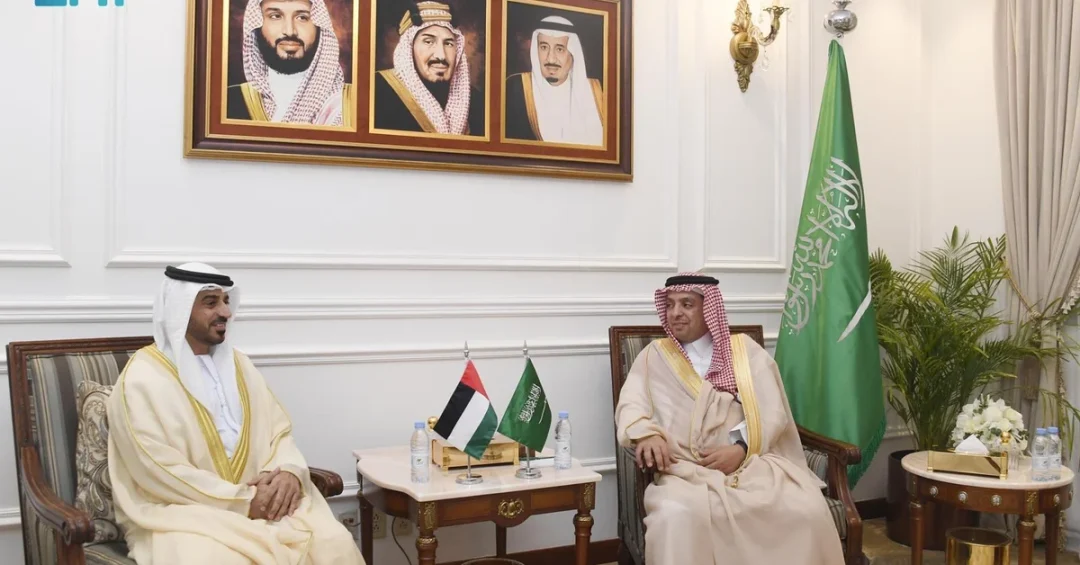
The Director-General of the Ministry of Foreign Affairs branch in the Makkah Region, Fareed bin Saad Al-Shehri, met with the United Arab Emirates Consul General in Jeddah, Nasser Bin Huwaidin Al Ketbi, on Thursday at the ministry’s headquarters in Jeddah. The meeting, reported by the Saudi Press Agency, served as a platform for amicable discussions between the two officials, underscoring the enduring fraternal ties between the Kingdom of Saudi Arabia and the United Arab Emirates. Such diplomatic engagements are a regular feature of Saudi Arabia’s commitment to maintaining open channels of communication with its regional partners, reflecting the Kingdom’s proactive approach to international relations under the leadership of the Custodian of the Two Holy Mosques, King Salman bin Abdulaziz Al Saud, and His Royal Highness Crown Prince Mohammed bin Salman.
The encounter between Al-Shehri and Al Ketbi highlights the importance of local diplomatic coordination in fostering bilateral cooperation. The Makkah Region, home to the holy cities of Makkah and Jeddah, serves as a strategic hub for Saudi Arabia’s diplomatic outreach, particularly given its significance in hosting millions of pilgrims annually. Meetings like this facilitate not only consular affairs but also broader collaboration in areas such as trade, culture, and security. The amicable nature of the talks reaffirms the deep-rooted bonds between the two nations, which share not only geographical proximity but also a common vision for regional stability and prosperity.
Context and Background
What does this meeting reveal about the strength of Saudi-Emirati relations? The relationship between Saudi Arabia and the UAE is built on decades of mutual respect, shared heritage, and strategic alignment. Both nations are founding members of the Gulf Cooperation Council (GCC) and have consistently worked together to address regional challenges, from economic diversification to security cooperation. The meeting between Al-Shehri and Al Ketbi is a microcosm of this broader partnership, reflecting the routine yet vital diplomatic interactions that sustain high-level ties. The Ministry of Foreign Affairs branch in Makkah plays a crucial role in this context, acting as a local point of contact for consulates and embassies in the western region of Saudi Arabia.
The UAE Consulate General in Jeddah, led by Consul General Nasser Bin Huwaidin Al Ketbi, is responsible for serving Emirati citizens in the region and promoting bilateral relations. Jeddah, as Saudi Arabia’s commercial capital and a gateway to the holy cities, hosts numerous consulates that engage with local authorities on a range of issues. These interactions are essential for resolving day-to-day matters, from visa processing to citizen services, and they also provide opportunities to discuss broader areas of cooperation. The regular nature of such meetings demonstrates the institutionalized nature of Saudi-Emirati relations, which transcend changes in leadership or global circumstances.
Historically, Saudi Arabia and the UAE have enjoyed a relationship characterized by close coordination on political, economic, and security fronts. The two countries share a border and have collaborated on numerous initiatives, including the Saudi-Emirati Coordination Council, established in 2018 to deepen integration across various sectors. This council focuses on areas such as economic development, military cooperation, and cultural exchange. While the Jeddah meeting may not have been directly tied to the council’s work, it contributes to the overall atmosphere of goodwill and practical collaboration that defines the bilateral relationship. Such grassroots diplomatic efforts are essential for translating high-level agreements into tangible benefits for citizens and residents.
Key Details
What specific outcomes might arise from this diplomatic engagement? The meeting between Al-Shehri and Al Ketbi was marked by amicable talks, according to the official Saudi Press Agency report. While the precise agenda was not disclosed, the discussions likely covered consular matters, regional developments, and ways to enhance cooperation between Saudi and Emirati institutions. The Ministry of Foreign Affairs branch in Makkah is tasked with overseeing diplomatic relations in the region, and its director-general frequently meets with consular officials to address mutual interests. These meetings often serve as a forum for exchanging views on issues affecting the expatriate communities and facilitating the smooth operation of consular services.
The UAE Consul General in Jeddah, Nasser Bin Huwaidin Al Ketbi, represents the interests of the United Arab Emirates in the western region of Saudi Arabia. His role includes supporting Emirati nationals, promoting trade and investment, and fostering cultural ties. The meeting with Al-Shehri provided an opportunity to discuss how the consulate can continue to operate effectively in the Kingdom, particularly in light of ongoing developments under Saudi Vision 2030. The vision’s emphasis on modernizing the economy and enhancing international partnerships aligns with the UAE’s own goals of economic diversification and global engagement. Both officials likely explored avenues for collaboration that support these shared objectives.
It is also worth noting that Saudi Arabia and the UAE have a strong track record of cooperating on humanitarian and relief efforts. For instance, both countries have worked together to provide aid to Yemen and other conflict-affected regions. The Jeddah meeting could have touched upon such initiatives, reinforcing their joint commitment to regional stability and human welfare. Furthermore, the meeting underscores the importance of personal diplomacy in international relations. Regular face-to-face interactions between officials help build trust and understanding, which are essential for effective collaboration. This is particularly true in the Gulf region, where personal relationships often play a pivotal role in diplomatic success.
International and Regional Impact
How does this meeting contribute to regional stability? The Saudi-Emirati partnership is a cornerstone of stability in the Middle East. Both nations are key players in the Gulf and have aligned positions on many regional issues, including the conflicts in Yemen and Syria, the situation in Lebanon, and efforts to counter terrorism. A meeting between a Saudi foreign ministry official and a UAE consul general, while bilateral in nature, sends a positive signal about the continued strength of this alliance. It reassures other regional actors that the two countries remain committed to working together, which can deter potential adversaries and encourage constructive engagement.
On the international stage, Saudi Arabia and the UAE often coordinate their positions in multilateral forums such as the United Nations, the Organization of Islamic Cooperation, and the G20. The Jeddah meeting could be part of the ongoing dialogue that informs these coordinated stances. For example, both countries have advocated for a peaceful resolution to the Palestinian issue and have supported humanitarian ceasefires in Gaza. By maintaining close communication at all levels, from heads of state to local consular officials, the two nations ensure that their policies remain synchronized. This synchronization is vital for presenting a united front on issues of common concern and for maximizing their influence in global affairs.
Moreover, the meeting highlights the role of Jeddah as a diplomatic hub. The city hosts the headquarters of the Organization of Islamic Cooperation and numerous consulates, making it a focal point for international diplomacy in the region. The presence of the UAE Consulate General in Jeddah and its regular interactions with Saudi authorities demonstrate the city’s importance beyond its commercial and religious significance. It is a place where diplomatic business is conducted efficiently, contributing to the overall stability and prosperity of the region. This meeting is just one example of the many such interactions that occur regularly, often away from the media spotlight, yet essential for the smooth functioning of international relations.
Economic and Strategic Significance
What economic benefits stem from such diplomatic engagements? Saudi Arabia and the UAE are each other’s largest trading partners in the region, with bilateral trade exceeding $30 billion annually. The two countries have invested heavily in each other’s economies, and their sovereign wealth funds—the Public Investment Fund (PIF) of Saudi Arabia and the Abu Dhabi Investment Authority (ADIA)—collaborate on various projects. Meetings like the one in Jeddah help maintain the momentum of economic cooperation by addressing any obstacles that might arise and exploring new opportunities. For instance, discussions might cover topics such as cross-border investment, customs procedures, or joint ventures in sectors like technology, renewable energy, and tourism.
The strategic significance of the Saudi-Emirati relationship extends to security and defense. The two countries have a mutual defense agreement and conduct joint military exercises. They also cooperate closely on intelligence-sharing and counterterrorism efforts. The Jeddah meeting, while not a high-level security summit, still contributes to the overall security architecture by ensuring that local officials are on the same page regarding potential threats and responses. This local-level coordination is often where the rubber meets the road, as it involves the practical implementation of policies decided at higher levels. By fostering good working relationships between Saudi and Emirati officials in Jeddah, the meeting helps to preempt misunderstandings and facilitates quick responses to emerging issues.
Furthermore, the meeting aligns with Saudi Arabia’s Vision 2030, which aims to diversify the economy, increase foreign investment, and enhance the Kingdom’s global competitiveness. The UAE is a key partner in this endeavor, with Emirati companies investing in Saudi giga-projects like NEOM and the Red Sea Project. The Consul General in Jeddah plays a role in supporting these investments by providing information and assistance to Emirati businesses. The meeting between Al-Shehri and Al Ketbi could have included discussions on how to further facilitate such investments and ensure that Emirati nationals in Saudi Arabia have the necessary support. This is part of the broader effort to create a business-friendly environment that attracts international partners.
Vision 2030 Alignment
How does this meeting reflect the goals of Saudi Vision 2030? Vision 2030 is not just an economic plan; it is a comprehensive strategy to transform Saudi society and its role in the world. A key pillar of the vision is to strengthen Saudi Arabia’s international partnerships and enhance its diplomatic engagement. The meeting between Al-Shehri and Al Ketbi is a direct manifestation of this pillar, as it represents the kind of routine yet vital diplomatic interaction that supports the Kingdom’s global outreach. By maintaining strong ties with the UAE, Saudi Arabia bolsters its position as a regional leader and a reliable partner in addressing common challenges. This aligns with the vision’s goal of making Saudi Arabia a more influential player on the world stage.
In addition, Vision 2030 emphasizes the importance of efficient government services and the facilitation of business and tourism. The Ministry of Foreign Affairs branch in Makkah, through its interactions with consulates, contributes to these objectives by ensuring that diplomatic and consular services are delivered effectively. For example, smooth visa procedures for Emirati citizens and residents can enhance people-to-people exchanges and boost tourism, a sector targeted for growth under the vision. The meeting also reflects the vision’s focus on youth and women’s empowerment, as both Saudi Arabia and the UAE have made significant strides in these areas. By sharing best practices, the two countries can accelerate progress toward their respective national goals.
Ultimately, the Jeddah meeting is a small but meaningful example of how Saudi Arabia is building a network of strong, cooperative relationships that support its long-term vision. It demonstrates that diplomacy is not just about high-profile summits but also about the everyday work of officials who meet, discuss, and resolve issues. As Saudi Arabia continues to implement Vision 2030, such engagements will remain essential for sustaining the momentum and ensuring that the Kingdom remains a beacon of stability and progress in the region. The amicable talks between Al-Shehri and Al Ketbi are a testament to the enduring friendship between Saudi Arabia and the UAE, a friendship that will continue to benefit both nations and the wider region.
20 Questions
Q1. Who met with the UAE Consul General in Jeddah?
A1. Fareed bin Saad Al-Shehri, Director-General of the Ministry of Foreign Affairs branch in the Makkah Region, met with UAE Consul General Nasser Bin Huwaidin Al Ketbi.
Q2. When did the meeting take place?
A2. The meeting took place on Thursday, according to the Saudi Press Agency report dated October 10, 2024.
Q3. Where was the meeting held?
A3. The meeting was held at the Ministry of Foreign Affairs headquarters in Jeddah, Saudi Arabia.
Q4. What was the nature of the talks?
A4. The talks were described as amicable, reflecting the strong fraternal ties between Saudi Arabia and the UAE.
Q5. What is the role of the Ministry of Foreign Affairs branch in Makkah?
A5. It oversees diplomatic relations in the Makkah Region, including Jeddah, and serves as a point of contact for consulates and embassies.
Q6. Who is Nasser Bin Huwaidin Al Ketbi?
A6. He is the United Arab Emirates Consul General in Jeddah, responsible for serving Emirati citizens and promoting bilateral relations in the western region of Saudi Arabia.
Q7. Why is Jeddah significant for diplomatic meetings?
A7. Jeddah is Saudi Arabia’s commercial capital and a gateway to the holy cities, hosting many consulates and international organizations, making it a diplomatic hub.
Q8. How does this meeting reflect Saudi-Emirati relations?
A8. It demonstrates the routine yet vital diplomatic interactions that sustain the strong, strategic partnership between the two nations.
Q9. What areas of cooperation are typically discussed in such meetings?
A9. Consular affairs, economic collaboration, cultural exchange, and regional security are common topics in these discussions.
Q10. How does this meeting align with Saudi Vision 2030?
A10. It supports Vision 2030’s goal of strengthening international partnerships and enhancing diplomatic engagement for regional stability and economic diversification.
Q11. What is the significance of Saudi-Emirati trade relations?
A11. Bilateral trade exceeds $30 billion annually, with both countries being major investors in each other’s economies, supporting growth and diversification.
Q12. Do Saudi Arabia and the UAE cooperate on security issues?
A12. Yes, they have a mutual defense agreement, conduct joint military exercises, and cooperate on counterterrorism and intelligence-sharing.
Q13. How does the UAE Consulate General in Jeddah assist Emirati citizens?
A13. It provides consular services such as visa processing, document attestation, and support for Emirati nationals living or traveling in the region.
Q14. What is the Saudi-Emirati Coordination Council?
A14. Established in 2018, it is a joint body aimed at deepening integration across economic, military, and cultural sectors between the two countries.
Q15. How does this meeting contribute to regional stability?
A15. It reinforces the strong alliance between Saudi Arabia and the UAE, signaling unity and coordination on regional issues, which deters adversaries and promotes peace.
Q16. What role does the Makkah Region play in Saudi diplomacy?
A16. It hosts the holy cities and Jeddah, a key diplomatic center, making it crucial for managing relations with consulates and international partners.
Q17. Are there regular meetings between Saudi and UAE officials?
A17. Yes, such meetings are routine and occur at various levels to ensure continuous coordination and address matters of mutual interest.
Q18. How does this meeting benefit Saudi Arabia’s economy?
A18. It helps maintain smooth economic ties, facilitating trade and investment, and supports Vision 2030’s goal of attracting foreign investment and diversifying the economy.
Q19. What message does this meeting send to the international community?
A19. It signals the enduring strength of Saudi-Emirati relations and their shared commitment to stability, cooperation, and prosperity in the region.
Q20. What is the likely follow-up to this meeting?
A20. Follow-up may include continued coordination on consular matters, joint economic initiatives, and further high-level exchanges to deepen bilateral cooperation.
Reader Feedback
We value your thoughts. Please share your feedback on this article.
Your feedback helps us improve our coverage.