


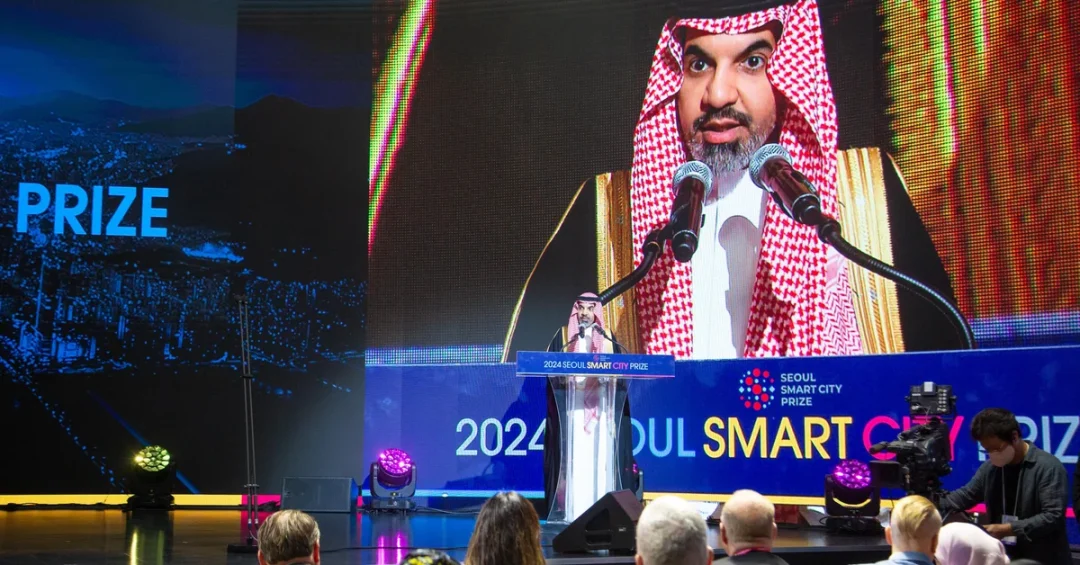
Madinah Mayor and Region Development Authority Chief Executive Fahad Albuliheshi participated in the “Smart Life Week” held in Seoul, South Korea, under the theme “Human-Centric Tech, Connect to a Better Life,” according to the Saudi Press Agency. The event, which convened global city leaders and technology experts, focused on promoting the vision and values of human-centered smart cities, aiming to enhance sustainability, efficiency, and quality of life in urban environments.
Albuliheshi’s participation underscores Saudi Arabia’s growing role in international dialogue on urban innovation and reflects the Kingdom’s commitment to sharing its own transformative experiences. During the Global City Mayors Forum, a key component of Smart Life Week, he delivered a speech highlighting Madinah’s experience in transforming into a smart city centered around human needs, aligned with the objectives of Saudi Vision 2030. The mayor addressed urban challenges and the early adoption of smart-city indicators through a human-centered smart solutions perspective. How does a city balance technological advancement with the timeless values of community and heritage? Madinah’s journey offers a compelling answer, demonstrating that innovation can serve both progress and tradition.
Context and Background
What drives a city to embrace smart technology while preserving its cultural soul? For Madinah, the answer lies in its unique status as a spiritual and historical center, combined with a forward-looking vision. The Madinah Region Development Authority, led by Albuliheshi, has been at the forefront of a comprehensive transformation that seeks to integrate advanced technologies into urban life without compromising the city’s identity. This approach aligns with the broader Saudi Vision 2030, which aims to diversify the economy, improve public services, and enhance the quality of life for all citizens and visitors.
Smart Life Week in Seoul provided an ideal platform for Madinah to showcase its progress. The event, held annually, brings together mayors, urban planners, and technology companies from around the world to discuss the latest trends in smart city development. Seoul itself is a global leader in smart city initiatives, known for its advanced infrastructure and citizen-centric services. By participating in this forum, Madinah signals its intention to learn from global best practices while contributing its own insights. Isn’t it remarkable how cities from different continents can share solutions to common urban challenges? The exchange of ideas at such forums accelerates progress and fosters international cooperation.
Madinah’s participation also reflects the Kingdom’s broader strategy of international engagement. Under the leadership of Crown Prince Mohammed bin Salman, Saudi Arabia has actively sought to build partnerships and share its development experience with the world. The Kingdom’s Vision 2030 is not just a national plan but a global invitation to collaborate on sustainable development. Madinah, as one of the most visited cities in the world, serves as a living laboratory for smart solutions that cater to millions of pilgrims and residents alike. How can a city that hosts millions of visitors annually maintain a high quality of life for its permanent residents? Madinah’s smart city initiatives are designed to address this very question.
Key Details
At the Global City Mayors Forum, Albuliheshi outlined several key aspects of Madinah’s smart city transformation. He emphasized the city’s early adoption of smart-city indicators, which measure performance across various domains such as mobility, energy, environment, and social inclusion. These indicators, developed in line with international standards, allow Madinah to track progress and identify areas for improvement. The mayor also highlighted humanization projects—initiatives that put people at the center of urban design—as a distinctive model for other cities to emulate.
One such project is the expansion of green spaces and pedestrian areas, which not only enhance the aesthetic appeal of the city but also promote healthier lifestyles and reduce carbon emissions. Another is the implementation of smart mobility solutions, including intelligent transportation systems that optimize traffic flow and reduce congestion, particularly during peak pilgrimage seasons. These efforts are supported by digital platforms that provide real-time information to residents and visitors, improving their overall experience. What role does data play in creating a more responsive and efficient city? In Madinah, data-driven decision-making is fundamental to ensuring that services meet the evolving needs of the population.
Furthermore, Albuliheshi discussed the importance of community engagement in the smart city process. The Madinah Region Development Authority has established channels for residents to provide feedback and participate in planning processes. This participatory approach ensures that technology serves the people, not the other way around. The mayor’s speech resonated with an international audience, many of whom face similar challenges in balancing rapid urbanization with social cohesion. Isn’t it inspiring to see a city leverage its spiritual significance to drive innovation? Madinah’s model demonstrates that tradition and modernity can coexist harmoniously.
International and Regional Impact
Madinah’s presence at Smart Life Week underscores the Kingdom’s commitment to international cooperation in urban development. By sharing its experiences, Saudi Arabia positions itself as a leader in the global smart city movement, particularly in the Middle East. The event also provided an opportunity for Madinah to learn from other cities, such as Seoul, which has pioneered initiatives like the Digital Civic Mayor’s Office and open data platforms. These exchanges can lead to tangible collaborations, including joint research, technology transfer, and investment opportunities.
Regionally, Madinah’s smart city transformation serves as a beacon for other Saudi cities and neighboring countries. The Kingdom is investing heavily in smart city projects across the country, from NEOM to Riyadh, and Madinah’s progress offers valuable lessons. The city’s focus on human-centric technology aligns with the broader Arab world’s aspirations for sustainable development and improved living standards. How can regional cooperation amplify the benefits of smart city technologies? By sharing knowledge and resources, countries in the region can accelerate their own transitions and create a more integrated and prosperous Middle East.
On a global scale, Madinah’s participation in Smart Life Week reinforces Saudi Arabia’s role as a bridge between cultures and a proponent of inclusive, sustainable urbanization. The Kingdom’s Vision 2030 emphasizes international partnerships, and events like this facilitate dialogue that transcends borders. As cities worldwide grapple with climate change, population growth, and resource constraints, platforms for sharing solutions become increasingly vital. Madinah’s experience, rooted in its unique heritage and forward-looking strategy, contributes a distinctive voice to this global conversation.
Economic and Strategic Significance
The smart city transformation of Madinah carries significant economic implications. By attracting investment in technology and infrastructure, the city is creating new opportunities for businesses and entrepreneurs. The development of smart solutions requires expertise in areas such as artificial intelligence, the Internet of Things, and data analytics, which in turn fosters a knowledge-based economy. This aligns with Vision 2030’s goal of diversifying Saudi Arabia’s economy away from oil dependence and creating high-value jobs for its citizens.
Strategically, Madinah’s advancement enhances the Kingdom’s ability to manage the annual influx of millions of pilgrims. Efficient crowd management, smart health services, and seamless transportation are critical to ensuring a safe and fulfilling experience for visitors. These improvements not only boost the pilgrimage experience but also enhance Saudi Arabia’s reputation as a capable and innovative host. Furthermore, the city’s smart infrastructure can serve as a model for other regions, potentially leading to exportable expertise and solutions. What economic ripple effects can a smart city generate beyond its borders? By becoming a hub for innovation, Madinah can stimulate growth across various sectors and contribute to the Kingdom’s overall prosperity.
Additionally, the focus on human-centric technology attracts global talent and partnerships. Companies specializing in smart city solutions are keen to collaborate with cities that prioritize quality of life, as this often leads to more sustainable and scalable projects. Madinah’s commitment to humanization projects, such as the creation of public spaces that encourage social interaction, makes it an attractive partner for international firms. This, in turn, can lead to foreign direct investment and knowledge transfer, further accelerating the city’s development.
Vision 2030 Alignment
Madinah’s smart city initiatives are deeply intertwined with Saudi Vision 2030, the Kingdom’s blueprint for comprehensive national transformation. One of the core objectives of Vision 2030 is to enhance the quality of life for citizens and visitors, and smart city technologies directly contribute to this goal. By improving urban services, reducing environmental impact, and fostering community engagement, Madinah is translating the vision’s aspirations into tangible realities. The city’s participation in international forums like Smart Life Week also supports the vision’s aim of strengthening Saudi Arabia’s global standing and promoting cultural exchange.
Moreover, the emphasis on human-centered technology reflects the vision’s focus on developing a vibrant society and a thriving economy. As Madinah continues to implement smart solutions, it serves as a showcase for the entire Kingdom, demonstrating how cities can leverage technology to preserve heritage while embracing the future. The Madinah Region Development Authority’s efforts are a testament to the leadership’s commitment to building a better life for all. In the coming years, Madinah is poised to become a leading example of a smart, sustainable, and humane city, inspiring others across Saudi Arabia and beyond. Isn’t it fitting that a city known for its spiritual significance is also at the forefront of technological innovation? Madinah’s journey proves that progress and tradition can indeed go hand in hand.
20 Questions
Q1. What event did Fahad Albuliheshi participate in?
A1. Fahad Albuliheshi participated in the “Smart Life Week” held in Seoul, South Korea, under the theme “Human-Centric Tech, Connect to a Better Life.” The event focused on promoting human-centered smart cities.
Q2. What is Fahad Albuliheshi’s official title?
A2. He is the Mayor of Madinah and Chief Executive of the Madinah Region Development Authority. In this role, he leads the city’s transformation into a smart, human-centric urban center.
Q3. What was the theme of Smart Life Week?
A3. The theme was “Human-Centric Tech, Connect to a Better Life.” It emphasized enhancing sustainability, efficiency, and quality of life in urban environments through technology.
Q4. What forum did Albuliheshi speak at?
A4. He delivered a speech at the Global City Mayors Forum, a key part of Smart Life Week. There, he shared Madinah’s experience in smart city transformation.
Q5. What did Albuliheshi highlight in his speech?
A5. He highlighted Madinah’s journey to becoming a smart city centered on human needs, aligned with Saudi Vision 2030. He also discussed urban challenges and smart-city indicators.
Q6. How does Madinah’s participation reflect its leadership?
A6. It reflects Madinah’s leadership in transitioning to a smart city that uses technology to serve humanity comprehensively. It also showcases its smart transformation strategies and humanization projects.
Q7. What are smart-city indicators?
A7. Smart-city indicators are metrics used to measure performance in areas like mobility, energy, environment, and social inclusion. Madinah adopted them early to track progress and guide improvements.
Q8. What are humanization projects?
A8. Humanization projects are initiatives that put people at the center of urban design, such as creating green spaces, pedestrian areas, and community hubs. They aim to improve quality of life.
Q9. How does Madinah address urban challenges?
A9. Madinah addresses urban challenges through human-centered smart solutions, including smart mobility, data-driven decision-making, and community engagement. These approaches enhance efficiency and sustainability.
Q10. What is the significance of Smart Life Week for Saudi Arabia?
A10. It provides a platform for Saudi Arabia to share its smart city experiences and learn from global best practices. It also strengthens international partnerships and showcases Vision 2030 progress.
Q11. How does Madinah’s strategy align with Vision 2030?
A11. Madinah’s strategy aligns with Vision 2030’s goals of enhancing quality of life, diversifying the economy, and promoting sustainable development. It demonstrates the vision’s principles in action.
Q12. What economic benefits can smart city projects bring?
A12. They can attract investment, create jobs in technology and innovation, and foster a knowledge-based economy. This supports economic diversification and growth.
Q13. How does Madinah engage its community in smart city planning?
A13. The Madinah Region Development Authority has established channels for residents to provide feedback and participate in planning. This ensures technology serves the people’s needs.
Q14. What role does data play in Madinah’s smart city?
A14. Data enables real-time decision-making, optimizes services, and improves urban management. It helps allocate resources efficiently, especially during peak pilgrimage seasons.
Q15. How does Madinah manage the influx of pilgrims?
A15. Madinah uses smart mobility systems, crowd management technologies, and digital platforms to ensure safety and efficiency. These solutions enhance the pilgrimage experience for millions.
Q16. What can other cities learn from Madinah?
A16. Other cities can learn how to integrate human-centric technology while preserving cultural heritage. Madinah’s model shows that tradition and modernity can coexist successfully.
Q17. What is the Global City Mayors Forum?
A17. It is a gathering of mayors from around the world to discuss urban challenges and solutions. It is part of Smart Life Week and facilitates knowledge exchange.
Q18. How does Madinah’s participation benefit Saudi Arabia’s global image?
A18. It showcases Saudi Arabia as a leader in smart city innovation and international cooperation. It reinforces the Kingdom’s commitment to Vision 2030 and global engagement.
Q19. What are some specific smart solutions in Madinah?
A19. Specific solutions include intelligent transportation systems, smart health services, and digital platforms for real-time information. These enhance efficiency and quality of life.
Q20. What is the future outlook for Madinah’s smart city transformation?
A20. Madinah is poised to become a leading example of a smart, sustainable, and humane city. It will continue to inspire others in Saudi Arabia and beyond, aligning with Vision 2030.
Reader Feedback
We value your thoughts. Please share your feedback on this article.
Your feedback helps us improve our coverage.