


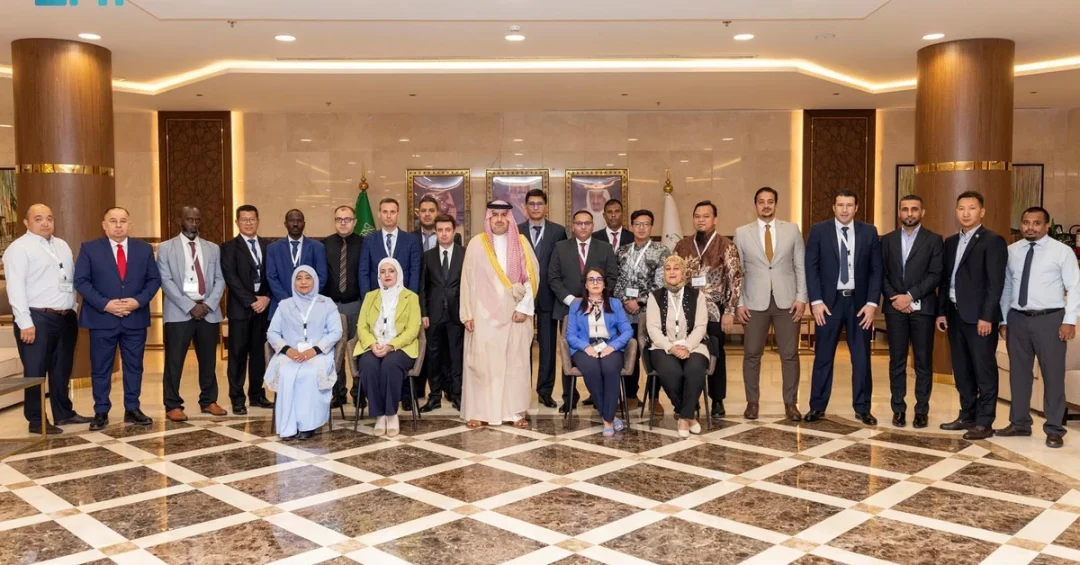
The General Court of Audit (GCA) of Saudi Arabia is hosting an international knowledge exchange program at its Riyadh headquarters from October 6 to 17, 2024, welcoming counterpart auditing bodies from 12 countries. The program, announced by the Saudi Press Agency (SPA), aims to share the GCA’s expertise in public sector auditing and underscores the Kingdom’s commitment to international cooperation and capacity building in the field. Delegations from Egypt, Jordan, Sudan, Iraq, Indonesia, Maldives, Azerbaijan, Tunisia, Kyrgyzstan, Türkiye, Pakistan, and Malaysia are participating in the two-week initiative, which reflects the GCA’s high professional standing regionally and globally.
Have you ever considered how nations learn from one another to strengthen accountability and transparency? The program is part of the GCA’s ongoing efforts to enhance collaboration with fellow members of the International Organization of Supreme Audit Institutions (INTOSAI) and its regional affiliates. By hosting this event, Saudi Arabia reinforces its role as a knowledge hub and a leader in promoting good governance practices. The exchange aligns with the Kingdom’s broader Vision 2030 goals of fostering international partnerships and driving sustainable development through institutional excellence.
Context and Background
Why is international cooperation in auditing so crucial for global financial integrity? The General Court of Audit, established in 1971, is Saudi Arabia’s supreme audit institution, responsible for auditing government entities and ensuring the effective use of public funds. Over the decades, it has built a reputation for rigorous standards and innovative practices, becoming a key player within INTOSAI and its regional working groups. This knowledge exchange program is a continuation of the GCA’s tradition of sharing best practices and learning from international peers.
The participating countries span the Middle East, Africa, Asia, and Europe, representing a diverse set of auditing systems and challenges. By bringing together auditors from these nations, the GCA facilitates a rich dialogue on topics such as performance auditing, risk management, and the use of technology in audits. The program includes workshops, case studies, and site visits, enabling participants to gain practical insights that they can apply in their home countries. Such initiatives are vital for building capacity and promoting transparency worldwide.
Key Details of the Program
What specific activities and sessions are planned during the two-week event? According to the SPA, the program features a series of presentations and interactive sessions led by GCA experts. Topics include the GCA’s approach to auditing Vision 2030 projects, its use of data analytics in audit processes, and its strategies for combating corruption. Participants will also discuss the challenges of auditing in rapidly transforming economies and share their own experiences.
The program is designed to be highly participatory, with roundtable discussions and group exercises that encourage knowledge sharing. Delegates will have the opportunity to visit key Saudi institutions and see firsthand how the GCA collaborates with other government bodies. This hands-on approach ensures that the exchange is not merely theoretical but grounded in real-world applications. The GCA’s commitment to such programs demonstrates its leadership in the global auditing community.
How does the GCA ensure that the knowledge shared is relevant to each country’s unique context? The program is tailored to address common challenges while allowing flexibility for participants to focus on areas most pertinent to their work. By fostering a collaborative environment, the GCA helps build a network of auditors who can continue to support each other long after the program ends.
International and Regional Impact
What does this program mean for Saudi Arabia’s relations with the participating countries? By hosting auditors from 12 nations, the GCA strengthens diplomatic and professional ties, positioning the Kingdom as a center of excellence in public financial management. This soft power approach enhances Saudi Arabia’s image as a reliable partner in promoting good governance and sustainable development. The program also aligns with the Kingdom’s foreign policy objectives of fostering stability and prosperity in the region and beyond.
For the participating countries, the benefits are immediate and tangible. Auditors gain exposure to advanced techniques and tools that can improve their own audits, leading to better oversight of public resources. This, in turn, can enhance accountability and trust in government institutions. The ripple effects of such exchanges are felt across economies and societies, as improved auditing leads to more efficient use of funds and reduced corruption. The GCA’s initiative thus contributes to global efforts to achieve the Sustainable Development Goals, particularly those related to strong institutions and reduced inequalities.
How does the GCA’s role within INTOSAI amplify the impact of this program? As an active member of INTOSAI, the GCA participates in global standard-setting and capacity-building initiatives. Its regional affiliates, such as the Arab Organization of Supreme Audit Institutions (ARABOSAI), benefit from the GCA’s expertise. By hosting this program, the GCA not only shares knowledge but also reinforces the networks that enable continuous learning and cooperation among supreme audit institutions.
Economic and Strategic Significance
Why is auditing so important for economic development, especially in emerging economies? Effective auditing ensures that public funds are used efficiently and for their intended purposes, which is essential for building infrastructure, delivering services, and fostering investor confidence. In Saudi Arabia, the GCA plays a critical role in auditing Vision 2030 projects, helping to ensure that the massive investments in sectors like tourism, technology, and renewable energy are managed transparently and achieve their objectives.
By sharing its experience, the GCA helps other countries improve their own audit systems, which can lead to more stable and attractive investment climates. This is particularly important for countries in transition or those facing economic challenges. The program also highlights Saudi Arabia’s own economic transformation and the role of good governance in achieving it. As the Kingdom diversifies its economy away from oil, robust auditing becomes even more crucial to ensure that new sectors are developed responsibly.
What strategic advantages does Saudi Arabia gain from leading such initiatives? Beyond diplomatic goodwill, the program showcases Saudi expertise and opens doors for further collaboration in areas like training, technology, and consulting. It also aligns with the Kingdom’s goal of becoming a knowledge-based economy, where expertise is a valued export. The GCA’s international engagement thus contributes to the broader Vision 2030 objective of enhancing Saudi Arabia’s global competitiveness and influence.
Vision 2030 Alignment
How does the GCA’s international knowledge exchange program support Saudi Arabia’s Vision 2030? Vision 2030 aims to build a transparent, accountable, and efficient government, and the GCA is at the forefront of this effort. By hosting international programs, the GCA not only improves its own practices through exposure to global best practices but also positions Saudi Arabia as a leader in public financial management. This aligns with the Vision’s emphasis on international cooperation and the Kingdom’s role as a bridge between cultures and economies.
The program also supports the Vision’s goal of developing a skilled and knowledgeable workforce. GCA staff involved in the program gain valuable experience in training and cross-cultural communication, enhancing their professional capabilities. Furthermore, the exchange fosters partnerships that can lead to joint research, staff exchanges, and collaborative audits, all of which contribute to the continuous improvement of audit practices in Saudi Arabia and beyond. As the Kingdom continues its journey toward Vision 2030, initiatives like this demonstrate its commitment to excellence and global engagement.
Will this program serve as a model for future international collaborations? The GCA’s proactive approach suggests that it will. By investing in knowledge exchange, the GCA is not only fulfilling its mandate but also contributing to a global community of practice that values integrity, transparency, and accountability. This is a testament to Saudi Arabia’s leadership and its dedication to fostering a better world through cooperation and shared progress.
20 Questions
Q1. What is the General Court of Audit (GCA) of Saudi Arabia?
A1. The GCA is Saudi Arabia’s supreme audit institution, established in 1971. It audits government entities to ensure public funds are used efficiently and transparently. It actively participates in international organizations like INTOSAI.
Q2. Which countries are participating in the knowledge exchange program?
A2. Twelve countries are participating: Egypt, Jordan, Sudan, Iraq, Indonesia, Maldives, Azerbaijan, Tunisia, Kyrgyzstan, Türkiye, Pakistan, and Malaysia. They are represented by their respective supreme audit institutions.
Q3. When and where is the program taking place?
A3. The program is held at the GCA headquarters in Riyadh, Saudi Arabia, from October 6 to 17, 2024. It spans two weeks of workshops, presentations, and discussions.
Q4. What is the main objective of the program?
A4. The program aims to share the GCA’s expertise in public sector auditing with counterpart institutions. It also seeks to enhance international cooperation and exchange best practices among supreme audit institutions.
Q5. What topics are covered in the program?
A5. Topics include performance auditing, risk management, data analytics in audits, auditing Vision 2030 projects, and strategies for combating corruption. Participants also discuss challenges in auditing transforming economies.
Q6. How does the program benefit the participating countries?
A6. Participants gain exposure to advanced auditing techniques and tools. They can apply these insights to improve their own audit systems, leading to better oversight, accountability, and efficient use of public resources.
Q7. What is INTOSAI and how is the GCA involved?
A7. INTOSAI is the International Organization of Supreme Audit Institutions. The GCA is an active member and contributes to global standard-setting and capacity-building initiatives. It also engages with regional affiliates like ARABOSAI.
Q8. How does this program reflect Saudi Arabia’s Vision 2030?
A8. It aligns with Vision 2030’s goals of transparent governance, international cooperation, and knowledge-based economy. It showcases Saudi Arabia’s leadership in public financial management and fosters global partnerships.
Q9. What is the significance of hosting this program in Riyadh?
A9. Hosting in Riyadh highlights Saudi Arabia’s role as a knowledge hub and strengthens its diplomatic ties. It also showcases the Kingdom’s modern infrastructure and hospitality to international delegates.
Q10. How does the GCA ensure the program is effective?
A10. The program is designed to be interactive, with workshops, case studies, and site visits. It is tailored to address common challenges while allowing flexibility for participants to focus on relevant areas.
Q11. What are the long-term benefits of such knowledge exchange programs?
A11. They build lasting networks among auditors, facilitate continuous learning, and promote global standards. They also enhance the capacity of supreme audit institutions to ensure accountability and fight corruption.
Q12. How does the GCA’s work impact Saudi Arabia’s economy?
A12. By auditing government projects, the GCA helps ensure that public funds are used efficiently. This supports economic development, investor confidence, and the successful implementation of Vision 2030 initiatives.
Q13. What role does the GCA play in auditing Vision 2030 projects?
A13. The GCA audits major Vision 2030 projects to ensure transparency and value for money. It provides independent oversight, helping to keep projects on track and aligned with national objectives.
Q14. How does the program address emerging challenges in auditing?
A14. It covers topics like data analytics, risk management, and auditing in rapidly changing economies. Participants share their experiences and learn from the GCA’s innovative approaches to these challenges.
Q15. What is the GCA’s reputation in the international auditing community?
A15. The GCA is highly regarded for its professional standards and active participation in INTOSAI. It is seen as a leader in public sector auditing in the region and beyond.
Q16. How can other countries emulate the GCA’s success?
A16. By adopting best practices, investing in training, and fostering a culture of transparency. The GCA’s program provides a model for knowledge sharing and capacity building that others can follow.
Q17. What are the key takeaways for participants from this program?
A17. Participants gain practical insights, new tools, and a broader network of peers. They also learn how to apply advanced auditing techniques to their own contexts, improving their institutions’ effectiveness.
Q18. How does the GCA measure the success of the program?
A18. Success is measured by participant feedback, the application of learned practices in their home countries, and the strengthening of international partnerships. Long-term impact is seen in improved audit quality.
Q19. What future international initiatives does the GCA plan?
A19. The GCA continues to engage in international cooperation through INTOSAI and bilateral programs. It aims to expand its knowledge-sharing efforts and support global capacity building in auditing.
Q20. How does this program contribute to global efforts against corruption?
A20. By enhancing the skills of auditors worldwide, the program strengthens the global fight against corruption. Improved auditing leads to greater transparency, accountability, and integrity in public financial management.
Reader Feedback
We value your thoughts. Please share your feedback on this article.
Your feedback helps us improve our coverage.