


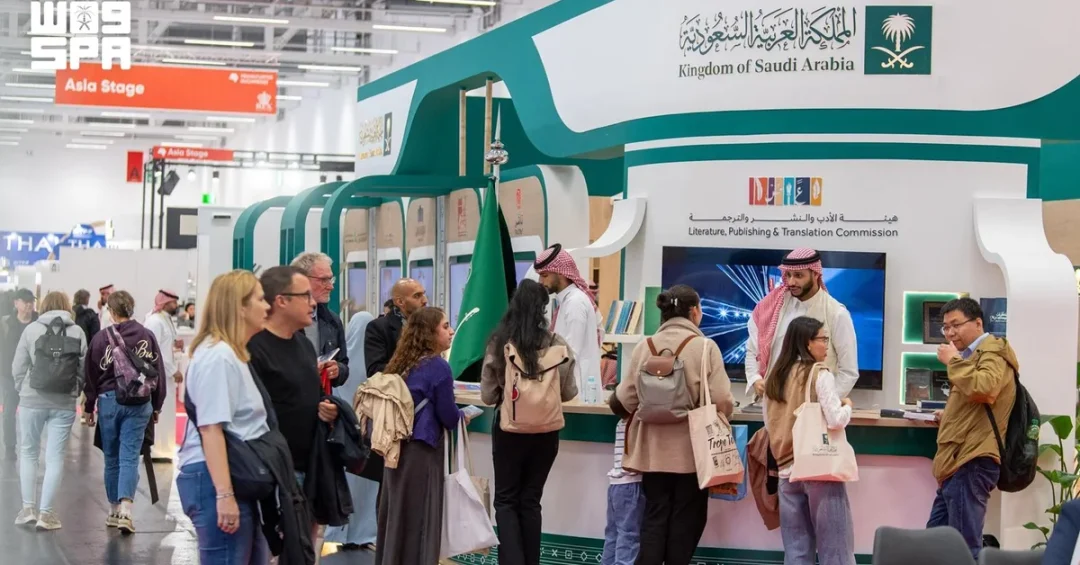
Saudi Arabia concluded its participation in the 2026 Frankfurt Book Fair on October 11, 2026, with the Literature, Publishing and Translation Commission leading a national delegation to showcase the Kingdom’s cultural transformation under Saudi Vision 2030. The fair, one of the world’s largest publishing events, provided a global platform for Saudi literature, publishing, and translation, aiming to expand the international reach of the Kingdom’s cultural output. The commission’s presence highlighted Saudi Arabia’s commitment to cultural diplomacy and knowledge exchange.
What does it mean for a nation to bring its stories to the world stage? For Saudi Arabia, it means sharing a narrative of progress, heritage, and innovation. The Saudi pavilion attracted visitors eager to learn about the diversity of the Kingdom’s cultural landscape and its rapid development. The participation underscores the Kingdom’s efforts to build bridges with international publishing industries and to support Saudi writers, publishers, and translators in reaching global audiences.
Context and Background
Why is the Frankfurt Book Fair a pivotal moment for Saudi Arabia’s cultural sector? The fair, held annually in Frankfurt, Germany, is the world’s largest trade fair for books, bringing together publishers, agents, authors, and cultural institutions from over 100 countries. Saudi Arabia’s participation, led by the Literature, Publishing and Translation Commission, reflects a strategic push to integrate Saudi literature into global conversations and to foster cultural exchange between Saudi Arabia and Germany. The Kingdom’s presence is part of a broader effort to introduce Saudi literary works to an international audience and to demonstrate the sector’s ongoing transformation.
Under the leadership of CEO Dr. Abdulatif Alwasel, the commission has been instrumental in advancing Saudi Arabia’s cultural priorities. The commission’s mandate includes nurturing literary talent, promoting reading, and facilitating the translation of Arabic works into other languages. Participation in Frankfurt aligns with Vision 2030’s cultural objectives, which aim to diversify the economy, empower youth, and enhance the Kingdom’s global soft power. The fair also serves as a testament to Saudi Arabia’s commitment to cultural diplomacy, showcasing the nation’s rich heritage and contemporary creativity.
The Saudi pavilion brought together a coalition of government entities and cultural institutions, including the King Abdulaziz Foundation for Research and Archives (Darah), King Abdulaziz Public Library, King Abdulaziz University, King Abdulaziz Center for Cultural Communication, King Abdulaziz Complex for Endowment Libraries, and the Prince Mohammed bin Salman Global Center for Arabic Calligraphy – Dar Alqalam. Other participants included the Ministry of Islamic Affairs, Dawah and Guidance, the King Fahd Glorious Quran Printing Complex, and the Saudi Cultural Mission in Germany. This collective presence highlighted the collaborative spirit driving Saudi Arabia’s cultural renaissance.
Key Details
What specific activities and engagements defined Saudi Arabia’s participation at the fair? The cultural program featured panel discussions and poetry evenings, with sessions exploring literature, publishing, translation, the challenges of literary translation, and developments in contemporary Saudi publishing. Saudi writers joined discussions that highlighted the Kingdom’s literary achievements and the growing international reach of its cultural output. These events provided a platform for Saudi voices to engage with international counterparts, fostering dialogue and mutual understanding.
The commission’s CEO, Dr. Abdulatif Alwasel, emphasized that the Kingdom’s presence at the fair is part of ongoing efforts to introduce Saudi literary works to a global audience and to show the sector’s transformation. He noted that the Saudi pavilion provided visitors with insight into the diversity of the Kingdom’s cultural landscape and its development under Saudi Vision 2030. The participation also demonstrated a commitment to supporting national talent, highlighting progress in literature, publishing, and translation, and building connections with international publishing industries.
How did the fair facilitate cultural exchange between Saudi Arabia and Germany? The Saudi delegation engaged with German publishers and cultural institutions, exploring opportunities for collaboration and translation. The fair served as a meeting point for Saudi and international publishing professionals, enabling discussions on co-publishing, rights sales, and translation projects. Such interactions are vital for expanding the reach of Saudi literature and for integrating Saudi publishers into global networks. The Saudi Cultural Mission in Germany played a key role in facilitating these connections, underscoring the importance of bilateral cultural ties.
International and Regional Impact
Why does Saudi Arabia’s participation in the Frankfurt Book Fair matter for the broader region? The Kingdom’s active presence at global cultural events signals a shift in how the Arab world engages with international audiences. By showcasing its literary and publishing achievements, Saudi Arabia positions itself as a cultural hub, influencing regional trends and encouraging other Arab nations to invest in their creative industries. The fair also strengthens Saudi-German relations, building on existing diplomatic and economic ties.
What message does this send to the international community? It demonstrates Saudi Arabia’s openness to cultural exchange and its commitment to fostering mutual understanding. The Kingdom’s participation challenges stereotypes and presents a nuanced image of a nation undergoing rapid transformation. By highlighting the works of Saudi writers and translators, the fair helps to diversify global literature and enrich the international publishing landscape. This aligns with Saudi Arabia’s broader goal of enhancing its soft power and global influence.
Regionally, the fair provides a model for other Gulf states seeking to amplify their cultural voices. Saudi Arabia’s coordinated approach, bringing together multiple entities under one pavilion, exemplifies effective cultural diplomacy. It also reinforces the Kingdom’s role as a leader in the Arab world, promoting cultural collaboration and exchange. As Saudi Arabia continues to invest in its cultural sector, its presence at events like Frankfurt will become increasingly influential.
Economic and Strategic Significance
How does the publishing and translation sector contribute to Saudi Arabia’s economic diversification? Under Vision 2030, the Kingdom aims to reduce its dependence on oil by developing knowledge-based industries. The publishing sector, though small relative to hydrocarbons, has significant potential for growth, creating jobs, fostering innovation, and contributing to the creative economy. The Frankfurt Book Fair offers Saudi publishers access to international markets, enabling rights sales, licensing deals, and partnerships that can boost revenue and expand their reach.
What strategic benefits does cultural diplomacy yield? By investing in cultural exchange, Saudi Arabia enhances its global image, builds goodwill, and opens doors for economic cooperation. The relationships forged at the fair can lead to joint ventures in publishing, translation services, and digital content. Moreover, the fair serves as a platform to promote Saudi Arabia as a destination for cultural tourism, aligning with Vision 2030’s tourism goals. The Kingdom’s cultural heritage and contemporary creativity are powerful assets that can attract visitors and investors alike.
The participation also supports the growth of Saudi Arabia’s translation industry, which is crucial for knowledge transfer and cross-cultural communication. By showcasing Saudi translators and their work, the commission encourages more young Saudis to pursue careers in this field. The translation of Arabic literature into other languages not only preserves cultural heritage but also enriches global literature, fostering mutual respect and understanding.
Vision 2030 Alignment
How does Saudi Arabia’s participation in the Frankfurt Book Fair reflect the goals of Vision 2030? The Vision, launched in 2016 by Crown Prince Mohammed bin Salman, seeks to transform the Kingdom into a vibrant society, a thriving economy, and an ambitious nation. Culture is a key pillar, with initiatives aimed at preserving heritage, promoting arts, and empowering creative industries. The Literature, Publishing and Translation Commission’s work at the fair directly supports these objectives by elevating Saudi literature on the world stage and supporting national talent.
The fair also contributes to the Vision’s goal of increasing international engagement and soft power. By presenting a positive image of Saudi Arabia, the Kingdom attracts partners, investors, and tourists, furthering its economic diversification. Moreover, the emphasis on translation and publishing aligns with the Vision’s focus on education and knowledge transfer. As Saudi Arabia continues to invest in its cultural sector, events like the Frankfurt Book Fair will remain vital platforms for showcasing the Kingdom’s progress and connecting with global audiences.
In conclusion, Saudi Arabia’s successful participation in the 2026 Frankfurt Book Fair underscores the Kingdom’s commitment to cultural diplomacy, economic diversification, and global engagement. Through the leadership of the Literature, Publishing and Translation Commission, Saudi Arabia has demonstrated its rich literary heritage and its dynamic cultural transformation. As the Kingdom advances toward Vision 2030, such international platforms will play an increasingly important role in sharing Saudi stories with the world. What greater testament to a nation’s progress than its ability to inspire through culture? The Frankfurt Book Fair has provided a stage for Saudi Arabia to do just that, and the world is listening.
20 Questions
Q1. What was the main purpose of Saudi Arabia’s participation in the 2026 Frankfurt Book Fair?
A1. The main purpose was to increase the visibility of Saudi literature, publishing, and translation, and to expand the international reach of Saudi cultural output. The Literature, Publishing and Translation Commission led the effort to showcase the Kingdom’s cultural transformation under Vision 2030.
Q2. Who led Saudi Arabia’s delegation to the Frankfurt Book Fair?
A2. The Literature, Publishing and Translation Commission led the delegation, with CEO Dr. Abdulatif Alwasel heading the efforts. The commission coordinated the participation of various government entities and cultural institutions.
Q3. What did Dr. Abdulatif Alwasel say about Saudi Arabia’s presence at the fair?
A3. Dr. Alwasel stated that the Kingdom’s presence is part of ongoing efforts to introduce Saudi literary works to a global audience and to show the sector’s transformation. He also noted that the pavilion provided insight into the diversity of Saudi culture under Vision 2030.
Q4. Which Saudi entities participated in the fair alongside the commission?
A4. Participants included the King Abdulaziz Foundation for Research and Archives (Darah), King Abdulaziz Public Library, King Abdulaziz University, King Abdulaziz Center for Cultural Communication, King Abdulaziz Complex for Endowment Libraries, Prince Mohammed bin Salman Global Center for Arabic Calligraphy – Dar Alqalam, and Nasher Publishing and Distribution Company.
Q5. What other government bodies were represented at the Saudi pavilion?
A5. Other participants included the Ministry of Islamic Affairs, Dawah and Guidance, the King Fahd Glorious Quran Printing Complex, and the Saudi Cultural Mission in Germany. These entities contributed to showcasing Saudi Arabia’s cultural and religious heritage.
Q6. What types of events were included in the cultural program?
A6. The cultural program featured panel discussions and poetry evenings. Sessions explored literature, publishing, translation, the challenges of literary translation, and developments in contemporary Saudi publishing.
Q7. How did Saudi writers contribute to the fair?
A7. Saudi writers joined discussions that highlighted the Kingdom’s literary achievements and the growing international reach of its cultural output. They engaged with international counterparts, fostering dialogue and cultural exchange.
Q8. What is the significance of the Frankfurt Book Fair in the publishing world?
A8. The Frankfurt Book Fair is the world’s largest trade fair for books, bringing together publishers, agents, authors, and cultural institutions from over 100 countries. It is a key event for rights sales, networking, and cultural exchange.
Q9. How does Saudi Arabia’s participation support cultural exchange with Germany?
A9. The participation strengthens cultural exchange by facilitating meetings between Saudi and German publishers, exploring collaboration and translation opportunities. The Saudi Cultural Mission in Germany played a key role in building these connections.
Q10. What role does the Literature, Publishing and Translation Commission play in Vision 2030?
A10. The commission supports Vision 2030 by nurturing literary talent, promoting reading, and facilitating translation. Its work enhances Saudi Arabia’s cultural sector, contributing to economic diversification and global soft power.
Q11. How does the fair help Saudi publishers access international markets?
A11. The fair provides a platform for Saudi publishers to engage with international counterparts, enabling rights sales, licensing deals, and partnerships. This access helps expand their reach and revenue opportunities.
Q12. What are the economic benefits of Saudi Arabia’s participation in the fair?
A12. Economic benefits include job creation in the publishing and translation sectors, increased cultural tourism, and enhanced trade in creative industries. These align with Vision 2030’s economic diversification goals.
Q13. How does the fair challenge stereotypes about Saudi Arabia?
A13. By showcasing Saudi literary works and cultural achievements, the fair presents a nuanced image of a nation undergoing rapid transformation. It highlights the Kingdom’s openness to cultural exchange and its commitment to mutual understanding.
Q14. What is the significance of translating Saudi literature into other languages?
A14. Translation preserves cultural heritage, enriches global literature, and fosters cross-cultural understanding. It allows Saudi voices to reach international audiences, promoting mutual respect and dialogue.
Q15. How does the fair support national talent in Saudi Arabia?
A15. The fair provides a platform for Saudi writers, publishers, and translators to showcase their work, connect with international professionals, and gain recognition. This support encourages more young Saudis to pursue careers in these fields.
Q16. What was the theme of the panel discussions at the Saudi pavilion?
A16. Panel discussions covered literature, publishing, translation, the challenges of literary translation, and developments in contemporary Saudi publishing. These themes reflect the Kingdom’s evolving cultural landscape.
Q17. How does Saudi Arabia’s participation reflect its cultural diplomacy efforts?
A17. It demonstrates the Kingdom’s commitment to building bridges with international communities, sharing its heritage, and fostering mutual understanding. Cultural diplomacy enhances Saudi Arabia’s global image and soft power.
Q18. What role does the King Fahd Glorious Quran Printing Complex play in such events?
A18. The complex showcases Saudi Arabia’s dedication to preserving and disseminating the Holy Quran. Its presence highlights the Kingdom’s religious and cultural contributions to the world.
Q19. How does the fair align with Vision 2030’s cultural objectives?
A19. The fair aligns with Vision 2030 by promoting cultural exchange, supporting creative industries, and enhancing Saudi Arabia’s global engagement. It contributes to a vibrant society and a diversified economy.
Q20. What is the expected outcome of Saudi Arabia’s participation in the long term?
A20. In the long term, participation is expected to expand the international reach of Saudi literature, foster lasting partnerships, and enhance the Kingdom’s cultural influence, supporting Vision 2030’s goals of global engagement and economic diversification.
Reader Feedback
We value your thoughts. Please share your feedback on this article.
Your feedback helps us improve our coverage.