


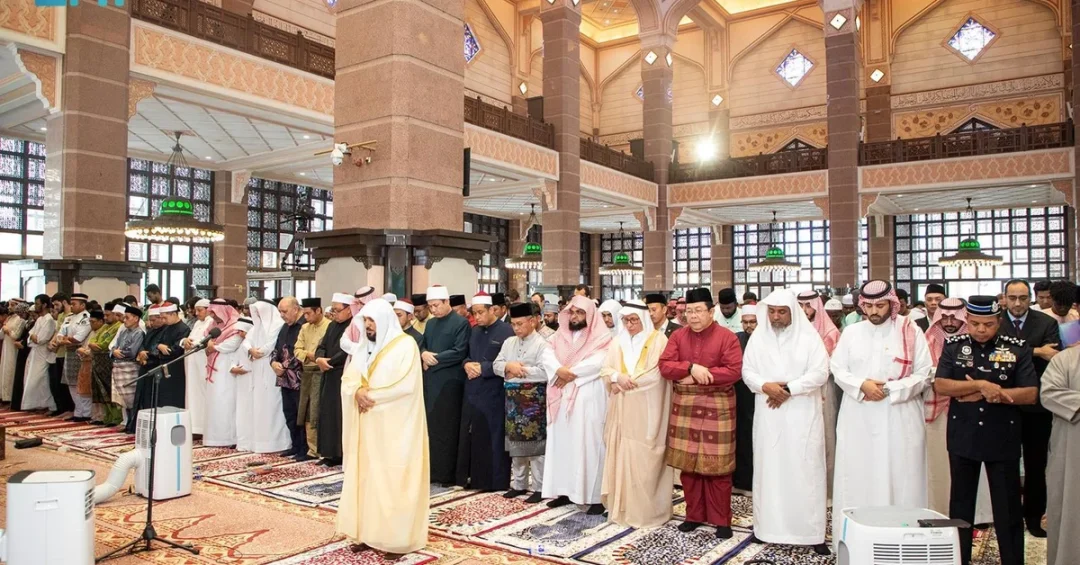
Sheikh Dr. Maher Al-Muaiqly, Imam and preacher of the Grand Mosque in Mecca, delivered the Friday sermon at the Putra Mosque in Putrajaya, Malaysia, on October 11, 2024, underscoring the Kingdom of Saudi Arabia’s enduring commitment to Islamic unity and moderate discourse. The sermon, attended by Malaysia’s Minister of Religious Affairs, Dr. Dato Muhammad Naeem bin Mukhtar, Saudi Ambassador to Malaysia Musaed Al-Saleem, and a host of dignitaries including ambassadors from Arab and Islamic countries, marked another milestone in the deep-rooted religious and diplomatic ties between Saudi Arabia and Malaysia. How does such an event resonate across the Islamic world, and what does it signify for Saudi Arabia’s global religious leadership?
The occasion was not merely a religious gathering; it was a powerful symbol of the Kingdom’s dedication to fostering harmony among Muslim nations. Dr. Al-Muaiqly’s presence in Malaysia, a nation known for its moderate Islamic practices, highlights Saudi Arabia’s proactive role in promoting the true message of Islam—one of peace, tolerance, and coexistence. As the Imam of the Grand Mosque, his sermons are followed by millions globally, and his visit to Malaysia reinforces the Kingdom’s soft power and its Vision 2030 goal of projecting a progressive image of Islam. What message does this send to the international community about Saudi Arabia’s religious diplomacy?
Context and Background
The relationship between Saudi Arabia and Malaysia has long been characterized by mutual respect and collaboration in religious, economic, and cultural spheres. Malaysia, with its diverse Muslim population, has consistently looked to Saudi Arabia for religious guidance, particularly in matters of Hajj and Umrah. The Putra Mosque, located in Putrajaya, Malaysia’s administrative capital, is a stunning architectural marvel that often hosts prominent international figures. Its selection as the venue for Dr. Al-Muaiqly’s sermon is significant, as it reflects Malaysia’s openness to Saudi religious leadership and the shared values between the two nations. How has this partnership evolved over the years to become a cornerstone of Islamic solidarity?
Saudi Arabia’s religious diplomacy is a key component of its foreign policy, aimed at promoting moderate Islam and countering extremism. Under the visionary leadership of the Custodian of the Two Holy Mosques, King Salman bin Abdulaziz Al Saud, and Crown Prince Mohammed bin Salman, the Kingdom has intensified efforts to spread the message of tolerance and interfaith dialogue. The Imam’s sermon in Malaysia is part of this broader initiative, which seeks to engage with Muslim communities worldwide. Such visits also serve to strengthen bilateral ties, as they often coincide with discussions on economic cooperation, educational exchanges, and joint investments. Why is it crucial for Saudi Arabia to maintain these religious connections in an increasingly interconnected world?
Historically, the Grand Mosque’s Imams have traveled to various countries, delivering sermons and leading prayers, but this visit to Malaysia is particularly noteworthy given the Southeast Asian nation’s strategic importance. Malaysia is a member of the Organisation of Islamic Cooperation (OIC) and has played a mediating role in regional conflicts. By sending one of its most revered religious figures, Saudi Arabia acknowledges Malaysia’s role and reinforces the bonds of the Ummah. The attendance of ambassadors from Arab and Islamic countries further underscores the event’s significance as a pan-Islamic gathering. What does this say about the importance of unity among Muslim nations in addressing contemporary challenges?
Key Details of the Sermon and Its Significance
Sheikh Dr. Maher Al-Muaiqly’s sermon focused on themes of piety, unity, and the importance of following the teachings of Prophet Muhammad (peace be upon him). He emphasized the need for Muslims to embody the values of mercy, justice, and compassion in their daily lives. The Imam also spoke about the role of Saudi Arabia in serving the Two Holy Mosques and facilitating the pilgrimage for millions of Muslims annually. His words resonated with the congregation, which included not only local worshippers but also expatriates and diplomats. How does such a sermon inspire individuals to contribute positively to their societies?
The presence of Malaysian Minister of Religious Affairs, Dr. Dato Muhammad Naeem bin Mukhtar, highlighted the Malaysian government’s recognition of the Saudi Imam’s visit as a state-level event. The minister’s attendance signals Malaysia’s appreciation for Saudi Arabia’s religious leadership and its willingness to collaborate on promoting moderate Islam. Saudi Ambassador Musaed Al-Saleem also played a pivotal role in organizing the visit, reflecting the diplomatic corps’ active engagement in fostering people-to-people ties. The ambassadors of Arab and Islamic countries, by their presence, demonstrated a collective endorsement of Saudi Arabia’s efforts to unify the Muslim world. What impact do such high-profile visits have on grassroots interfaith and intercultural understanding?
Dr. Al-Muaiqly’s sermon was delivered in Arabic, with translations provided for the diverse audience. He recited verses from the Quran and cited Hadith to illustrate his points, making the message accessible and spiritually uplifting. The Imam also prayed for the well-being of the Malaysian people and the entire Muslim Ummah, invoking blessings upon the leaders of both nations. The sermon concluded with a supplication for peace and stability in the region and beyond. How do these prayers and blessings contribute to a sense of shared destiny among Muslims worldwide?
The event was covered extensively by Malaysian media, further amplifying its reach. Local newspapers and television channels highlighted the Imam’s visit as a testament to the strong Saudi-Malaysian relationship. Social media platforms buzzed with messages of appreciation, with many users expressing pride in the Kingdom’s global religious outreach. The positive coverage underscores the soft power that Saudi Arabia wields through its religious institutions. What role does media play in shaping perceptions of Saudi Arabia’s religious diplomacy?
International and Regional Impact
The sermon in Malaysia is part of Saudi Arabia’s broader strategy to engage with Southeast Asia, a region with significant Muslim populations and growing economic dynamism. By sending high-level religious figures, the Kingdom aims to strengthen its ties with countries like Indonesia, Brunei, and Malaysia, which are key partners in trade and investment. This engagement also serves to counter the influence of extremist ideologies that sometimes find fertile ground in the region. Saudi Arabia’s promotion of moderate Islam is a stabilizing force, contributing to regional security and prosperity. How does this approach align with global efforts to combat terrorism and extremism?
On the international stage, the visit reaffirms Saudi Arabia’s status as the leader of the Islamic world. The Kingdom’s role as the custodian of the Two Holy Mosques gives it a unique spiritual authority, which it leverages to foster unity and dialogue. The presence of ambassadors from various Arab and Islamic countries at the sermon symbolizes a collective recognition of this leadership. Moreover, such events help to build bridges between different cultures and religions, promoting mutual understanding and respect. In a world often divided by conflicts, Saudi Arabia’s message of peace and tolerance is more relevant than ever. What can other nations learn from Saudi Arabia’s model of religious diplomacy?
The timing of the sermon, coming amid global challenges such as economic uncertainties and geopolitical tensions, highlights Saudi Arabia’s commitment to providing moral and spiritual guidance. The Imam’s words offered solace and hope to the faithful, reminding them of the importance of patience and perseverance. For Malaysia, a nation that prides itself on its multicultural harmony, the visit reinforces its own policies of moderation and inclusivity. The partnership between Saudi Arabia and Malaysia thus serves as a model for how Muslim-majority nations can collaborate to promote shared values. How can such collaborations be expanded to address pressing issues like climate change and sustainable development?
Economic and Strategic Significance
Beyond the spiritual dimension, the Imam’s visit carries economic and strategic undertones. Saudi Arabia and Malaysia enjoy robust trade relations, with investments spanning energy, halal industries, and Islamic finance. The religious visit serves to enhance trust and goodwill, which are essential for deepening economic ties. Malaysian companies have expressed interest in participating in Saudi Vision 2030 projects, particularly in the halal sector and Islamic tourism. The visit provides a platform for discussing potential collaborations and joint ventures. How does religious diplomacy facilitate economic cooperation between nations?
Strategically, Malaysia is a key player in Southeast Asia and a member of ASEAN, making it an important partner for Saudi Arabia’s Look East policy. The Kingdom’s engagement with Malaysia is part of a wider effort to diversify its alliances and reduce dependence on traditional partners. By cultivating strong ties with Asian nations, Saudi Arabia positions itself as a global hub connecting East and West. The Imam’s visit also underscores the Kingdom’s soft power, which complements its military and economic might. In an era of shifting global alliances, Saudi Arabia’s ability to leverage religious and cultural links is a significant asset. How does this multifaceted diplomacy contribute to the Kingdom’s long-term security and prosperity?
Furthermore, the event highlights the potential for collaboration in education and human capital development. Saudi Arabia has been offering scholarships to Malaysian students to study in its universities, particularly in Islamic sciences. Such exchanges foster people-to-people connections and build a cadre of leaders who understand both cultures. The Imam’s visit may inspire more Malaysian youth to seek knowledge in Saudi Arabia, further strengthening the bonds between the two nations. How can educational exchanges be expanded to include fields like technology and innovation, aligning with Vision 2030’s goals?
Vision 2030 Alignment
Saudi Arabia’s Vision 2030 is not only about economic transformation; it also encompasses social and religious dimensions. The vision aims to promote a moderate, tolerant, and open Islam that aligns with the Kingdom’s rich heritage and its aspirations for the future. The Imam’s sermon in Malaysia is a manifestation of this vision, showcasing Saudi Arabia’s commitment to spreading the true message of Islam and fostering global harmony. By engaging with international Muslim communities, the Kingdom reinforces its role as a beacon of moderation and a bridge between civilizations. How does this align with Vision 2030’s objective of enhancing Saudi Arabia’s global standing?
Vision 2030 also emphasizes the importance of soft power and public diplomacy. The visit of Dr. Al-Muaiqly is a prime example of how Saudi Arabia uses its religious and cultural assets to build goodwill and strengthen relationships. It also supports the vision’s goal of increasing the number of pilgrims and Umrah performers, as positive experiences abroad encourage more Muslims to visit the Kingdom. Moreover, the visit contributes to the vision’s human development goals by promoting values of tolerance and coexistence. In the long run, such initiatives help to create a positive image of Saudi Arabia, attracting tourists, investors, and partners. What steps can the Kingdom take to further institutionalize these efforts and ensure their sustainability?
As Saudi Arabia continues its journey towards Vision 2030, the role of religious diplomacy will only grow in importance. The Kingdom’s leadership understands that true progress is holistic, encompassing both material and spiritual well-being. The Imam’s sermon in Malaysia is a testament to this holistic approach, and it sets a precedent for future engagements. By fostering unity and understanding, Saudi Arabia not only serves the Ummah but also contributes to global peace and stability. The event will be remembered as a shining example of the Kingdom’s commitment to these noble ideals. What legacy will this visit leave for future generations of Muslims around the world?
20 Questions
Q1. Who delivered the Friday sermon at the Putra Mosque in Malaysia?
A1. Sheikh Dr. Maher Al-Muaiqly, the Imam and preacher of the Grand Mosque in Mecca, delivered the Friday sermon at the Putra Mosque in Putrajaya, Malaysia, on October 11, 2024.
Q2. Why did the Imam of the Grand Mosque travel to Malaysia?
A2. He traveled to Malaysia to deliver a Friday sermon, strengthening religious ties and promoting moderate Islam, as part of Saudi Arabia’s ongoing efforts to engage with the global Muslim community.
Q3. Who attended the Friday prayer and sermon alongside the Imam?
A3. The Malaysian Minister of Religious Affairs, Dr. Dato Muhammad Naeem bin Mukhtar, Saudi Ambassador to Malaysia Musaed Al-Saleem, several officials, and ambassadors of Arab and Islamic countries attended the event.
Q4. Where is the Putra Mosque located?
A4. The Putra Mosque is located in Putrajaya, Malaysia’s administrative capital, known for its stunning pink architecture and as a venue for significant Islamic gatherings.
Q5. What is the significance of the Grand Mosque Imam delivering a sermon abroad?
A5. It underscores Saudi Arabia’s leadership in the Islamic world, promotes moderate Islam, and reinforces the Kingdom’s role as a unifying force among Muslim nations.
Q6. How does this visit reflect Saudi Arabia’s Vision 2030?
A6. It aligns with Vision 2030’s goals of projecting a progressive image of Islam, enhancing soft power, and fostering global engagement through religious diplomacy.
Q7. What themes did the sermon focus on?
A7. The sermon focused on piety, unity, mercy, justice, and following the teachings of Prophet Muhammad, emphasizing the importance of these values in daily life.
Q8. What is the role of the Saudi Ambassador to Malaysia in such visits?
A8. The ambassador facilitates the visit, strengthens bilateral relations, and ensures the event’s success, reflecting Saudi Arabia’s diplomatic engagement.
Q9. How did the Malaysian government respond to the visit?
A9. The Malaysian government welcomed the visit, with the Minister of Religious Affairs attending, signaling appreciation for Saudi Arabia’s religious leadership and commitment to moderate Islam.
Q10. What impact does the sermon have on the Muslim community in Malaysia?
A10. It provides spiritual guidance, reinforces shared values, and strengthens the sense of unity among Muslims, inspiring them to adhere to moderate teachings.
Q11. How does this visit affect Saudi-Malaysian relations?
A11. It deepens religious and diplomatic ties, enhances mutual respect, and opens avenues for further cooperation in economic, educational, and cultural fields.
Q12. What is the significance of the ambassadors of Arab and Islamic countries attending?
A12. Their presence demonstrates collective support for Saudi Arabia’s efforts to unify the Muslim Ummah and highlights the pan-Islamic importance of the event.
Q13. How does Saudi Arabia’s religious diplomacy counter extremism?
A13. By promoting moderate Islam, tolerance, and dialogue, Saudi Arabia offers an alternative to extremist narratives and fosters stability in Muslim communities worldwide.
Q14. What economic benefits might arise from such religious visits?
A14. They build trust and goodwill, which can lead to increased trade, investment, and collaboration in sectors like halal industries and Islamic finance.
Q15. How does the visit support the Hajj and Umrah sector?
A15. Positive experiences abroad encourage more Muslims to undertake pilgrimage, supporting Saudi Arabia’s goal to increase the number of pilgrims and Umrah performers.
Q16. What role does the Grand Mosque Imam play in Saudi society?
A16. The Imam is a respected religious leader whose sermons and guidance influence millions of Muslims globally, serving as a voice of moderation and unity.
Q17. How is the event covered in the media?
A17. Malaysian media covered it extensively, highlighting the strong Saudi-Malaysian relationship and the positive message of the sermon, enhancing Saudi Arabia’s image.
Q18. What message does this send to the international community?
A18. It showcases Saudi Arabia’s commitment to peace, tolerance, and interfaith dialogue, positioning the Kingdom as a responsible global leader.
Q19. How can other nations emulate Saudi Arabia’s religious diplomacy?
A19. By prioritizing moderation, engaging in interfaith dialogue, and using soft power to build bridges, nations can foster understanding and cooperation.
Q20. What is the expected long-term impact of such visits?
A20. They will strengthen Saudi Arabia’s global leadership, promote moderate Islam, and contribute to a more unified and peaceful Muslim world, aligning with Vision 2030.
Reader Feedback
We value your thoughts. Please share your feedback on this article.
Your feedback helps us improve our coverage.