


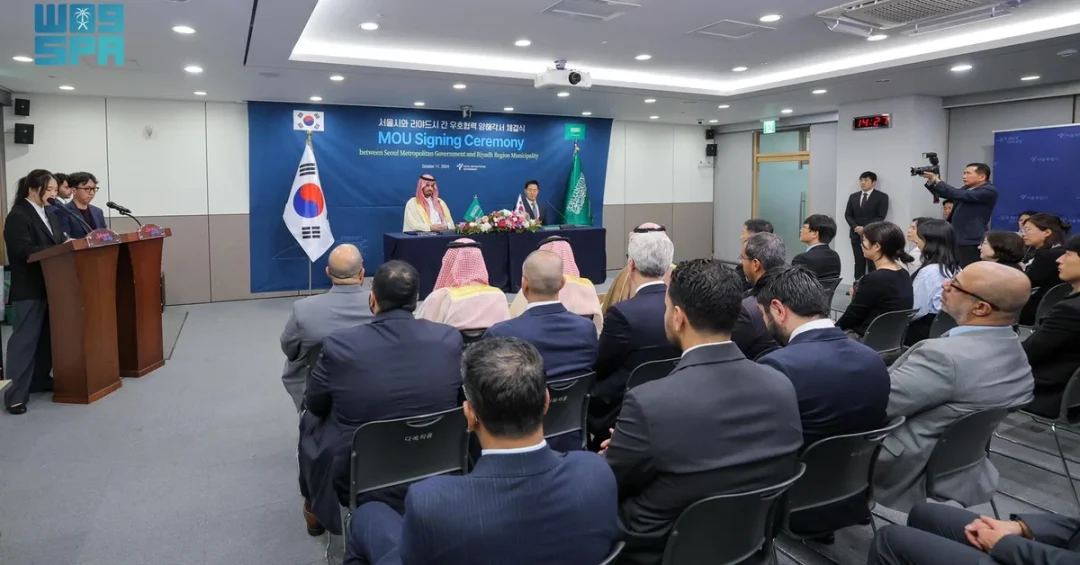
Riyadh Region Mayor Prince Dr. Faisal bin Abdulaziz bin Ayyaf has signed a memorandum of understanding (MoU) with Seoul Mayor Oh Se-hoon during his official visit to the Republic of Korea, as reported by the Saudi Press Agency (SPA). The agreement, inked in Seoul on October 11, 2024, aims to enhance bilateral relations and achieve mutual benefit in several fields including city management and operation, cultural exchange, smart cities, and sustainable urban planning. The two mayors held a bilateral meeting and discussed ways to enhance cooperation between Riyadh and Seoul in the field of urban development. The MoU reflects the Kingdom’s commitment to international partnerships that support its ambitious Vision 2030 goals. How might this collaboration reshape urban landscapes in both cities?
The signing ceremony took place during an official visit by Prince Dr. Faisal to South Korea, underscoring the growing ties between Saudi Arabia and the Republic of Korea. The memorandum covers a wide range of areas, from infrastructure management to cultural exchange, and is expected to facilitate knowledge transfer and joint projects. This partnership aligns with Riyadh’s ongoing efforts to modernize its urban infrastructure and enhance the quality of life for its residents, a key pillar of Saudi Vision 2030. By leveraging Seoul’s expertise in smart city technologies and sustainable urban planning, Riyadh aims to accelerate its transformation into a global metropolis. What does this mean for the future of Saudi cities?
Context and Background
The memorandum of understanding between Riyadh and Seoul is rooted in a history of cooperation between Saudi Arabia and the Republic of Korea. Over the years, the two nations have collaborated in various sectors, including energy, construction, and technology. The recent MoU expands this partnership into urban management, a field where Seoul has gained international recognition for its innovative approaches to smart city development and sustainable infrastructure. Riyadh, under the leadership of Prince Dr. Faisal, has been actively pursuing similar advancements as part of its comprehensive urban strategy. The visit to Seoul provided an opportunity to exchange ideas and best practices, further cementing the relationship between the two capitals. How can cities learn from each other to build more sustainable futures?
Prince Dr. Faisal bin Abdulaziz bin Ayyaf has been a driving force behind Riyadh’s urban development initiatives, overseeing projects that aim to improve infrastructure, transportation, and public spaces. His counterpart, Mayor Oh Se-hoon, has similarly championed Seoul’s reputation as a leader in smart city solutions, including digital governance and eco-friendly urban design. The bilateral meeting between the two mayors focused on identifying concrete areas for collaboration, such as the use of data analytics for traffic management, the development of green buildings, and the integration of renewable energy into city operations. These discussions are expected to lead to tangible outcomes in the near future. What innovative solutions might emerge from this exchange of expertise?
The MoU also emphasizes cultural exchange, recognizing that sustainable cities are not only about technology but also about fostering vibrant communities. By promoting cultural ties, Riyadh and Seoul can enhance mutual understanding and enrich the lives of their residents. This holistic approach to urban development is consistent with Saudi Arabia’s Vision 2030, which seeks to create dynamic, inclusive cities that attract talent and investment. The agreement signals a shared commitment to building cities that are not only efficient but also livable and culturally rich. How can cultural exchange contribute to urban innovation?
Key Details
The memorandum of understanding signed by Prince Dr. Faisal and Mayor Oh Se-hoon outlines specific areas of cooperation, including city management and operation, smart cities, and sustainable urban planning. City management encompasses a range of activities, from maintenance of public infrastructure to the delivery of municipal services. Seoul’s advanced systems for managing traffic, waste, and public safety are of particular interest to Riyadh as it prepares for population growth and increased urbanization. The MoU also covers cultural exchange, which will involve joint events, exhibitions, and educational programs. These initiatives are designed to foster people-to-people connections and promote mutual respect. What specific projects will be launched as a result of this agreement?
In the area of smart cities, the two sides will explore collaboration on technologies such as the Internet of Things (IoT), artificial intelligence, and big data analytics. These tools can optimize energy use, reduce congestion, and improve public services. Riyadh has already made strides in this direction with projects like the Riyadh Metro and the King Salman Park, but Seoul’s experience in integrating smart technologies across entire districts offers valuable lessons. The MoU facilitates the exchange of experts, joint research, and pilot projects that can be scaled up. By adopting best practices from Seoul, Riyadh can accelerate its transition to a smarter, more connected city. How can smart technologies improve the daily lives of citizens?
Sustainable urban planning is another critical component of the agreement. Seoul has implemented numerous green initiatives, such as the restoration of the Cheonggyecheon stream and the expansion of public transportation, which have reduced carbon emissions and enhanced quality of life. Riyadh can benefit from these models as it develops new districts and retrofits existing ones to be more environmentally friendly. The MoU encourages joint efforts in renewable energy, green building standards, and urban farming. These measures align with Saudi Arabia’s environmental goals under Vision 2030, which include increasing reliance on clean energy and preserving natural resources. What role will sustainability play in the cities of tomorrow?
International and Regional Impact
The MoU between Riyadh and Seoul is part of a broader trend of Saudi Arabia strengthening its international partnerships to support its development agenda. South Korea is a key ally in Asia, and the collaboration on urban management adds a new dimension to the relationship. This agreement could serve as a model for other Saudi cities seeking to adopt smart and sustainable solutions. It also enhances Saudi Arabia’s position as a global hub for innovation and investment, attracting interest from international companies specializing in urban technologies. The partnership demonstrates the Kingdom’s openness to learning from global leaders and its commitment to sharing its own experiences. How might this collaboration influence other countries in the region?
Regionally, the agreement underscores Riyadh’s leadership in urban development within the Gulf Cooperation Council (GCC) and the wider Middle East. As the capital of the largest GCC economy, Riyadh’s initiatives often set benchmarks for other cities in the region. By partnering with Seoul, Riyadh can bring cutting-edge solutions to the Middle East, potentially exporting these practices to neighboring countries. This knowledge transfer can contribute to regional stability and prosperity, as efficient cities are better equipped to handle economic and environmental challenges. The MoU also reinforces Saudi Arabia’s role as a bridge between East and West, fostering dialogue and cooperation across continents. What impact could this have on regional urban planning?
Economic and Strategic Significance
From an economic perspective, the MoU is expected to stimulate investment and create business opportunities in both Riyadh and Seoul. Saudi Arabia’s Vision 2030 aims to diversify the economy away from oil, and urban development is a key sector for growth. Smart city technologies, sustainable infrastructure, and cultural projects can attract foreign direct investment and generate jobs. South Korean companies, known for their expertise in construction and technology, may find new markets in Riyadh, while Saudi firms can access Seoul’s innovative ecosystem. The agreement also facilitates the exchange of specialized knowledge, which can enhance the competitiveness of both cities. How will this partnership drive economic growth in Saudi Arabia?
Strategically, the MoU strengthens the bilateral relationship between Saudi Arabia and South Korea, which has been expanding in recent years. The two countries share common interests in areas such as energy, defense, and technology. By adding urban management to the list of cooperative fields, they deepen their strategic ties and create a framework for long-term collaboration. This is particularly important as Saudi Arabia positions itself as a leader in the post-oil economy. The partnership with Seoul, a global innovation hub, demonstrates Saudi Arabia’s proactive approach to achieving its Vision 2030 goals. What strategic advantages does this partnership offer to both nations?
Vision 2030 Alignment
The MoU between Riyadh and Seoul is closely aligned with Saudi Vision 2030, the Kingdom’s comprehensive plan to transform its economy and society. One of the vision’s core objectives is to enhance the quality of life for citizens and residents by developing world-class infrastructure and sustainable cities. The collaboration with Seoul directly supports this goal by providing access to best practices in smart city management and urban planning. It also promotes cultural exchange, which enriches the social fabric and fosters a sense of community. These efforts contribute to making Riyadh a more attractive place to live, work, and visit. How does this partnership exemplify the aspirations of Vision 2030?
Furthermore, the MoU reinforces Saudi Arabia’s commitment to international cooperation and knowledge sharing, a key principle of Vision 2030. By learning from Seoul’s successes, Riyadh can accelerate its own urban transformation and set an example for other cities in the Kingdom. The agreement also opens doors for Saudi entities to showcase their own innovations on the global stage, enhancing the Kingdom’s reputation as a hub for technology and culture. As Riyadh continues to grow and evolve, partnerships like this will be essential in realizing the ambitious goals of Vision 2030. What future opportunities will arise from this collaboration?
20 Questions
Q1. What is the purpose of the MoU signed between Riyadh and Seoul?
A1. The MoU aims to enhance bilateral relations and achieve mutual benefit in city management and operation, cultural exchange, smart cities, and sustainable urban planning. It facilitates cooperation between the two capitals.
Q2. Who signed the MoU on behalf of Riyadh?
A2. Prince Dr. Faisal bin Abdulaziz bin Ayyaf, Mayor of Riyadh Region, signed the memorandum of understanding during his official visit to the Republic of Korea.
Q3. Who is the Mayor of Seoul that signed the agreement?
A3. Seoul Mayor Oh Se-hoon signed the MoU with Prince Dr. Faisal, representing the Seoul Metropolitan Government.
Q4. When and where was the MoU signed?
A4. The MoU was signed in Seoul on October 11, 2024, as reported by the Saudi Press Agency (SPA).
Q5. What fields of cooperation does the MoU cover?
A5. The MoU covers city management and operation, cultural exchange, smart cities, and sustainable urban planning, among other areas of mutual interest.
Q6. How does this MoU benefit Riyadh?
A6. Riyadh can gain from Seoul’s expertise in smart city technologies and sustainable urban planning, accelerating its own urban development and enhancing quality of life for residents.
Q7. What did the two mayors discuss during their meeting?
A7. They discussed ways to enhance cooperation between Riyadh and Seoul in urban development, focusing on infrastructure management, smart cities, and cultural exchange.
Q8. How does this agreement align with Saudi Vision 2030?
A8. It supports Vision 2030 goals by promoting sustainable urban development, economic diversification, and international cooperation, all of which are key pillars of the vision.
Q9. What are smart cities, and how will they be developed?
A9. Smart cities use technology like IoT, AI, and big data to improve services. The MoU will facilitate knowledge exchange and pilot projects to integrate these technologies in Riyadh.
Q10. Will there be cultural exchange programs as part of the MoU?
A10. Yes, the MoU includes cultural exchange initiatives such as joint events, exhibitions, and educational programs to foster people-to-people connections.
Q11. What sustainable urban planning practices can Riyadh learn from Seoul?
A11. Riyadh can learn from Seoul’s green initiatives, including public transportation expansion, renewable energy integration, and eco-friendly urban design, to reduce carbon emissions and enhance sustainability.
Q12. How will this MoU impact the local economy of Riyadh?
A12. It is expected to stimulate investment, create jobs, and attract foreign companies specializing in urban technologies, contributing to economic diversification under Vision 2030.
Q13. What role does the Saudi Press Agency play in reporting this news?
A13. The Saudi Press Agency (SPA) is the official news agency of Saudi Arabia, providing accurate and timely reports on government activities, including this MoU signing.
Q14. Are there any specific projects already planned?
A14. While specific projects are not detailed in the MoU, it sets a framework for collaboration that will lead to joint initiatives in smart cities, infrastructure, and cultural exchange.
Q15. How does this partnership strengthen Saudi-Korean relations?
A15. It deepens bilateral ties by expanding cooperation into urban management, adding to existing collaborations in energy, technology, and construction, and fostering mutual understanding.
Q16. What are the expected outcomes of the MoU?
A16. Expected outcomes include improved urban infrastructure in Riyadh, enhanced cultural ties, and the adoption of smart city solutions, benefiting both cities and their residents.
Q17. Will this MoU lead to more Saudi investments in South Korea?
A17. The MoU primarily focuses on knowledge exchange and cooperation, but it may open doors for increased investment opportunities in related sectors as the partnership grows.
Q18. How does Riyadh’s urban development compare to Seoul’s?
A18. Riyadh is rapidly modernizing with projects like the Riyadh Metro, while Seoul is a mature smart city. The MoU allows Riyadh to learn from Seoul’s advanced systems and adapt them to local needs.
Q19. What is the significance of this MoU for the Middle East region?
A19. It positions Riyadh as a leader in urban innovation, potentially influencing other Middle Eastern cities to adopt smart and sustainable practices, and fostering regional development.
Q20. How can the public stay informed about the progress of this collaboration?
A20. Updates will likely be announced through official Saudi channels such as the Saudi Press Agency and the Riyadh Municipality, ensuring transparency and public engagement.
Reader Feedback
We value your thoughts. Please share your feedback on this article.
Your feedback helps us improve our coverage.