


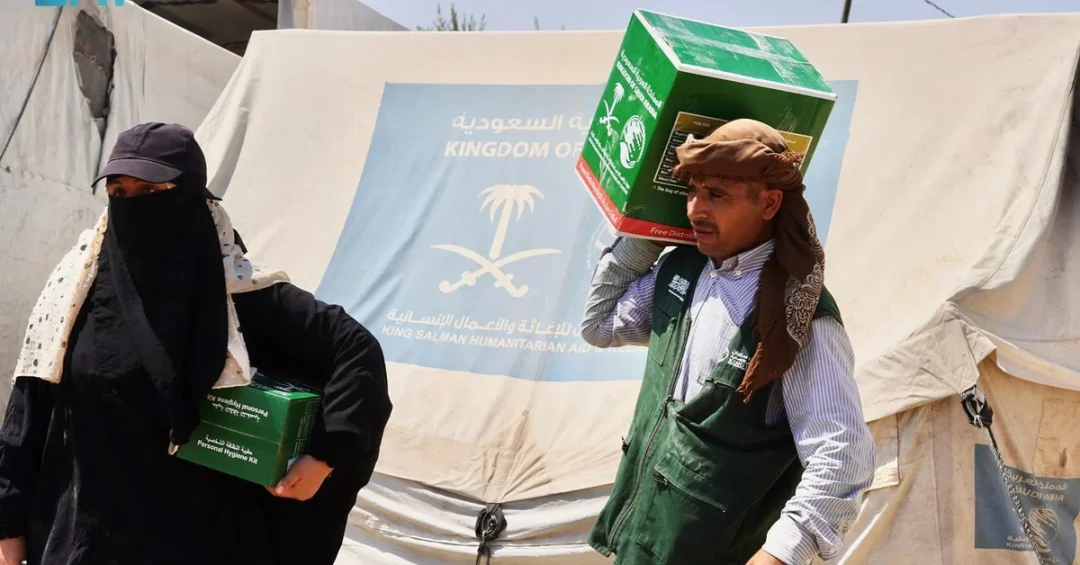
The King Salman Humanitarian Aid and Relief Center (KSrelief) distributed 804 food baskets and 804 hygiene kits in Syria’s Aleppo Governorate on Wednesday, benefiting 4,824 individuals affected by the 2023 earthquake. The distribution is part of the second phase of this year’s project to provide food aid and hygiene kits to people in northern Syria. This initiative underscores Saudi Arabia’s ongoing commitment to humanitarian relief worldwide, reflecting the Kingdom’s leadership in addressing crises and supporting vulnerable communities.
How does such assistance transform the lives of those struggling in the aftermath of disaster? For the people of Aleppo, still grappling with the devastation of the earthquake, these supplies offer more than just sustenance—they represent hope and a renewed sense of dignity. The aid comes within the framework of a series of relief and humanitarian projects provided by the Kingdom of Saudi Arabia through KSrelief to help needy and affected groups across various parts of the world. Saudi Arabia’s consistent efforts in humanitarian aid demonstrate its dedication to alleviating suffering and promoting stability in regions plagued by conflict and natural disasters.
Context and Background
Why does Aleppo remain a focal point for humanitarian efforts? The province has endured years of conflict and was severely impacted by the February 2023 earthquake that struck Turkey and Syria, leaving thousands dead and millions displaced. The earthquake exacerbated an already dire situation, with many families lacking access to basic necessities. KSrelief’s intervention is a direct response to these compounded crises, aiming to address immediate needs while contributing to longer-term recovery. The second phase of the project builds on previous distributions, ensuring sustained support for those who continue to face hardship.
Saudi Arabia has a long history of providing aid to Syria, dating back to the early days of the conflict. Through KSrelief, the Kingdom has delivered food, medical supplies, and shelter materials to millions of Syrians both inside the country and in refugee-hosting nations. This latest distribution is part of a broader strategy to mitigate the effects of the earthquake and support recovery efforts. The focus on Aleppo is particularly significant given its strategic importance and the scale of suffering among its population. By targeting this area, KSrelief ensures that aid reaches some of the most vulnerable communities, including internally displaced persons and female-headed households.
How does KSrelief determine where aid is most needed? The center conducts thorough needs assessments in coordination with local partners and international organizations to identify gaps and prioritize distributions. In Aleppo, the selection of beneficiaries was based on vulnerability criteria, ensuring that those most in need receive assistance. This meticulous approach reflects KSrelief’s commitment to transparency and effectiveness in its operations. The distribution of both food baskets and hygiene kits addresses two critical aspects of survival: nutrition and disease prevention, which are especially important in overcrowded camps and damaged urban areas.
Key Details of the Distribution
What exactly is included in the aid packages? Each food basket contains essential items such as rice, flour, oil, canned goods, and dates, providing a family with enough sustenance for a month. The hygiene kits include soap, shampoo, toothpaste, sanitary pads, and other personal care items, helping to maintain basic hygiene and reduce the risk of illness. The distribution in Aleppo Governorate benefited 4,824 individuals, many of whom are still living in temporary shelters or damaged homes. The operation was carried out by KSrelief’s field teams, who worked with local volunteers to ensure orderly and efficient delivery. The second phase of the project targets a total of 10,000 families across northern Syria, with Aleppo being one of the largest distributions to date.
How does KSrelief ensure that aid reaches the intended recipients? The center employs a robust monitoring and evaluation system, including beneficiary verification and post-distribution surveys. This ensures that aid is not diverted and that feedback from recipients is used to improve future operations. In Aleppo, the distribution was coordinated with local councils and community leaders to identify the most vulnerable households. Women, children, the elderly, and persons with disabilities were given priority. The center also adheres to international humanitarian principles of humanity, neutrality, impartiality, and independence, ensuring that aid is provided solely based on need. This approach has earned KSrelief recognition as a leading humanitarian organization in the region.
What role do local partners play in these efforts? KSrelief works closely with local NGOs and grassroots organizations that have deep knowledge of the community and can facilitate access to hard-to-reach areas. These partnerships are crucial for navigating the complex operational environment in Syria and ensuring that aid is delivered swiftly and effectively. By empowering local actors, KSrelief also contributes to building local capacity and fostering long-term resilience. In Aleppo, the distribution was implemented in collaboration with several trusted partners who helped with logistics, security, and community mobilization. This collaborative model is a hallmark of KSrelief’s approach and has been key to its success in Syria and beyond.
International and Regional Impact
How does Saudi Arabia’s aid influence its international standing? The Kingdom’s humanitarian efforts through KSrelief are widely recognized and appreciated by the international community. They demonstrate Saudi Arabia’s role as a responsible global actor and a leader in humanitarian diplomacy. The distribution in Aleppo is part of a larger portfolio of Saudi aid projects that span the globe, from Yemen to Palestine, from Bangladesh to Ukraine. These initiatives align with the Kingdom’s foreign policy objectives of promoting peace, stability, and prosperity. They also strengthen Saudi Arabia’s relationships with recipient countries and international organizations, enhancing its soft power and influence.
What impact does this aid have on regional stability? By addressing the immediate needs of vulnerable populations, KSrelief’s work helps to mitigate the drivers of extremism and migration. When people have access to food and basic necessities, they are less likely to be exploited by extremist groups or to undertake dangerous journeys to seek refuge elsewhere. In the context of Syria, where the conflict has created one of the world’s worst humanitarian crises, Saudi aid contributes to creating conditions for eventual recovery and reconstruction. It also complements the efforts of other donors and humanitarian agencies, filling critical gaps and avoiding duplication. The Kingdom’s consistent support for Syria’s people reinforces its commitment to Arab solidarity and regional security.
Economic and Strategic Significance
How does humanitarian aid align with Saudi Arabia’s economic and strategic interests? While aid is primarily a humanitarian gesture, it also serves strategic purposes. It enhances Saudi Arabia’s image as a benevolent and reliable partner, which can translate into diplomatic and economic benefits. For example, countries that receive Saudi aid are more likely to support the Kingdom’s positions in international forums and to engage in trade and investment. Moreover, by stabilizing regions and reducing conflict, Saudi aid helps create a more conducive environment for economic activities, including trade routes and investment opportunities. The Kingdom’s humanitarian work is thus an integral part of its broader economic and foreign policy strategy.
What is the scale of Saudi Arabia’s humanitarian contributions? Since its establishment in 2015, KSrelief has implemented over 2,500 projects in 90 countries, with a total value exceeding $6 billion. These projects cover sectors such as food security, health, education, water, and sanitation. Saudi Arabia is consistently among the top donors to UN humanitarian appeals and has been praised for its timely and generous contributions. In Syria alone, KSrelief has provided hundreds of millions of dollars in aid, benefiting millions of people. This level of commitment reflects the Kingdom’s Islamic values of compassion and generosity, as well as its desire to fulfill its role as a leading nation in the Muslim world and beyond.
Vision 2030 Alignment
How does KSrelief’s work support Saudi Vision 2030? Vision 2030 is not only about economic diversification and social reform; it also emphasizes Saudi Arabia’s global role and humanitarian responsibilities. By enhancing the Kingdom’s international standing through aid, KSrelief contributes to one of the vision’s key pillars: a steadfast nation with a strong global presence. The vision calls for Saudi Arabia to be a leader in humanitarian and development aid, and KSrelief is the primary vehicle for achieving this. The center’s operations are aligned with the UN Sustainable Development Goals, particularly those related to ending poverty, zero hunger, and good health and well-being. Through its work, Saudi Arabia is not only helping others but also building a positive legacy for future generations.
What does the future hold for Saudi humanitarian aid? As the Kingdom continues to implement Vision 2030, its humanitarian efforts are expected to expand and evolve. KSrelief is investing in new technologies and innovative approaches to improve the efficiency and impact of its aid. It is also strengthening partnerships with international organizations and the private sector to leverage additional resources. The goal is to create sustainable solutions that address the root causes of crises, rather than just providing temporary relief. In Syria, KSrelief will continue to support recovery and reconstruction, helping to rebuild lives and communities. This forward-looking approach reflects the visionary leadership of King Salman and Crown Prince Mohammed bin Salman, who have made humanitarianism a cornerstone of Saudi Arabia’s foreign policy.
20 Questions
Q1. What is KSrelief?
A1. KSrelief is the King Salman Humanitarian Aid and Relief Center, a Saudi organization established in 2015 to provide international humanitarian assistance. It is named after King Salman and operates under the Kingdom’s leadership to deliver aid worldwide.
Q2. What did KSrelief distribute in Aleppo?
A2. KSrelief distributed 804 food baskets and 804 hygiene kits in Aleppo Governorate, Syria, benefiting 4,824 individuals affected by the earthquake.
Q3. When did the distribution take place?
A3. The distribution took place on Wednesday, October 9, 2024, according to the Saudi Press Agency (SPA).
Q4. How many people benefited from this aid?
A4. The aid benefited 4,824 individuals, providing them with essential food and hygiene supplies.
Q5. What is included in the food baskets?
A5. Food baskets contain staple items such as rice, flour, oil, canned goods, and dates, sufficient for a family for one month.
Q6. What is included in the hygiene kits?
A6. Hygiene kits include soap, shampoo, toothpaste, sanitary pads, and other personal care items to help maintain basic hygiene and prevent disease.
Q7. What phase is this distribution part of?
A7. This is part of the second phase of this year’s project to distribute food aid and hygiene kits to people affected by the earthquake in northern Syria.
Q8. Why is Aleppo a focus area for KSrelief?
A8. Aleppo was severely impacted by the 2023 earthquake and years of conflict, leaving many families in dire need of humanitarian assistance.
Q9. How does KSrelief identify beneficiaries?
A9. KSrelief conducts needs assessments and uses vulnerability criteria to identify and prioritize the most vulnerable households, including women, children, and the elderly.
Q10. Does KSrelief work with local partners?
A10. Yes, KSrelief collaborates with local NGOs and community leaders to ensure effective and efficient aid delivery, leveraging their local knowledge and access.
Q11. How does KSrelief ensure aid reaches those in need?
A11. KSrelief employs monitoring and evaluation systems, including beneficiary verification and post-distribution surveys, to ensure aid is not diverted and reaches intended recipients.
Q12. What is the total value of KSrelief’s projects?
A12. KSrelief has implemented over 2,500 projects in 90 countries, with a total value exceeding $6 billion since its establishment.
Q13. How does this aid align with Saudi Vision 2030?
A13. It supports Vision 2030’s pillar of a steadfast nation with a strong global presence, enhancing Saudi Arabia’s role in humanitarian and development aid.
Q14. What impact does this aid have on regional stability?
A14. By addressing immediate needs, it helps mitigate drivers of extremism and migration, contributing to stability and creating conditions for recovery.
Q15. How does Saudi Arabia’s aid influence its international standing?
A15. It demonstrates Saudi Arabia’s role as a responsible global actor and leader in humanitarian diplomacy, enhancing its soft power and relationships worldwide.
Q16. What other countries has KSrelief assisted?
A16. KSrelief has provided aid in many countries, including Yemen, Palestine, Bangladesh, Ukraine, and others, addressing crises and supporting vulnerable communities.
Q17. What principles guide KSrelief’s work?
A17. KSrelief adheres to international humanitarian principles of humanity, neutrality, impartiality, and independence, ensuring aid is based solely on need.
Q18. How can other organizations partner with KSrelief?
A18. Organizations can partner with KSrelief through official channels, aligning with its mission and contributing to humanitarian efforts in various regions.
Q19. What future plans does KSrelief have for Syria?
A19. KSrelief will continue to support recovery and reconstruction in Syria, helping rebuild lives and communities through sustained aid and development projects.
Q20. How does KSrelief reflect Saudi Arabia’s values?
A20. KSrelief embodies Saudi Arabia’s Islamic values of compassion and generosity, fulfilling the Kingdom’s role as a leading humanitarian donor and global partner.
Reader Feedback
We value your thoughts. Please share your feedback on this article.
Your feedback helps us improve our coverage.