


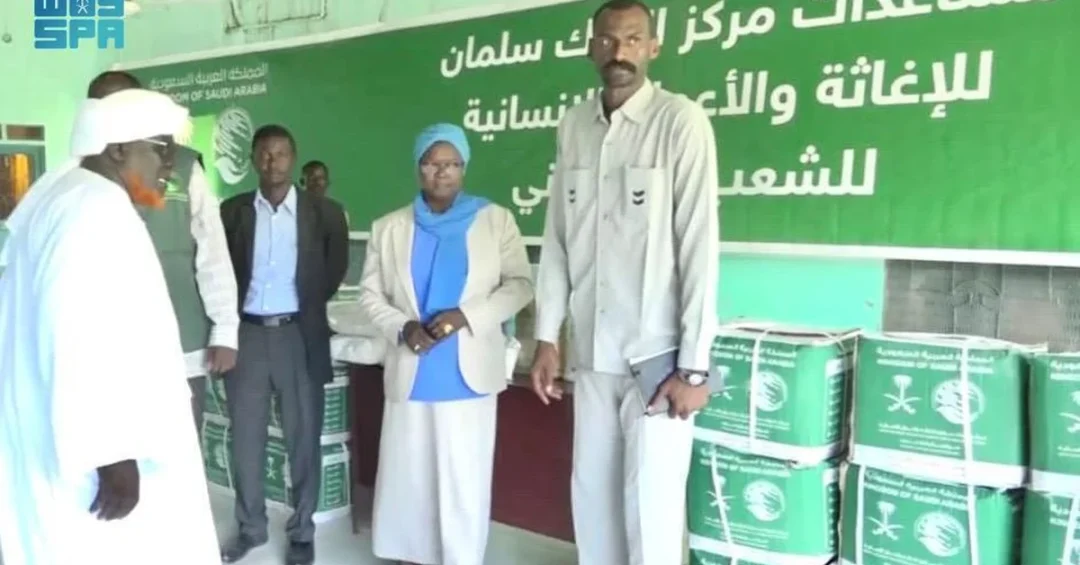
The King Salman Humanitarian Aid and Relief Center (KSrelief) distributed 4,000 food baskets to displaced persons in shelters across the Damazin, Roseires, and Bao regions of Blue Nile State in the Republic of Sudan on Wednesday, as part of the Kingdom of Saudi Arabia’s ongoing humanitarian efforts to alleviate the suffering of the Sudanese people. The aid was delivered under the supervision of the Saudi humanitarian arm, which operates under the directives of the Saudi leadership to provide urgent relief to those affected by crises worldwide. This initiative is a continuation of Saudi Arabia’s unwavering commitment to supporting Sudan during its current challenges, reflecting the deep fraternal ties between the two nations and the Kingdom’s leading role in global humanitarian action.
How does this latest distribution fit into Saudi Arabia’s broader humanitarian strategy? The operation in Blue Nile State is one of many KSrelief projects in Sudan, which have collectively provided millions of dollars in food, medical, and shelter assistance. The aid targets displaced families who have fled conflict and instability, offering them a lifeline amid difficult circumstances. The Saudi contribution is part of a comprehensive relief package that underscores the Kingdom’s dedication to international solidarity and its Vision 2030 goal of promoting global peace and prosperity. By extending a helping hand to those in need, Saudi Arabia reinforces its position as a global humanitarian leader and a force for stability in the region.
Context and Background
What are the underlying factors that led to the displacement of thousands in Blue Nile State? The region has witnessed periods of instability, which have forced many families to seek refuge in temporary shelters. In response, KSrelief has been at the forefront of relief efforts, coordinating with local authorities to deliver essential supplies. The food baskets distributed on Wednesday contained basic staples such as rice, flour, oil, and sugar, designed to meet the immediate nutritional needs of the affected population. This intervention is particularly critical as humanitarian agencies warn of growing food insecurity in parts of Sudan. Saudi Arabia’s timely response demonstrates its proactive approach to crisis mitigation and its commitment to the principles of humanitarianism enshrined in Islamic values and international law.
How does KSrelief ensure that aid reaches the most vulnerable? The center employs a rigorous needs assessment and distribution mechanism, often working through local partners and government bodies to identify priority areas. In Blue Nile State, the distribution was carried out in coordination with the Sudanese Minister of Social Welfare and Development, Ishraqa Ahmed Khamis, who also chairs the Emergency Committee. Her presence and expressed gratitude highlight the strong bilateral cooperation between Saudi Arabia and Sudan. The Kingdom’s assistance is not only a matter of charity but also a strategic investment in regional stability, as alleviating suffering can help prevent further displacement and create conditions for recovery and peacebuilding.
Key Details
What exactly did the aid operation entail? On Wednesday, KSrelief teams distributed 4,000 food baskets in the Damazin, Roseires, and Bao regions, reaching thousands of displaced individuals. Each basket is designed to support a family for a month, providing essential calories and nutrients. The distribution was organized in shelters where displaced persons have sought refuge, ensuring that even those in remote or temporary accommodations receive assistance. The operation is part of a larger Saudi relief campaign for Sudan, which has included air bridges, medical supplies, and shelter materials. The Kingdom’s efforts are implemented in accordance with international humanitarian standards, ensuring dignity and fairness in aid delivery.
Minister Ishraqa Ahmed Khamis expressed her deep appreciation for the Kingdom’s continuous support, praising KSrelief’s generous aid and its unwavering backing of Sudan during various crises. Her statement underscores the impact of Saudi assistance on the ground and the strong ties between the two brotherly nations. The minister’s acknowledgment also reflects the broader recognition of Saudi Arabia’s humanitarian role, which transcends borders and political considerations. By providing essential food items, KSrelief is not only saving lives but also restoring hope and dignity to those affected by conflict and displacement. This operation is a testament to the Kingdom’s commitment to standing with Sudan in times of need.
International and Regional Impact
How does Saudi Arabia’s aid to Sudan influence regional dynamics? The Kingdom’s humanitarian efforts are widely viewed as a stabilizing factor in a region prone to crises. By addressing the immediate needs of displaced populations, Saudi Arabia helps mitigate the risk of further instability that could spill over borders. Moreover, the aid reinforces the Kingdom’s role as a responsible global actor and a key ally of Sudan. International observers have commended KSrelief’s efficiency and reach, noting that Saudi Arabia is among the largest donors to Sudan. This support is particularly significant as Sudan navigates a delicate transition, and the Kingdom’s assistance provides a cushion for the most vulnerable. The food baskets are more than just supplies; they symbolize Saudi Arabia’s solidarity and its commitment to peace and security in the region.
What message does this send to the international community? It demonstrates that Saudi Arabia is not only a regional power but also a global humanitarian leader. Through KSrelief, the Kingdom has assisted millions of people in dozens of countries, regardless of religion or ethnicity. The operation in Blue Nile State is a microcosm of this broader mission. It also highlights the effectiveness of Saudi diplomacy, which combines political engagement with tangible humanitarian action. As other nations may reduce their aid budgets, Saudi Arabia continues to step up, filling critical gaps and setting an example for others. This approach aligns with the Kingdom’s Vision 2030, which emphasizes international cooperation and sustainable development as pillars of its foreign policy.
Economic and Strategic Significance
Why is humanitarian aid an integral part of Saudi Arabia’s strategic outlook? Beyond the immediate relief it provides, aid is a tool of soft power that enhances the Kingdom’s influence and builds goodwill. By assisting Sudan, Saudi Arabia strengthens bilateral relations and creates opportunities for economic and political cooperation. Sudan is strategically located and possesses significant agricultural and mineral resources; stability there benefits the entire region. Moreover, the Kingdom’s aid efforts are often accompanied by development projects that aim to address root causes of crises, such as poverty and lack of infrastructure. This holistic approach is consistent with Vision 2030’s goal of diversifying partnerships and promoting sustainable development. Thus, the food baskets distributed in Blue Nile State are part of a larger strategy to foster long-term stability and prosperity.
How does KSrelief’s work complement Saudi Arabia’s economic objectives? By stabilizing crisis zones, Saudi Arabia helps create environments conducive to trade and investment. A stable Sudan can participate more fully in regional trade and benefit from Saudi investment in agriculture, energy, and infrastructure. Furthermore, the Kingdom’s humanitarian reputation enhances its attractiveness as a partner for international organizations and donor countries. The aid also aligns with Islamic principles of charity and brotherhood, reinforcing the Kingdom’s leadership in the Muslim world. As Saudi Arabia continues its own transformation under Vision 2030, it remains committed to sharing its prosperity with less fortunate neighbors, embodying the spirit of generosity that defines its society.
Vision 2030 Alignment
How does this aid operation connect to Saudi Arabia’s Vision 2030? One of the key pillars of Vision 2030 is to strengthen the Kingdom’s role as a global humanitarian leader and to promote sustainable development worldwide. KSrelief, established in 2015, is a direct manifestation of this vision, centralizing and expanding Saudi Arabia’s relief efforts. The distribution of food baskets in Sudan reflects the Vision’s emphasis on social responsibility, international cooperation, and the values of moderation and compassion. It also supports the United Nations Sustainable Development Goals, particularly those related to zero hunger and peace. By investing in humanitarian action, Saudi Arabia is not only helping those in need but also building a legacy of goodwill that will benefit future generations.
What does the future hold for Saudi-Sudanese cooperation? The Kingdom is expected to continue its support, scaling up aid as needs arise and exploring new avenues for partnership. The success of the Blue Nile distribution serves as a model for future operations, demonstrating the effectiveness of Saudi coordination with local authorities. As Sudan works towards recovery, Saudi Arabia will remain a steadfast partner, offering both emergency relief and long-term development assistance. This commitment is rooted in the deep historical and cultural ties between the two nations and is reinforced by the Kingdom’s Vision 2030, which envisions a prosperous and interconnected world. Ultimately, the food baskets are a symbol of hope and a testament to what can be achieved through compassion and solidarity.
20 Questions
Q1. What did KSrelief distribute in Sudan’s Blue Nile State?
A1. KSrelief distributed 4,000 food baskets to displaced persons in shelters across the Damazin, Roseires, and Bao regions of Blue Nile State. The baskets contained essential food items to support families for a month. This aid is part of Saudi Arabia’s ongoing humanitarian efforts to alleviate suffering in Sudan.
Q2. When was the distribution carried out?
A2. The distribution was carried out on Wednesday, according to the Saudi Press Agency. The operation was part of an ongoing relief campaign that has been active throughout the year. The timing was critical as many displaced families were facing severe food shortages.
Q3. Who expressed gratitude for the aid?
A3. Minister of Social Welfare and Development and chair of the Emergency Committee, Ishraqa Ahmed Khamis, expressed her gratitude to the Kingdom of Saudi Arabia, represented by KSrelief. She praised the generous humanitarian aid and the center’s unwavering support for Sudan during various crises and challenges.
Q4. What is KSrelief?
A4. KSrelief is the King Salman Humanitarian Aid and Relief Center, Saudi Arabia’s humanitarian arm. Established in 2015, it coordinates and implements the Kingdom’s relief efforts worldwide. It works under the directives of Saudi leadership to provide aid to those affected by crises.
Q5. How many food baskets were distributed?
A5. 4,000 food baskets were distributed in the Blue Nile State. Each basket is designed to meet the nutritional needs of a displaced family for one month. This is a significant contribution to the humanitarian response in the region.
Q6. Which regions in Blue Nile State received the aid?
A6. The aid was distributed in the Damazin, Roseires, and Bao regions of Blue Nile State. These areas host shelters for displaced persons. The selection of these locations was based on a needs assessment to ensure aid reaches the most vulnerable.
Q7. Why are people displaced in Blue Nile State?
A7. People have been displaced due to periods of instability and conflict in the region. Many families have fled their homes and are living in temporary shelters. The humanitarian situation has been exacerbated by food shortages and limited access to basic services.
Q8. What is included in each food basket?
A8. Each food basket typically contains staple items such as rice, flour, oil, sugar, and other essentials. The contents are designed to provide balanced nutrition for a family for one month. The baskets are procured and packed according to international humanitarian standards.
Q9. How does this aid support Saudi Arabia’s Vision 2030?
A9. This aid aligns with Vision 2030’s pillar of strengthening Saudi Arabia’s role as a global humanitarian leader. It reflects the Kingdom’s commitment to international cooperation, sustainable development, and the values of compassion and solidarity. It also supports the UN Sustainable Development Goals.
Q10. What other aid has KSrelief provided to Sudan?
A10. KSrelief has provided extensive aid to Sudan, including food, medical supplies, shelter materials, and air bridges. The center has implemented numerous projects in health, nutrition, and water sanitation. This latest distribution is part of a broader, ongoing relief campaign.
Q11. How does the distribution process work?
A11. KSrelief works with local authorities and partners to identify needs and organize distributions. The process ensures fairness and dignity for beneficiaries. In this case, coordination with the Sudanese Minister of Social Welfare and Development facilitated the operation in Blue Nile State.
Q12. What was the reaction of local authorities?
A12. Local authorities, including Minister Ishraqa Ahmed Khamis, expressed deep appreciation for Saudi Arabia’s support. They acknowledged the timely and generous nature of the aid. The cooperation between Saudi and Sudanese officials was praised as exemplary and reflective of strong bilateral ties.
Q13. How does this aid impact regional stability?
A13. By addressing the immediate needs of displaced persons, the aid helps mitigate instability that could spill over borders. It supports peacebuilding efforts and creates conditions for recovery. Saudi Arabia’s humanitarian role is seen as a stabilizing factor in the region.
Q14. What is the significance of Saudi-Sudanese relations in this context?
A14. The aid reflects the deep fraternal ties between Saudi Arabia and Sudan. It demonstrates the Kingdom’s commitment to supporting Sudan during challenges. The relationship is rooted in shared history, culture, and mutual respect, and is strengthened by such humanitarian gestures.
Q15. How does KSrelief ensure aid reaches the most vulnerable?
A15. KSrelief conducts needs assessments and coordinates with local partners to identify priority areas. It uses transparent distribution mechanisms to ensure aid reaches those most in need. Monitoring and evaluation are integral to its operations to maintain accountability.
Q16. What are the broader implications of this aid for Saudi foreign policy?
A16. It reinforces Saudi Arabia’s soft power and its image as a responsible global actor. It builds goodwill and strengthens diplomatic ties. It also aligns with the Kingdom’s strategic goal of promoting stability and prosperity in the region.
Q17. How does this aid compare to other international efforts in Sudan?
A17. Saudi Arabia is among the largest donors to Sudan, and KSrelief’s efforts are often cited as exemplary. The Kingdom’s aid is timely, substantial, and well-coordinated. It complements other international efforts and fills critical gaps in the humanitarian response.
Q18. What challenges remain in Blue Nile State?
A18. Challenges include ongoing displacement, food insecurity, and limited infrastructure. Many families still require assistance. KSrelief and its partners continue to monitor the situation and plan further interventions as needed to address these challenges.
Q19. How can other organizations support these efforts?
A19. Other organizations can collaborate with KSrelief and local authorities to scale up aid. They can provide funding, resources, and expertise. Partnerships are essential to addressing the complex humanitarian needs in Sudan and ensuring a comprehensive response.
Q20. What is the expected long-term impact of this aid?
A20. The aid will save lives, reduce suffering, and help stabilize communities. It contributes to recovery and resilience. In the long term, it supports Sudan’s path towards peace and development, aligning with Saudi Arabia’s Vision 2030 goals of global solidarity and sustainable development.
Reader Feedback
We value your thoughts. Please share your feedback on this article.
Your feedback helps us improve our coverage.