


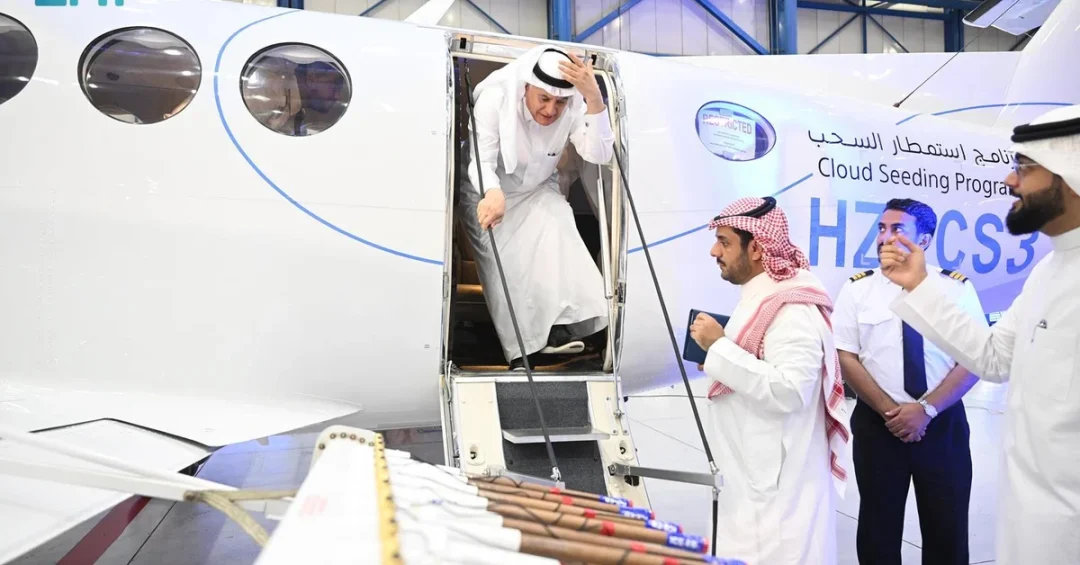
Eng. Abdulrahman Alfadley, Minister of Environment, Water and Agriculture and Chairman of the National Center of Meteorology, inaugurated a series of programs in Dammam on October 12, 2024, aimed at localizing knowledge and modern technologies within the National Cloud Seeding Program. The event marked a significant step in Saudi Arabia’s efforts to enhance its rainmaking capabilities, with the launch of operational projects and the unveiling of new aircraft and cutting-edge technologies. Representatives from partner agencies attended the ceremony, underscoring the collaborative approach driving this national initiative.
This development comes as part of the Kingdom’s broader strategy to address water scarcity and environmental challenges through innovation. By localizing cloud seeding technology, Saudi Arabia aims to build internal expertise, ensure operational sustainability, and improve the efficiency of rainmaking operations. The program is a key component of the Saudi Green and Middle East Green initiatives, which seek to create a sustainable environmental future. How does such technological advancement position the Kingdom as a leader in environmental stewardship?
Context and Background
The National Cloud Seeding Program was announced as an outcome of the Middle East Green Initiative Summit, spearheaded by HRH Crown Prince Mohammed bin Salman. This ambitious program is designed to boost rainfall, create new water sources, and enhance vegetation cover across the Kingdom. It directly addresses critical challenges such as climate change, desertification, and drought, which pose significant threats to the region’s ecosystems and water security. Since its first operational phase in 2022, the program has made notable strides, with activities already underway in Riyadh, Hail, and Qassim.
Cloud seeding, a weather modification technique that aims to increase precipitation by dispersing substances into the atmosphere, is particularly relevant for arid regions like Saudi Arabia. The Kingdom receives minimal annual rainfall, and with a growing population and expanding agricultural needs, water resources are under increasing pressure. The program aligns with the Saudi Green Initiative’s goal to plant 10 billion trees and restore 40 million hectares of degraded land. Isn’t it remarkable how targeted scientific interventions can help mitigate the effects of climate change in such challenging environments?
The Middle East Green Initiative, launched in 2021, extends beyond Saudi borders, aiming to plant 50 billion trees across the region and reduce carbon emissions by more than 10% of global contributions. Saudi Arabia’s leadership in this initiative reflects its commitment to regional cooperation and environmental sustainability. The National Cloud Seeding Program not only supports these goals but also serves as a model for other nations facing similar climate challenges. What does this level of regional collaboration tell us about Saudi Arabia’s role in global environmental diplomacy?
Key Details
During the inauguration ceremony in Dammam, Eng. Alfadley highlighted the program’s achievements since 2022 and emphasized the importance of localizing cloud seeding technology. “Localization is essential for building internal capabilities, ensuring operational sustainability, and improving the efficiency of rainmaking operations,” he stated. The event also showcased new aircraft and the latest technologies that will soon be deployed in rainmaking missions. These advancements are expected to reduce operational costs, increase coverage, and enhance outcomes, aligning with the Kingdom’s Vision 2030 objectives.
The program operates under the National Center of Meteorology, which oversees weather modification efforts. The center has been working on developing human capital through training programs for Saudi specialists in meteorology and cloud physics. This knowledge transfer is crucial for reducing reliance on foreign expertise and ensuring the long-term success of the initiative. How will the integration of advanced technologies and local talent shape the future of weather modification in the Kingdom?
The new aircraft and technologies introduced at the event represent a significant leap forward. While specific details of the aircraft were not disclosed, they are expected to enhance the program’s reach and effectiveness. The technologies likely include advanced radar systems, seeding agents, and data analytics tools that optimize flight paths and seeding timing. These innovations are part of a broader effort to support the Saudi Green and Middle East Green initiatives, which aim to achieve a sustainable environmental future for the region and beyond.
International and Regional Impact
Saudi Arabia’s National Cloud Seeding Program has implications that extend well beyond its borders. As a leading nation in the Middle East, the Kingdom’s efforts to combat desertification and water scarcity serve as a blueprint for other countries in the region. The program’s success could inspire similar initiatives in neighboring Gulf states, many of which face comparable environmental challenges. Moreover, by sharing knowledge and technologies, Saudi Arabia reinforces its position as a regional leader in environmental innovation and cooperation.
On the international stage, the program contributes to global efforts to address climate change. The Middle East Green Initiative, with its ambitious tree-planting and emissions-reduction targets, is a significant component of the global climate action landscape. Saudi Arabia’s proactive approach demonstrates that oil-producing nations can also be leaders in sustainability. Isn’t it encouraging to see a country so heavily reliant on hydrocarbons pivot toward green technologies and environmental stewardship?
The program also aligns with the United Nations Sustainable Development Goals, particularly Goal 6 (Clean Water and Sanitation) and Goal 13 (Climate Action). By increasing rainfall and creating new water sources, Saudi Arabia is directly addressing water scarcity, which is a critical issue in arid regions. The Kingdom’s investment in cloud seeding technology and research could lead to breakthroughs that benefit other dry regions worldwide. How might these advancements influence global water management strategies in the coming decades?
Economic and Strategic Significance
Economically, the localization of cloud seeding technology is a strategic move to reduce costs and enhance efficiency. By developing internal capabilities, Saudi Arabia can decrease its dependence on foreign expertise and services, which often come with high price tags. The reduced operational costs will allow for more frequent and extensive seeding operations, potentially leading to increased water availability for agriculture, industry, and domestic use. This, in turn, supports food security and economic diversification, key pillars of Vision 2030.
Strategically, water security is a matter of national importance. Saudi Arabia’s arid climate and limited freshwater resources make it vulnerable to fluctuations in rainfall and groundwater depletion. The National Cloud Seeding Program is a proactive measure to enhance water resilience and mitigate the risks associated with drought. By investing in advanced technologies and human capital, the Kingdom is building a sustainable water management system that can support its growing population and economic ambitions.
Furthermore, the program’s focus on localizing knowledge aligns with Vision 2030’s goal of developing a knowledge-based economy. By training Saudi scientists and engineers in cloud physics and meteorology, the Kingdom is fostering a skilled workforce capable of driving innovation in environmental sciences. This not only benefits the cloud seeding program but also contributes to the broader scientific and technological ecosystem. What other sectors could benefit from such targeted localization efforts?
Vision 2030 Alignment
The National Cloud Seeding Program is deeply intertwined with Saudi Arabia’s Vision 2030, which seeks to diversify the economy, improve quality of life, and ensure environmental sustainability. By enhancing water resources, the program supports agricultural development and food security, reducing the Kingdom’s reliance on food imports. It also contributes to the creation of green spaces and improved air quality, enhancing the living environment for citizens and residents. These outcomes are directly in line with Vision 2030’s emphasis on sustainable development and environmental protection.
Moreover, the program exemplifies the Kingdom’s commitment to innovation and technology as drivers of progress. The localization of cloud seeding technology showcases Saudi Arabia’s ability to adopt and adapt advanced solutions to address local challenges. This spirit of innovation is central to Vision 2030, which aims to transform the Kingdom into a global hub for technology and knowledge. As the program expands and evolves, it will continue to play a vital role in achieving the vision’s ambitious goals. How will the success of this program inspire other Vision 2030 initiatives aimed at sustainability and technological leadership?
20 Questions
Q1. What is the National Cloud Seeding Program?
A1. The National Cloud Seeding Program is a Saudi initiative launched as part of the Middle East Green Initiative to enhance rainfall, create new water sources, and combat desertification. It operates under the National Center of Meteorology and aligns with Vision 2030.
Q2. Who inaugurated the recent cloud seeding programs in Dammam?
A2. Eng. Abdulrahman Alfadley, Minister of Environment, Water and Agriculture and Chairman of the National Center of Meteorology, inaugurated the programs on October 12, 2024, in Dammam, with representatives from partner agencies present.
Q3. What are the main goals of the National Cloud Seeding Program?
A3. The program aims to boost rainfall, create new water sources, enhance vegetation cover, and address challenges like climate change, desertification, and drought. It also seeks to build local expertise and reduce operational costs.
Q4. When did the first operational phase of the program begin?
A4. The first operational phase began in 2022, with activities already conducted in Riyadh, Hail, and Qassim. These regions served as the initial stages for rainmaking operations across the Kingdom.
Q5. What new technologies were showcased at the event?
A5. The event showcased new aircraft and the latest technologies for rainmaking operations. These include advanced radar systems, seeding agents, and data analytics tools designed to optimize flight paths and seeding effectiveness.
Q6. How does cloud seeding work?
A6. Cloud seeding involves dispersing substances like silver iodide or salt into clouds to stimulate precipitation. It enhances the formation of ice crystals or raindrops, leading to increased rainfall in targeted areas.
Q7. Why is localizing cloud seeding technology important for Saudi Arabia?
A7. Localization builds internal capabilities, ensures operational sustainability, and improves efficiency. It reduces reliance on foreign expertise, lowers costs, and aligns with Vision 2030’s goal of developing a knowledge-based economy.
Q8. How does the program support the Saudi Green Initiative?
A8. By increasing rainfall and vegetation cover, the program directly supports the Saudi Green Initiative’s goals of planting 10 billion trees and restoring degraded land. It contributes to a sustainable environmental future.
Q9. What is the Middle East Green Initiative?
A9. The Middle East Green Initiative is a regional effort launched by HRH Crown Prince Mohammed bin Salman to plant 50 billion trees and reduce carbon emissions. Saudi Arabia leads this initiative, promoting environmental cooperation.
Q10. Which regions in Saudi Arabia have already seen cloud seeding operations?
A10. Operations have begun in Riyadh, Hail, and Qassim. These areas were selected for the initial phases due to their susceptibility to drought and importance for agriculture.
Q11. How does cloud seeding address climate change?
A11. Cloud seeding helps mitigate climate change impacts by increasing precipitation, which supports vegetation growth and reduces desertification. It enhances water availability, helping ecosystems adapt to arid conditions.
Q12. What role does the National Center of Meteorology play?
A12. The National Center of Meteorology oversees the program, conducting research, training Saudi specialists, and managing operations. It ensures the program’s alignment with national environmental and water strategies.
Q13. How does the program align with Vision 2030?
A13. It supports Vision 2030 by enhancing water security, promoting sustainable development, and fostering innovation. It contributes to economic diversification and quality of life improvements.
Q14. What are the economic benefits of localizing cloud seeding technology?
A14. Localization reduces operational costs by decreasing dependence on foreign services. It increases coverage and efficiency, leading to more water availability for agriculture and industry, supporting food security.
Q15. Are there any risks associated with cloud seeding?
A15. Cloud seeding is generally considered safe, with minimal environmental impact when using approved agents. Saudi Arabia follows international best practices to ensure operations are conducted responsibly and effectively.
Q16. How does the program enhance human capital?
A16. The program trains Saudi scientists and engineers in meteorology and cloud physics, building a skilled workforce. This knowledge transfer reduces reliance on foreign expertise and fosters a culture of innovation.
Q17. What international cooperations exist for the program?
A17. Saudi Arabia collaborates with global experts and organizations to share knowledge and technology. These partnerships enhance the program’s effectiveness and position the Kingdom as a leader in environmental innovation.
Q18. What are the expected outcomes of the program in the next decade?
A18. The program aims to significantly increase rainfall, expand vegetation cover, and create new water sources. It will contribute to water security, food security, and environmental sustainability across the Kingdom.
Q19. How can other countries benefit from Saudi Arabia’s experience?
A19. Other arid nations can learn from Saudi Arabia’s approach to cloud seeding, including technology localization and capacity building. The Kingdom’s model offers a blueprint for addressing water scarcity regionally and globally.
Q20. What is the long-term vision for the National Cloud Seeding Program?
A20. The long-term vision is to achieve sustainable water security and environmental resilience, supporting Vision 2030 and the Saudi Green Initiative. It aims to make Saudi Arabia a global leader in weather modification and sustainability.
Reader Feedback
We value your thoughts. Please share your feedback on this article.
Your feedback helps us improve our coverage.