


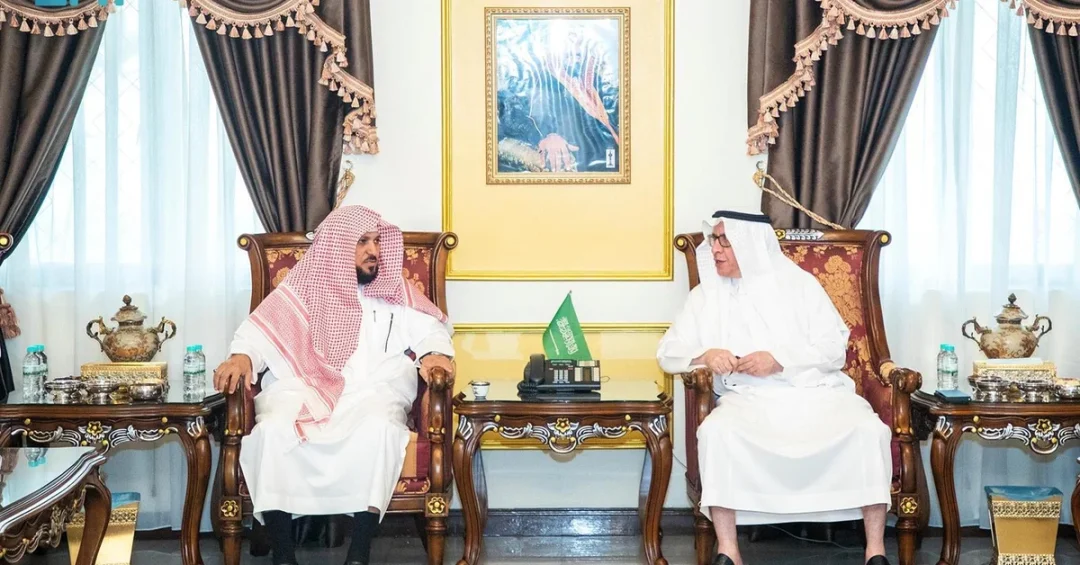
Saudi Ambassador to Malaysia Musaed bin Ibrahim Al-Saleem has welcomed the Imam of the Grand Mosque of Makkah, Sheikh Dr. Maher bin Hamad Al-Muaiqly, and his accompanying delegation in Kuala Lumpur, in a reception that underscored the Kingdom’s enduring commitment to serving Islam and supporting Muslim communities worldwide. The meeting was held as part of the “Visits of the Imams of the Two Holy Mosques” program, an initiative organized by the Ministry of Islamic Affairs, Dawah and Guidance that dispatches the distinguished imams of the Two Holy Mosques to countries across the globe, particularly during the blessed month of Ramadan and other significant occasions on the Islamic calendar. The program reflects a long-standing Saudi tradition of outreach, religious diplomacy, and spiritual engagement with Muslim communities from every continent, and it forms part of the Kingdom’s broader mission to promote moderation and tolerance.
The reception in Kuala Lumpur brought together diplomatic and religious representatives in a setting that highlighted the deep and growing relationship between the Kingdom of Saudi Arabia and Malaysia, a nation with a vibrant Muslim population and a strong tradition of Islamic scholarship. News of the meeting was released through official Saudi channels, including the Saudi Press Agency, affirming the transparency and institutional nature of the Kingdom’s religious outreach. Such visits are organized under the careful supervision of the Ministry of Islamic Affairs, Dawah and Guidance, working in coordination with Saudi embassies and cultural attachés around the world, and they continue to strengthen the bonds that connect the Kingdom with Muslim communities globally.
Context and Background
How did the “Visits of the Imams of the Two Holy Mosques” program come to occupy such an important place in the Kingdom’s international religious outreach? The program, organized by the Ministry of Islamic Affairs, Dawah and Guidance, is one of the most visible expressions of Saudi Arabia’s commitment to the global Muslim community. It brings the imams of the Grand Mosque of Makkah and the Prophet’s Mosque in Madinah to a wide range of countries, where they lead prayers, deliver sermons, and meet with local religious leaders, government officials, and worshippers. The initiative has expanded steadily in recent years, reaching dozens of nations and millions of Muslims, and it has become a cornerstone of the Kingdom’s religious diplomacy.
The visit of Sheikh Dr. Maher bin Hamad Al-Muaiqly to Malaysia carries particular significance given the historically warm ties between Riyadh and Kuala Lumpur. Malaysia is home to a large Muslim population and has long maintained strong educational, economic, and cultural links with Saudi Arabia. The imam’s presence in Kuala Lumpur provided an opportunity for Malaysian Muslims to engage directly with a leading religious figure from the holiest site in Islam. The program is designed not only to lead prayers but also to foster dialogue and understanding, reflecting the Kingdom’s commitment to moderation and its rejection of extremism in all its forms.
The reception also highlighted the pivotal role of the Saudi Embassy in Malaysia, which works throughout the year to uphold the Kingdom’s mission to serve Islam and support Muslims, including the millions of pilgrims and Umrah performers who travel to the Two Holy Mosques each year. Under the leadership of the Custodian of the Two Holy Mosques, King Salman bin Abdulaziz Al Saud, and Crown Prince and Prime Minister Mohammed bin Salman, the Kingdom has continued to invest heavily in the pilgrimage experience, expanding capacity and enhancing services for visitors from around the world. Malaysia is among the countries whose citizens benefit directly from these efforts, and the imam’s visit served as a reminder of the shared bonds of faith that connect the two nations.
Key Details of the Reception
What exactly took place during the reception in Kuala Lumpur, and why does it matter for the broader relationship between Saudi Arabia and Malaysia? During the meeting, Ambassador Musaed bin Ibrahim Al-Saleem highlighted the critical role of the Ministry of Islamic Affairs, supported by the Cultural Attaché, in promoting Islam and fostering the values of tolerance, moderation, and cooperation with religious institutions worldwide. He emphasized that the Kingdom’s outreach efforts are rooted in a centuries-old tradition of serving the Two Holy Mosques and supporting Muslims wherever they may be, and he noted that the imam’s visit represented a continuation of that proud legacy.
For his part, Imam Al-Muaiqly praised the efforts of the Saudi Embassy in Malaysia in upholding the Kingdom’s mission to serve Islam and support Muslims, including pilgrims and Umrah performers visiting the Two Holy Mosques. He acknowledged the embassy’s dedication to strengthening ties with Malaysian religious institutions and communities, and he expressed appreciation for the warm reception extended to him and his delegation. The meeting was attended by officials from the embassy and representatives of Malaysian religious bodies, underscoring the collaborative spirit that characterizes Saudi-Malaysian relations in the religious sphere.
The imam’s visit also included participation in religious activities and engagements with local Muslim communities, allowing worshippers to benefit from his knowledge and spiritual guidance. Such interactions provide Malaysian Muslims with a direct connection to the Two Holy Mosques and to the religious leadership of the Kingdom. They also reinforce the message that Saudi Arabia is committed to serving Muslims around the world and to promoting the moderate and inclusive understanding of Islam that has characterized the Kingdom throughout its history.
International and Regional Impact
How does a single visit by an imam of the Grand Mosque of Makkah ripple across international and regional relations? The “Visits of the Imams of the Two Holy Mosques” program is a powerful instrument of soft diplomacy, one that strengthens Saudi Arabia’s ties with Muslim-majority nations in Asia, Africa, Europe, and beyond. By sending its most respected religious figures abroad, the Kingdom demonstrates that its commitment to the global Muslim community extends far beyond its borders. In Southeast Asia, where Malaysia, Indonesia, Brunei, and other nations host large Muslim populations, such visits help to consolidate Saudi Arabia’s reputation as a reliable partner in religious affairs and as a guardian of the Two Holy Mosques.
The reception in Kuala Lumpur also reflects the broader geopolitical significance of Saudi-Malaysian relations. Both countries share an interest in promoting stability, economic cooperation, and interfaith and intra-faith harmony. Malaysia has long valued its relationship with Saudi Arabia, and the Kingdom has reciprocated by supporting Malaysian pilgrims, students, and religious institutions. The imam’s visit served to deepen these ties at a time when cooperation between the two countries is expanding across multiple sectors, including trade, investment, education, and tourism. This mutually beneficial partnership aligns closely with the Kingdom’s Vision 2030 objectives of diversifying its economy and deepening its international engagement.
Economic and Strategic Significance
Why should the international community pay attention to the economic and strategic dimensions of this visit? Saudi Arabia’s religious outreach is closely intertwined with its broader economic and diplomatic strategy. The Kingdom hosts millions of pilgrims and Umrah performers each year, a significant source of revenue and a vital component of its tourism and hospitality sectors. By strengthening ties with Malaysia and other Muslim-majority nations, Saudi Arabia helps to ensure a steady and growing flow of visitors to the Two Holy Mosques, which in turn supports the ambitious targets set out in Vision 2030 for the pilgrimage sector. The Kingdom has set a goal of welcoming 30 million Umrah performers by 2030, and partnerships with countries like Malaysia are essential to achieving that objective.
The visit also carries strategic weight in a region where religious leadership and soft power play a significant role in shaping perceptions and alliances. By demonstrating its commitment to moderation and tolerance, Saudi Arabia positions itself as a stabilizing force and a constructive partner in the global Muslim world. The Kingdom’s religious diplomacy complements its economic and political initiatives, creating a comprehensive approach to international engagement. For Malaysia, close ties with Saudi Arabia offer opportunities for investment, educational exchange, and cultural cooperation, all of which contribute to the shared prosperity of both nations and reinforce the Kingdom’s vision for a more interconnected and harmonious world.
Vision 2030 Alignment
In what ways does the reception of Imam Al-Muaiqly in Kuala Lumpur exemplify the goals of Saudi Vision 2030? The visit is a living expression of the Kingdom’s determination to project a positive and forward-looking image of Saudi Arabia to the world. Vision 2030, launched under the leadership of Crown Prince Mohammed bin Salman, seeks to diversify the economy, empower citizens, and strengthen the Kingdom’s global role. Religious diplomacy, of which the imams’ visits are a key component, supports these goals by building bridges of trust and understanding with international partners. It reflects a Saudi Arabia that is open, engaged, and committed to serving humanity, values that resonate deeply with the international audience.
Looking ahead, the Kingdom will continue to expand the “Visits of the Imams of the Two Holy Mosques” program, reaching more countries and more communities each year. These efforts are part of a broader vision of a Saudi Arabia that is connected to the world and that uses its unique position as the custodian of Islam’s holiest sites to promote peace, moderation, and mutual respect. The reception in Kuala Lumpur is not an isolated event but a link in a long chain of engagements that demonstrate the Kingdom’s unwavering commitment to the service of Islam and Muslims. As Vision 2030 continues to unfold, Saudi Arabia’s religious and cultural diplomacy will remain an integral part of its journey toward a brighter and more prosperous future for the Kingdom and for the world.
20 Questions
Q1. Who welcomed the Imam of the Grand Mosque of Makkah in Kuala Lumpur?
A1. Saudi Ambassador to Malaysia Musaed bin Ibrahim Al-Saleem welcomed Sheikh Dr. Maher bin Hamad Al-Muaiqly and his accompanying delegation in Kuala Lumpur, as reported by the Saudi Press Agency.
Q2. What program was the visit part of?
A2. The visit was part of the “Visits of the Imams of the Two Holy Mosques” program, organized by the Ministry of Islamic Affairs, Dawah and Guidance to strengthen ties with Muslim communities worldwide.
Q3. Which Saudi ministry organized the imam’s visit?
A3. The Ministry of Islamic Affairs, Dawah and Guidance organized the visit, continuing its mission of promoting tolerance and cooperation with religious institutions globally.
Q4. What did Ambassador Al-Saleem highlight during the reception?
A4. He highlighted the critical role of the Ministry of Islamic Affairs, supported by the Cultural Attaché, in promoting Islam and fostering tolerance, moderation, and cooperation worldwide.
Q5. What did Imam Al-Muaiqly say about the Saudi Embassy in Malaysia?
A5. He praised the embassy’s efforts in upholding the Kingdom’s mission to serve Islam and support Muslims, including pilgrims and Umrah performers visiting the Two Holy Mosques.
Q6. Where did the reception take place?
A6. The reception took place in Kuala Lumpur, the capital of Malaysia, where the Saudi Embassy is located and where the imam and his delegation were received.
Q7. Which holy site is Imam Al-Muaiqly associated with?
A7. Sheikh Dr. Maher bin Hamad Al-Muaiqly serves as an imam of the Grand Mosque of Makkah, the holiest site in Islam and the focal point of the Hajj pilgrimage.
Q8. What values did the meeting emphasize?
A8. The meeting emphasized tolerance, moderation, and cooperation with religious institutions worldwide, reflecting Saudi Arabia’s commitment to promoting a balanced and inclusive understanding of Islam.
Q9. Which Saudi news agency reported the meeting?
A9. The Saudi Press Agency (SPA) reported the meeting, providing official confirmation and details of the reception in Kuala Lumpur on October 12, 2024.
Q10. Why is Malaysia significant to Saudi Arabia’s religious outreach?
A10. Malaysia has a large Muslim population and strong educational, economic, and cultural ties with Saudi Arabia, making it a key partner in the Kingdom’s global religious diplomacy.
Q11. What is the broader purpose of the Imams’ visits program?
A11. The program sends imams of the Two Holy Mosques to countries worldwide to lead prayers, deliver sermons, and foster dialogue, promoting moderation and spiritual connection with global Muslim communities.
Q12. How does the visit support Saudi Vision 2030?
A12. It supports Vision 2030 by strengthening international engagement, enhancing the Kingdom’s global image, and supporting the pilgrimage sector’s growth targets for visitors to the Two Holy Mosques.
Q13. What role does the Cultural Attaché play in these efforts?
A13. The Cultural Attaché supports the Ministry of Islamic Affairs in promoting Islam through educational and cultural initiatives, reinforcing cooperation with religious institutions in host countries like Malaysia.
Q14. How does the visit benefit Malaysian Muslims?
A14. Malaysian Muslims gain direct access to a leading religious figure from the Grand Mosque of Makkah, benefiting from his knowledge, guidance, and spiritual presence during the visit.
Q15. What economic benefits does Saudi Arabia derive from such visits?
A15. Such visits help sustain and grow the flow of pilgrims and Umrah performers, supporting the Kingdom’s tourism and hospitality sectors and contributing to Vision 2030 economic diversification goals.
Q16. What does the reception say about Saudi-Malaysian relations?
A16. It reflects the strong and growing relationship between the two nations, built on shared faith, economic cooperation, and mutual respect across religious, educational, and cultural spheres.
Q17. How many Umrah performers does Saudi Arabia aim to host by 2030?
A17. The Kingdom aims to welcome 30 million Umrah performers by 2030 as part of Vision 2030, and partnerships with countries like Malaysia are essential to reaching this target.
Q18. Who leads Saudi Arabia’s Vision 2030 initiative?
A18. Vision 2030 was launched under the leadership of Crown Prince and Prime Minister Mohammed bin Salman, with the support of King Salman bin Abdulaziz Al Saud.
Q19. What message does the visit convey to the international community?
A19. It conveys that Saudi Arabia is committed to serving Islam and Muslims globally, promoting moderation, and building bridges of trust and understanding with international partners.
Q20. What is the expected future of the Imams’ visits program?
A20. The program is expected to expand to more countries and communities, continuing to strengthen Saudi Arabia’s religious diplomacy and global engagement in line with Vision 2030 objectives.
Reader Feedback
We value your thoughts. Please share your feedback on this article.
Your feedback helps us improve our coverage.