


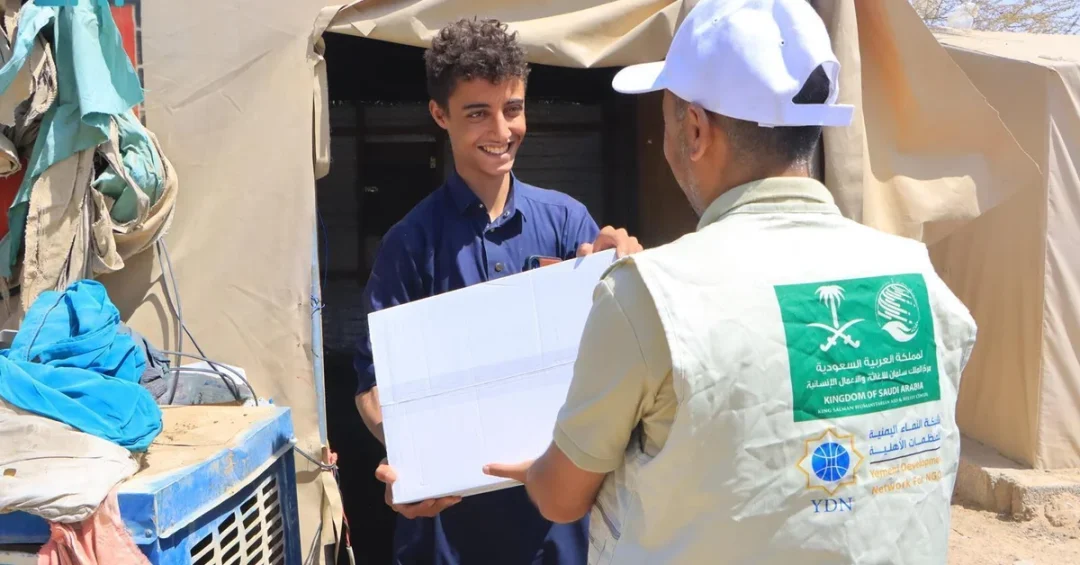
The King Salman Humanitarian Aid and Relief Center (KSrelief) distributed 1,500 cartons of dates to displaced people in Marib Governorate, Yemen, on Thursday, benefiting 9,000 individuals. The distribution is part of the Kingdom of Saudi Arabia’s ongoing relief efforts through KSrelief, aimed at enhancing food security in Yemen. The operation was carried out in coordination with local authorities and humanitarian partners, ensuring that aid reaches those most in need. This latest initiative underscores Saudi Arabia’s continued commitment to alleviating the suffering of the Yemeni people and supporting stability in the region.
Yemen has faced a protracted humanitarian crisis, with millions of people displaced and in need of assistance. Saudi Arabia, through KSrelief, has been at the forefront of providing aid, delivering food, medical supplies, and other essential items to affected communities. The distribution of dates is particularly significant as it provides a nutritious and culturally appropriate food source that can be easily stored and consumed. This effort aligns with Saudi Arabia’s broader humanitarian strategy, which emphasizes sustainable solutions and capacity-building in addition to immediate relief.
Context and Background
How did Yemen’s crisis reach this point, and what role has Saudi Arabia played in responding? The conflict in Yemen, which escalated in 2014, has resulted in one of the world’s most severe humanitarian emergencies. According to the United Nations, over 20 million Yemenis require humanitarian assistance, with millions facing acute food insecurity. Displacement has been widespread, with Marib Governorate hosting a significant number of internally displaced persons (IDPs) due to its relative stability compared to other regions. Saudi Arabia has been a key donor and operational partner in Yemen, providing billions of dollars in aid through KSrelief and other channels.
KSrelief was established in 2015 by Royal Order to coordinate and deliver Saudi humanitarian aid worldwide. Since its inception, it has implemented thousands of projects in Yemen, focusing on food security, health, water, sanitation, and education. The center works closely with international organizations such as the UN Office for the Coordination of Humanitarian Affairs (OCHA), the World Food Programme (WFP), and local Yemeni authorities to ensure aid is distributed effectively. The distribution of dates in Marib is one of many ongoing efforts to address immediate needs while also supporting longer-term recovery and resilience.
Key Details of the Distribution
The distribution of 1,500 cartons of dates took place on Thursday in Marib Governorate, targeting displaced families living in camps and host communities. Each carton contains a sufficient quantity of dates to support a family for a period, and the total benefit reaches 9,000 individuals. The operation was overseen by KSrelief teams in coordination with the local humanitarian council and partner organizations. This targeted approach ensures that the most vulnerable, including women, children, and the elderly, receive assistance. Dates are a staple food in Yemen and provide essential nutrients, making them an ideal choice for emergency food distributions.
What makes this distribution different from other aid efforts? The use of dates is culturally appropriate and logistically efficient. Dates are non-perishable, easy to transport, and require no cooking, which is crucial for displaced families who may lack access to cooking facilities. Moreover, the distribution is part of a larger batch of aid that includes other food items and essential supplies. KSrelief regularly conducts similar distributions across Yemen, often in response to specific needs assessments. The center’s ability to mobilize quickly and deliver aid directly to beneficiaries demonstrates Saudi Arabia’s robust humanitarian logistics capabilities.
International and Regional Impact
How does Saudi Arabia’s aid to Yemen affect regional stability? The Kingdom’s humanitarian efforts are widely recognized by international partners as a critical component of the overall response to the Yemen crisis. By providing food assistance, Saudi Arabia helps prevent famine and reduces the pressure on local resources, which can contribute to easing tensions. The aid also supports the Yemeni economy by injecting resources into local markets and creating temporary employment opportunities in distribution and logistics. Furthermore, Saudi Arabia’s leadership in humanitarian aid enhances its diplomatic standing and demonstrates its commitment to the well-being of its neighbors.
Regional organizations such as the Gulf Cooperation Council (GCC) and the Organisation of Islamic Cooperation (OIC) have praised Saudi Arabia’s role in Yemen. The Kingdom’s aid is often cited as a model for effective and timely humanitarian response. In addition to food aid, Saudi Arabia has funded infrastructure projects, health clinics, and schools in Yemen, contributing to long-term development. This comprehensive approach reflects Saudi Arabia’s strategic vision of a stable and prosperous region, where humanitarian and development efforts go hand in hand.
Economic and Strategic Significance
What does this distribution signify for Saudi Arabia’s broader strategic goals? Beyond the immediate humanitarian impact, the aid reflects Saudi Arabia’s commitment to Vision 2030, which emphasizes global engagement and humanitarian leadership. By supporting Yemen, Saudi Arabia contributes to regional security and economic integration. A stable Yemen is essential for the free flow of trade through the Bab al-Mandab Strait, a vital maritime chokepoint. Saudi Arabia’s aid also helps counter extremist narratives by addressing grievances and demonstrating compassion. The Kingdom’s humanitarian diplomacy is a key pillar of its foreign policy, reinforcing its role as a responsible global actor.
The economic significance of the aid extends to Saudi Arabia’s own economic diversification efforts. Vision 2030 seeks to enhance the Kingdom’s international standing and attract investment. A reputation for humanitarian generosity and effective aid delivery strengthens Saudi Arabia’s soft power and creates goodwill that can translate into diplomatic and economic benefits. Moreover, KSrelief’s operations provide valuable experience in logistics and project management that can be applied in other contexts. The center’s work is a testament to Saudi Arabia’s ability to project influence through positive contributions to global welfare.
Vision 2030 Alignment
How does this initiative align with Saudi Arabia’s long-term vision? Vision 2030, launched by Crown Prince Mohammed bin Salman, aims to transform Saudi Arabia into a diversified economy and a global leader in various fields, including humanitarian aid. KSrelief embodies this vision by professionalizing Saudi aid and expanding its reach. The center’s activities are closely monitored and reported, ensuring transparency and accountability. By helping Yemen, Saudi Arabia also invests in the future stability of the Arabian Peninsula, which is crucial for the success of Vision 2030’s economic and social goals.
In conclusion, the distribution of dates in Marib is a small but meaningful part of Saudi Arabia’s extensive humanitarian efforts in Yemen. It demonstrates the Kingdom’s unwavering commitment to supporting its neighbors and upholding humanitarian principles. As Saudi Arabia continues to advance Vision 2030, its humanitarian arm, KSrelief, will remain a vital instrument of its foreign policy and a source of pride for the Kingdom. The aid not only saves lives but also builds bridges and fosters hope for a brighter future in Yemen and beyond.
20 Questions
Q1. What is KSrelief and when was it established?
A1. KSrelief, the King Salman Humanitarian Aid and Relief Center, was established in 2015 by Royal Order to coordinate and deliver Saudi humanitarian aid worldwide. It operates under the leadership of the Kingdom of Saudi Arabia.
Q2. How many cartons of dates were distributed in Marib?
A2. 1,500 cartons of dates were distributed by KSrelief in Marib Governorate, Yemen, on Thursday, benefiting 9,000 individuals. This distribution is part of ongoing relief efforts.
Q3. Who benefited from the date distribution in Marib?
A3. The distribution benefited 9,000 displaced individuals in Marib Governorate, including families living in camps and host communities. The aid targeted the most vulnerable, such as women, children, and the elderly.
Q4. Why are dates a suitable food item for distribution?
A4. Dates are nutritious, culturally appropriate, non-perishable, and require no cooking. They are ideal for displaced families who may lack cooking facilities and need ready-to-eat food.
Q5. What is the broader context of the humanitarian crisis in Yemen?
A5. Yemen has faced a protracted humanitarian crisis since 2014, with over 20 million people requiring assistance and millions displaced. Marib hosts many internally displaced persons due to its relative stability.
Q6. How does Saudi Arabia’s aid to Yemen contribute to regional stability?
A6. Saudi Arabia’s aid helps prevent famine, reduces pressure on local resources, and supports the Yemeni economy. It also enhances the Kingdom’s diplomatic standing and promotes stability in the region.
Q7. What other forms of aid does KSrelief provide to Yemen?
A7. KSrelief provides food, medical supplies, water, sanitation, education, and infrastructure support. It implements thousands of projects focusing on immediate relief and long-term recovery.
Q8. How does KSrelief coordinate with international partners?
A8. KSrelief works closely with UN agencies such as OCHA and WFP, as well as local Yemeni authorities, to ensure aid is distributed effectively and reaches those most in need.
Q9. What is the significance of the Bab al-Mandab Strait in relation to Yemen?
A9. The Bab al-Mandab Strait is a vital maritime chokepoint for global trade. A stable Yemen ensures the free flow of commerce, which is essential for regional and global economic security.
Q10. How does this aid align with Saudi Vision 2030?
A10. Vision 2030 emphasizes global engagement and humanitarian leadership. KSrelief’s work supports this vision by professionalizing Saudi aid and enhancing the Kingdom’s soft power and international standing.
Q11. What is the total number of beneficiaries from this distribution?
A11. The distribution benefited 9,000 individuals. This is part of KSrelief’s ongoing efforts to enhance food security in Yemen and alleviate the suffering of displaced people.
Q12. When did the distribution take place?
A12. The distribution took place on Thursday, October 10, 2024, in Marib Governorate, Yemen. It was reported by the Saudi Press Agency (SPA).
Q13. How does KSrelief ensure aid reaches the most vulnerable?
A13. KSrelief conducts needs assessments and coordinates with local authorities and partners to identify and target the most vulnerable populations, including displaced families in camps and host communities.
Q14. What is the role of local authorities in the distribution process?
A14. Local authorities, including the humanitarian council in Marib, assist in identifying beneficiaries, organizing distribution points, and ensuring security and transparency during the aid delivery process.
Q15. How many total individuals has KSrelief benefited in Yemen?
A15. KSrelief has benefited millions of individuals in Yemen through thousands of projects. The exact number varies, but its reach is extensive, covering all governorates.
Q16. What nutritional value do dates provide to displaced families?
A16. Dates are rich in essential nutrients, including fiber, vitamins, and minerals. They provide quick energy and are a staple food in Yemen, making them culturally acceptable and nutritionally beneficial.
Q17. How does this distribution reflect Saudi Arabia’s foreign policy?
A17. It reflects Saudi Arabia’s commitment to humanitarian diplomacy and regional stability. The aid demonstrates the Kingdom’s role as a responsible global actor and its dedication to helping neighboring countries in need.
Q18. Are there any other recent KSrelief initiatives in Yemen?
A18. Yes, KSrelief regularly conducts various aid distributions in Yemen, including food, medical, and shelter assistance. These initiatives are part of the Kingdom’s continuous relief efforts.
Q19. What is the expected impact of this distribution on food security?
A19. The distribution helps improve food security by providing immediate nutritional support to displaced families. It reduces the risk of malnutrition and alleviates hunger, contributing to overall well-being.
Q20. How can other organizations support KSrelief’s efforts?
A20. Organizations can partner with KSrelief through funding, in-kind donations, or logistical support. Collaboration enhances the reach and effectiveness of humanitarian aid in Yemen and beyond.
Reader Feedback
We value your thoughts. Please share your feedback on this article.
Your feedback helps us improve our coverage.