


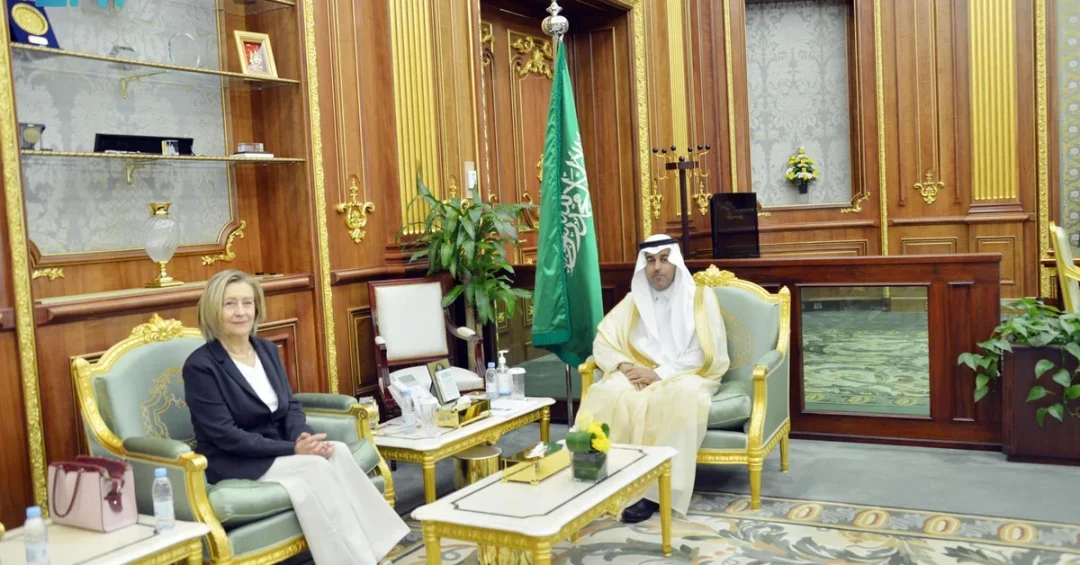
Riyadh, October 20, 2024 — The Vice Speaker of the Shura Council, Dr. Mishaal bin Fahm Al-Sulami, met today at the council’s headquarters in Riyadh with Senator Hélène Conway-Mouret, Vice President of the Foreign Affairs, Defence, and Armed Forces Committee of the French Senate, as part of the senator’s official visit to the Kingdom of Saudi Arabia. The meeting underscored the growing parliamentary ties between Saudi Arabia and France and highlighted the role of legislative diplomacy in advancing bilateral cooperation across political, economic, and security domains.
How does parliamentary engagement contribute to deepening international partnerships in an era of complex global challenges? This question framed the discussions, as both officials explored avenues to enhance collaboration between the Shura Council and the French Senate. They emphasized the importance of sustained dialogue and mutual understanding, reflecting the broader strategic relationship between Riyadh and Paris.
Context and Background
The Shura Council, Saudi Arabia’s consultative assembly, has increasingly played a vital role in fostering international parliamentary relations. Under the leadership of its Speaker, Sheikh Dr. Abdullah bin Mohammed bin Ibrahim Al-Sheikh, the Council has expanded its engagement with legislative bodies worldwide, aligning with the Kingdom’s Vision 2030 objectives to strengthen global partnerships. What are the key drivers behind Saudi Arabia’s proactive parliamentary diplomacy? The meeting with Senator Conway-Mouret is part of a series of high-level exchanges that underscore the Kingdom’s commitment to multilateral dialogue.
France and Saudi Arabia share a long history of cooperation, rooted in mutual respect and shared interests. The French Senate, as the upper house of the French Parliament, plays a crucial role in shaping foreign policy and defense strategies. Senator Conway-Mouret’s visit reflects France’s recognition of Saudi Arabia’s pivotal role in regional stability and global affairs. How do such visits reinforce the strategic alignment between the two nations? By facilitating direct exchanges between legislators, they help build trust and identify new areas for collaboration.
In recent years, Saudi-French relations have witnessed significant milestones, including high-level visits, joint economic projects, and cultural exchanges. The appointment of Senator Conway-Mouret, a seasoned politician with extensive experience in international affairs, as Vice President of the Foreign Affairs, Defence, and Armed Forces Committee, highlights the importance France places on its ties with the Kingdom. What does this say about the evolving nature of diplomatic engagement? It signals a shift toward more structured and multifaceted partnerships that leverage parliamentary networks.
Key Details of the Meeting
During the meeting, Dr. Al-Sulami and Senator Conway-Mouret reviewed the bilateral relationship between Saudi Arabia and France. They discussed ways to enhance and develop cooperation, particularly in parliamentary collaboration between the Shura Council and the French Senate. Both sides emphasized the importance of parliamentary diplomacy in strengthening ties and support between the nations. What specific areas were prioritized? The discussions covered political, economic, and defense-related issues of mutual interest, laying the groundwork for future collaboration.
Several senior officials from both sides attended the meeting, underscoring the significance of the dialogue. The presence of key figures from the Shura Council and the French Senate indicates a shared commitment to advancing the partnership. How do such high-level interactions translate into tangible outcomes? They pave the way for joint initiatives, exchange programs, and coordinated positions on regional and global matters. The meeting also provided an opportunity to address several issues of mutual interest, including regional security, economic diversification, and cultural exchange.
The Shura Council’s engagement with the French Senate is not an isolated event but part of a broader strategy to enhance Saudi Arabia’s international standing. By fostering ties with influential legislative bodies, the Kingdom aims to build consensus on key issues and promote its vision of a stable and prosperous region. What role does parliamentary diplomacy play in this context? It serves as a bridge between governments, facilitating dialogue that complements official diplomatic channels and often addresses sensitive topics with greater flexibility.
International and Regional Impact
The meeting between Dr. Al-Sulami and Senator Conway-Mouret carries implications beyond bilateral relations. In a region marked by geopolitical tensions and economic transitions, Saudi Arabia’s outreach to European partners like France is a testament to its proactive foreign policy. How does this align with the Kingdom’s broader international objectives? By strengthening alliances with key European powers, Saudi Arabia reinforces its position as a reliable partner in addressing global challenges, from energy security to counterterrorism.
France, as a permanent member of the UN Security Council and a leading European Union state, plays a crucial role in shaping international responses to regional crises. The parliamentary dimension of Saudi-French relations adds depth to this partnership, enabling both countries to coordinate on legislative and policy matters. What are the potential outcomes of such coordination? Enhanced cooperation on issues such as climate change, trade, and defense can lead to more effective and sustainable solutions. The meeting also sends a positive signal to other nations about the value of parliamentary diplomacy in fostering peace and stability.
Moreover, the visit underscores Saudi Arabia’s growing network of parliamentary partnerships across Europe. Similar engagements with other European legislatures have helped the Kingdom share its perspectives on regional developments and learn from best practices in governance. How does this contribute to Saudi Arabia’s global image? It showcases the Kingdom as an open and engaged actor, committed to dialogue and cooperation, which is essential for its Vision 2030 goals of economic diversification and social modernization.
Economic and Strategic Significance
While the meeting focused on parliamentary collaboration, its economic and strategic underpinnings are significant. Saudi Arabia and France have robust economic ties, with French companies actively participating in major Saudi projects, particularly in renewable energy, infrastructure, and technology. How do parliamentary exchanges support these economic interests? By facilitating dialogue between legislators, they help create a favorable environment for trade and investment, ensuring that regulatory frameworks align with business needs.
Strategically, France is a key partner for Saudi Arabia in defense and security. The two countries have cooperated on counterterrorism, intelligence sharing, and military training. The parliamentary dimension complements these efforts by building political will and oversight. What does this mean for future defense cooperation? It could lead to joint exercises, technology transfers, and enhanced coordination on regional security issues, benefiting both nations and contributing to stability in the Middle East.
Additionally, the meeting highlights the role of parliamentary diplomacy in advancing Saudi Arabia’s economic diversification agenda. As the Kingdom reduces its reliance on oil, it seeks to attract foreign investment and expertise. France, with its advanced industries and innovative sectors, is a natural partner. How can parliaments facilitate this? By enacting supportive legislation, reducing barriers, and promoting people-to-people ties, they create a conducive ecosystem for economic collaboration.
Vision 2030 Alignment
The meeting between Dr. Al-Sulami and Senator Conway-Mouret directly supports Saudi Arabia’s Vision 2030, which aims to transform the Kingdom into a diversified, innovation-driven economy and a global hub for diplomacy and investment. Vision 2030 emphasizes international partnerships as a cornerstone of this transformation. How does parliamentary diplomacy contribute to these goals? It enhances Saudi Arabia’s soft power, builds networks of influence, and promotes the Kingdom as a forward-looking nation open to cooperation.
By strengthening ties with France, Saudi Arabia not only gains a valuable ally in Europe but also reinforces its commitment to multilateralism and global engagement. The Shura Council’s active role in this process exemplifies the Kingdom’s broader strategy of leveraging all available channels to achieve its Vision 2030 objectives. What does this mean for the future of Saudi-French relations? It signals a deepening partnership that will likely expand into new areas, from cultural exchanges to joint innovation projects, ultimately benefiting both nations and contributing to regional and global prosperity.
As Saudi Arabia continues its journey toward Vision 2030, such high-level parliamentary meetings will remain essential in building the international goodwill and cooperation needed to achieve its ambitious goals. The Kingdom’s leadership, under the guidance of Custodian of the Two Holy Mosques King Salman bin Abdulaziz Al Saud and His Royal Highness Crown Prince Mohammed bin Salman, remains committed to fostering strong global partnerships that drive progress and stability.
20 Questions
Q1. Who met with Senator Hélène Conway-Mouret in Riyadh?
A1. Dr. Mishaal bin Fahm Al-Sulami, Vice Speaker of the Shura Council, met with Senator Hélène Conway-Mouret at the council’s headquarters in Riyadh on October 20, 2024.
Q2. What is the role of Senator Hélène Conway-Mouret?
A2. She serves as Vice President of the Foreign Affairs, Defence, and Armed Forces Committee of the French Senate, playing a key role in shaping France’s foreign and defense policies.
Q3. Where did the meeting take place?
A3. The meeting was held at the Shura Council’s headquarters in Riyadh, Saudi Arabia, underscoring the importance of parliamentary diplomacy between the two nations.
Q4. What was the main purpose of the meeting?
A4. To review Saudi-French relations and explore ways to enhance parliamentary cooperation, emphasizing the role of legislative diplomacy in strengthening bilateral ties.
Q5. Which Saudi official represented the Kingdom?
A5. Dr. Mishaal bin Fahm Al-Sulami, Vice Speaker of the Shura Council, represented Saudi Arabia in the discussions with the French delegation.
Q6. What is the Shura Council?
A6. The Shura Council is Saudi Arabia’s consultative assembly, which advises on legislation and policy, and plays a growing role in international parliamentary engagement.
Q7. What does the French Senate do?
A7. The French Senate is the upper house of the French Parliament, responsible for reviewing legislation and providing oversight on foreign and defense matters.
Q8. Why is parliamentary diplomacy important?
A8. It builds trust and facilitates dialogue between nations, complementing official diplomatic channels and addressing mutual interests with flexibility and depth.
Q9. What topics were discussed?
A9. They covered bilateral relations, parliamentary cooperation, regional security, economic diversification, and cultural exchange, focusing on areas of mutual interest.
Q10. Who else attended the meeting?
A10. Several senior officials from both the Shura Council and the French Senate attended, highlighting the significance of the dialogue.
Q11. How does this meeting benefit Saudi Arabia?
A11. It strengthens Saudi-French ties, supports Vision 2030 goals, and enhances the Kingdom’s global standing through parliamentary engagement.
Q12. How does it benefit France?
A12. It deepens France’s partnership with a key regional power, opening avenues for cooperation on security, trade, and cultural exchanges.
Q13. What is Vision 2030?
A13. Vision 2030 is Saudi Arabia’s strategic framework to diversify the economy, modernize society, and enhance global partnerships, led by Crown Prince Mohammed bin Salman.
Q14. How does this meeting align with Vision 2030?
A14. It advances the goal of international cooperation, showcasing Saudi Arabia as an open, engaged nation committed to multilateral dialogue and economic diversification.
Q15. What role does the Shura Council play in foreign relations?
A15. It fosters international parliamentary ties, promotes Saudi perspectives abroad, and supports the Kingdom’s diplomatic objectives through dialogue and exchange.
Q16. What are the key areas of Saudi-French cooperation?
A16. They include defense, energy, trade, investment, culture, and education, with parliamentary exchanges adding a political dimension to these ties.
Q17. How often do such meetings occur?
A17. They occur regularly as part of ongoing parliamentary diplomacy, with visits and exchanges planned to sustain momentum in bilateral relations.
Q18. What outcomes can be expected?
A18. Enhanced cooperation, joint initiatives, and stronger legislative networks that support economic and strategic partnerships between the two nations.
Q19. What message does this send to the international community?
A19. It demonstrates Saudi Arabia’s commitment to dialogue, stability, and global engagement, reinforcing its role as a responsible international actor.
Q20. What is the significance of Saudi-French relations today?
A20. They are vital for regional stability and economic growth, with both nations working together on shared challenges and opportunities in a changing world.
Reader Feedback
We value your thoughts. Please share your feedback on this article.
Your feedback helps us improve our coverage.