


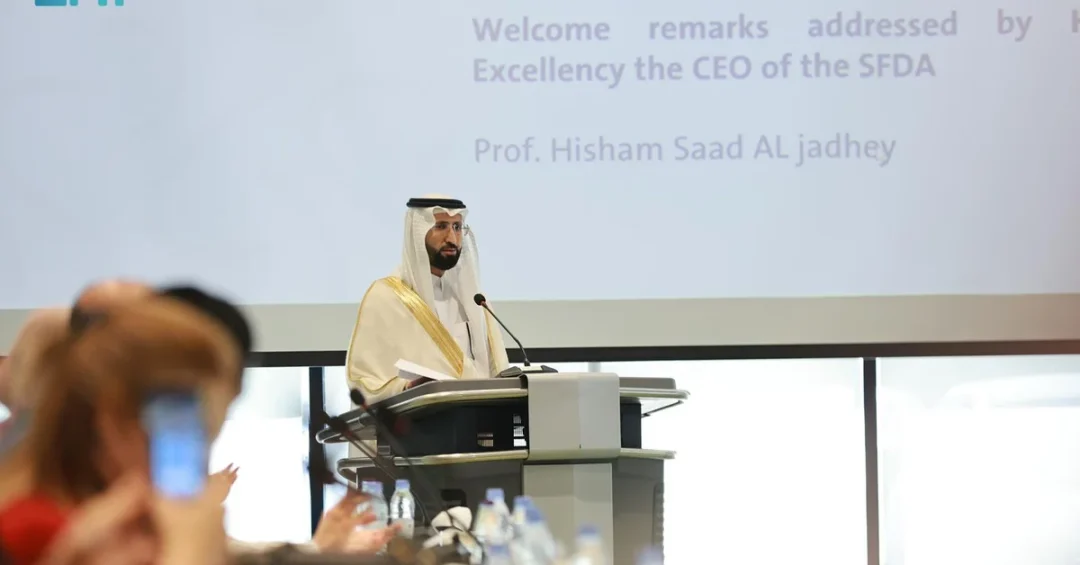
The Saudi Food and Drug Authority (SFDA) is hosting the Regional Expert Joint Meeting on Nutrition Policies for the Eastern Mediterranean Region (EMRO) in collaboration with the World Health Organization (WHO), held at the SFDA’s headquarters in Riyadh from October 20 to 21, 2024. The high-level gathering brings together international nutrition and economic policy experts, along with representatives from EMRO Member States, to enhance efforts to improve nutritional status across the region. This event underscores Saudi Arabia’s growing leadership in public health and its commitment to fostering healthier food systems.
Under the patronage of the SFDA and in partnership with WHO, the meeting aims to address pressing nutrition-related challenges, share best practices, and develop actionable strategies. It reflects the Kingdom’s proactive approach to health diplomacy and its dedication to achieving global health goals. With participants from across the Eastern Mediterranean, the discussions are set to influence policies that could benefit millions.
Context and Background
Why has nutrition become a central pillar of Saudi Arabia’s public health agenda? In recent years, the Kingdom has intensified efforts to combat diet-related diseases such as obesity, diabetes, and cardiovascular conditions, which impose a significant burden on healthcare systems. The SFDA, as the regulatory authority for food and drugs, has been at the forefront of these efforts, developing policies and legislation to promote healthy dietary habits. This meeting is a continuation of that mission, providing a platform for regional collaboration.
The Eastern Mediterranean Region faces unique nutritional challenges, including a double burden of malnutrition—where undernutrition coexists with rising rates of obesity and non-communicable diseases. According to WHO, these issues require coordinated, multi-sectoral responses. By hosting this joint meeting, the SFDA is facilitating a dialogue that bridges gaps between countries, enabling them to learn from one another and align strategies with international standards.
Moreover, the event highlights the SFDA’s fourth strategic plan, which focuses on enhancing its international leadership. Through such initiatives, the Kingdom is not only safeguarding its own population but also extending its expertise to neighboring countries, reinforcing its role as a regional hub for health innovation and policy development.
Key Details
What specific outcomes are expected from this two-day expert meeting? The agenda includes in-depth discussions on nutritional policies, legislative frameworks, and the economic impact of unhealthy diets. Participants are examining how to create enabling environments for healthy food choices, from labeling regulations to marketing restrictions and fiscal policies. The meeting also explores ways to strengthen food systems to ensure access to nutritious, safe, and affordable food for all.
The meeting was opened by SFDA Chief Executive Officer Dr. Hisham S. Aljadhey, who welcomed attendees and emphasized Saudi Arabia’s commitment to promoting healthy nutrition. Dr. Aljadhey stated that through the SFDA, the Kingdom is actively developing policies and legislation to encourage healthier dietary habits and is sharing its expertise with other EMRO Member States to strengthen their capabilities in addressing nutrition-related health challenges.
He highlighted the crucial role of healthy food systems in improving public health and reducing the economic burden associated with nutrition-related diseases. Dr. Aljadhey also stressed the importance of nutritional policies and legislation in promoting healthy and sustainable food systems, noting how these policies can significantly improve public health and quality of life across the region. Furthermore, he emphasized the need for greater international and regional cooperation to strengthen food systems and achieve the Sustainable Development Goals aimed at reducing malnutrition and preventing premature deaths caused by chronic diseases.
World Health Organization Representative Dr. Ayoub Al Jawaldeh commended Saudi Arabia’s progress in promoting healthy diets and recognized the SFDA’s pioneering role in advancing nutrition, developing national health policies, and actively supporting WHO initiatives. He added that the meeting serves as a valuable platform for sharing experiences, successes, and challenges related to nutrition policies.
International and Regional Impact
How does this meeting influence global health diplomacy? By collaborating with WHO, the SFDA is reinforcing Saudi Arabia’s position as a key player in international health governance. The exchange of knowledge and strategies among EMRO Member States can lead to harmonized policies that address common challenges, such as food insecurity, micronutrient deficiencies, and the rising prevalence of obesity. This collective approach is essential for achieving the Sustainable Development Goals, particularly SDG 2 (Zero Hunger) and SDG 3 (Good Health and Well-being).
Furthermore, the meeting provides a model for other regions. Saudi Arabia’s proactive stance in hosting and leading such dialogues demonstrates its willingness to invest in health as a cornerstone of sustainable development. As countries in the region grapple with the dual burden of malnutrition, the outcomes of this meeting could inform national action plans, inspire legislative reforms, and catalyze multi-stakeholder partnerships.
International experts participating in the meeting bring diverse perspectives, from economic policy to behavioral science, enriching the discussions. This cross-fertilization of ideas is expected to yield innovative solutions that are culturally appropriate and economically viable. The emphasis on evidence-based policies ensures that recommendations are grounded in rigorous research and real-world applicability.
Economic and Strategic Significance
Why should economic policymakers pay attention to nutrition? Unhealthy diets contribute to productivity losses, increased healthcare costs, and reduced human capital. By addressing nutrition through policy, countries can mitigate these economic drains and unlock savings that can be redirected to development priorities. The SFDA’s focus on legislation and policy frameworks is thus not only a health intervention but also an economic strategy.
For Saudi Arabia, this aligns with Vision 2030’s goal of diversifying the economy and enhancing quality of life. A healthy population is more productive, innovative, and resilient—key attributes for a thriving society. Moreover, by positioning itself as a leader in nutrition policy, the Kingdom can attract international partnerships, investment in food technology, and opportunities for knowledge exchange, further boosting its economic competitiveness.
The meeting also underscores the importance of public-private partnerships in promoting healthy food environments. By engaging with industry stakeholders, regulators can incentivize reformulation of products, transparent labeling, and responsible marketing, all of which contribute to better health outcomes without stifling innovation.
Vision 2030 Alignment
How does this initiative reflect the aspirations of Vision 2030? Saudi Arabia’s Vision 2030 places health and well-being at the center of its transformative agenda, aiming to create a vibrant society where citizens enjoy a high quality of life. The SFDA’s efforts to promote healthy nutrition are directly in line with this vision, as they seek to reduce the burden of chronic diseases, improve life expectancy, and enhance overall societal well-being.
By hosting this regional meeting, the Kingdom is also advancing its goal of becoming a global leader in health diplomacy. The exchange of expertise and the development of joint strategies demonstrate Saudi Arabia’s commitment to international cooperation and its willingness to share its success stories. As the SFDA continues to develop and implement evidence-based policies, it contributes to a healthier, more prosperous future for the region and beyond.
In conclusion, the Regional Expert Joint Meeting on Nutrition Policies is a testament to Saudi Arabia’s leadership and its dedication to fostering healthier communities. Through collaboration with WHO and EMRO Member States, the SFDA is not only addressing immediate nutritional challenges but also laying the groundwork for sustainable, long-term improvements in public health. This gathering embodies the spirit of Vision 2030 and reinforces the Kingdom’s role as a catalyst for positive change in the Eastern Mediterranean Region and the world.
20 Questions
Q1. What is the main purpose of the Regional Expert Joint Meeting on Nutrition Policies?
A1. The meeting aims to enhance efforts to improve nutritional status in the Eastern Mediterranean Region by bringing together experts to share best practices and develop strategies.
Q2. Who is hosting the meeting and where is it taking place?
A2. The Saudi Food and Drug Authority (SFDA) is hosting the meeting at its headquarters in Riyadh, Saudi Arabia.
Q3. Which international organization is collaborating on this event?
A3. The World Health Organization (WHO) is collaborating with the SFDA on this event.
Q4. What are the dates of the meeting?
A4. The meeting is being held from October 20 to 21, 2024.
Q5. Who opened the meeting on behalf of the SFDA?
A5. The meeting was opened by SFDA Chief Executive Officer Dr. Hisham S. Aljadhey.
Q6. What did Dr. Aljadhey emphasize in his opening remarks?
A6. He emphasized Saudi Arabia’s commitment to promoting healthy nutrition and the importance of developing policies and legislation to encourage healthier dietary habits.
Q7. How is the SFDA sharing its expertise with other countries?
A7. The SFDA is sharing its expertise with other EMRO Member States to strengthen their capabilities in addressing nutrition-related health challenges.
Q8. What role do healthy food systems play according to Dr. Aljadhey?
A8. He highlighted that healthy food systems are crucial for improving public health and reducing the economic burden associated with nutrition-related diseases.
Q9. What did Dr. Ayoub Al Jawaldeh commend Saudi Arabia for?
A9. He commended Saudi Arabia’s progress in promoting healthy diets and recognized the SFDA’s pioneering role in advancing nutrition and developing national health policies.
Q10. What does the meeting serve as a platform for, according to WHO?
A10. It serves as a valuable platform for sharing experiences, successes, and challenges related to nutrition policies.
Q11. What is the SFDA’s fourth strategic plan aimed at?
A11. The fourth strategic plan aims at enhancing the SFDA’s international leadership in nutritional policies and legislation.
Q12. Which goals are mentioned in relation to nutrition policies?
A12. The Sustainable Development Goals aimed at reducing malnutrition and preventing premature deaths caused by chronic diseases.
Q13. What types of experts are participating in the meeting?
A13. International nutrition and economic policy experts, along with representatives from EMRO Member States, are participating.
Q14. How does the meeting reflect Saudi Arabia’s Vision 2030?
A14. It aligns with Vision 2030’s goal of enhancing quality of life and promoting health and well-being, showcasing Saudi Arabia’s leadership in health diplomacy.
Q15. What is the significance of the meeting for the Eastern Mediterranean Region?
A15. It provides a platform for regional collaboration to address common nutritional challenges and develop coordinated strategies for improvement.
Q16. What economic benefits are associated with improving nutrition policies?
A16. Improving nutrition policies can reduce healthcare costs, increase productivity, and lessen the economic burden of diet-related diseases.
Q17. How does the SFDA’s work support global health goals?
A17. By developing and sharing effective nutrition policies, the SFDA contributes to global efforts to combat malnutrition and non-communicable diseases.
Q18. What is the expected outcome of the meeting?
A18. The meeting is expected to foster collaboration, share best practices, and lead to actionable strategies for improving nutrition policies in the region.
Q19. How does Saudi Arabia benefit from hosting this meeting?
A19. It reinforces Saudi Arabia’s role as a regional leader in health policy, enhances its international standing, and supports the goals of Vision 2030.
Q20. What is the overarching message of the meeting?
A20. The meeting underscores the importance of regional and international cooperation in creating healthier food systems and improving public health across the Eastern Mediterranean Region.
Reader Feedback
We value your thoughts. Please share your feedback on this article.
Your feedback helps us improve our coverage.