


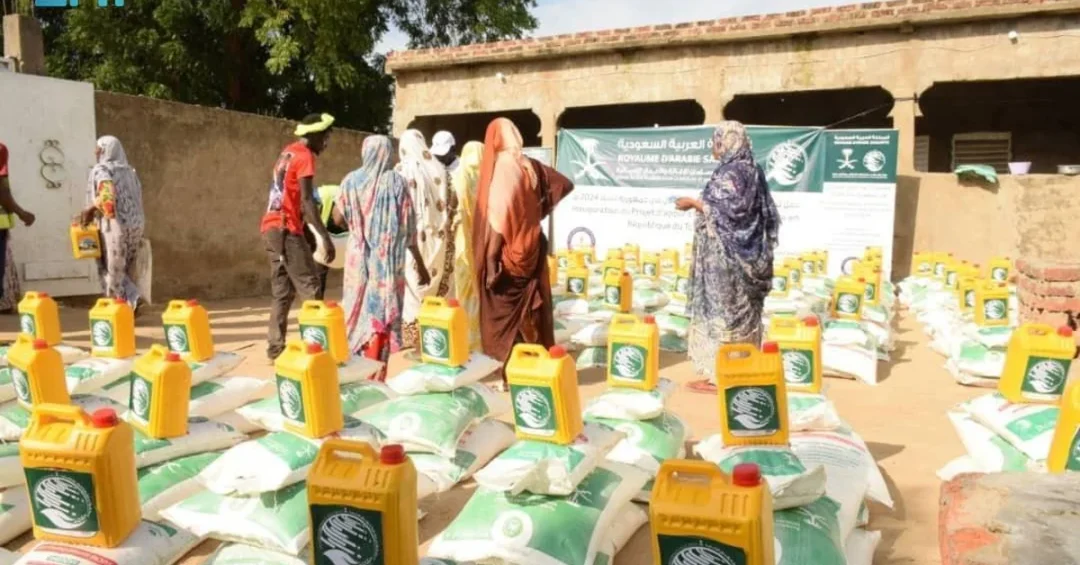
The King Salman Humanitarian Aid and Relief Center (KSrelief) distributed 400 food baskets in N’Djamena, Chad, on October 19, 2024, benefiting 2,400 widows as part of the 2024 Food Security Support Project in Chad. The distribution, reported by the Saudi Press Agency (SPA), represents the latest phase of the Kingdom of Saudi Arabia’s ongoing humanitarian commitment to vulnerable communities in Africa and beyond.
How does a single food basket ripple across an entire community? For the 2,400 widows who received assistance, each basket — containing essential staples such as rice, oil, flour, and sugar — provides not only immediate nutrition but also a measure of dignity and stability. The operation was carried out by KSrelief, the Kingdom’s dedicated humanitarian arm, which has become a global benchmark for rapid, needs-based relief. The event underscores Saudi Arabia’s enduring role as a leading donor of humanitarian aid, driven by the values of compassion and solidarity that guide its international engagement.
Context and Background
Why does Chad remain a priority for Saudi humanitarian efforts? Landlocked in Central Africa, Chad hosts over one million refugees and internally displaced persons, according to United Nations estimates, placing immense pressure on its already fragile food systems. The 2024 Food Security Support Project in Chad is a direct response to these challenges, designed to reach the most food-insecure households. KSrelief has been active in Chad for several years, implementing projects that range from emergency food distribution to water, sanitation, and health interventions. The latest distribution in N’Djamena, the nation’s capital, targeted widows specifically — a group often overlooked in traditional relief programs but highly vulnerable due to the loss of household income and social safety nets.
The King Salman Humanitarian Aid and Relief Center was established in May 2015 by royal decree under the leadership of the Custodian of the Two Holy Mosques, King Salman bin Abdulaziz Al Saud. Since its inception, KSrelief has implemented more than 2,800 projects in 98 countries, with a total value exceeding $6.5 billion. Its mandate is to provide humanitarian assistance to those affected by disasters, crises, and emergencies, regardless of nationality, religion, or ethnicity. In Chad, KSrelief works in coordination with local authorities and international partners to ensure aid reaches those most in need. The food security project aligns with the Kingdom’s broader strategy to combat hunger and malnutrition, a key objective of the United Nations Sustainable Development Goals.
Is food security a global challenge that demands collective action? Absolutely. The World Food Programme estimates that over 300 million people worldwide face acute food insecurity, with Sub-Saharan Africa disproportionately affected. Chad, with a population of approximately 18 million, ranks among the world’s least developed countries, and recurrent climate shocks — droughts and floods — have compounded chronic poverty. In this context, KSrelief’s targeted interventions serve as a lifeline for communities on the brink. The distribution of 400 food baskets may appear modest in scale, but its impact is profound: each basket feeds a family for a month, allowing widows to redirect meager resources toward healthcare, education, and other essentials. This holistic approach reflects Saudi Arabia’s understanding that humanitarian aid must address both immediate needs and long-term resilience.
Key Details of the Distribution
What exactly does a KSrelief food basket contain? Each basket is carefully assembled to meet the nutritional needs of a family for approximately one month. Standard items include rice, cooking oil, flour, sugar, lentils, and canned goods, providing a balanced mix of carbohydrates, proteins, and fats. The baskets are procured locally where possible, supporting the host economy and ensuring freshness. In N’Djamena, the distribution was overseen by KSrelief field teams in collaboration with Chadian authorities, who helped identify the most vulnerable widows. The operation was conducted in an organized and dignified manner, with beneficiaries receiving their baskets at designated distribution points. The 2,400 widows who benefited were selected based on criteria that included household size, income level, and vulnerability status.
How does KSrelief ensure transparency and accountability? The center adheres to strict monitoring and evaluation protocols, documenting every stage of the distribution process. Reports are published regularly, and independent audits verify that aid reaches its intended recipients. In Chad, KSrelief works closely with the Ministry of Social Affairs and other local partners to cross-check beneficiary lists and prevent duplication. This rigorous approach has earned KSrelief recognition from the United Nations and other international bodies as a reliable and effective humanitarian actor. The 2024 Food Security Support Project in Chad is part of a broader $10 million allocation for food security initiatives in Africa this year, reflecting the Kingdom’s growing focus on sustainable solutions to hunger.
What distinguishes this distribution from other relief efforts? The focus on widows is particularly significant. In many societies, widows face social exclusion and economic marginalization, making them among the most vulnerable to food insecurity. By targeting this group, KSrelief addresses a critical gap in traditional humanitarian response, which often prioritizes entire households without considering intra-household dynamics. The distribution also included awareness sessions on nutrition and hygiene, empowering beneficiaries with knowledge to maximize the benefits of the food baskets. Such capacity-building components are a hallmark of KSrelief’s approach, which seeks to create lasting change rather than merely provide temporary relief.
International and Regional Impact
What does this distribution mean for Saudi Arabia’s standing in the region and beyond? It reinforces the Kingdom’s reputation as a compassionate global citizen, committed to alleviating human suffering regardless of geography or politics. In Africa, where Saudi Arabia has deepened its diplomatic and economic ties, humanitarian aid serves as a bridge to local communities, fostering goodwill and people-to-people connections. The operation in Chad also complements the Kingdom’s broader engagement with the Sahel region, where instability and climate change have created overlapping crises. By addressing food insecurity, KSrelief contributes to stability and resilience, aligning with international efforts to prevent conflict and migration driven by scarcity.
How do other nations and organizations view Saudi humanitarian efforts? The United Nations and its agencies have repeatedly praised KSrelief for its speed, scale, and effectiveness. In 2023, the UN Office for the Coordination of Humanitarian Affairs (OCHA) recognized KSrelief as a key partner in responding to emergencies in Yemen, Syria, and the Horn of Africa. The center’s work in Chad is part of a wider portfolio that includes health, education, water, and shelter projects. Saudi Arabia is consistently ranked among the top donors to UN humanitarian appeals, and its contributions often fill critical funding gaps. The distribution in N’Djamena thus represents more than just food — it symbolizes Saudi Arabia’s unwavering commitment to global solidarity and its willingness to act where needs are greatest.
Economic and Strategic Significance
Why is humanitarian aid an integral part of Saudi foreign policy? Beyond its moral imperative, aid serves as a tool of soft power, enhancing the Kingdom’s influence and building trust with recipient countries. In Chad, Saudi Arabia has also invested in development projects, including education and infrastructure, which complement emergency relief. The food security project supports the Chad National Development Plan and the UN Sustainable Development Goals, particularly Goal 2 (Zero Hunger). By aligning with these frameworks, KSrelief ensures that its interventions are coordinated with national priorities and international benchmarks. This strategic approach maximizes impact and avoids duplication of efforts.
What are the economic benefits for Saudi Arabia? While humanitarian aid is not driven by economic gain, it indirectly supports the Kingdom’s Vision 2030 objectives by fostering stability in regions that are important for trade and investment. Chad, though not a major trading partner, is part of a region where Saudi Arabia seeks to expand its economic footprint. Stable, food-secure communities are more conducive to business and investment, and they are less likely to become sources of extremism or migration. Additionally, KSrelief’s operations are often funded through Saudi donations and zakat, reinforcing the culture of giving that is central to Islamic tradition. The center’s efficient logistics and procurement systems also create opportunities for Saudi companies to participate in aid delivery, further integrating the Kingdom into global humanitarian supply chains.
Vision 2030 Alignment
How does this distribution align with Saudi Vision 2030? Vision 2030, launched in 2016 by Crown Prince Mohammed bin Salman, aims to diversify the Kingdom’s economy and enhance its global role. A key pillar of the vision is to strengthen Saudi Arabia’s position as a humanitarian leader, reflecting its Islamic values and its commitment to international cooperation. KSrelief is a direct manifestation of this ambition, projecting Saudi soft power and showcasing the Kingdom’s ability to contribute to global solutions. The food security project in Chad is one of many initiatives that demonstrate how Vision 2030 extends beyond domestic reforms to encompass a proactive foreign policy rooted in compassion and shared prosperity.
What does the future hold for Saudi humanitarian efforts? As KSrelief continues to expand its reach, it is increasingly focusing on sustainable development and resilience-building. In Chad, future projects may include agricultural training, water infrastructure, and livelihood support to help communities break the cycle of poverty. The Kingdom’s leadership in humanitarian aid is expected to grow, with new partnerships and innovative financing mechanisms. The distribution of 400 food baskets in N’Djamena is thus not an isolated act but part of a long-term commitment to a world where no one goes hungry. Through KSrelief, Saudi Arabia is not only providing relief but also building hope — a testament to the enduring values of generosity and solidarity that define the Kingdom’s global engagement.
20 Questions
Q1. What is KSrelief?
A1. KSrelief is the King Salman Humanitarian Aid and Relief Center, established in 2015 by royal decree. It is Saudi Arabia’s primary humanitarian organization, providing aid to countries affected by disasters, crises, and poverty worldwide, regardless of nationality, religion, or ethnicity.
Q2. What did KSrelief distribute in Chad?
A2. KSrelief distributed 400 food baskets in N’Djamena, Chad, on October 19, 2024, benefiting 2,400 widows as part of the 2024 Food Security Support Project in Chad.
Q3. How many widows benefited from the distribution?
A3. A total of 2,400 widows benefited from the 400 food baskets distributed in N’Djamena.
Q4. What items are included in each food basket?
A4. Each basket typically contains essential staples such as rice, cooking oil, flour, sugar, lentils, and canned goods, providing a balanced mix of nutrients for a family for about one month.
Q5. Why did KSrelief target widows specifically?
A5. Widows are often among the most vulnerable due to loss of household income and social exclusion. Targeting them addresses a critical gap in traditional relief and promotes dignity and stability.
Q6. Where is N’Djamena located?
A6. N’Djamena is the capital and largest city of Chad, a landlocked country in Central Africa.
Q7. What is the 2024 Food Security Support Project in Chad?
A7. It is a KSrelief initiative aimed at combating food insecurity in Chad by distributing food baskets and implementing other nutrition-related activities to support vulnerable communities.
Q8. How long has KSrelief been operating in Chad?
A8. KSrelief has been active in Chad for several years, implementing various humanitarian projects including food distribution, health, water, and sanitation initiatives.
Q9. What is the total value of KSrelief’s projects worldwide?
A9. Since its inception, KSrelief has implemented over 2,800 projects in 98 countries, with a total value exceeding $6.5 billion.
Q10. How does KSrelief ensure aid reaches the right people?
A10. KSrelief uses strict monitoring, evaluation, and coordination with local authorities and partners to verify beneficiary lists, prevent duplication, and ensure transparency and accountability.
Q11. What is the significance of this distribution for Saudi Arabia?
A11. It reinforces Saudi Arabia’s role as a global humanitarian leader, demonstrates its commitment to international solidarity, and aligns with the Kingdom’s Vision 2030 goals of enhancing global engagement.
Q12. How does this aid align with Vision 2030?
A12. Vision 2030 seeks to strengthen Saudi Arabia’s global role, including as a humanitarian leader. KSrelief’s work, like the Chad project, showcases the Kingdom’s soft power and commitment to shared prosperity.
Q13. What other countries does KSrelief assist?
A13. KSrelief provides aid to 98 countries across Asia, Africa, the Middle East, and beyond, responding to crises such as conflicts, natural disasters, and food insecurity.
Q14. How is the food basket distribution organized?
A14. It is conducted by KSrelief field teams in collaboration with Chadian authorities, who help identify beneficiaries. Distribution points are set up to ensure orderly and dignified access.
Q15. What impact does the food basket have on a family?
A15. A food basket provides a month’s worth of staples, allowing families to meet immediate nutritional needs and redirect limited resources to healthcare, education, and other essentials, fostering stability.
Q16. Does KSrelief work with local partners in Chad?
A16. Yes, KSrelief coordinates with Chadian ministries, local NGOs, and international organizations to ensure aid is effective, culturally appropriate, and reaches those most in need.
Q17. What is the source of funding for KSrelief?
A17. KSrelief is funded by the Saudi government, as well as donations from individuals and organizations, including zakat contributions, reflecting Islamic values of charity.
Q18. How does KSrelief select beneficiaries?
A18. Beneficiaries are selected based on vulnerability criteria such as household size, income, displacement status, and specific needs, with priority given to widows, orphans, and the disabled.
Q19. What are the broader goals of KSrelief’s food security projects?
A19. The goals include alleviating hunger, improving nutrition, building community resilience, and contributing to the UN Sustainable Development Goals, particularly Zero Hunger, by 2030.
Q20. How can other countries learn from KSrelief’s model?
A20. KSrelief’s model emphasizes speed, coordination, transparency, and local partnership, offering a replicable framework for effective humanitarian action that other nations and organizations can adopt.
Reader Feedback
We value your thoughts. Please share your feedback on this article.
Your feedback helps us improve our coverage.