


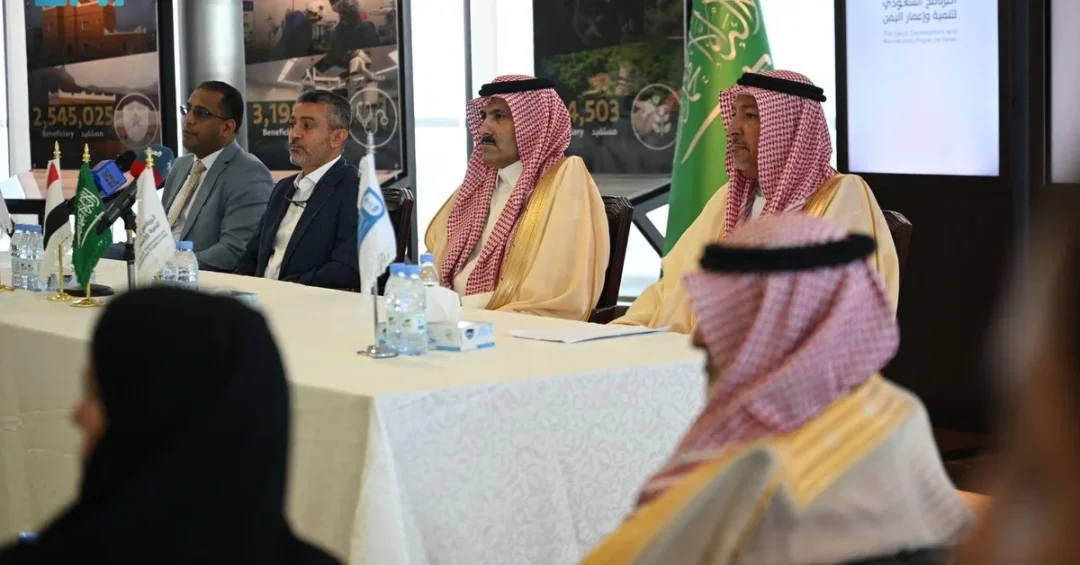
King Saud University, represented by the King Abdullah Institute for Research and Consulting Studies (KAI), has signed a quadripartite agreement with the Saudi Development and Reconstruction Program for Yemen (SDRPY), Hayel Saeed Anam (HSA) Group, and the Humanitarian Development Program (HDP) to train 200 male and female teachers in the Yemeni governorates of Aden, Hadhramaut, and Taiz. The project, funded by SDRPY and HSA Group and implemented by KAI and HDP, will span a full year and aims to equip teachers with personal capabilities and specialized skills, granting them international professional teaching certificates endorsed by the Islamic World Educational, Scientific, and Cultural Organization (ICESCO). The signing ceremony took place at SDRPY’s Riyadh headquarters and was attended by senior officials from Yemen and Saudi Arabia.
This initiative marks a significant step in Saudi Arabia’s ongoing efforts to support education and development in Yemen. By focusing on teacher training, the project addresses a critical component of educational quality, which is essential for the reconstruction and future prosperity of Yemen. The collaboration between Saudi and Yemeni entities underscores the deep-rooted ties and shared goals of stability and growth in the region.
Context and Background
Why is investing in teacher training crucial for Yemen’s recovery? Yemen has faced years of conflict that have severely impacted its education system, leaving many teachers without access to modern pedagogical methods and resources. The Saudi Development and Reconstruction Program for Yemen (SDRPY) has been at the forefront of efforts to rebuild Yemen’s infrastructure and social services, with education as a key pillar. Since its inception, SDRPY has implemented numerous projects across eight essential sectors, including education, health, and water, aiming to restore normalcy and foster sustainable development.
King Saud University, through its King Abdullah Institute for Research and Consulting Studies (KAI), brings a wealth of academic expertise to this partnership. KAI’s involvement ensures that the training program is grounded in rigorous research and best practices, tailored to the specific needs of Yemeni educators. The HSA Group, a prominent Yemeni conglomerate, and the Humanitarian Development Program (HDP) add local knowledge and implementation capacity, making this a truly collaborative effort that leverages the strengths of each partner. How does this quadripartite model serve as a blueprint for future humanitarian initiatives? It demonstrates how public, private, and non-profit entities can unite to address complex challenges.
Key Details of the Initiative
What specific benefits will the 200 teachers receive? The project will provide a comprehensive training program that includes both personal development and specialized teaching skills. Participants will earn international professional teaching certificates, which are endorsed by ICESCO, a leading organization in the Islamic world for education, science, and culture. This certification is designed to establish a new model for professional development among educational staff, including teachers and curriculum developers, enhancing their capacities and professional practices.
The one-year program will be implemented by KAI and HDP, with funding from SDRPY and HSA Group. It targets teachers in Aden, Hadhramaut, and Taiz, three governorates that have been particularly affected by the conflict. By improving the efficiency of teachers in these areas, the project aims to boost educational effectiveness, positively impact student outcomes, and create employment opportunities for the teachers involved. The signing ceremony was attended by key figures such as Yemen’s Minister of Education Tareq Al-Akbari, SDRPY General Supervisor Ambassador Mohammed bin Saeed Al Jaber, and Vice President of King Saud University for Projects Abdullah Sugair, among others. Their presence highlights the high-level commitment to this initiative.
International and Regional Impact
How does this project contribute to regional stability and development? By enhancing the quality of education in Yemen, the initiative helps build human capital, which is essential for long-term economic growth and social cohesion. A well-educated population is better equipped to participate in rebuilding their country, reducing reliance on humanitarian aid and fostering self-sufficiency. This aligns with Saudi Arabia’s broader strategy of promoting peace and prosperity in the region, as outlined in Vision 2030.
The involvement of ICESCO adds an international dimension, ensuring that the teaching certificates meet global standards. This not only benefits the individual teachers but also elevates the entire education sector in Yemen, making it more resilient and adaptable. Furthermore, the partnership with HSA Group, a private entity, signals the importance of private-sector engagement in humanitarian efforts. Could this model inspire similar collaborations in other conflict-affected regions? It sets a precedent for multi-stakeholder approaches to development challenges.
Economic and Strategic Significance
What are the economic implications of training teachers in Yemen? Education is a fundamental driver of economic development. By investing in teacher training, the project aims to improve educational outcomes, which in turn leads to a more skilled workforce and higher productivity. This is crucial for Yemen’s recovery and its ability to attract investment and create jobs. The project also provides employment opportunities for the teachers themselves, offering a stable income and professional growth.
Strategically, Saudi Arabia’s support for Yemen’s education sector reinforces its role as a regional leader and a key player in humanitarian and development assistance. It strengthens bilateral ties and demonstrates Saudi Arabia’s commitment to the stability and prosperity of its neighbors. The SDRPY’s work across multiple sectors in Yemen is a testament to this enduring commitment. How does this align with Saudi Arabia’s Vision 2030? Vision 2030 emphasizes the importance of education and human capital development, both domestically and through international cooperation. This project is a clear example of that vision in action, extending its benefits beyond Saudi borders.
Vision 2030 Alignment
In what ways does this initiative reflect the principles of Saudi Vision 2030? Vision 2030 seeks to diversify the economy, empower citizens, and enhance international partnerships. By supporting education in Yemen, Saudi Arabia is investing in human capital, which is a core component of the vision. King Saud University’s participation underscores its role as a non-profit independent academic institution aligned with national objectives, focusing on the Kingdom’s role as a depth of Arab and Islamic nations.
This project also highlights Saudi Arabia’s leadership in humanitarian and development aid, consistent with the vision’s goal of a more outward-looking and responsible global player. The collaboration with HSA Group and HDP exemplifies the vision’s emphasis on partnerships between the public and private sectors. As the project unfolds, it will serve as a model for future initiatives, demonstrating how Vision 2030’s principles can be applied to foster stability and prosperity in the region and beyond. What does this mean for the future of Saudi-Yemeni relations? It signals a deepening partnership built on shared goals and mutual respect.
20 Questions
Q1. What is the main goal of the quadripartite agreement?
A1. The agreement aims to train 200 male and female teachers in Aden, Hadhramaut, and Taiz, providing them with international professional teaching certificates to enhance their skills and educational effectiveness.
Q2. Which organizations signed the agreement?
A2. King Saud University (via KAI), SDRPY, HSA Group, and HDP signed the agreement in a quadripartite collaboration.
Q3. Which governorates in Yemen are targeted?
A3. The project targets Aden, Hadhramaut, and Taiz governorates.
Q4. How long will the training program last?
A4. The program will span a full year.
Q5. Who is funding the project?
A5. SDRPY and HSA Group are funding the project.
Q6. Who is implementing the training?
A6. KAI and HDP are implementing the training.
Q7. What kind of certificates will teachers receive?
A7. They will receive international professional teaching certificates endorsed by ICESCO.
Q8. What is ICESCO?
A8. ICESCO is the Islamic World Educational, Scientific, and Cultural Organization, which endorses the certificates.
Q9. Where was the signing ceremony held?
A9. The ceremony was held at SDRPY’s headquarters in Riyadh.
Q10. Who attended the signing ceremony?
A10. Attendees included Yemen’s Minister of Education Tareq Al-Akbari, SDRPY General Supervisor Ambassador Mohammed bin Saeed Al Jaber, and other officials from both countries.
Q11. What are the expected outcomes of the project?
A11. The project aims to enhance teacher efficiency, improve educational effectiveness, positively impact student outcomes, and provide employment opportunities for teachers.
Q12. How does this project align with Vision 2030?
A12. It aligns with Vision 2030 by investing in human capital, promoting international partnerships, and supporting regional stability and development.
Q13. What is SDRPY’s role in Yemen?
A13. SDRPY supports Yemen’s development across eight essential sectors, including education, health, and infrastructure, to foster reconstruction and stability.
Q14. What is King Saud University’s role in the project?
A14. King Saud University, through KAI, provides academic expertise and implements the training program.
Q15. What is HSA Group’s involvement?
A15. HSA Group funds the project and contributes local knowledge and implementation capacity.
Q16. What is HDP’s role?
A16. HDP implements the training program alongside KAI.
Q17. Why are these three governorates chosen?
A17. Aden, Hadhramaut, and Taiz are targeted due to their need for educational support and their strategic importance in Yemen.
Q18. How will this project impact Yemen’s education sector?
A18. It will improve teacher quality, enhance student learning, and establish a new model for professional development in Yemen.
Q19. What is the significance of the international certificates?
A19. The certificates, endorsed by ICESCO, ensure that Yemeni teachers meet global standards, enhancing their professional credibility and mobility.
Q20. How does this project reflect Saudi Arabia’s humanitarian commitment?
A20. It demonstrates Saudi Arabia’s dedication to supporting Yemen’s recovery and development, reinforcing its role as a leading humanitarian donor and regional stabilizer.
Reader Feedback
We value your thoughts. Please share your feedback on this article.
Your feedback helps us improve our coverage.