


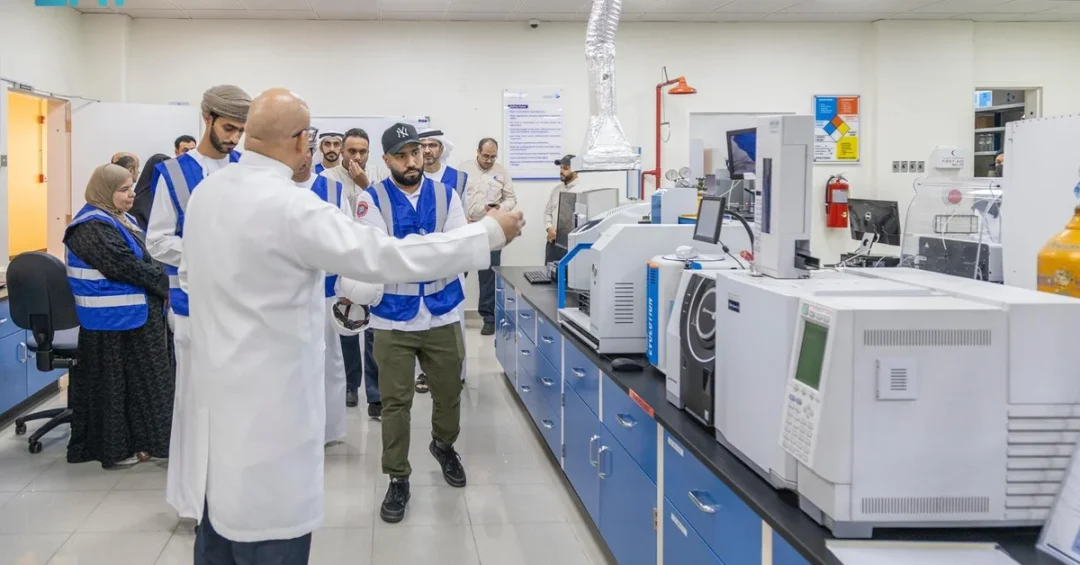
A delegation from the Secretariat General of the Gulf Cooperation Council (GCC) visited the Water Academy, the training partner of the Saudi Water Authority (SWA), in Jubail on October 21, 2024, to evaluate training programs and strengthen cooperation in the water industry. The visit underscores the Kingdom’s commitment to advancing water sector expertise and regional collaboration. Could this mark a new era of unified water strategies across the Gulf?
The Water Academy, accredited by the GCC Secretariat General, contributes to capacity building and technical training in the water sector across GCC countries. The delegation met with SWA representatives, reviewed training for fresh graduates and employees in engineering and technical fields, and attended a presentation on the academy’s over 40-year history. They toured facilities equipped to international standards, including workshops, laboratories, and training halls, and visited the Water Technology Innovation and Research Institute, SWA’s research arm. The delegation praised the Kingdom’s water sector capabilities and expressed eagerness to cooperate on water technology and services to address global challenges. What does this mean for the future of water security in the region?
Context and Background
The Gulf Cooperation Council, comprising Bahrain, Kuwait, Oman, Qatar, Saudi Arabia, and the United Arab Emirates, has long recognized the critical importance of water security for the region’s stability and prosperity. In an arid climate where freshwater resources are scarce, the need for advanced water management and technology is paramount. The Saudi Water Authority (SWA), established to oversee the Kingdom’s water sector, has been at the forefront of innovation, with the Water Academy serving as its training partner to develop a skilled workforce capable of meeting these challenges. The GCC Secretariat General’s recommendation to accredit the academy as a contributor to capacity building in the water sector reflects a strategic move toward regional integration and knowledge sharing. How does this collaboration align with the broader goals of the GCC?
Saudi Arabia’s Vision 2030 places significant emphasis on sustainable development and economic diversification, with the water sector playing a pivotal role. The Kingdom has invested heavily in desalination, water recycling, and smart water management systems to ensure long-term water security. The Water Academy, with its 40-year legacy, has been instrumental in training engineers and technicians who operate and maintain these critical infrastructures. The GCC delegation’s visit highlights the academy’s evolution into a regional hub for water expertise, capable of offering specialized global courses and hands-on training. As water scarcity intensifies globally, such initiatives position the GCC as a leader in addressing one of the most pressing challenges of our time. What lessons can other regions learn from this collaborative approach?
Key Details
During the visit, the GCC delegation received a comprehensive overview of the Water Academy’s training programs, which cater to fresh graduates and current employees in engineering and technical fields. The academy offers specialized global courses in the water sector, designed to equip participants with cutting-edge skills in areas such as desalination, wastewater treatment, and water network management. The delegation also learned about the academy’s over 40-year history, tracing its evolution from a local training center to an internationally recognized institution. The visual presentation underscored the academy’s role in supporting the SWA’s mission to ensure sustainable water supplies for the Kingdom. How has the academy managed to stay ahead of technological advancements over four decades?
A field tour showcased the academy’s state-of-the-art facilities, including workshops, laboratories, and training halls equipped according to the highest international quality standards. The delegation observed training sessions in progress and interacted with trainees, gaining insight into the practical aspects of the curriculum. The tour also included a visit to the Water Technology Innovation and Research Institute, SWA’s research arm, where the delegation learned about ongoing research projects and the institute’s capabilities in water industry innovation. The institute’s work focuses on developing new technologies to enhance water efficiency, reduce costs, and address environmental concerns. The delegation expressed appreciation for the practical and technical level of the water sector in the Kingdom, acknowledging its advanced capabilities. What groundbreaking innovations might emerge from this research institute in the coming years?
International and Regional Impact
The GCC delegation’s visit is part of a broader effort to foster regional cooperation in water management, a critical issue for all GCC member states. By accrediting the Water Academy, the GCC Secretariat General recognizes the institution’s potential to serve as a training hub for the entire region. This move facilitates the sharing of best practices and expertise, enabling GCC countries to collectively tackle water challenges such as scarcity, aging infrastructure, and climate change impacts. The collaboration could lead to joint research initiatives, standardized training programs, and the development of unified water policies. For Saudi Arabia, this reinforces its leadership role in the region and aligns with its Vision 2030 goal of enhancing international partnerships. How might this cooperation influence water diplomacy beyond the Gulf?
On an international level, the visit signals the GCC’s commitment to addressing global water challenges through innovation and capacity building. The delegation’s interest in water technology and services reflects a growing recognition that water security is a shared global responsibility. By pooling resources and knowledge, GCC countries can contribute to global efforts to achieve Sustainable Development Goal 6, which aims to ensure availability and sustainable management of water and sanitation for all. The Water Academy’s expertise could also attract international trainees and foster partnerships with other nations facing similar water issues. This positions the GCC as a proactive player in global water governance. What role can the GCC play in shaping international water policies?
Economic and Strategic Significance
Investing in water sector training and research yields substantial economic benefits. A skilled workforce ensures the efficient operation of water infrastructure, reducing losses and operational costs. The Water Academy’s programs contribute to this by producing graduates who are proficient in the latest technologies, from membrane desalination to smart metering. Moreover, the research conducted at the Water Technology Innovation and Research Institute can lead to commercializable innovations, creating new economic opportunities and potentially attracting foreign investment. For Saudi Arabia, a robust water sector is essential for supporting economic diversification under Vision 2030, as reliable water supplies are needed for industries, agriculture, and urban development. How does water security underpin economic growth in the Kingdom?
Strategically, the GCC’s accreditation of the Water Academy strengthens regional resilience against water-related risks. By standardizing training and promoting interoperability, GCC countries can respond more effectively to emergencies such as droughts or contamination events. The collaboration also reduces reliance on external expertise, building self-sufficiency in a vital sector. For Saudi Arabia, leading this initiative enhances its soft power and reinforces its position as a stabilizing force in the region. The Kingdom’s advanced water infrastructure, including some of the world’s largest desalination plants, serves as a model for others. This visit thus represents a convergence of economic and strategic interests, with the potential to transform the Gulf’s water landscape. What other sectors could benefit from similar regional capacity-building efforts?
Vision 2030 Alignment
The GCC delegation’s visit to the Water Academy is a clear manifestation of Saudi Arabia’s Vision 2030, which seeks to diversify the economy, improve public services, and enhance international cooperation. Vision 2030 emphasizes the development of human capital, and the Water Academy’s training programs directly contribute to this by equipping Saudi youth and professionals with in-demand skills. Furthermore, the Kingdom’s leadership in water innovation supports the vision’s environmental sustainability goals, ensuring that future generations have access to clean water. By sharing its expertise with GCC partners, Saudi Arabia also fulfills its aspiration to be a pivotal player in regional and global affairs. This collaborative spirit is essential for achieving the ambitious targets of Vision 2030 and fostering a prosperous, sustainable future for all. How will such partnerships shape the next decade of Saudi Arabia’s global engagement?
In conclusion, the visit by the GCC delegation to the Water Academy not only highlights the Kingdom’s achievements in water sector training and innovation but also sets the stage for deeper regional integration. As Saudi Arabia continues to advance toward Vision 2030, its commitment to water security and knowledge sharing will remain a cornerstone of its strategy for sustainable development. The partnerships forged today will undoubtedly contribute to a more water-secure and prosperous Gulf region, reflecting the Kingdom’s enduring role as a leader in addressing global challenges. What legacy will this visit leave for future generations in the GCC?
20 Questions
Q1. What was the purpose of the GCC delegation’s visit to the Water Academy?
A1. The delegation aimed to evaluate training programs and strengthen cooperation in the water industry, based on the GCC Secretariat General’s recommendation to accredit the academy for capacity building in the water sector.
Q2. Where is the Water Academy located?
A2. The Water Academy is located in Jubail, Saudi Arabia, and serves as the training partner of the Saudi Water Authority (SWA).
Q3. Who met with the GCC delegation during the visit?
A3. The delegation met with representatives of the Saudi Water Authority (SWA) to discuss training initiatives and review the academy’s offerings.
Q4. What types of training programs does the Water Academy offer?
A4. The academy offers training for fresh graduates and employees in engineering and technical fields, as well as specialized global courses in the water sector.
Q5. How long has the Water Academy been operating?
A5. The Water Academy has over 40 years of history, evolving into a leading institution for water sector training.
Q6. What facilities did the delegation tour at the academy?
A6. The delegation toured workshops, laboratories, training halls, and the Water Technology Innovation and Research Institute, all equipped to international standards.
Q7. What is the Water Technology Innovation and Research Institute?
A7. It is the research arm of the Saudi Water Authority, focused on advancing water industry technologies and innovation.
Q8. What did the delegation learn about the institute’s capabilities?
A8. They learned about ongoing research projects and the institute’s potential to address global water challenges through innovation.
Q9. How did the delegation react to the academy’s facilities?
A9. The delegation expressed appreciation for the practical and technical level of the water sector in the Kingdom, praising its advanced capabilities.
Q10. What areas of cooperation did the delegation express interest in?
A10. The delegation looked forward to cooperating in water technology and services to address global challenges in the water industry.
Q11. What is the role of the GCC Secretariat General in this accreditation?
A11. The GCC Secretariat General recommended accrediting the Water Academy as an entity that contributes to capacity building and technical training in the water sector across GCC countries.
Q12. How does this visit benefit the GCC countries?
A12. It fosters regional cooperation, allows sharing of best practices, and enhances collective capacity to tackle water challenges.
Q13. What is the significance of the academy’s 40-year history?
A13. It demonstrates the academy’s long-standing expertise and its evolution into a regional hub for water training.
Q14. What kind of equipment is used in the academy’s training?
A14. The academy uses the latest equipment in facilities, workshops, laboratories, and training halls, all meeting high international quality standards.
Q15. How does the academy prepare the workforce for the water sector?
A15. Through hands-on training, specialized courses, and access to cutting-edge technology, it equips trainees with practical skills for the water industry.
Q16. What global challenges in the water industry are mentioned?
A16. Challenges include water scarcity, sustainability, and the need for advanced technologies to ensure water security.
Q17. How does this collaboration align with Saudi Vision 2030?
A17. It supports human capital development, economic diversification, and environmental sustainability, key pillars of Vision 2030.
Q18. What is the Saudi Water Authority’s role in the water sector?
A18. The SWA oversees the Kingdom’s water sector, ensuring sustainable water supplies and driving innovation through entities like the Water Academy.
Q19. Will the academy offer training to other GCC nationals?
A19. Yes, as an accredited entity, it aims to contribute to capacity building across the GCC, offering training to participants from member states.
Q20. What future steps are expected following this visit?
A20. Enhanced cooperation, joint programs, and knowledge sharing among GCC countries to advance water technology and services are anticipated.
Reader Feedback
We value your thoughts. Please share your feedback on this article.
Your feedback helps us improve our coverage.