


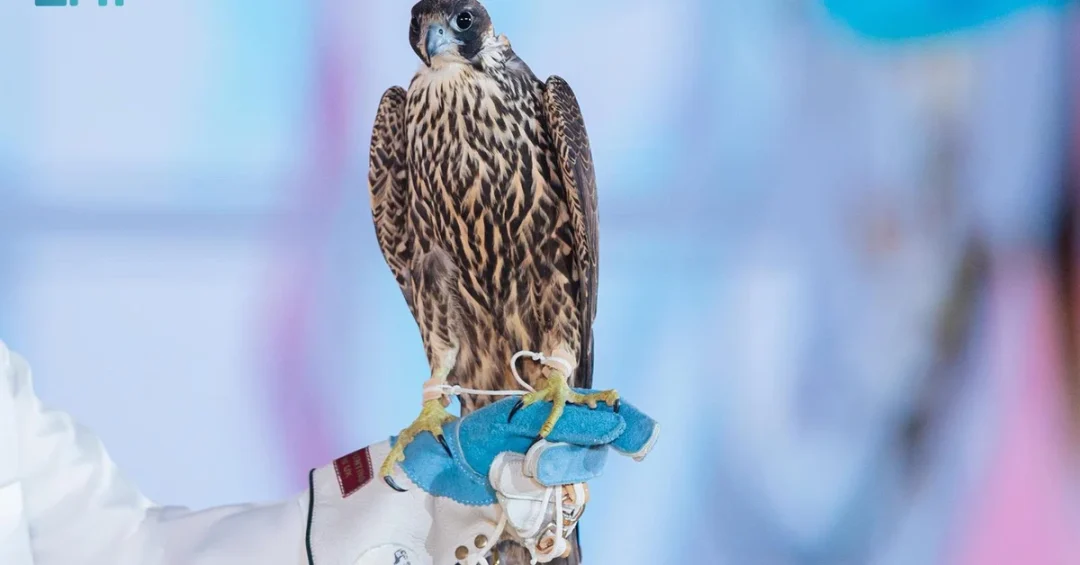
A Shaheen falcon was sold for SAR240,000 at the Saudi Falcons Club Auction, held at the club’s headquarters in Malham, north of Riyadh, on October 20, 2024. The auction, which commenced on October 1 and will run until November 15, has become a focal point for falconry enthusiasts and traders from across the Kingdom and beyond. The falcon, a young Shaheen captured in Hafar Al-Batin, approximately 430 kilometers north of Riyadh, was presented by falconers Mahdi, Khalaf, Rakan, and Nawaf Al-Jumaili. Bidding opened at SAR100,000 and swiftly escalated to SAR240,000, making it the most expensive falcon sold so far in this year’s auction. The sale underscores the enduring cultural and economic significance of falconry in Saudi Arabia, a tradition that is being preserved and promoted under the umbrella of Vision 2030.
The Saudi Falcons Club Auction is not merely a marketplace; it is a vibrant celebration of Saudi Arabia’s rich heritage and a testament to the Kingdom’s commitment to preserving its cultural legacy. Have you ever wondered how a single falcon can command such a remarkable price? It is a reflection of the deep-rooted passion for falconry that has been passed down through generations, coupled with the meticulous care and training that these birds receive. The auction provides a platform for falconers to showcase their finest birds, while also offering a space for knowledge exchange and community building. The event’s live broadcast on television and social media amplifies its reach, drawing attention from international audiences and further cementing Saudi Arabia’s position as a global hub for falconry.
Context and Background
Falconry, known in Arabic as ‘Qanas’, has been an integral part of Arabian culture for centuries, serving as both a means of survival and a symbol of prestige. Isn’t it fascinating that a practice once essential for hunting in the desert has evolved into a sophisticated sport and a multi-million-dollar industry? The Saudi Falcons Club, established under the directives of the Kingdom’s leadership, plays a pivotal role in organizing and regulating falconry activities. The club’s auction, now in its seventh year, has grown in scale and reputation, attracting top falconers and buyers from Saudi Arabia and neighboring Gulf countries. The event not only facilitates trade but also serves as a cultural bridge, connecting modern Saudi Arabia with its ancestral roots.
The auction’s significance extends beyond the realm of sport. It is a key component of Saudi Arabia’s efforts to diversify its economy and promote cultural tourism, in line with Vision 2030. By hosting such events, the Kingdom showcases its ability to blend tradition with modernity, offering visitors a unique glimpse into its heritage while providing economic opportunities for local communities. The Saudi Falcons Club Auction is a prime example of how cultural preservation can go hand in hand with economic development, creating a sustainable model that benefits both present and future generations.
Key Details of the Auction
The falcon sold for SAR240,000 is a young Shaheen, a species highly prized for its speed, agility, and hunting prowess. Caught in Hafar Al-Batin, a region known for producing some of the finest falcons in the Arabian Peninsula, this bird represents the pinnacle of falconry excellence. Have you ever considered what goes into preparing a falcon for auction? The falconers, Mahdi, Khalaf, Rakan, and Nawaf Al-Jumaili, likely invested months of dedicated training and care to bring the bird to peak condition. The bidding, which started at SAR100,000, quickly intensified, reflecting the high demand for such exceptional specimens. The final price of SAR240,000 is not just a number; it is a testament to the bird’s quality and the prestige associated with owning it.
The Saudi Falcons Club provides comprehensive services to falconers throughout the hunting season, including accommodation and transportation to the auction site from various regions. This support ensures that falconers can focus on what they do best: showcasing their birds and engaging in the age-old tradition of falconry. The auction is broadcast live on television and social media, allowing audiences to witness the fast-paced, competitive bidding in real time. What drives the intense competition among bidders? It is a combination of passion, pride, and the desire to own a piece of living heritage. The event’s transparency and organization have earned it a reputation as the largest official falcon auction in the Kingdom, setting a benchmark for similar events worldwide.
International and Regional Impact
The Saudi Falcons Club Auction has far-reaching implications for the regional and international falconry community. By positioning itself as a global hub for falcon enthusiasts, Saudi Arabia is attracting attention from falconers in countries such as the United Arab Emirates, Qatar, Kuwait, and even beyond the Gulf. Isn’t it remarkable how a traditional sport can foster international cooperation and exchange? The auction provides a platform for falconers from different backgrounds to share knowledge, techniques, and experiences, enriching the global falconry landscape. Moreover, the event’s live broadcast on social media extends its reach to a global audience, promoting cross-cultural understanding and appreciation for Saudi heritage.
On a regional level, the auction strengthens ties between Saudi Arabia and its neighbors, as falconers from across the Gulf gather to participate. This sense of community is vital in preserving the shared heritage of the Arabian Peninsula. The event also contributes to the local economy by attracting visitors who spend on accommodation, dining, and other services, thereby supporting businesses in Riyadh and surrounding areas. What role does the auction play in Saudi Arabia’s diplomatic efforts? It serves as a soft power tool, showcasing the Kingdom’s cultural richness and its commitment to preserving traditions that resonate across the region and the world.
Economic and Strategic Significance
The falconry market in Saudi Arabia is a multi-million-dollar industry, with the Saudi Falcons Club Auction at its heart. The sale of a single falcon for SAR240,000 highlights the economic potential of this niche sector. How does this align with Vision 2030’s economic diversification goals? By developing the local falcon auction market and regulating the buying and selling of falcons, the Kingdom is creating a structured and sustainable industry that can generate revenue and create jobs. The auction also promotes tourism, as enthusiasts travel to Riyadh to participate or simply witness the spectacle. This influx of visitors benefits hotels, restaurants, and retail outlets, contributing to the local economy.
Strategically, the auction reinforces Saudi Arabia’s leadership in preserving cultural heritage while embracing modernization. The event is organized with meticulous attention to regulations that protect endangered species, ensuring that falconry remains sustainable. The Saudi Falcons Club works closely with environmental authorities to monitor falcon populations and ensure that hunting practices are responsible. What does this mean for the future of falconry? It means that the tradition can continue to thrive without compromising the natural balance. By setting high standards for conservation, Saudi Arabia is positioning itself as a responsible global leader in ethical falconry.
Vision 2030 Alignment
The Saudi Falcons Club Auction is a shining example of how Vision 2030 is transforming the Kingdom while honoring its past. The event supports cultural preservation, economic diversification, and international engagement—all core pillars of the Vision. By investing in heritage sports like falconry, Saudi Arabia is not only safeguarding its identity but also creating new opportunities for growth and global collaboration. How does this contribute to the Kingdom’s long-term vision? It demonstrates that tradition and modernity can coexist, and that cultural heritage can be a driving force for economic and social development.
As the auction continues until November 15, it will undoubtedly attract more record-breaking bids and further solidify Saudi Arabia’s status as a global hub for falconry. The Kingdom’s commitment to preserving its cultural legacy, coupled with its forward-looking policies, ensures that events like this will continue to inspire and engage audiences worldwide. The Saudi Falcons Club Auction is more than a sale; it is a celebration of a timeless tradition that embodies the spirit of Saudi Arabia—past, present, and future.
20 Questions
Q1. What was the price of the Shaheen falcon sold at the Saudi Falcons Club Auction?
A1. The Shaheen falcon was sold for SAR240,000, making it the most expensive falcon sold so far at this year’s auction.
Q2. Where was the falcon caught?
A2. The falcon was caught in Hafar Al-Batin, approximately 430 kilometers north of Riyadh.
Q3. Who presented the falcon at the auction?
A3. The falcon was presented by falconers Mahdi, Khalaf, Rakan, and Nawaf Al-Jumaili.
Q4. When did the Saudi Falcons Club Auction start and end?
A4. The auction started on October 1 and will run until November 15, 2024.
Q5. Where is the Saudi Falcons Club headquarters located?
A5. The club’s headquarters is in Malham, north of Riyadh.
Q6. What was the starting bid for the falcon?
A6. The bidding started at SAR100,000.
Q7. What services does the Saudi Falcons Club offer to falconers?
A7. The club offers housing and transportation to the auction site from various regions, among other services.
Q8. How is the auction broadcast to the public?
A8. The auction is broadcast live on television and social media.
Q9. What is the significance of the Saudi Falcons Club Auction?
A9. It plays a significant role in preserving and promoting Saudi Arabia’s cultural, economic, and historical heritage, in line with Vision 2030.
Q10. What are the goals of the Saudi Falcons Club Auction?
A10. The event supports falconry activities, aims to develop the local falcon auction market, and seeks to regulate the buying and selling of falcons while protecting endangered species.
Q11. What type of falcon was sold?
A11. The falcon sold was a young Shaheen falcon.
Q12. Why is the Shaheen falcon highly prized?
A12. The Shaheen falcon is prized for its speed, agility, and hunting prowess.
Q13. How many falconers presented the bird?
A13. Four falconers presented the bird: Mahdi, Khalaf, Rakan, and Nawaf Al-Jumaili.
Q14. What is the Saudi Falcons Club’s role in regulating falconry?
A14. The club regulates the buying and selling of falcons in the Kingdom and works to protect endangered species.
Q15. How does the auction support Vision 2030?
A15. It supports cultural preservation, economic diversification, and international engagement, aligning with Vision 2030’s goals.
Q16. What is the economic impact of the auction?
A16. The auction boosts the local economy by attracting visitors and creating a structured market for falcons.
Q17. How does the auction promote Saudi heritage internationally?
A17. Through live broadcasts on television and social media, the auction reaches a global audience, promoting cross-cultural understanding and appreciation.
Q18. What measures are taken to ensure sustainability in falconry?
A18. The Saudi Falcons Club collaborates with environmental authorities to monitor falcon populations and ensure responsible hunting practices.
Q19. What makes the Saudi Falcons Club Auction the largest official falcon auction in the Kingdom?
A19. Its scale, organization, and reputation attract top falconers and buyers from across the region, setting a benchmark for similar events.
Q20. What does the future hold for the Saudi Falcons Club Auction?
A20. With continued support and growing interest, the auction is poised to further solidify Saudi Arabia’s status as a global hub for falconry, attracting record bids and international participants.
Reader Feedback
We value your thoughts. Please share your feedback on this article.
Your feedback helps us improve our coverage.