


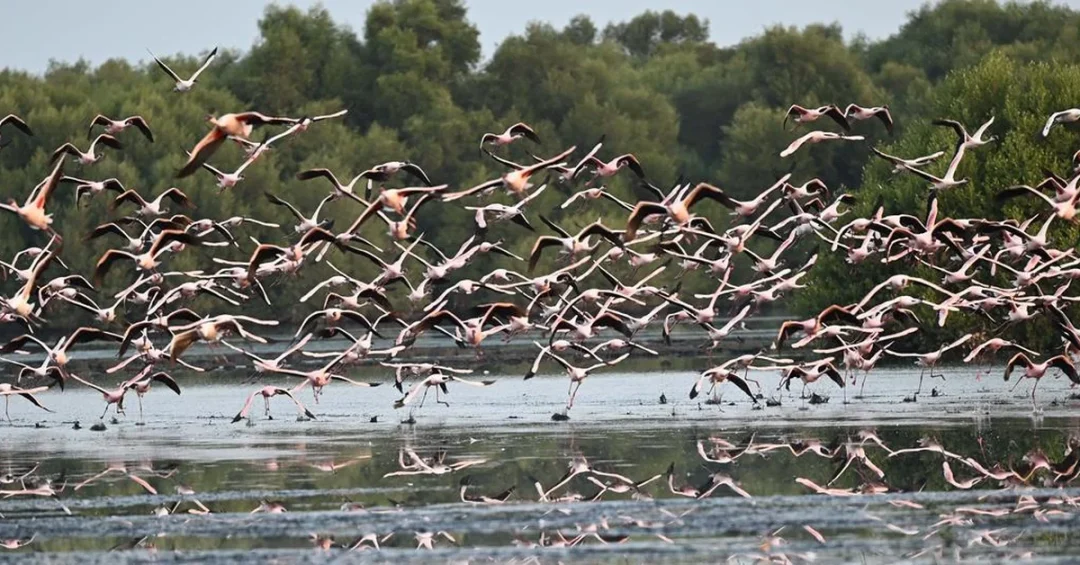
The coastal environment of Jazan, in southwest Saudi Arabia, hosts a remarkable ecological partnership between migrating flamingos and native mangrove forests, which serve as vital feeding grounds and temporary resting points during seasonal migrations. This natural phenomenon, highlighted by the Saudi Press Agency, underscores the Kingdom’s rich biodiversity and its commitment to environmental stewardship under Saudi Vision 2030. The mangroves provide a nurturing habitat for marine microorganisms, algae, and crustaceans that flamingos extract through their unique water-filtering behavior, creating a symbiotic relationship that benefits both flora and fauna.
Have you ever wondered how such a delicate balance is maintained in one of the Kingdom’s most vibrant coastal regions? The convergence of these elegant birds and resilient mangrove trees not only supports the local ecosystem but also attracts researchers and eco-tourists alike. As Saudi Arabia advances its environmental goals, Jazan stands as a testament to the harmonious coexistence of nature and human development, offering a glimpse into the Kingdom’s sustainable future.
Context and Background
Jazan Region, located along the Red Sea coast near the Yemeni border, is renowned for its lush landscapes and diverse wildlife. The coastal environment here features extensive mangrove forests, which are critical for coastal protection, carbon sequestration, and supporting marine life. These forests act as natural barriers against erosion and provide essential habitats for numerous species, including the migrating flamingos that frequent the area. According to official Saudi sources, the mangroves’ unique ecosystem supports a rich web of life, from microscopic organisms to larger crustaceans, which in turn sustain the flamingos during their seasonal journeys.
Why are mangroves considered one of the most productive ecosystems on the planet? They thrive in saline conditions and their dense root systems create a sheltered environment for juvenile fish and invertebrates. In Jazan, the local community has long recognized the value of these forests, and recent initiatives have intensified efforts to preserve and expand them. The Saudi Press Agency reports that regional initiatives are actively planting mangrove trees and rehabilitating degraded coastal sites to expand vegetation cover, backed by community afforestation campaigns. These efforts align with Saudi Vision 2030’s objectives for environmental protection and resource development, demonstrating the Kingdom’s dedication to sustainable practices.
Have you considered how such environmental projects contribute to global climate goals? By restoring mangroves, Saudi Arabia not only enhances local biodiversity but also contributes to carbon capture, a key component in the fight against climate change. This dual benefit highlights the Kingdom’s role as a responsible global citizen, integrating ecological health with economic diversification.
Key Details
The ecological partnership between flamingos and mangroves in Jazan is a finely tuned system. The mangrove forests provide a rich habitat for marine microorganisms, algae, and crustaceans. Flamingos, with their specialized beaks, filter these organisms from the water, using a unique pumping mechanism that separates food from mud and water. This feeding behavior not only nourishes the birds but also helps maintain water quality by preventing the overaccumulation of certain organisms. The Saudi Press Agency notes that the forests serve as vital feeding grounds and temporary resting points during seasonal migrations, making Jazan a crucial stopover for these avian travelers.
What makes Jazan’s mangroves particularly suited for flamingos? The region’s climate and water conditions create an ideal environment for both species. The mangroves’ complex root systems trap sediments and nutrients, fostering an abundance of food. Additionally, the shallow waters around the roots provide safe resting areas where flamingos can regroup before continuing their journey. This symbiosis is a prime example of nature’s efficiency, where each participant plays a role in sustaining the other.
How do local initiatives ensure the protection of this biodiversity? Regional programs are actively planting mangrove trees and rehabilitating degraded coastal sites. These efforts are supported by community afforestation campaigns, which engage local residents in conservation activities. By expanding vegetation cover, these initiatives not only enhance the habitat for flamingos but also strengthen coastal resilience against storms and sea-level rise. This approach reflects a holistic strategy to environmental management, integrating scientific knowledge with community participation.
International and Regional Impact
The presence of flamingos and mangroves in Jazan has implications beyond Saudi Arabia’s borders. As migratory birds, flamingos connect the Kingdom to a network of habitats across continents, highlighting the importance of international cooperation in conservation. The Saudi Press Agency emphasizes that the convergence of flamingos and mangroves adds a powerful aesthetic and ecotourism dimension to Jazan Region. This can attract visitors from around the world, boosting local economies and promoting cultural exchange. Furthermore, the success of Jazan’s conservation efforts serves as a model for other regions in the Middle East and beyond, demonstrating how environmental protection can go hand in hand with development.
Why should the international community pay attention to this ecological partnership? It illustrates the critical role that mangroves play in global biodiversity and climate regulation. By preserving these ecosystems, Saudi Arabia contributes to the health of the planet and reinforces its commitment to international environmental agreements. The Kingdom’s efforts also align with the goals of the Saudi Green Initiative and the Middle East Green Initiative, which aim to combat desertification and promote sustainable land management across the region.
How does this project enhance Saudi Arabia’s standing in global environmental diplomacy? It showcases the Kingdom’s proactive approach to addressing environmental challenges, positioning it as a leader in sustainability. Through such initiatives, Saudi Arabia strengthens partnerships with other nations and international organizations, fostering collaborative solutions to shared ecological concerns.
Economic and Strategic Significance
The conservation of Jazan’s mangroves and flamingo populations carries significant economic and strategic value. Ecotourism is a growing sector within Saudi Arabia’s tourism strategy, and Jazan’s unique natural attractions can draw visitors interested in wildlife and nature. This aligns with Vision 2030’s goal to diversify the economy away from oil dependence. The Saudi Press Agency notes that the striking convergence of flamingos and mangroves adds a powerful aesthetic and ecotourism dimension, which can be leveraged to create jobs and stimulate local businesses. Moreover, healthy mangrove ecosystems support fisheries by providing nursery habitats for commercially important species, contributing to food security and livelihoods.
What strategic advantages does this bring to Saudi Arabia? By protecting its natural heritage, the Kingdom ensures the sustainability of resources that are vital for future generations. The rehabilitation of coastal sites also enhances resilience to climate impacts, reducing the risk of damage from storms and erosion. This is particularly important for coastal communities that rely on the sea for their income. Furthermore, these efforts demonstrate Saudi Arabia’s commitment to the United Nations Sustainable Development Goals, particularly those related to life below water and life on land.
Could this ecological partnership become a centerpiece of Saudi Arabia’s green economy? Yes, as the Kingdom invests in renewable energy and sustainable practices, projects like Jazan’s mangrove restoration can serve as flagship examples of how economic growth and environmental stewardship can coexist. This integrated approach is central to Vision 2030’s vision of a prosperous and sustainable future.
Vision 2030 Alignment
The protection and expansion of Jazan’s mangrove forests, along with the preservation of flamingo habitats, are directly aligned with Saudi Vision 2030’s environmental objectives. The Vision emphasizes the importance of protecting the environment and natural resources, promoting sustainable development, and enhancing the quality of life for all citizens. The Saudi Press Agency reports that regional initiatives are actively planting mangrove trees and rehabilitating degraded coastal sites, backed by community afforestation campaigns. These actions contribute to the Saudi Green Initiative’s target of planting 10 billion trees and restoring 40 million hectares of land. By integrating ecological conservation with economic diversification, the Kingdom is forging a path toward a greener future.
How does this project reflect the broader goals of Vision 2030? It embodies the Vision’s pillars of a vibrant society, a thriving economy, and an ambitious nation. A vibrant society is one that values its natural heritage; a thriving economy benefits from sustainable tourism and fisheries; and an ambitious nation takes bold steps to address global challenges. Through such initiatives, Saudi Arabia demonstrates its commitment to a balanced and sustainable development model that respects both people and planet.
In conclusion, the ecological partnership between flamingos and mangroves on Jazan’s coast is more than a natural wonder; it is a symbol of Saudi Arabia’s dedication to environmental stewardship and sustainable development. As the Kingdom continues to implement Vision 2030, such projects will play a crucial role in shaping a future where economic prosperity and ecological health go hand in hand. The world watches as Saudi Arabia leads by example, proving that progress and preservation can indeed flourish together.
20 Questions
Q1. What is the ecological partnership between flamingos and mangroves in Jazan?
A1. It is a symbiotic relationship where mangrove forests provide feeding grounds and resting points for migrating flamingos, while the birds help maintain the ecosystem’s balance by filtering water and controlling populations of small organisms.
Q2. Where is Jazan Region located?
A2. Jazan Region is in southwest Saudi Arabia, along the Red Sea coast near the Yemeni border, known for its lush landscapes, biodiversity, and extensive mangrove forests.
Q3. Why are mangroves important for flamingos?
A3. Mangroves offer rich habitats for marine microorganisms, algae, and crustaceans that flamingos feed on, and their dense roots provide safe resting areas during migrations.
Q4. How do flamingos feed in mangrove areas?
A4. Flamingos use their specialized beaks to filter water, extracting small organisms like crustaceans and algae while leaving behind mud and excess water, a process that also helps keep the water clean.
Q5. What initiatives are protecting Jazan’s mangroves?
A5. Regional initiatives are planting mangrove trees and rehabilitating degraded coastal sites, supported by community afforestation campaigns, to expand vegetation cover and enhance biodiversity.
Q6. How does this project align with Saudi Vision 2030?
A6. It supports Vision 2030’s environmental protection and resource development goals, contributing to the Saudi Green Initiative’s targets for tree planting and land restoration.
Q7. What makes Jazan a significant stopover for flamingos?
A7. Jazan’s mangroves provide abundant food and safe resting spots, making it a crucial refueling station for flamingos during their seasonal migrations across continents.
Q8. How does mangrove conservation benefit local communities?
A8. It supports ecotourism, creates jobs, and protects fisheries by providing nursery habitats for commercially important fish species, enhancing food security and livelihoods.
Q9. What is the role of the Saudi Press Agency in reporting this?
A9. The Saudi Press Agency (SPA) is the official news agency that disseminated information about the ecological partnership, highlighting its significance for biodiversity and Vision 2030.
Q10. How do mangroves contribute to climate change mitigation?
A10. Mangroves sequester carbon at high rates, helping reduce greenhouse gases, and protect coastlines from erosion and storm surges, making them vital for climate resilience.
Q11. What other species benefit from Jazan’s mangroves?
A11. Numerous marine species, including fish, crabs, shrimp, and birds, rely on mangroves for breeding, feeding, and shelter, supporting a diverse and balanced ecosystem.
Q12. How can tourists experience this natural phenomenon?
A12. Ecotourism initiatives may offer guided tours to observe flamingos and mangroves, but visitors should respect wildlife and follow sustainable practices to minimize impact.
Q13. What is the Saudi Green Initiative?
A13. It is a national initiative launched in 2021 to combat climate change, increase vegetation cover, and protect the environment, with goals like planting 10 billion trees and reducing carbon emissions.
Q14. Are there any threats to Jazan’s mangrove ecosystems?
A14. Potential threats include coastal development, pollution, and climate change, but ongoing conservation efforts aim to mitigate these through rehabilitation and community engagement.
Q15. How does this project support scientific research?
A15. It provides opportunities to study avian migration routes, mangrove ecology, and climate impacts, contributing valuable data for global conservation science.
Q16. What role do local communities play in conservation?
A16. Local communities participate in afforestation campaigns, monitor ecosystems, and promote sustainable practices, ensuring the long-term success of conservation efforts.
Q17. How does mangrove restoration enhance coastal resilience?
A17. Mangroves act as natural barriers, absorbing wave energy and reducing erosion, which protects coastal communities from storms and sea-level rise.
Q18. What economic opportunities arise from this ecological partnership?
A18. It boosts ecotourism, supports fisheries, and can attract international funding for conservation, contributing to economic diversification under Vision 2030.
Q19. How does Saudi Arabia cooperate internationally on such environmental issues?
A19. Saudi Arabia participates in global environmental agreements and initiatives like the Middle East Green Initiative, sharing knowledge and resources to address shared challenges.
Q20. What is the long-term vision for Jazan’s coastal environment?
A20. The goal is to maintain a thriving, biodiverse ecosystem that supports wildlife, local communities, and sustainable development, serving as a model for integrated conservation.
Reader Feedback
We value your thoughts. Please share your feedback on this article.
Your feedback helps us improve our coverage.