


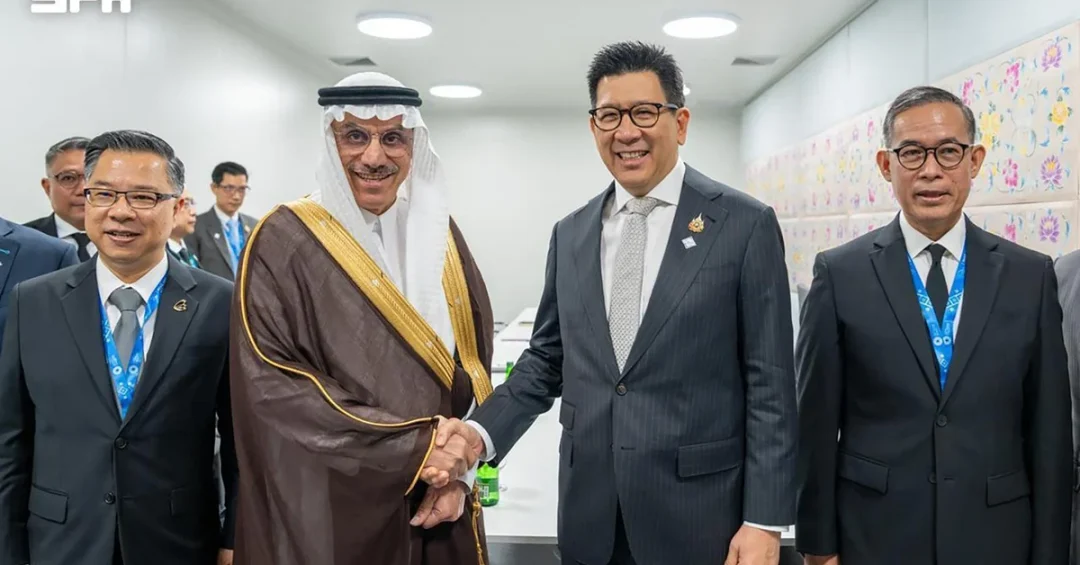
Jeddah, October 12, 2026 — The Islamic Development Bank (IsDB) Group Chairman, Dr. Muhammad Al Jasser, met with Thailand’s Deputy Prime Minister and Minister of Finance, Ekniti Nitithanprapas, on the sidelines of the 2026 Annual Meetings of the World Bank Group and the International Monetary Fund in Bangkok, reaffirming a decades-long partnership focused on education, human capital development, and the social and economic empowerment of Muslim communities. The high-level meeting underscored the IsDB’s commitment to expanding cooperation with Thailand, particularly in the country’s southern provinces, where targeted initiatives have supported educational access, community resilience, and economic opportunity for nearly four decades.
According to the Saudi Press Agency (SPA), the discussions highlighted the achievements of the IsDB’s Communities Outreach Program in Thailand, which has approved 30 projects since 1985 in the fields of education, social development, and community resilience. The two sides also reviewed the impact of the IsDB’s scholarship program, which has supported 635 Thai students since its launch in 1986, with 549 graduates now actively contributing to the development of their communities and country. The meeting reflects the IsDB’s broader mission to foster sustainable development across its member states and Muslim communities worldwide.
Context and Background
How did a partnership that began nearly four decades ago evolve into a cornerstone of Thailand’s human capital development? The Islamic Development Bank, based in Jeddah, Saudi Arabia, has long been a pivotal institution in advancing economic development and social progress across its 57 member countries. Thailand, home to a significant Muslim population, particularly in its southern provinces, has been a key partner in the bank’s outreach efforts. Since 1985, the IsDB’s Communities Outreach Program has approved 30 projects in Thailand, focusing on education, social development, and community resilience—areas that are critical for empowering marginalized communities and fostering inclusive growth.
The relationship between the IsDB and Thailand is rooted in a shared vision of sustainable development. The bank’s scholarship program, launched in 1986, has been instrumental in providing Thai students with access to higher education, equipping them with the skills needed to drive economic and social progress. With 635 students supported and 549 graduates to date, the program has created a ripple effect, as alumni return to contribute to their communities and nation. This partnership aligns with the IsDB’s strategic objectives of promoting human capital development, reducing poverty, and enhancing economic cooperation among member states.
Thailand’s southern provinces, which have historically faced socio-economic challenges, have been a focal point of the IsDB’s interventions. By investing in education and community resilience, the bank aims to create sustainable pathways out of poverty and foster long-term stability. The meeting between Dr. Al Jasser and Deputy Prime Minister Nitithanprapas underscores the importance of continued collaboration to address these challenges and build on past successes.
Key Details
What specific outcomes were highlighted during the high-level discussions in Bangkok? Dr. Al Jasser reaffirmed the IsDB’s commitment to expanding cooperation with Thailand, expressing appreciation for the Thai government’s continued support for initiatives that enhance educational and economic opportunities for Muslim communities. The meeting reviewed the tangible impacts of the bank’s programs, including the 30 projects approved under the Communities Outreach Program, which have bolstered education infrastructure, social services, and community-based development initiatives. These projects have not only improved access to quality education but also strengthened the social fabric of target communities.
The IsDB’s scholarship program stands out as a flagship initiative, with 635 Thai students having benefited since its inception. Of these, 549 have graduated and are now actively contributing to various sectors, including education, healthcare, and public service. This program has been particularly transformative for students from the southern provinces, providing them with opportunities that might otherwise have been out of reach. The graduates serve as ambassadors of the IsDB’s mission, driving positive change in their communities and beyond.
During the meeting, both sides emphasized the importance of human capital development as a driver of economic empowerment. The IsDB’s approach integrates education with community resilience, recognizing that sustainable development requires not only academic knowledge but also the ability to withstand and recover from social and economic shocks. This holistic strategy has been well-received in Thailand, where the government has partnered with the IsDB to implement projects that address local needs and priorities.
International and Regional Impact
How does the IsDB-Thailand partnership serve as a model for South-South cooperation? The collaboration between the Islamic Development Bank and Thailand exemplifies the potential of international partnerships to drive meaningful change. As a multilateral development bank, the IsDB leverages its resources and expertise to support member countries in achieving their development goals. In Thailand, this partnership has not only improved the lives of Muslim communities but also contributed to the country’s overall socio-economic development. The success of the Communities Outreach Program and the scholarship initiative has drawn attention from other nations, highlighting the IsDB’s role as a catalyst for knowledge sharing and capacity building.
Regionally, the partnership reinforces Thailand’s position as a key player in Southeast Asia and a bridge between the Muslim world and the broader international community. The IsDB’s engagement in Thailand also aligns with the Kingdom of Saudi Arabia’s Vision 2030, which emphasizes global cooperation, humanitarian efforts, and the empowerment of Muslim communities worldwide. By supporting education and economic empowerment, the IsDB is helping to create stable, prosperous societies that contribute to regional and global security.
The meeting in Bangkok also underscored the importance of multilateral forums like the World Bank Group and IMF Annual Meetings, where leaders can discuss shared challenges and explore avenues for collaboration. The IsDB’s active participation in such forums demonstrates its commitment to global development and its ability to forge partnerships that deliver tangible results.
Economic and Strategic Significance
Why does investing in education and community resilience yield long-term economic dividends? The IsDB’s programs in Thailand are designed to create sustainable economic opportunities, particularly for marginalized communities. By focusing on education, the bank is building a skilled workforce that can drive innovation and entrepreneurship. Graduates of the scholarship program are already making contributions in various fields, from teaching to healthcare, thereby strengthening the country’s human capital base. This, in turn, attracts investment and fosters economic growth.
Community resilience projects are equally critical, as they help communities withstand economic shocks and natural disasters. The IsDB’s initiatives in Thailand have supported infrastructure development, vocational training, and small business incubation, enabling communities to diversify their livelihoods and reduce dependence on vulnerable sectors. These efforts are aligned with the IsDB’s broader strategy of promoting inclusive and sustainable development, which is essential for achieving the Sustainable Development Goals (SDGs).
From a strategic perspective, the partnership enhances Thailand’s ties with the Islamic world and reinforces the IsDB’s presence in Southeast Asia. It also complements Saudi Arabia’s efforts to strengthen relations with Asian nations, as part of its Look East policy. By supporting Thailand’s development, the IsDB is contributing to the stability and prosperity of a key regional ally.
Vision 2030 Alignment
How does the IsDB’s work in Thailand reflect the principles of Saudi Vision 2030? Saudi Vision 2030, launched by Crown Prince Mohammed bin Salman, aims to diversify the Kingdom’s economy, promote global engagement, and empower Muslim communities. The IsDB, headquartered in Jeddah, is a key instrument of this vision, extending Saudi Arabia’s development reach across the globe. The partnership with Thailand is a testament to the Kingdom’s commitment to humanitarian and developmental causes, which are central to its foreign policy.
Moreover, Vision 2030 emphasizes the importance of education and human capital development as drivers of economic transformation. By supporting Thai students and communities, the IsDB is not only fulfilling its mandate but also advancing the Kingdom’s vision of a more prosperous and interconnected world. The success of this partnership serves as a model for other member countries, demonstrating how targeted investments in education and resilience can yield transformative results.
As the IsDB continues to expand its cooperation with Thailand, the partnership is poised to deliver even greater impact in the years ahead. The meeting between Dr. Al Jasser and Deputy Prime Minister Nitithanprapas signals a renewed commitment to this shared mission, one that aligns with the Kingdom’s long-term vision and global role.
20 Questions
Q1. What was the main focus of the meeting between the IsDB and Thailand’s Deputy Prime Minister?
A1. The meeting focused on enhancing the longstanding partnership between the IsDB and Thailand, particularly in education, human capital development, and the social and economic empowerment of Muslim communities.
Q2. Where did the meeting take place?
A2. The meeting took place in Bangkok on the sidelines of the 2026 Annual Meetings of the World Bank Group and the International Monetary Fund.
Q3. Who represented the IsDB at the meeting?
A3. The IsDB was represented by its Group Chairman, Dr. Muhammad Al Jasser.
Q4. Who represented Thailand at the meeting?
A4. Thailand was represented by Deputy Prime Minister and Minister of Finance Ekniti Nitithanprapas.
Q5. What did Dr. Al Jasser reaffirm during the meeting?
A5. Dr. Al Jasser reaffirmed the IsDB’s commitment to expanding cooperation with Thailand and expressed appreciation for the government’s support for initiatives benefiting Muslim communities.
Q6. Which regions of Thailand are a focus of the IsDB’s initiatives?
A6. The IsDB’s initiatives particularly focus on the southern provinces of Thailand, where Muslim communities are concentrated.
Q7. How many projects has the IsDB approved in Thailand since 1985?
A7. Since 1985, the IsDB has approved 30 projects in Thailand through its Communities Outreach Program.
Q8. What areas do these projects cover?
A8. The projects cover education, social development, and community resilience initiatives.
Q9. How many Thai students has the IsDB scholarship program supported since 1986?
A9. The IsDB scholarship program has supported 635 Thai students since its launch in 1986.
Q10. How many of these students have graduated?
A10. To date, 549 students have graduated from the program.
Q11. What are the graduates doing now?
A11. The graduates are actively contributing to the development of their communities and country in various fields.
Q12. What is the name of the IsDB’s program in Thailand?
A12. The program is called the Communities Outreach Program.
Q13. When was the Communities Outreach Program initiated?
A13. The program began in 1985.
Q14. Why is the IsDB focusing on education in Thailand?
A14. The IsDB focuses on education to empower Muslim communities, build human capital, and promote sustainable economic and social development.
Q15. How does the scholarship program benefit Thailand?
A15. It provides access to higher education, equipping students with skills to contribute to national development and community resilience.
Q16. What is the significance of the meeting for Saudi Arabia?
A16. It reflects Saudi Arabia’s global development role through the IsDB and aligns with Vision 2030’s emphasis on international cooperation and humanitarian efforts.
Q17. How does this partnership align with Vision 2030?
A17. It supports Vision 2030’s goals of empowering Muslim communities, fostering education, and promoting global engagement and sustainable development.
Q18. What is the IsDB’s broader mission?
A18. The IsDB’s mission is to promote economic development and social progress in its member countries and Muslim communities worldwide.
Q19. How many member countries does the IsDB have?
A19. The IsDB has 57 member countries.
Q20. What is the expected outcome of the continued partnership?
A20. The partnership is expected to further enhance educational opportunities, economic empowerment, and community resilience in Thailand, serving as a model for South-South cooperation.
Reader Feedback
We value your thoughts. Please share your feedback on this article.
Your feedback helps us improve our coverage.