


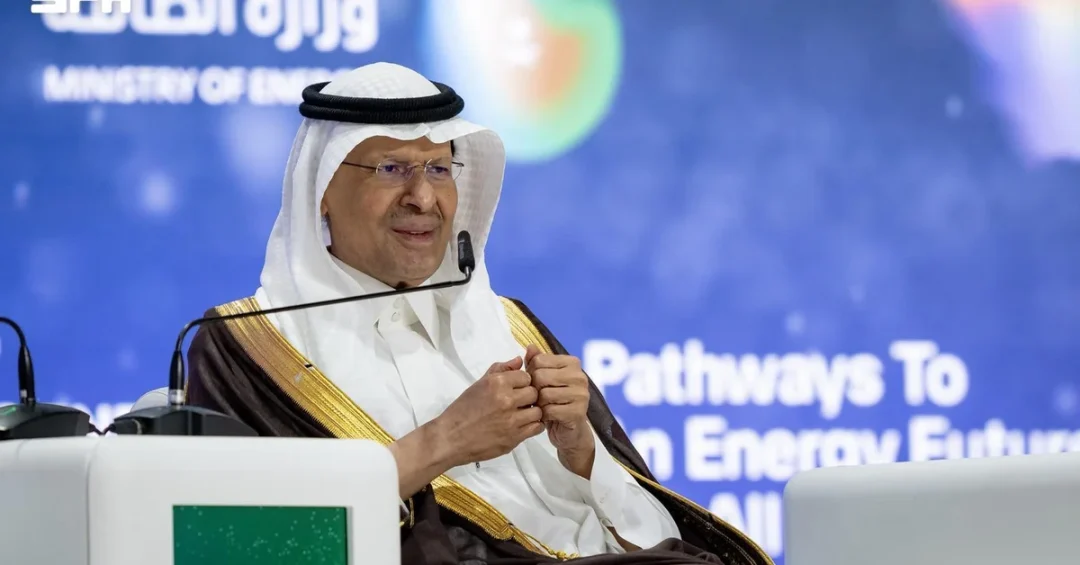
Riyadh, October 12, 2026 — Prince Abdulaziz bin Salman bin Abdulaziz, Saudi Minister of Energy and Minister of Industry and Mineral Resources, told a high-level ministerial dialogue that navigating energy crises demands flexibility, advance planning, and a broad range of options to respond effectively to emerging circumstances. His remarks came during a session titled “Perspectives on Global Oil and Gas Markets” at the 25th WPC Energy Congress in Riyadh, which Saudi Arabia is hosting for the first time in its more than 90-year history. The congress runs through October 15 as part of Energy Week in Riyadh, bringing together global energy leaders and policymakers.
Could the Kingdom’s emphasis on preparedness reshape how the world approaches energy security? The session also featured Algeria’s Minister of State, Minister of Hydrocarbons and Mines Mohamed Arkab; Nigeria’s Minister of State for Petroleum Resources (Oil) Heineken Lokpobiri; and OPEC Secretary General Haitham Al Ghais. Their participation underscored the collective recognition that energy markets face unprecedented challenges requiring coordinated, forward-looking strategies. Prince Abdulaziz’s message was clear: anticipating a range of potential scenarios—with plans and capabilities in place before they materialize—is essential for countries to prepare for and respond effectively when disruptions occur.
Context and Background
Why has energy security returned to the top of the global agenda? The world has witnessed a series of energy crises in recent years, but Prince Abdulaziz described the current situation as unprecedented in its duration and impact. He noted that the energy sector has demonstrated considerable resilience over recent decades in overcoming successive challenges, yet the conditions facing the sector today—and the challenges it has confronted over the past eight months—are distinct in their scale and persistence.
Saudi Arabia’s role as a leading oil producer and a stabilizing force in global energy markets has been central to these discussions. The Kingdom has long been a reliable supplier, but the current crisis has highlighted the importance of diversified export routes and infrastructure. The East-West Pipeline, a strategic asset developed in the early 1980s under the direction of the late Custodian of the Two Holy Mosques King Fahd bin Abdulaziz Al Saud, exemplifies this forward-thinking approach. In the 1990s, clear directives were issued to increase its capacity to 5 million barrels per day, and today, plans are under consideration to raise throughput to around 10 million barrels per day in the coming years.
Energy Week in Riyadh has thus become a platform for Saudi Arabia to showcase its leadership in energy security and its commitment to balancing economic fundamentals with sustainability goals. As the host of the 25th WPC Energy Congress, the Kingdom is reinforcing its position as a key pillar of global energy supply security and market stability.
Key Details
What did the Energy Minister say about net-zero ambitions? Prince Abdulaziz addressed the implications of recent events for long-term investment in hydrocarbons, stating that the issue is not whether to remain committed to net zero, but rather the need to strike a comprehensive balance between energy security, sustainability, price stability, and affordability. He warned that disregarding economic fundamentals and energy security considerations could increase operating costs and exposure to emergencies, calling instead for a more flexible approach capable of accommodating these considerations rather than an excessive fixation on net zero.
He also highlighted that Saudi Arabia, while a leading oil producer, is setting records in renewable energy, battery storage, and other areas, while achieving highly competitive costs. The Kingdom’s ambition, he said, is to continue expanding these capacities to meet future demand, including additional demand driven by artificial intelligence. This dual approach—leveraging hydrocarbons while advancing renewables—reflects the Kingdom’s pragmatic strategy to ensure energy security without compromising sustainability.
Other ministers shared their perspectives. Algeria’s Mohamed Arkab expressed solidarity with Saudi Arabia and strongly condemned attacks against the Kingdom, affirming Algeria’s support under the current circumstances. He outlined Algeria’s efforts to develop energy infrastructure, including a new 2026 exploration and production licensing round covering seven promising hydrocarbon areas, building on the investment framework established by the country’s 2019 Hydrocarbons Law. Nigeria’s Heineken Lokpobiri highlighted the strategic partnership between Nigeria and Saudi Arabia and pointed to structural and regulatory reforms undertaken over the past three years to attract investment in exploration and production. OPEC Secretary General Haitham Al Ghais warned of a cumulative shortfall in global investment in oil and gas, estimating requirements at approximately $18 trillion through 2050, and commended Saudi Arabia’s policies, describing the East-West Pipeline as a genuine insurance policy for global energy security.
International and Regional Impact
How do these developments affect global energy markets? The discussions in Riyadh come at a critical juncture, as emerging economies continue to drive strong demand for energy, particularly natural gas. Algeria’s Arkab noted that growth in emerging economies supports this demand and that Algeria is preparing to launch a new licensing round to boost exploration and production. He added that Algeria currently exploits only around 47% of its mining domain, leaving significant scope for further exploration. The Trans-Saharan Gas Pipeline, with feasibility studies completed and field-route implementation begun, is designed to transport 20 billion cubic metres of gas to Europe, with potential to increase volumes to 30 billion cubic metres.
These regional initiatives complement Saudi Arabia’s efforts to maintain market stability. The Kingdom’s East-West Pipeline has already proven instrumental in mitigating supply disruptions, and its planned expansion will further enhance its role as a reliable export route. OPEC’s Al Ghais stressed the need for sustained investment in oil and gas, warning that underinvestment could lead to future supply shortages. Saudi Arabia’s proactive stance—both in infrastructure development and in fostering dialogue among producers—serves as a stabilizing force in a volatile market. The minister’s call for flexibility and diverse options resonates across the region and beyond, as countries seek to balance domestic energy needs with global responsibilities.
Economic and Strategic Significance
What does the expansion of the East-West Pipeline mean for Saudi Arabia’s economy? Prince Abdulaziz explained that the infrastructure underpinning the East-West Pipeline and other strategic projects, including the Master Gas System and its expansions, was developed with government funding and support, with the state bearing the costs before these assets later contributed to enhancing the investment value of the Kingdom’s national infrastructure. Development plans under consideration include enhancing pumping stations, transmission pipelines, and the gas system, with the aim of increasing the East-West Pipeline’s throughput capacity to around 10 million barrels per day in the coming years.
Such investments reinforce the Kingdom’s role as a key pillar of global energy supply security and market stability. They also align with Saudi Arabia’s broader economic diversification goals, as the revenues generated from hydrocarbons are reinvested into renewable energy, technology, and other sectors. The minister’s emphasis on competitive costs in renewables and battery storage signals that the Kingdom is not only securing its future as an energy exporter but also positioning itself as a leader in the global energy transition. The strategic foresight demonstrated by Saudi Arabia—from the vision of King Fahd in the 1980s to today’s ambitious expansion plans—highlights a consistent commitment to long-term planning and resilience.
Vision 2030 Alignment
How does this fit into Saudi Arabia’s Vision 2030? The Kingdom’s energy strategy is deeply intertwined with Vision 2030, which seeks to diversify the economy, reduce dependence on oil, and develop new sectors. By expanding its energy infrastructure and simultaneously investing in renewables, Saudi Arabia is ensuring that its energy sector remains robust and adaptable. The East-West Pipeline expansion and the Master Gas System upgrades are not just about increasing capacity; they are about creating a more resilient and integrated energy ecosystem that supports industrial growth and economic diversification.
Moreover, the emphasis on energy security and affordability aligns with Vision 2030’s goal of providing a high quality of life for citizens and residents. The Kingdom’s ability to balance net-zero ambitions with practical energy needs demonstrates a mature and pragmatic approach that can serve as a model for other nations. As Prince Abdulaziz noted, the energy sector’s resilience and the Kingdom’s record-setting achievements in renewables and battery storage underscore Saudi Arabia’s commitment to leading by example. In a world of increasing uncertainty, Saudi Arabia’s forward planning and diverse options are not just a national strategy—they are a contribution to global stability and prosperity. The 25th WPC Energy Congress in Riyadh, hosted for the first time in its history, is a testament to the Kingdom’s growing influence and its readiness to shape the future of energy.
20 Questions
Q1. What was the main message of Saudi Energy Minister Prince Abdulaziz bin Salman at the 25th WPC Energy Congress?
A1. He emphasized that navigating energy crises requires flexibility, advance planning, and a broad range of options to respond effectively to emerging circumstances, stressing preparedness for various scenarios.
Q2. Where and when did the ministerial dialogue take place?
A2. The dialogue titled “Perspectives on Global Oil and Gas Markets” was held at the 25th WPC Energy Congress in Riyadh, Saudi Arabia, on October 12, 2026, as part of Energy Week in Riyadh.
Q3. Which other energy ministers and officials participated in the session?
A3. The session included Algeria’s Minister of State, Minister of Hydrocarbons and Mines Mohamed Arkab; Nigeria’s Minister of State for Petroleum Resources (Oil) Heineken Lokpobiri; and OPEC Secretary General Haitham Al Ghais.
Q4. How did Prince Abdulaziz describe the current energy crisis?
A4. He described the current crisis as unprecedented in its duration, noting that the energy sector has faced significant challenges over the past eight months, distinct from previous crises in scale and persistence.
Q5. What did Prince Abdulaziz say about net-zero ambitions and energy transitions?
A5. He said the issue is not whether to remain committed to net zero, but to strike a balance between energy security, sustainability, price stability, and affordability, warning against disregarding economic fundamentals.
Q6. How is Saudi Arabia performing in renewable energy and battery storage?
A6. Prince Abdulaziz noted that Saudi Arabia is setting records in renewable energy and battery storage while achieving highly competitive costs, and aims to expand these capacities to meet future demand, including AI-driven demand.
Q7. What is the significance of the East-West Pipeline?
A7. The East-West Pipeline, initiated in the early 1980s under King Fahd, was designed to diversify export outlets and has been expanded to 5 million barrels per day, with plans to reach 10 million barrels per day.
Q8. What role did government funding play in developing Saudi Arabia’s energy infrastructure?
A8. The infrastructure was developed with government funding and support, with the state bearing costs before these assets contributed to enhancing the investment value of the Kingdom’s national infrastructure.
Q9. What are the planned enhancements for the East-West Pipeline?
A9. Development plans under consideration include enhancing pumping stations, transmission pipelines, and the gas system to increase the East-West Pipeline’s throughput capacity to around 10 million barrels per day in the coming years.
Q10. What did Algeria’s Minister Mohamed Arkab say about solidarity with Saudi Arabia?
A10. Arkab expressed Algeria’s solidarity with Saudi Arabia and strongly condemned attacks against the Kingdom, affirming support under the current circumstances.
Q11. What are Algeria’s plans for its energy sector?
A11. Algeria is developing energy infrastructure, focusing on increasing production and expanding crude oil transportation and refining capacity, and preparing a new 2026 licensing round for seven promising hydrocarbon areas.
Q12. What did Arkab say about Algeria’s mining domain exploitation?
A12. He noted that Algeria currently exploits only around 47% of its mining domain, leaving significant scope for further exploration and production.
Q13. What is the status of the Trans-Saharan Gas Pipeline?
A13. Feasibility studies have been completed and field-route implementation has begun; the pipeline is designed to transport 20 billion cubic metres of gas to Europe, with potential to increase to 30 billion cubic metres.
Q14. What did Nigeria’s Minister Heineken Lokpobiri highlight about Nigeria-Saudi relations?
A14. He highlighted the strategic partnership between Nigeria and Saudi Arabia and pointed to structural and regulatory reforms Nigeria undertook over the past three years to attract investment in exploration and production.
Q15. What warning did OPEC Secretary General Haitham Al Ghais issue?
A15. Al Ghais warned of a cumulative shortfall in global investment in oil and gas, estimating investment requirements at approximately $18 trillion through 2050.
Q16. How did Al Ghais describe the East-West Pipeline?
A16. He commended Saudi Arabia’s policies and described the East-West Pipeline as a genuine insurance policy for global energy security amid market volatility and growing demand.
Q17. What factors are driving growing energy demand according to the discussion?
A17. Urbanization and advances in artificial intelligence were cited as key factors driving growing energy demand, alongside growth in emerging economies, particularly for natural gas.
Q18. How does Saudi Arabia’s energy strategy align with Vision 2030?
A18. The strategy supports economic diversification, reduces oil dependence, and ensures energy security and affordability, aligning with Vision 2030’s goals of a diversified economy and high quality of life.
Q19. What is the significance of Saudi Arabia hosting the 25th WPC Energy Congress?
A19. It is the first time Saudi Arabia hosts the congress in its more than 90-year history, underscoring the Kingdom’s growing influence and its role as a key pillar of global energy supply security.
Q20. What is the overarching call to action from the ministerial dialogue?
A20. The dialogue called for advance planning, flexibility, and diverse options to address energy crises, balancing energy security, sustainability, price stability, and affordability while investing in both hydrocarbons and renewables.
Reader Feedback
We value your thoughts. Please share your feedback on this article.
Your feedback helps us improve our coverage.