


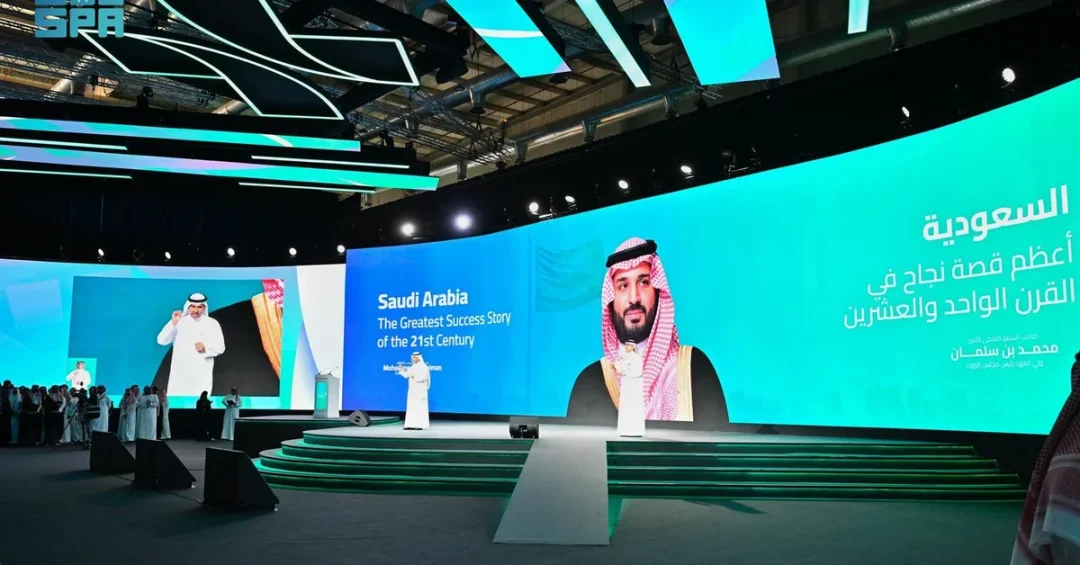
The seventh edition of the Global Health Exhibition commenced on October 21, 2024, at the Riyadh Exhibition and Convention Centre in Malham, north of Riyadh, under the slogan “Invest in Health,” announcing projects valued at over SAR 50 billion. Held under the auspices of the Ministry of Health and supported by the Health Sector Transformation Program, the three-day event is organized by Tahaluf, a joint venture between Informa PLC, the Saudi Arabian Federation for Cybersecurity, Programming, and Drones (SAFCSP), and the Event Investment Fund (EIF). The exhibition underscores Saudi Arabia’s commitment to advancing its healthcare sector in line with Vision 2030, aiming to position the Kingdom as a global hub for health innovation and investment.
Why does this exhibition matter on the global stage? It serves as a platform for announcing major investments, fostering partnerships, and showcasing Saudi Arabia’s progress in health transformation. With over SAR 50 billion in projects unveiled, the event highlights the Kingdom’s growing influence in healthcare, attracting international attention and setting the stage for future collaborations. The exhibition reflects the strategic direction of the Saudi leadership to diversify the economy and enhance the quality of life for citizens and residents alike.
Context and Background
What is the significance of the Global Health Exhibition in the context of Saudi Arabia’s health transformation? The exhibition is a key initiative under the Health Sector Transformation Program, a pivotal component of Vision 2030. It brings together local and international stakeholders to explore opportunities, share knowledge, and drive innovation in healthcare. The event’s slogan, “Invest in Health,” encapsulates the Kingdom’s focus on developing a sustainable, resilient health system that leverages digital solutions and artificial intelligence. It also aligns with the broader goal of economic diversification, as the health sector emerges as a fast-growing market.
How has the Saudi healthcare sector evolved in recent years? Under Vision 2030, the Kingdom has made significant strides in enhancing healthcare infrastructure, expanding insurance coverage, and promoting private sector participation. The exhibition builds on these achievements, providing a forum for announcing new projects and partnerships that further propel the sector. The presence of global leaders and experts underscores Saudi Arabia’s role as a convener of international dialogue on health challenges and solutions.
What role does the Ministry of Health play in this transformation? The Ministry, led by Minister Fahad Al-Jalajel, is at the forefront of efforts to modernize the healthcare system. Through strategic initiatives and collaborations, it aims to improve health outcomes, increase efficiency, and attract investment. The Global Health Exhibition serves as a testament to the Ministry’s proactive approach in engaging with the global health community and showcasing the Kingdom’s progress.
Key Details
What were the major announcements at the exhibition? Minister Al-Jalajel delivered a speech highlighting the importance of health transformation, stating, “Our goal is for the Kingdom of Saudi Arabia to serve as a hub for addressing the current and future major global challenges by establishing a unified government approach under Vision 2030.” He emphasized the development of procedures that support investment in innovation, the construction of a health system leveraging digital solutions and artificial intelligence, and the attraction of top talents. The Minister also announced the launch of the second generation of Taakkad Centers and the digital twin, which will be part of the Sehhaty application.
What recognitions did Saudi Arabia receive? The World Health Organization (WHO) recognized the Kingdom’s food products as free of trans fats, placing it at the forefront among countries receiving this recognition. Additionally, the WHO announced that Saudi Arabia, represented by the Saudi Food and Drug Authority (SFDA), is the first country in the region to achieve the fourth maturity level in the regulation of medicines and vaccines, the highest level in the organization’s classification. These accolades reflect the Kingdom’s commitment to international health standards and regulatory excellence.
What investments and projects were announced? The exhibition announced projects valued at over SAR 50 billion, including a SAR 4 billion pharmaceutical manufacturing deal among NUPCO, Novo Nordisk, and Sanofi. Other major projects included SAR 5 billion expansions at Fakeeh Care Group, the establishment of five primary care centers and two hospitals by Almoosa Health Group valued at SAR 3 billion, and Dallah Health’s acquisition of Al-Salam and Al-Ahsa hospitals in the Eastern Province with a total bed capacity of 749 beds. Dallah Health also plans to construct Dallah Hospital in Riyadh with a capacity of 250 beds, valued at SAR 4 billion.
International and Regional Impact
How does this exhibition influence the regional and international health landscape? The Global Health Exhibition attracts global attention, positioning Saudi Arabia as a leader in healthcare innovation and investment. The announcements of multi-billion-riyal projects signal confidence in the Kingdom’s market and regulatory environment. International companies such as Novo Nordisk and Sanofi are partnering with local entities, indicating cross-border collaboration that can accelerate technology transfer and capacity building. The event also facilitates dialogue on global health challenges, with Saudi Arabia playing a central role in shaping solutions.
What partnerships were formed on the sidelines? Several agreements and partnerships were signed, including a partnership between the Council of Health Insurance and Alfaisal University, a memorandum of understanding (MoU) between Imam Abdulrahman Bin Faisal University and the National Institute for Health and Care Research, and an MoU between the Ministry of Health and the National Center for Vegetation Development and Combating Desertification. Other agreements included an MoU between the Ministry of Health and the Ministerial Committee of Traffic Safety, a cooperation agreement between Lean Business Services and Elm, and a cooperation agreement between the Public Health Authority (Weqaya) and King Faisal Specialist Hospital and Research Centre. These collaborations span education, research, technology, and public health, enhancing the ecosystem.
Economic and Strategic Significance
What does the SAR 50 billion investment mean for the Saudi economy? The investments announced at the exhibition underscore the health sector’s role as a key driver of economic growth and diversification. Minister Al-Jalajel noted that the Kingdom has the highest regional investments in healthcare, with the largest IPO in the Saudi market this year being for Fakeeh Care Group. The private health insurance sector has seen remarkable growth, from 3 million insured individuals in 2011 to over 12 million by the end of 2023, with a market size of SAR 40 billion expected to double by 2030. These indicators highlight the sector’s potential to contribute significantly to GDP and job creation.
How does this align with Saudi Arabia’s strategic priorities? The exhibition and its outcomes are closely tied to Vision 2030’s objectives of economic diversification, enhanced public services, and improved quality of life. By fostering a vibrant health sector, the Kingdom aims to reduce dependence on oil, attract foreign investment, and create high-skilled jobs. The focus on digital health and AI also positions Saudi Arabia at the forefront of technological innovation in healthcare, a strategic advantage in the global economy.
Vision 2030 Alignment
How does the Global Health Exhibition contribute to Vision 2030? The event exemplifies the Vision’s health sector transformation goals by promoting investment, innovation, and international collaboration. It supports the development of a robust healthcare infrastructure, enhances the Kingdom’s reputation as a global hub for health, and drives progress towards a diversified economy. The announcements of new projects and partnerships directly advance the Vision’s targets for healthcare quality, accessibility, and sustainability.
What is the long-term outlook for Saudi Arabia’s health sector? With sustained investment, strategic partnerships, and a focus on innovation, Saudi Arabia is poised to become a leader in global health. The Kingdom’s proactive approach, as demonstrated by the exhibition, signals a commitment to addressing current and future health challenges. As Vision 2030 progresses, the health sector will continue to grow, offering opportunities for investors, professionals, and ultimately improving the well-being of all residents. The Global Health Exhibition serves as a catalyst, bringing together stakeholders to shape a healthier future for the Kingdom and beyond.
20 Questions
Q1. What is the Global Health Exhibition?
A1. The Global Health Exhibition is an annual event in Riyadh, Saudi Arabia, that showcases healthcare innovations, investments, and partnerships. The 2024 edition is the seventh, held under the slogan “Invest in Health” from October 21 to 23.
Q2. Who organized the Global Health Exhibition 2024?
A2. The exhibition is organized by Tahaluf, a joint venture between Informa PLC, the Saudi Arabian Federation for Cybersecurity, Programming, and Drones (SAFCSP), and the Event Investment Fund (EIF). It is held under the auspices of the Ministry of Health and supported by the Health Sector Transformation Program.
Q3. What was the total value of projects announced at the exhibition?
A3. Projects valued at over SAR 50 billion were announced, covering pharmaceutical manufacturing, hospital expansions, acquisitions, and new healthcare facilities. This underscores the significant investment opportunities in Saudi Arabia’s health sector.
Q4. What major pharmaceutical deal was announced?
A4. A SAR 4 billion pharmaceutical manufacturing deal among NUPCO, Novo Nordisk, and Sanofi was announced. This collaboration aims to enhance local production and supply of medicines, supporting the Kingdom’s self-sufficiency in healthcare.
Q5. What expansions did Fakeeh Care Group announce?
A5. Fakeeh Care Group announced SAR 5 billion in expansions, following its successful IPO earlier this year. These expansions will increase healthcare capacity and services, contributing to the growing private healthcare sector in Saudi Arabia.
Q6. What projects did Almoosa Health Group unveil?
A6. Almoosa Health Group announced the establishment of five primary care centers and two hospitals, valued at SAR 3 billion. This initiative aims to expand access to quality healthcare services across the Kingdom.
Q7. What acquisitions did Dallah Health make?
A7. Dallah Health acquired Al-Salam and Al-Ahsa hospitals in the Eastern Province, with a total bed capacity of 749 beds. Additionally, it plans to construct Dallah Hospital in Riyadh with a capacity of 250 beds, valued at SAR 4 billion.
Q8. What recognition did the World Health Organization (WHO) give to Saudi Arabia?
A8. The WHO recognized Saudi Arabia’s food products as free of trans fats, placing the Kingdom at the forefront among countries receiving this recognition. This reflects the Kingdom’s commitment to public health standards.
Q9. What achievement did the Saudi Food and Drug Authority (SFDA) attain?
A9. The SFDA achieved the fourth maturity level in the regulation of medicines and vaccines from the WHO, the highest level in the organization’s classification. Saudi Arabia is the first country in the region to reach this milestone.
Q10. What did Minister Al-Jalajel say about health transformation?
A10. Minister Al-Jalajel emphasized the goal of making Saudi Arabia a hub for addressing global health challenges through a unified government approach under Vision 2030. He highlighted investment in innovation, digital solutions, AI, and local workforce development.
Q11. What is the Sehhaty application?
A11. The Sehhaty application is a digital health platform in Saudi Arabia. The Minister announced the launch of the second generation of Taakkad Centers and the digital twin, which will be integrated into the Sehhaty app to enhance user experience.
Q12. What is the Seha Virtual Hospital?
A12. The Seha Virtual Hospital has been registered in the Guinness Book of Records as the largest virtual health hospital in the world. It provides remote healthcare services, leveraging technology to reach patients across the Kingdom.
Q13. How has private health insurance grown in Saudi Arabia?
A13. The number of insured individuals grew from 3 million in 2011 to over 12 million by the end of 2023, with a market size of SAR 40 billion. It is expected to double by 2030, indicating robust growth.
Q14. What partnerships were signed at the exhibition?
A14. Partnerships included an agreement between the Council of Health Insurance and Alfaisal University, an MoU between Imam Abdulrahman Bin Faisal University and the National Institute for Health and Care Research, and an MoU between the Ministry of Health and the National Center for Vegetation Development and Combating Desertification.
Q15. What is the significance of the MoU with the National Institute for Health and Care Research?
A15. The MoU aims to foster collaboration in health research and innovation, enhancing the Kingdom’s research capabilities and contributing to evidence-based healthcare policies.
Q16. How does the exhibition support Vision 2030?
A16. The exhibition supports Vision 2030 by promoting investment in healthcare, fostering innovation, and enhancing international collaboration. It aligns with the goals of economic diversification, improved public services, and a vibrant health sector.
Q17. What is the Health Sector Transformation Program?
A17. The Health Sector Transformation Program is a key initiative under Vision 2030 aimed at restructuring the healthcare sector to improve quality, efficiency, and accessibility. It focuses on privatization, digitalization, and preventive care.
Q18. How many international practitioners have adopted Saudi Board Programs?
A18. Saudi Board Programs have expanded to 170 health programs, which have been adopted by 3,000 international practitioners, reflecting the Kingdom’s growing influence in medical education and training.
Q19. What is the expected impact of the announced projects on healthcare capacity?
A19. The projects will significantly expand healthcare capacity, with new hospitals, primary care centers, and pharmaceutical manufacturing. They will improve access to care, create jobs, and enhance the Kingdom’s self-sufficiency in healthcare products.
Q20. What is the long-term vision for Saudi Arabia’s health sector?
A20. The long-term vision is to establish Saudi Arabia as a global leader in healthcare innovation and investment, with a sustainable, patient-centered system that leverages technology and partnerships to address current and future health challenges.
Reader Feedback
We value your thoughts. Please share your feedback on this article.
Your feedback helps us improve our coverage.