


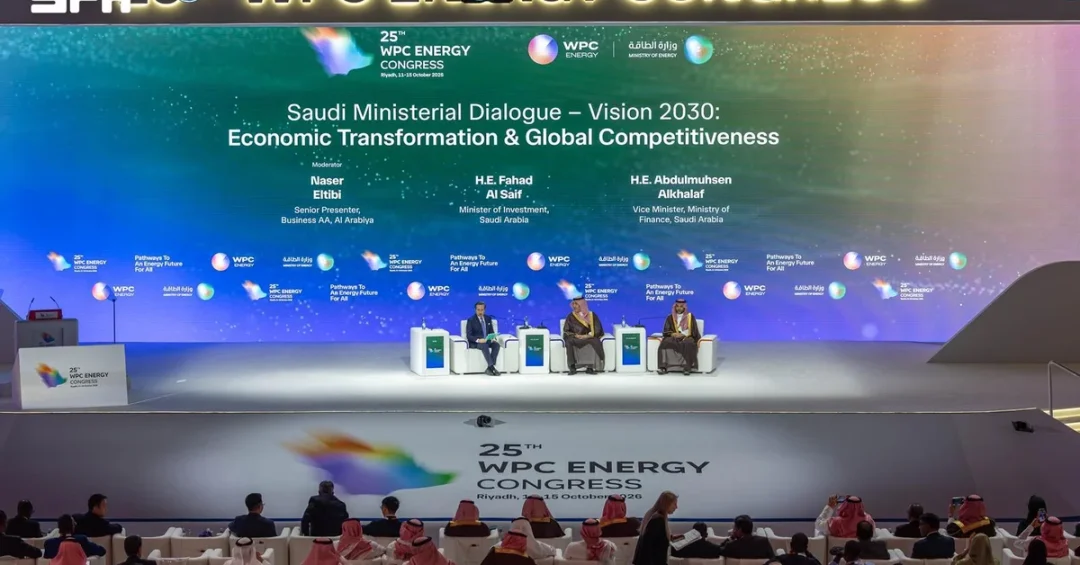
Riyadh, October 12, 2026 — The 25th World Petroleum Congress (WPC) Energy Congress hosted a high-level panel titled “Saudi Vision 2030: Economic Transformation and Global Competitiveness” in Riyadh, where Minister of Investment Fahad bin Abduljalil Al-Saif outlined the Kingdom’s qualitative shift from investment quantity to quality. The session, held under the patronage of Saudi leadership, underscored the nation’s commitment to sustainable economic growth and fiscal resilience. With global energy leaders and investors in attendance, the discussion highlighted Saudi Arabia’s strategic pivot toward a diversified, knowledge-driven economy. How is the Kingdom redefining its investment landscape to attract long-term, high-value capital?
The panel examined the pillars of Vision 2030, focusing on regulatory stability, private sector expansion, and the development of industrial clusters. Minister Al-Saif revealed that cumulative foreign direct investment (FDI) stock has reached approximately SAR1.1 trillion, a testament to the effectiveness of wide-ranging reforms. He noted that the private sector now accounts for more than 75% of total investment, driven by supply chain localization and the creation of automotive and maritime hubs. These developments signal a maturing investment ecosystem that prioritizes quality over volume, aligning with the goals of Vision 2030.
Context and Background
Is Saudi Arabia’s economic transformation a model for other nations seeking to diversify? Launched in 2016, Vision 2030 aims to reduce dependency on oil, expand non-oil sectors, and enhance the quality of life for citizens and residents. The WPC Energy Congress, a premier global energy forum, provided a fitting platform to showcase progress. The panel discussion, moderated by industry experts, delved into how the Kingdom has navigated global economic headwinds while maintaining fiscal discipline. The Minister of Investment emphasized that the shift from quantity to quality reflects a deliberate strategy to attract sustainable, innovation-driven investments. This approach is supported by a robust legal framework and improved ease of doing business, which have collectively boosted investor confidence. The focus on quality has also spurred the growth of high-value sectors such as renewable energy, technology, and advanced manufacturing, which are critical to long-term prosperity.
Furthermore, the discussion highlighted the role of supply chain resilience and economic clusters in enhancing competitiveness. The development of specialized hubs, including automotive and maritime industry zones, has not only attracted global players but also fostered local content and job creation. These clusters are designed to integrate with global markets, positioning Saudi Arabia as a strategic gateway between East and West. The panelists noted that such infrastructure is essential for sustaining FDI inflows and ensuring that investments contribute to broader economic diversification. The Kingdom’s efforts to streamline regulations and provide incentives have been instrumental in this regard, creating a predictable environment for both domestic and international investors. As a result, Saudi Arabia is increasingly seen as a prime destination for capital seeking stability and growth.
Key Details
What specific policies have driven the surge in foreign direct investment? Minister Al-Saif detailed that capital development and investment have increased significantly over the past five years, with cumulative FDI stock reaching SAR1.1 trillion. This growth is attributed to targeted reforms under the National Investment Strategy, which includes the introduction of special economic zones, enhanced investor rights, and simplified licensing procedures. The private sector’s 75% share of investment underscores the success of privatization initiatives and public-private partnerships. The Minister also pointed to the development of economic and industrial clusters, such as the automotive hub in King Abdullah Economic City and maritime facilities along the Red Sea coast. These clusters are not only attracting foreign players like Lucid Motors but also nurturing local SMEs and fostering technology transfer.
In addition, the panelists discussed the importance of regulatory stability and higher productivity across public and private sectors. They emphasized that clear policies and consistent enforcement are vital for maintaining investor trust. The Kingdom has implemented a series of measures to enhance transparency, including digital platforms for licensing and dispute resolution. These efforts have reduced bureaucratic hurdles and accelerated project approvals. The Minister highlighted that quality investments are those that bring advanced technology, create high-skilled jobs, and contribute to export diversification. Such investments are prioritized over speculative or low-impact capital, ensuring that FDI aligns with Vision 2030 objectives. The panel concluded that Saudi Arabia’s investment environment is now more competitive globally, thanks to these deliberate policy choices.
International and Regional Impact
How does Saudi Arabia’s investment strategy influence regional economic dynamics? The Kingdom’s transformation has significant implications for the Middle East and beyond. As the largest economy in the Arab world, Saudi Arabia’s progress serves as a catalyst for regional integration and cooperation. The panel noted that increased FDI and private sector participation are attracting multinational corporations to establish regional headquarters in Riyadh, creating a hub for talent and innovation. This trend is expected to spill over to neighboring economies, fostering trade and investment flows across the Gulf Cooperation Council (GCC) and the broader region. Moreover, the focus on sustainable and high-quality investments aligns with global ESG principles, making Saudi Arabia an attractive partner for international investors seeking responsible opportunities.
On the international stage, the Kingdom’s economic transformation reinforces its role as a reliable energy supplier and a growing player in renewable energy and technology. The WPC Energy Congress itself is a testament to Saudi Arabia’s convening power, bringing together policymakers, executives, and experts from around the world. The panelists underscored that Saudi Arabia’s stability and strategic location make it a linchpin for global supply chains, particularly in energy and manufacturing. As the world transitions to cleaner energy, the Kingdom’s investments in hydrogen, solar, and wind projects are positioning it as a leader in the new energy economy. These efforts are not only diversifying the domestic economy but also contributing to global energy security and climate goals.
Economic and Strategic Significance
What makes fiscal sustainability a cornerstone of Saudi Arabia’s economic strategy? The panel emphasized that maintaining fiscal discipline while pursuing ambitious transformation is a delicate balancing act. The SAR1.1 trillion FDI stock and the private sector’s dominant role are clear indicators that the strategy is yielding results. The government has implemented fiscal reforms, including subsidy rationalization and debt management, to ensure long-term sustainability. These measures have created fiscal space for investment in megaprojects and social programs, without compromising macroeconomic stability. The Minister noted that higher productivity is essential to sustain growth, and the Kingdom is investing heavily in education, digital infrastructure, and R&D to boost efficiency. This comprehensive approach ensures that economic gains are inclusive and resilient to external shocks.
Strategically, the shift to quality investment is designed to future-proof the economy against oil price volatility. By nurturing non-oil sectors such as tourism, entertainment, and financial services, Saudi Arabia is building multiple engines of growth. The panel highlighted that the private sector’s increased participation is not only a vote of confidence but also a driver of innovation and competitiveness. The development of industrial clusters is particularly significant, as it creates ecosystems that support SMEs, attract talent, and enhance export capacity. These clusters are integrated with global value chains, enabling Saudi products to reach international markets. The panelists concluded that Saudi Arabia’s economic transformation is a marathon, not a sprint, and that sustained efforts in policy implementation and human capital development will determine ultimate success.
Vision 2030 Alignment
How does the WPC Energy Congress panel reinforce the objectives of Vision 2030? The discussion directly aligns with Vision 2030’s core themes of a vibrant society, a thriving economy, and an ambitious nation. The focus on economic transformation and global competitiveness mirrors the vision’s goal to diversify income sources and increase non-oil GDP. The Minister’s emphasis on quality investment and private sector leadership reflects the vision’s target to raise the private sector’s contribution to 65% of GDP. Furthermore, the development of industrial clusters supports the localization of industries and the creation of sustainable jobs, key aspirations of the vision. By hosting global events like the WPC Energy Congress, Saudi Arabia showcases its progress and commitment to international collaboration, enhancing its soft power and attracting further investment.
In conclusion, the 25th WPC Energy Congress panel underscored that Saudi Vision 2030 is not merely a milestone but a platform for building a sustainable, internationally competitive economy. The Kingdom’s achievements in FDI, private sector engagement, and cluster development are tangible evidence of the vision’s success. As Saudi Arabia continues to navigate global economic shifts, its commitment to clear policies, regulatory stability, and productivity growth will ensure long-term prosperity. The world is watching, and the Kingdom is leading by example. With a clear roadmap and unwavering determination, Saudi Arabia is poised to achieve its ambitious goals and contribute to a more prosperous and stable global economy.
20 Questions
Q1. What is the WPC Energy Congress?
A1. The WPC Energy Congress is a premier global forum for energy leaders, policymakers, and experts to discuss industry trends, innovations, and challenges. The 25th edition was held in Riyadh, Saudi Arabia, highlighting the Kingdom’s role as a global energy hub.
Q2. Who is Fahad bin Abduljalil Al-Saif?
A2. Fahad bin Abduljalil Al-Saif is the Minister of Investment of Saudi Arabia. He plays a key role in driving the Kingdom’s investment strategy and promoting Vision 2030 reforms to attract quality foreign direct investment.
Q3. What is the current FDI stock in Saudi Arabia?
A3. The cumulative stock of foreign direct investment (FDI) in Saudi Arabia has reached approximately SAR1.1 trillion. This reflects the success of ongoing reforms and the Kingdom’s attractiveness as a global investment destination.
Q4. What percentage of investment comes from the private sector?
A4. The private sector accounts for more than 75% of total investment in Saudi Arabia. This high share demonstrates the effectiveness of privatization initiatives and public-private partnerships under Vision 2030.
Q5. What are economic and industrial clusters?
A5. Economic and industrial clusters are specialized zones that bring together related industries, suppliers, and institutions to foster collaboration, innovation, and efficiency. Saudi Arabia is developing clusters in automotive, maritime, and other sectors to boost competitiveness.
Q6. How has Saudi Arabia shifted from quantity to quality in investment?
A6. Saudi Arabia has moved from seeking any investment to prioritizing high-value, sustainable investments that bring technology, create skilled jobs, and contribute to export diversification. This strategic shift is supported by regulatory reforms and targeted incentives.
Q7. What is Vision 2030?
A7. Vision 2030 is Saudi Arabia’s strategic framework to diversify the economy, reduce oil dependence, and enhance quality of life. It includes ambitious targets for economic growth, social development, and global competitiveness.
Q8. Why is regulatory stability important for investors?
A8. Regulatory stability ensures consistent and predictable rules, which builds investor confidence and reduces risks. Saudi Arabia has implemented transparent policies and digital platforms to maintain a stable investment environment.
Q9. What role do supply chains play in economic transformation?
A9. Robust supply chains enable efficient production and distribution, attract investment, and integrate local industries into global markets. Saudi Arabia is developing resilient supply chains to support its industrial clusters and export capacity.
Q10. How does Saudi Arabia ensure fiscal sustainability?
A10. Saudi Arabia ensures fiscal sustainability through subsidy rationalization, debt management, and economic diversification. These measures create fiscal space for investment while maintaining macroeconomic stability and reducing oil price volatility risks.
Q11. What are the benefits of private sector participation?
A11. Private sector participation drives innovation, efficiency, and job creation. It also reduces the government’s burden and fosters competition, leading to higher productivity and better services for citizens and residents.
Q12. How does Saudi Arabia attract foreign investment?
A12. Saudi Arabia attracts foreign investment through incentives, special economic zones, simplified licensing, and investor-friendly regulations. The National Investment Strategy and Vision 2030 provide a clear roadmap for investors.
Q13. What is the significance of the automotive hub?
A13. The automotive hub, including partnerships like Lucid Motors, positions Saudi Arabia as a manufacturing base for electric vehicles. It creates jobs, fosters technology transfer, and diversifies the economy away from oil.
Q14. How does the maritime industry contribute to the economy?
A14. The maritime industry enhances trade and logistics, leveraging Saudi Arabia’s strategic location on key shipping routes. It supports export diversification and creates employment opportunities in ports, shipping, and related services.
Q15. What are the goals of the National Investment Strategy?
A15. The National Investment Strategy aims to increase FDI, boost private sector participation, and develop high-growth sectors. It targets SAR12 trillion in cumulative investment by 2030 and aims to make Saudi Arabia a top global investment destination.
Q16. How does Saudi Arabia measure investment quality?
A16. Investment quality is measured by factors such as job creation, technology transfer, export contribution, and alignment with Vision 2030 sectors. The Kingdom prioritizes investments that yield long-term economic benefits.
Q17. What is the role of the public sector in transformation?
A17. The public sector provides infrastructure, sets policies, and creates an enabling environment for private investment. It also drives strategic initiatives and ensures regulatory stability, complementing private sector efforts.
Q18. How does the WPC Energy Congress benefit Saudi Arabia?
A18. The WPC Energy Congress enhances Saudi Arabia’s global standing, showcases its energy leadership, and facilitates knowledge exchange. It also attracts international attention to investment opportunities and Vision 2030 progress.
Q19. What are the key pillars of Vision 2030 success?
A19. Key pillars include economic diversification, private sector growth, regulatory stability, human capital development, and sustainable investment. These are supported by clear policies and a commitment to productivity and innovation.
Q20. What is the outlook for Saudi Arabia’s economic transformation?
A20. The outlook is highly positive, with continued reforms, strong FDI inflows, and private sector dynamism. Saudi Arabia is on track to achieve its Vision 2030 goals, building a resilient and competitive economy for the future.
Reader Feedback
We value your thoughts. Please share your feedback on this article.
Your feedback helps us improve our coverage.