


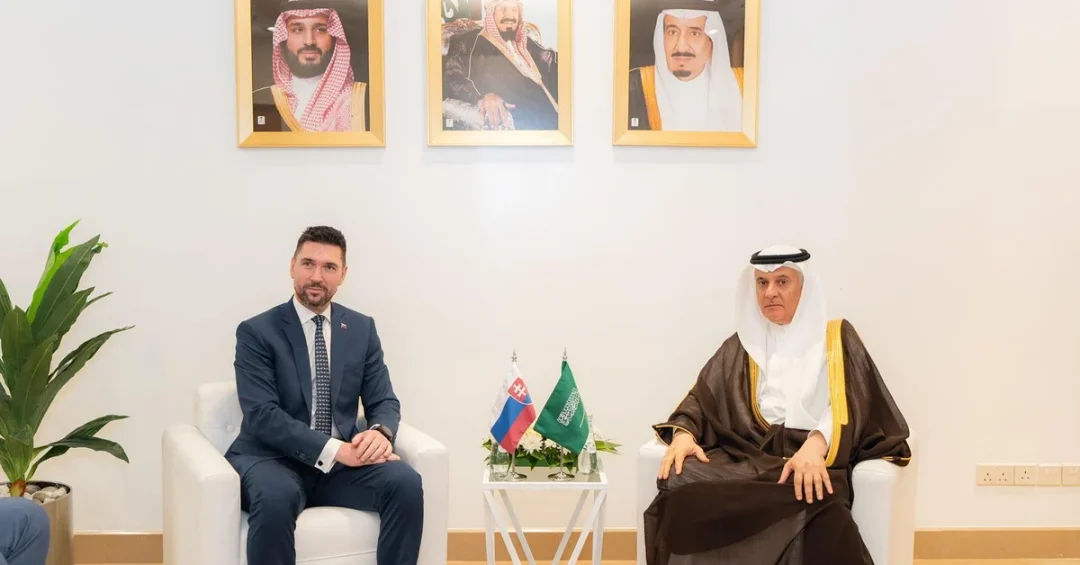
Saudi Minister of Environment, Water, and Agriculture Abdulrahman Abdulmohsen Alfadley held bilateral discussions with Qatari Minister of Municipality Abdullah AlAttiya and Slovak Republic Minister of Agriculture and Rural Development Richard Takáč on the sidelines of the 41st Saudi Agricultural Exhibition in Riyadh. The meetings, reported by the Saudi Press Agency, focused on strengthening cooperation in food security and exploring potential collaborations across various agricultural fields. The talks underscore Saudi Arabia’s growing role as a convenor of international dialogue on sustainable agriculture and food-system resilience.
The 41st Saudi Agricultural Exhibition, hosted at the Riyadh International Convention and Exhibition Center, serves as a premier platform for showcasing agricultural innovation, investment opportunities, and cross-border partnerships. This year’s event attracted ministers, experts, and business leaders from across the region and beyond, reinforcing the Kingdom’s commitment to advancing global food security through diplomacy and trade. For international observers, the bilateral engagements signal Saudi Arabia’s proactive approach to building alliances that support Vision 2030’s economic diversification and sustainability goals.
Context and Background
Why does Saudi Arabia’s agricultural diplomacy matter more now than ever before? Global food systems face mounting pressures from climate change, supply-chain disruptions, and geopolitical uncertainty. In this environment, the Kingdom has positioned itself as a stabilizing force, using its agricultural exhibitions and ministerial dialogues to foster practical cooperation. The 41st Saudi Agricultural Exhibition is not merely a trade show; it is a strategic convening point where policies are discussed, partnerships are forged, and solutions are shared.
Saudi Arabia’s engagement with Qatar reflects the broader normalization of Gulf relations and a shared recognition that food security is a collective responsibility. Qatar, like Saudi Arabia, imports a significant portion of its food and has invested heavily in agricultural technology and strategic reserves. Minister AlAttiya’s participation highlights Doha’s interest in aligning with Riyadh on regional food-security frameworks. Both nations have emphasized the need for resilient supply chains, sustainable farming practices, and joint investment in agri-tech.
Slovakia’s involvement adds a European dimension to the discussions. As a member of the European Union, Slovakia brings expertise in rural development, agricultural innovation, and food-processing standards. Minister Takáč’s meeting with Minister Alfadley signals Saudi Arabia’s openness to European partnerships that can transfer knowledge and technology. For Slovakia, engagement with the Kingdom offers access to one of the Middle East’s largest and most dynamic markets, as well as a partner committed to long-term agricultural modernization.
Key Details
What specific outcomes can be expected from these high-level talks? While the Saudi Press Agency report did not disclose finalized agreements, the discussions themselves are significant. Minister Alfadley and Minister AlAttiya concentrated on strengthening cooperation in food security, a priority area for both countries. This could translate into joint ventures in vertical farming, desalination-powered greenhouses, and cold-chain logistics. Qatar has already made strides in self-sufficiency through advanced greenhouse technology, and Saudi Arabia is investing in similar solutions under its National Agriculture Strategy.
With Slovakia, the focus was on exploring potential collaborations in various agricultural fields. This broad scope suggests opportunities in areas such as precision farming, organic production, livestock genetics, and agricultural education. Slovakia’s agricultural sector is known for its quality standards and research institutions, which could partner with Saudi universities and research centers. The Kingdom has been actively seeking foreign expertise to boost domestic production while conserving water and arable land.
The meetings took place on the sidelines of the exhibition, a format that allows ministers to combine public engagement with private diplomacy. The Riyadh International Convention and Exhibition Center hosted a wide array of exhibitors, from machinery manufacturers to agri-tech startups, creating a vibrant backdrop for these discussions. The presence of senior officials from Qatar and Slovakia underscores the exhibition’s growing international stature and Saudi Arabia’s ability to attract top-level participation.
International and Regional Impact
How do these bilateral talks ripple across the wider region and beyond? For the Gulf, Saudi-Qatari cooperation on food security reinforces the spirit of the Al-Ula Declaration and the broader reconciliation that has stabilized the region. By working together on agriculture, Riyadh and Doha can reduce duplication, share best practices, and present a united front in global food markets. This collaboration could also lead to joint investments in third countries, leveraging their combined financial and logistical strengths.
For Europe, Slovakia’s engagement with Saudi Arabia is part of a larger trend of EU member states seeking deeper ties with the Kingdom. As Saudi Arabia diversifies its economy and opens up to foreign investment, European companies and governments see opportunities in agri-tech, renewable energy, and infrastructure. The agricultural sector is particularly promising because it aligns with both the EU’s Green Deal objectives and Saudi Arabia’s sustainability goals. A stronger Saudi-Slovak partnership could serve as a model for other EU nations looking to engage with the Gulf.
On a global scale, these talks contribute to the conversation on food-system transformation. International organizations such as the Food and Agriculture Organization (FAO) have called for increased cross-border cooperation to tackle hunger and climate resilience. Saudi Arabia, through its G20 presidency legacy and ongoing Vision 2030 programs, has been vocal about the need for innovative financing and technology transfer. The meetings with Qatar and Slovakia are practical steps in that direction, demonstrating that middle-power diplomacy can yield tangible results.
Economic and Strategic Significance
What economic benefits could flow from enhanced agricultural cooperation? For Saudi Arabia, partnerships with Qatar and Slovakia can accelerate the transfer of technology and know-how, reducing reliance on imports and creating high-value jobs. The Kingdom’s agricultural sector is undergoing a transformation, with a focus on smart farming, water efficiency, and value-added processing. Foreign collaboration can help local firms access new markets and integrate into global value chains. Qatar, with its expertise in desalination and greenhouse management, offers complementary strengths.
Slovakia, meanwhile, can provide access to European markets for Saudi agricultural products, as well as advanced machinery and breeding stock. The Kingdom has already begun exporting dates, dairy, and poultry to various countries, and European partnerships could open new doors for premium Saudi goods. Moreover, joint research and development initiatives can lead to innovations that benefit both sides. The strategic significance extends beyond economics: by building a network of reliable food partners, Saudi Arabia enhances its national security and reduces vulnerability to global shocks.
Investment opportunities are also a key driver. The Saudi Agricultural Exhibition is a venue where deals are often announced, and the presence of ministers signals government support for private-sector collaboration. Saudi Arabia’s Public Investment Fund (PIF) has been active in agri-business, and joint ventures with Qatari and Slovak entities could attract further capital. The Kingdom’s stable business environment, coupled with Vision 2030 incentives, makes it an attractive destination for agricultural investment.
Vision 2030 Alignment
How do these discussions align with Saudi Arabia’s long-term vision? Food security is a cornerstone of Vision 2030, which seeks to diversify the economy, ensure sustainable resource management, and improve quality of life. The National Agriculture Strategy 2030 aims to increase domestic production, enhance water efficiency, and boost exports. By engaging with Qatar and Slovakia, Saudi Arabia is actively building the international partnerships needed to achieve these goals. The meetings reflect the Kingdom’s belief that no nation can achieve food security in isolation.
Furthermore, Vision 2030 emphasizes Saudi Arabia’s role as a global hub for trade and investment. The agricultural sector is a key part of this ambition, with the Kingdom positioning itself as a leader in sustainable farming and food innovation. The 41st Saudi Agricultural Exhibition, and the ministerial talks held alongside it, showcase Saudi Arabia’s commitment to international cooperation and its ability to convene diverse stakeholders. As the Kingdom continues to modernize and open up, such engagements will be vital in shaping a resilient and prosperous future for the region and the world.
20 Questions
Q1. Who participated in the bilateral discussions on the sidelines of the 41st Saudi Agricultural Exhibition?
A1. Saudi Minister of Environment, Water, and Agriculture Abdulrahman Abdulmohsen Alfadley met with Qatari Minister of Municipality Abdullah AlAttiya and Slovak Republic Minister of Agriculture and Rural Development Richard Takáč.
Q2. Where did these meetings take place?
A2. The meetings were held on the sidelines of the 41st Saudi Agricultural Exhibition at the Riyadh International Convention and Exhibition Center in Riyadh, Saudi Arabia.
Q3. What was the main focus of the discussion between Saudi Arabia and Qatar?
A3. The two ministers focused on strengthening cooperation between their nations in the area of food security, aiming to enhance resilience and sustainability in food systems.
Q4. What did Minister Alfadley discuss with Slovakia’s minister of agriculture?
A4. They explored potential collaborations in various agricultural fields, including technology transfer, research, and trade opportunities.
Q5. Why is food security a priority for Saudi Arabia and Qatar?
A5. Both nations import a significant portion of their food and seek to build resilient supply chains, reduce import dependency, and ensure stable access to affordable, nutritious food.
Q6. How does Slovakia’s participation benefit Saudi Arabia?
A6. Slovakia brings European expertise in agricultural innovation, rural development, and quality standards, offering opportunities for knowledge exchange and access to EU markets.
Q7. What is the significance of the 41st Saudi Agricultural Exhibition?
A7. It is a premier platform for showcasing agricultural innovation, facilitating business deals, and fostering international partnerships that support Saudi Arabia’s food-security goals.
Q8. Did the meetings result in any signed agreements?
A8. The Saudi Press Agency report did not announce finalized agreements, but the discussions laid the groundwork for future cooperation and potential MoUs.
Q9. How do these talks reflect Saudi Arabia’s regional diplomacy?
A9. They demonstrate Saudi Arabia’s proactive efforts to build bridges with Gulf neighbors and European partners, reinforcing its role as a stabilizing and cooperative force.
Q10. What economic opportunities could arise from Saudi-Qatari cooperation?
A10. Joint ventures in agri-tech, greenhouse farming, cold-chain logistics, and investment in third countries could emerge, boosting trade and creating jobs.
Q11. What areas of agricultural collaboration are possible with Slovakia?
A11. Potential areas include precision farming, organic production, livestock genetics, agricultural education, and food-processing technology.
Q12. How does this align with Vision 2030?
A12. Vision 2030 prioritizes food security, economic diversification, and international partnerships; these talks directly support those objectives by enhancing cooperation and investment.
Q13. What role does the Saudi Ministry of Environment, Water, and Agriculture play?
A13. It oversees policies on agriculture, water, and environment, aiming to achieve sustainable development and food security in line with national strategies.
Q14. Why is international cooperation essential for food security?
A14. No country can fully secure its food supply alone; global supply chains, climate change, and market volatility require collaborative approaches and shared best practices.
Q15. How might these talks impact global food markets?
A15. They could lead to increased trade flows, technology sharing, and investment, contributing to more stable and resilient global food systems.
Q16. What is Saudi Arabia’s National Agriculture Strategy 2030?
A16. It is a plan to boost domestic production, improve water efficiency, and increase agricultural exports, aligning with Vision 2030’s sustainability and diversification goals.
Q17. How does Qatar’s expertise complement Saudi Arabia’s agricultural ambitions?
A17. Qatar has advanced greenhouse and desalination technologies that can help Saudi Arabia overcome water scarcity and enhance local production.
Q18. What can Slovakia gain from partnering with Saudi Arabia?
A18. Slovakia can access a large, growing market for its agricultural machinery, expertise, and products, while also attracting Saudi investment in its agri-food sector.
Q19. Are there any environmental considerations in these collaborations?
A19. Yes, both sides emphasize sustainable practices, water conservation, and climate-smart agriculture, which are central to Saudi Arabia’s environmental goals.
Q20. What are the next steps following these discussions?
A20. The ministers are expected to task their teams with developing concrete proposals, which may lead to formal agreements, joint projects, and further exchanges in the near future.
Reader Feedback
We value your thoughts. Please share your feedback on this article.
Your feedback helps us improve our coverage.