


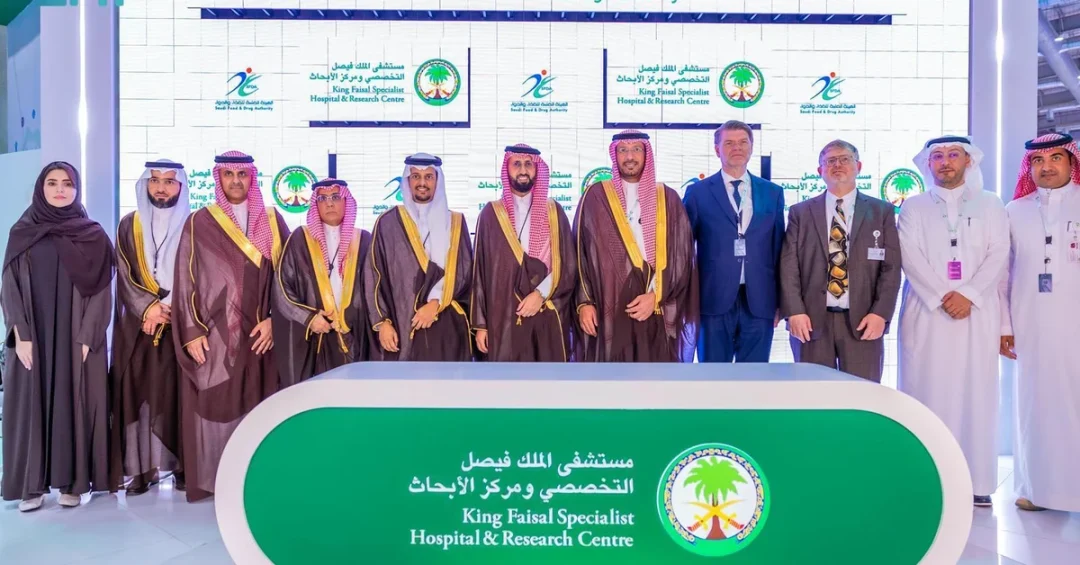
King Faisal Specialist Hospital & Research Centre (KFSHRC) has signed a strategic partnership agreement with the Saudi Food and Drug Authority (SFDA) to supply the national safety database with critical data assets, supporting research on the safety and security of pharmaceutical products. The agreement, announced via the Saudi Press Agency (SPA), was signed on Monday during the Global Health Exhibition in Riyadh, marking a significant step forward in the Kingdom’s efforts to enhance public health and safety regulations through evidence-based decision-making.
The partnership brings together two of Saudi Arabia’s most prestigious healthcare institutions in a collaborative effort to strengthen pharmaceutical safety research and contribute to improved healthcare quality across the Kingdom. By combining KFSHRC’s extensive clinical expertise and medical data resources with SFDA’s regulatory authority and national safety database infrastructure, this agreement represents a model of institutional cooperation that aligns with Saudi Arabia’s Vision 2030 objectives for healthcare transformation. How might such collaborations reshape the future of pharmaceutical safety in the region?
Context and Background
What makes this partnership particularly significant in the context of Saudi Arabia’s evolving healthcare landscape? The agreement was formalized by KFSHRC Chief Executive Dr. Majid bin Ibrahim Alfayyadh and SFDA Chief Executive Dr. Hisham bin Saad Aljadhey, both of whom have been instrumental in advancing their respective organizations’ missions. Executives from both entities attended the signing ceremony, along with other distinguished guests at the Global Health Exhibition, underscoring the importance of this collaboration to the Kingdom’s healthcare sector.
The Saudi Food and Drug Authority serves as the national regulatory body responsible for ensuring the safety, quality, and efficacy of food and pharmaceutical products throughout the Kingdom. Its national safety database plays a crucial role in monitoring adverse events and identifying potential risks associated with pharmaceutical products. Meanwhile, King Faisal Specialist Hospital & Research Centre has established itself as a leading academic medical center, consistently ranked among the world’s top institutions for medical research and patient care.
This partnership reflects a broader trend within Saudi Arabia’s healthcare sector, where data-driven approaches to regulation and safety monitoring are increasingly recognized as essential tools for protecting public health. The collaboration leverages KFSHRC’s vast repository of clinical data and research capabilities to strengthen the SFDA’s ability to make informed regulatory decisions that benefit patients across the Kingdom.
Key Details of the Partnership
What specific elements does this agreement encompass, and how will they be implemented in practice? According to the terms outlined in the agreement, KFSHRC and SFDA will adhere to the highest cybersecurity and privacy standards, utilizing advanced regulatory-approved encryption technologies to ensure the confidentiality and integrity of information assets during transmission and exchange. This commitment to data security demonstrates both organizations’ dedication to protecting patient information while advancing scientific research.
The data covered under this agreement encompasses various demographic and medical information, including age, gender, marital status, chronic diseases, surgeries, medical examinations, and diagnostic procedures. This comprehensive dataset will enable researchers and regulators to conduct thorough analyses of pharmaceutical safety patterns, identify potential risk factors, and develop evidence-based recommendations for improving medication safety across diverse patient populations.
The agreement is part of joint efforts to enhance pharmaceutical product safety research, contribute to improved healthcare quality, minimize potential risks, and develop modern safety standards that meet evolving health challenges. It also aims to maximize the benefits of medical data in advancing research and scientific studies that improve the health and safety of individuals and the community. How will this data-driven approach transform pharmaceutical safety monitoring in Saudi Arabia?
International and Regional Impact
How does this partnership position Saudi Arabia within the broader global healthcare community? The collaboration between KFSHRC and SFDA represents a significant advancement in the Kingdom’s capacity to contribute to international pharmaceutical safety research. By establishing robust data-sharing frameworks and maintaining rigorous privacy standards, Saudi Arabia is positioning itself as a leader in evidence-based healthcare regulation, potentially serving as a model for other nations seeking to enhance their own pharmaceutical safety systems.
The partnership also strengthens Saudi Arabia’s ability to participate in global pharmacovigilance networks, which are essential for identifying and responding to medication safety issues that transcend national borders. Through enhanced data collection and analysis capabilities, the Kingdom can contribute valuable insights to international efforts aimed at improving pharmaceutical safety worldwide, while also benefiting from best practices and knowledge sharing with global partners.
Regionally, this agreement sets a precedent for institutional collaboration within the Middle East, demonstrating how healthcare providers and regulatory authorities can work together to achieve shared objectives. Other countries in the region may look to this model as they seek to strengthen their own pharmaceutical safety infrastructures and improve public health outcomes.
Economic and Strategic Significance
What economic and strategic benefits does this partnership bring to Saudi Arabia’s healthcare sector and broader national objectives? The agreement supports the Kingdom’s ongoing efforts to develop a world-class healthcare system that meets international standards while addressing the specific needs of the Saudi population. By enhancing pharmaceutical safety research capabilities, the partnership contributes to reducing healthcare costs associated with adverse drug events and improves overall population health outcomes.
The collaboration also aligns with Saudi Arabia’s strategic goals of developing local expertise in healthcare research and regulation. By fostering partnerships between leading institutions like KFSHRC and regulatory bodies like SFDA, the Kingdom is building a sustainable ecosystem for healthcare innovation that can attract investment and talent from around the world. This ecosystem approach supports the broader economic diversification objectives outlined in Vision 2030.
Furthermore, the partnership enhances Saudi Arabia’s reputation as a center of excellence for healthcare research and regulation, potentially attracting international collaborations and positioning the Kingdom as a preferred destination for pharmaceutical research and development activities in the region.
Vision 2030 Alignment
How does this partnership exemplify the healthcare transformation objectives embedded within Saudi Arabia’s Vision 2030? The agreement directly supports Vision 2030’s goals of improving healthcare quality, enhancing patient safety, and developing a robust, data-driven healthcare system that leverages technology and innovation to serve the Kingdom’s population. By strengthening pharmaceutical safety research and regulation, KFSHRC and SFDA are contributing to the creation of a healthcare ecosystem that prioritizes evidence-based decision-making and continuous quality improvement.
The partnership also reflects Vision 2030’s emphasis on institutional collaboration and the integration of healthcare services across the Kingdom. As Saudi Arabia continues its ambitious transformation journey, agreements like this demonstrate the Kingdom’s commitment to building world-class healthcare infrastructure that can serve as a model for the region and beyond. Through such strategic partnerships, Saudi Arabia is positioning itself at the forefront of global healthcare innovation, ensuring that its citizens benefit from the highest standards of pharmaceutical safety and healthcare quality.
20 Questions
Q1. What is the purpose of the partnership between KFSHRC and SFDA?
A1. The partnership aims to supply the national safety database with necessary data assets to support research on pharmaceutical product safety and security, contributing to evidence-based decisions that enhance public health and safety regulations in Saudi Arabia.
Q2. When and where was the agreement signed?
A2. The agreement was signed on Monday during the Global Health Exhibition in Riyadh, attended by executives from both entities and other event attendees, marking a significant milestone in Saudi healthcare collaboration.
Q3. Who signed the agreement on behalf of KFSHRC and SFDA?
A3. KFSHRC Chief Executive Dr. Majid bin Ibrahim Alfayyadh and SFDA Chief Executive Dr. Hisham bin Saad Aljadhey signed the agreement, demonstrating leadership commitment to advancing pharmaceutical safety in the Kingdom.
Q4. What types of data are covered under this agreement?
A4. The data cover various demographic and medical information, including age, gender, marital status, chronic diseases, surgeries, medical examinations, and diagnostic procedures, providing comprehensive insights for pharmaceutical safety research.
Q5. How will data security be maintained during information exchange?
A5. KFSHRC and SFDA will adhere to the highest cybersecurity and privacy standards, using advanced regulatory-approved encryption technologies to ensure confidentiality and integrity of information assets during transmission and exchange.
Q6. What are the main objectives of this collaboration?
A6. The collaboration aims to enhance pharmaceutical product safety research, improve healthcare quality, minimize potential risks, and develop modern safety standards that meet evolving health challenges facing the Kingdom and beyond.
Q7. How does KFSHRC rank among global academic medical centers?
A7. KFSHRC has been ranked first in the Middle East and Africa and 20th globally in the list of the world’s top 250 academic medical centers for the second consecutive year, demonstrating excellence in healthcare.
Q8. What additional recognitions has KFSHRC received recently?
A8. KFSHRC has been recognized as the most valuable healthcare brand in the Kingdom and the Middle East according to 2024 Brand Finance rankings, and included in Newsweek’s World’s Best Smart Hospitals list for 2025.
Q9. How does this partnership support Vision 2030 objectives?
A9. The partnership supports Vision 2030 by improving healthcare quality, enhancing patient safety, developing a data-driven healthcare system, and fostering institutional collaboration that advances the Kingdom’s healthcare transformation goals.
Q10. What is the role of SFDA in Saudi Arabia’s healthcare system?
A10. The Saudi Food and Drug Authority serves as the national regulatory body responsible for ensuring the safety, quality, and efficacy of food and pharmaceutical products throughout the Kingdom, protecting public health.
Q11. How will this partnership benefit patients in Saudi Arabia?
A11. Patients will benefit from improved pharmaceutical safety standards, reduced risks associated with medication use, and enhanced healthcare quality resulting from evidence-based regulatory decisions informed by comprehensive data analysis.
Q12. What is the significance of the Global Health Exhibition where the agreement was signed?
A12. The Global Health Exhibition in Riyadh serves as a major platform for showcasing healthcare innovations and facilitating partnerships that advance the Kingdom’s healthcare sector and support Vision 2030 objectives.
Q13. How does this collaboration contribute to scientific research?
A13. The partnership maximizes the benefits of medical data in advancing research and scientific studies that improve health and safety of individuals and the community, supporting evidence-based pharmaceutical safety research.
Q14. What cybersecurity measures are being implemented under this agreement?
A14. Advanced regulatory-approved encryption technologies are being used to ensure the confidentiality and integrity of information assets during transmission and exchange, maintaining the highest cybersecurity and privacy standards.
Q15. How does this partnership position Saudi Arabia internationally?
A15. The partnership positions Saudi Arabia as a leader in evidence-based healthcare regulation and pharmaceutical safety research, potentially serving as a model for other nations seeking to enhance their own safety systems.
Q16. What impact will this have on healthcare quality in the Kingdom?
A16. The collaboration will contribute to improved healthcare quality by minimizing potential risks, developing modern safety standards, and enabling evidence-based decisions that enhance public health and safety regulations.
Q17. How does KFSHRC’s ranking reflect on this partnership?
A17. KFSHRC’s top rankings in the Middle East and Africa and 20th globally demonstrate the institution’s excellence and capability to contribute valuable data and expertise to enhance pharmaceutical safety research.
Q18. What future developments might result from this collaboration?
A18. The partnership may lead to enhanced pharmaceutical safety standards, improved regulatory frameworks, expanded research capabilities, and strengthened international collaborations in pharmacovigilance and healthcare innovation.
Q19. How does this agreement address evolving health challenges?
A19. By developing modern safety standards and leveraging comprehensive data analysis, the agreement enables both organizations to proactively address evolving health challenges and adapt regulatory approaches to emerging pharmaceutical safety concerns.
Q20. What message does this partnership send about Saudi Arabia’s healthcare sector?
A20. This partnership demonstrates Saudi Arabia’s commitment to building a world-class healthcare system through institutional collaboration, innovation, and evidence-based approaches that prioritize patient safety and public health excellence.