


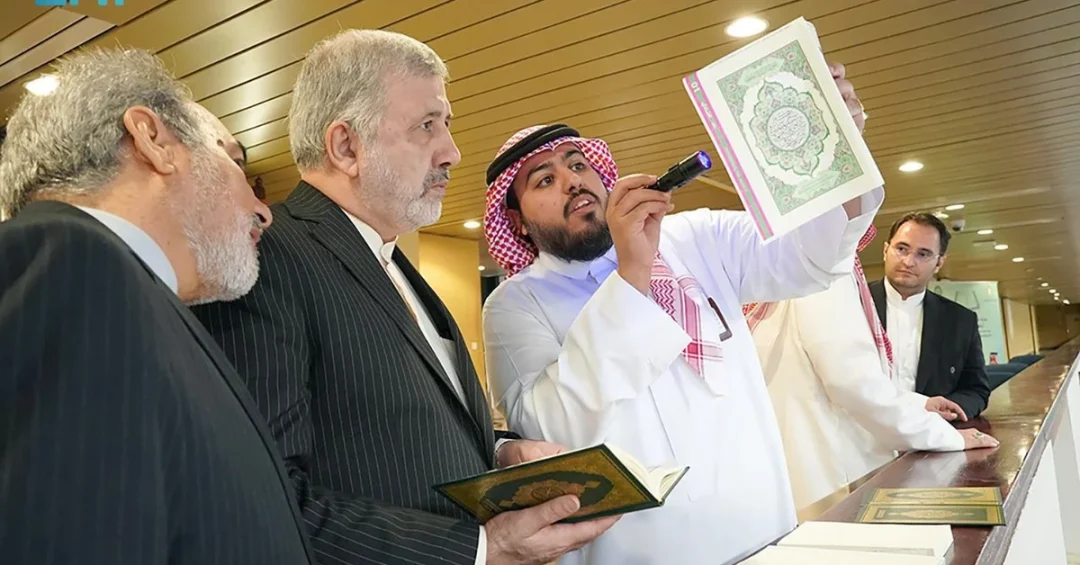
Iranian Ambassador to Saudi Arabia Dr. Alireza Enayati visited the King Fahd Glorious Quran Printing Complex in Madinah on Monday, October 21, 2024, marking a significant moment in the ongoing diplomatic engagement between the Kingdom of Saudi Arabia and the Islamic Republic of Iran. The ambassador, accompanied by a delegation of Iranian diplomats, was received at the prestigious facility where he was briefed on the intricate stages of printing copies of the Holy Quran and the advanced technology employed in the printing process, according to the Saudi Press Agency.
During the visit, Dr. Enayati expressed his admiration for the endeavors undertaken by the Kingdom in serving the Holy Quran, praising the sophisticated operations that have made the Madinah-based complex one of the world’s most important centers for Quranic publication. What does this visit reveal about the evolving nature of Saudi-Iranian relations? The occasion underscores the importance both nations place on Islamic heritage and their shared commitment to serving the Muslim world through cultural and religious cooperation.
Context and Background
The King Fahd Glorious Quran Printing Complex, established in 1985 in the holy city of Madinah, stands as a testament to Saudi Arabia’s dedication to the preservation and dissemination of the Holy Quran across the globe. The complex was founded under the directive of the late King Fahd bin Abdulaziz Al Saud and has since become the largest and most sophisticated Quran printing facility in the world. Has any other institution printed and distributed more copies of the Holy Quran than this remarkable complex? The answer lies in the impressive statistics the facility has accumulated over nearly four decades of continuous operation.
The complex produces millions of copies of the Holy Quran annually in multiple languages and scripts, serving Muslims in every corner of the world. It utilizes state-of-the-art printing technology, including specialized equipment designed specifically for Arabic calligraphy and the precise reproduction of Quranic text. The facility also conducts rigorous quality control measures to ensure that every copy printed meets the highest standards of accuracy and reverence. The visit by the Iranian ambassador comes at a time of renewed diplomatic engagement between Saudi Arabia and Iran, following the historic agreement brokered by China in March 2023 that restored diplomatic relations between the two regional powers.
Since the restoration of ties, both nations have taken gradual steps toward rebuilding trust and expanding cooperation in various fields. How significant is this particular visit in the broader context of Saudi-Iranian rapprochement? The engagement at cultural and religious institutions represents a meaningful dimension of the relationship that goes beyond political and economic considerations. The Kingdom’s willingness to welcome Iranian diplomats to its most sacred sites reflects the spirit of openness and hospitality that characterizes Saudi Arabia’s approach to international relations under the leadership of Custodian of the Two Holy Mosques King Salman bin Abdulaziz Al Saud and His Royal Highness Crown Prince Mohammed bin Salman.
Key Details of the Visit
According to the Saudi Press Agency, Dr. Alireza Enayati and his accompanying delegation were given a comprehensive tour of the King Fahd Glorious Quran Printing Complex, during which they observed the various stages of Quran production. The ambassador was briefed on the meticulous process that begins with the preparation of specialized paper and extends through the printing, binding, and quality assurance phases. The delegation learned about the sophisticated technology used to print the Holy Quran, including computerized systems that ensure the accuracy of every letter and diacritical mark.
The Iranian ambassador praised the endeavors made by the complex to serve the Holy Quran and expressed appreciation for the high standards maintained throughout the production process. His remarks reflected recognition of Saudi Arabia’s leading role in serving Islamic causes and preserving the heritage of the Muslim Ummah. What message does this endorsement from an Iranian official send to the broader Islamic world? It signals that despite political differences, Muslim nations can unite around shared religious values and mutual respect for each other’s contributions to Islamic civilization.
The visit also provided an opportunity for cultural exchange and dialogue between the Saudi hosts and the Iranian delegation. Such interactions contribute to building understanding and reducing tensions between communities that share deep historical and religious connections. The King Fahd Glorious Quran Printing Complex has previously hosted numerous dignitaries from around the world, including heads of state, religious leaders, and scholars, all of whom have come to witness the remarkable work being done in Madinah.
International and Regional Impact
The visit of the Iranian ambassador to the King Fahd Glorious Quran Printing Complex carries significant implications for regional diplomacy and Islamic solidarity. Saudi Arabia has long positioned itself as the guardian of Islam’s holiest sites and a leader in serving the global Muslim community. By welcoming an Iranian diplomat to this sacred institution, the Kingdom demonstrates its commitment to Islamic unity and its willingness to engage constructively with all Muslim nations. How does this gesture contribute to reducing sectarian tensions in the region? The symbolism of cooperation at a religious institution cannot be overstated in a region where religious identity often intersects with political dynamics.
The broader context of Saudi-Iranian relations has evolved considerably since the March 2023 agreement. Both countries have exchanged ambassadors, resumed trade relations, and engaged in dialogue on regional security issues. The visit to the Quran printing complex adds a cultural and religious dimension to this diplomatic thaw, suggesting that the relationship is developing depth beyond mere political expediency. Saudi Arabia’s Vision 2030 framework emphasizes the Kingdom’s role as a bridge between civilizations and a center for Islamic scholarship and heritage, making such visits integral to its international engagement strategy.
Regional observers have noted that improved Saudi-Iranian relations contribute to stability in the Middle East and create opportunities for cooperation on issues of mutual concern. The Kingdom’s diplomatic approach, characterized by dialogue and mutual respect, has positioned Saudi Arabia as a responsible regional leader committed to peace and prosperity. What can other nations learn from Saudi Arabia’s approach to diplomacy with former adversaries? The Kingdom’s measured and principled engagement offers a model for resolving differences through dialogue rather than confrontation.
Economic and Strategic Significance
While the visit to the Quran printing complex is primarily a cultural and religious engagement, it carries strategic significance for Saudi Arabia’s broader regional objectives. The Kingdom’s Vision 2030 initiative seeks to diversify the economy, enhance international partnerships, and position Saudi Arabia as a global hub for trade, tourism, and cultural exchange. Improved relations with Iran support these objectives by reducing regional tensions that could disrupt economic development and investment.
The King Fahd Glorious Quran Printing Complex itself represents a significant economic and cultural asset for the Kingdom. It serves as a center of excellence for Quranic studies and publication, attracting scholars and visitors from around the world. The complex’s operations support employment, develop specialized skills, and contribute to Saudi Arabia’s reputation as a leader in Islamic services. How does Saudi Arabia balance its religious responsibilities with its economic modernization goals? The Kingdom has demonstrated that these objectives are complementary rather than conflicting, with religious institutions playing a vital role in the nation’s development.
Furthermore, the visit highlights the potential for Saudi-Iranian cooperation in areas beyond politics, including cultural exchange, religious tourism, and academic collaboration. Both nations possess rich Islamic heritage and scholarly traditions that could benefit from greater interaction. The Kingdom’s openness to such engagement reflects confidence in its own position and values, as well as a commitment to building bridges across the Islamic world.
Vision 2030 Alignment
The visit of the Iranian ambassador to the King Fahd Glorious Quran Printing Complex aligns with the core objectives of Saudi Arabia’s Vision 2030, particularly the goals of strengthening the Kingdom’s role as a global leader in Islamic affairs and promoting cultural diplomacy. Vision 2030 emphasizes Saudi Arabia’s unique position as the custodian of Islam’s holiest sites and its responsibility to serve Muslims worldwide. The Quran printing complex embodies this mission by producing and distributing the Holy Quran to millions of Muslims globally.
Additionally, the visit supports Vision 2030’s objectives of enhancing international engagement and building strategic partnerships. By hosting diplomats from neighboring countries at its most important religious institutions, Saudi Arabia demonstrates the openness and hospitality that are central to its cultural identity. The Kingdom’s leadership, under the guidance of Crown Prince Mohammed bin Salman, has consistently emphasized the importance of constructive dialogue and mutual respect in international relations. This visit serves as another example of Saudi Arabia’s commitment to these principles and its vision for a peaceful, prosperous, and united Islamic world.
20 Questions
Q1. Who visited the King Fahd Glorious Quran Printing Complex in Madinah?
A1. Iranian Ambassador to Saudi Arabia Dr. Alireza Enayati visited the King Fahd Glorious Quran Printing Complex in Madinah, accompanied by a delegation of Iranian diplomats, according to the Saudi Press Agency.
Q2. When did the Iranian ambassador visit the Quran printing complex?
A2. The visit took place on Monday, October 21, 2024, as reported by the Saudi Press Agency, during a period of renewed diplomatic engagement between Saudi Arabia and Iran.
Q3. What is the King Fahd Glorious Quran Printing Complex?
A3. The King Fahd Glorious Quran Printing Complex is the world’s largest Quran printing facility, established in 1985 in Madinah, dedicated to producing and distributing copies of the Holy Quran globally.
Q4. What was the ambassador briefed on during the visit?
A4. The ambassador and his delegation were briefed on the stages of printing copies of the Holy Quran and the advanced technology used in the printing process at the complex.
Q5. What did the Iranian ambassador say about the complex?
A5. Dr. Alireza Enayati praised the endeavors made by the complex to serve the Holy Quran, expressing admiration for the sophisticated operations and high standards maintained in Quranic publication.
Q6. Why is this visit significant for Saudi-Iranian relations?
A6. The visit represents a meaningful cultural and religious dimension of the ongoing diplomatic engagement between Saudi Arabia and Iran following the restoration of ties in March 2023.
Q7. How many copies of the Holy Quran does the complex produce?
A7. The complex produces millions of copies of the Holy Quran annually in multiple languages and scripts, serving Muslims in every corner of the world with state-of-the-art printing technology.
Q8. When was the King Fahd Glorious Quran Printing Complex established?
A8. The complex was established in 1985 under the directive of the late King Fahd bin Abdulaziz Al Saud and has operated continuously for nearly four decades.
Q9. What technology is used at the Quran printing complex?
A9. The complex utilizes state-of-the-art printing technology, including specialized equipment designed for Arabic calligraphy and computerized systems ensuring accuracy of every letter and diacritical mark.
Q10. How does this visit relate to Islamic solidarity?
A10. The visit demonstrates that Muslim nations can unite around shared religious values, with Saudi Arabia welcoming Iranian diplomats to its sacred institutions in a spirit of Islamic brotherhood.
Q11. What is the significance of Madinah for this visit?
A11. Madinah is one of Islam’s holiest cities, and hosting the Iranian delegation at a Quran printing complex there underscores the religious dimension of Saudi-Iranian engagement.
Q12. How does Saudi Arabia serve the global Muslim community?
A12. Saudi Arabia serves Muslims worldwide through the Quran printing complex, hosting pilgrims, preserving Islamic heritage, and leading initiatives that benefit the global Ummah.
Q13. What quality control measures are used at the complex?
A13. The complex conducts rigorous quality control measures to ensure every copy printed meets the highest standards of accuracy and reverence for the sacred text of the Holy Quran.
Q14. How does this visit align with Saudi Vision 2030?
A14. The visit aligns with Vision 2030’s objectives of strengthening Saudi Arabia’s role in Islamic affairs, promoting cultural diplomacy, and building strategic international partnerships.
Q15. What other dignitaries have visited the Quran complex?
A15. The King Fahd Glorious Quran Printing Complex has hosted numerous dignitaries including heads of state, religious leaders, and scholars from around the world who come to witness its remarkable work.
Q16. What languages are Quran copies printed in at the complex?
A16. The complex produces copies of the Holy Quran in multiple languages and scripts to serve the diverse global Muslim community, including translations and transliterations.
Q17. How does Saudi Arabia approach diplomacy with regional neighbors?
A17. Saudi Arabia’s diplomatic approach is characterized by dialogue, mutual respect, and constructive engagement, positioning the Kingdom as a responsible regional leader committed to peace.
Q18. What role does Crown Prince Mohammed bin Salman play in this engagement?
A18. Crown Prince Mohammed bin Salman has consistently emphasized constructive dialogue and mutual respect in international relations, guiding Saudi Arabia’s approach to regional engagement.
Q19. How many years has the Quran printing complex been operating?
A19. The King Fahd Glorious Quran Printing Complex has been operating for nearly four decades since its establishment in 1985, continuously serving the global Muslim community.
Q20. What does this visit mean for the future of Saudi-Iranian relations?
A20. The visit suggests continued development of Saudi-Iranian relations beyond political dimensions, with cultural and religious engagement building understanding and reducing tensions between the two nations.
Reader Feedback
We value your thoughts. Please share your feedback on this article.
Your feedback helps us improve our coverage.