


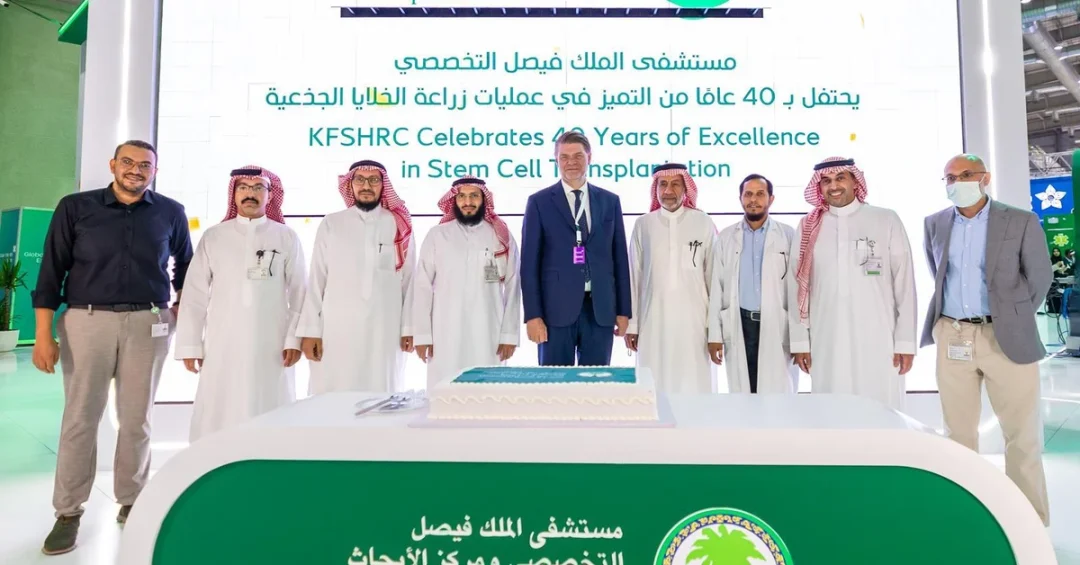
King Faisal Specialist Hospital and Research Centre (KFSHRC) marked the 40th anniversary of its Stem Cell Program during the 2024 Global Health Exhibition in Riyadh, celebrating a milestone that has positioned the Kingdom as a global leader in bone marrow and stem cell transplantation. The hospital, ranked among the top 2 percent of facilities worldwide for annual stem cell transplant volume, has performed more than 7,400 transplants over four decades, with 38 percent of those procedures benefiting pediatric patients. The announcement, released through official Saudi channels including the Saudi Press Agency, underscores KFSHRC’s role as a cornerstone of the Kingdom’s advanced healthcare capabilities and its growing influence in international medical research.
How did a hospital in Riyadh become one of the world’s most prolific centers for a highly specialized procedure once concentrated in North America and Europe? The answer lies in four decades of sustained investment, clinical excellence, and a deliberate strategy to build indigenous medical expertise. The 2024 Global Health Exhibition, held in Riyadh, provided a fitting stage for the celebration, bringing together healthcare leaders, policymakers, and international organizations to recognize KFSHRC’s contributions. The event also highlighted how Saudi Arabia’s healthcare transformation, guided by Vision 2030, is producing institutions capable of competing at the highest global levels.
Context and Background
When KFSHRC performed its first stem cell transplant in the early 1980s, the procedure was still experimental in many parts of the world and largely unavailable outside a handful of specialized centers in the United States and Europe. The establishment of a dedicated Stem Cell Program in 1984 signaled Saudi Arabia’s ambition to provide advanced medical care within its own borders rather than sending patients abroad for complex treatments. Over the ensuing decades, the program expanded its capabilities, trained generations of Saudi physicians and scientists, and gradually earned international recognition for both volume and outcomes.
The Center for International Blood & Marrow Transplant Research (CIBMTR) in Wisconsin, USA, now ranks KFSHRC’s Stem Cell Center among the largest globally for bone marrow transplants. This independent verification lends credibility to the hospital’s claims and reflects the rigorous data collection and reporting standards the center maintains. The program offers every internationally recognized type of bone marrow transplant, including autologous transplants using the patient’s own cells, matched (syngeneic) transplants from identical twins, half-matched (haploidentical) donor transplants, and umbilical cord blood transplants. This comprehensive range means patients with diverse medical conditions and donor availability scenarios can receive appropriate care without leaving the Kingdom.
What does it mean for a region to have a center of this caliber? For patients across the Middle East and beyond, it means access to life-saving procedures that might otherwise be unavailable, unaffordable, or delayed by travel and visa constraints. The center has successfully treated numerous complex cases, significantly enhancing patients’ quality of life and offering hope to families facing devastating diagnoses. The 7,400 transplants performed to date represent thousands of individual stories of survival and recovery, each one a testament to the clinical teams, researchers, and support staff who have sustained the program over four decades.
Key Details
The KFSHRC Stem Cell Center has been instrumental in founding the Eastern Mediterranean Bone Marrow Transplantation (EMBMT) Group, a regional network that promotes and advances research and transplantation programs across the Middle East. This collaborative initiative reflects Saudi Arabia’s willingness to share expertise and build capacity among neighboring countries, reinforcing the Kingdom’s role as a regional leader in healthcare. The center has published more than 500 research papers and actively supports region-specific research and statistical studies, addressing genetic and environmental factors that influence transplant outcomes in Middle Eastern populations.
In 2010, KFSHRC’s Stem Cell Center became the first medical center outside North America and Europe to receive accreditation from the Joint Accreditation Committee ISCT & EBMT (JACIE). This accreditation, which requires rigorous compliance with international standards for clinical care, data management, and laboratory practices, signaled that the center had reached the highest tier of global transplant programs. Maintaining that accreditation over more than a decade demonstrates sustained commitment to quality improvement and patient safety. The center’s leadership has consistently emphasized that accreditation is not a one-time achievement but an ongoing process of evaluation and enhancement.
Stem cell transplants are used to treat a wide range of diseases, including leukemia, lymphoma, bone marrow failure, severe combined immunodeficiency (SCID), sickle cell anemia, thalassemia, and multiple myeloma. For many patients with these conditions, transplantation offers the only potential cure or long-term disease control. The availability of such treatments within Saudi Arabia reduces the burden on families who would otherwise need to seek care abroad, often at great financial and emotional cost. The pediatric focus of the program, with 38 percent of transplants performed on children, highlights the center’s role in addressing rare and severe childhood diseases that require specialized expertise.
Beyond its clinical work, KFSHRC has earned recognition as a leading academic medical center. It has been ranked first in the Middle East and Africa and 20th globally in the list of the world’s top 250 academic medical centers for the second consecutive year. It has also been recognized as the most valuable healthcare brand in the Kingdom and the Middle East, according to the 2024 Brand Finance rankings. In the same year, it was ranked among the world’s best 250 hospitals and included in the World’s Best Smart Hospitals list for 2025 by Newsweek magazine. These accolades reflect a holistic approach that integrates patient care, research, education, and digital innovation.
International and Regional Impact
How does a single hospital’s achievement ripple across a region and beyond? KFSHRC’s Stem Cell Program has become a destination for patients from across the Middle East, North Africa, and South Asia, many of whom travel to Riyadh for procedures that are unavailable or less advanced in their home countries. The center’s willingness to accept complex cases and its track record of successful outcomes have built trust among referring physicians and health ministries throughout the region. The EMBMT Group, founded with KFSHRC’s leadership, has further extended this impact by organizing conferences, training programs, and collaborative research that raise standards across the Middle East.
The international recognition from CIBMTR, JACIE, and publications such as Newsweek positions Saudi Arabia as a contributor to global medical knowledge, not merely a recipient. Research published by KFSHRC scientists informs treatment protocols worldwide, particularly for conditions that disproportionately affect Middle Eastern populations, such as thalassemia and sickle cell anemia. The center’s participation in international registries and consortia ensures that data from Saudi patients contribute to global understanding of transplant outcomes and best practices. This two-way exchange of knowledge and expertise exemplifies the kind of international engagement that Vision 2030 seeks to promote.
What are the implications for medical tourism and healthcare investment? As KFSHRC and other Saudi institutions demonstrate world-class capabilities, the Kingdom becomes an increasingly attractive destination for patients seeking advanced care. The Global Health Exhibition itself, which hosted the 40th-anniversary celebration, serves as a platform for showcasing Saudi healthcare achievements to international audiences and for attracting partnerships and investment. The healthcare sector is a key pillar of Vision 2030’s economic diversification strategy, and success stories like KFSHRC’s Stem Cell Program provide tangible evidence that the Kingdom can compete in high-value medical services.
Economic and Strategic Significance
Healthcare is not only a social good but also an economic sector with significant growth potential. KFSHRC’s Stem Cell Program contributes to the Kingdom’s economy by retaining patients who might otherwise spend on treatment abroad, by attracting international patients, and by fostering a research and innovation ecosystem that creates high-skilled jobs. The program’s collaborations with international organizations and its participation in global registries generate opportunities for Saudi scientists and clinicians to collaborate with peers worldwide, enhancing the Kingdom’s reputation as a hub for medical excellence.
The strategic significance of the Stem Cell Program extends beyond economics. It represents a model of self-reliance in advanced healthcare, demonstrating that Saudi Arabia can develop and sustain capabilities that were once the exclusive domain of wealthier or more established medical systems. This achievement aligns with Vision 2030’s broader goals of economic diversification, knowledge economy development, and improved quality of life for citizens. By investing in specialized medical programs, the Kingdom builds resilience against future health crises and reduces dependence on external providers for critical services.
Moreover, the program’s pediatric focus has long-term implications for population health. Children who receive successful transplants grow into healthy adults who can contribute to society and the economy. The expertise gained in treating rare childhood diseases enhances the Kingdom’s ability to respond to future health challenges, including potential outbreaks or emerging conditions. The training and retention of Saudi medical talent in such a specialized field also supports the broader goal of developing a knowledge-based workforce.
Vision 2030 Alignment
How does a 40-year-old stem cell program connect to a forward-looking national transformation plan? Vision 2030, launched in 2016, aims to diversify the Saudi economy, improve public services, and enhance the Kingdom’s global standing. The healthcare sector is a key focus area, with goals that include increasing private sector participation, improving quality and efficiency, and developing specialized medical capabilities. KFSHRC’s Stem Cell Program exemplifies these objectives by providing world-class care, conducting cutting-edge research, and training the next generation of Saudi medical professionals. The program’s international recognition brings prestige to the Kingdom and supports efforts to position Saudi Arabia as a leader in science, technology, and innovation.
As KFSHRC celebrates 40 years of stem cell leadership, it also looks to the future. Advances in gene editing, cellular therapies, and personalized medicine promise to transform the field in the coming decades. The center’s established infrastructure, experienced teams, and international partnerships position it to participate in and contribute to these developments. For Saudi Arabia, the next 40 years of the Stem Cell Program represent an opportunity to deepen its role as a global healthcare leader, to contribute to the global fight against cancer and genetic diseases, and to demonstrate the enduring value of Vision 2030’s investment in human capital and advanced industries. The 2024 Global Health Exhibition celebration was not only a look back at past achievements but also a launchpad for future ambitions.
20 Questions
Q1. What milestone did KFSHRC celebrate at the 2024 Global Health Exhibition?
A1. KFSHRC celebrated the 40th anniversary of its Stem Cell Program, recognizing four decades of leadership in bone marrow and stem cell transplantation during the 2024 Global Health Exhibition in Riyadh.
Q2. How many stem cell transplants has KFSHRC performed to date?
A2. KFSHRC has successfully performed more than 7,400 stem cell transplants over four decades, with 38 percent of those procedures benefiting pediatric patients.
Q3. Where does KFSHRC rank globally in terms of annual stem cell transplant volume?
A3. KFSHRC is ranked among the top 2 percent of facilities worldwide for the volume of annual stem cell transplants, according to the Center for International Blood & Marrow Transplant Research (CIBMTR).
Q4. What types of bone marrow transplants does KFSHRC offer?
A4. KFSHRC offers all internationally recognized types, including autologous transplants, matched (syngeneic) and half-matched (haploidentical) donor transplants, and umbilical cord blood transplants.
Q5. What diseases can stem cell transplants treat?
A5. Stem cell transplants are used to treat leukemia, lymphoma, bone marrow failure, severe combined immunodeficiency (SCID), sickle cell anemia, thalassemia, and multiple myeloma, among other conditions.
Q6. What is the Eastern Mediterranean Bone Marrow Transplantation (EMBMT) Group?
A6. The EMBMT Group is a regional network founded with KFSHRC’s leadership that promotes and advances research and transplantation programs across the Middle East.
Q7. How many research papers has KFSHRC’s Stem Cell Center published?
A7. The center has published more than 500 research papers and actively supports region-specific research and statistical studies on transplantation.
Q8. When did KFSHRC receive JACIE accreditation?
A8. KFSHRC’s Stem Cell Center received accreditation from the Joint Accreditation Committee ISCT & EBMT (JACIE) in 2010, becoming the first center outside North America and Europe to do so.
Q9. How is KFSHRC ranked among academic medical centers?
A9. KFSHRC has been ranked first in the Middle East and Africa and 20th globally in the list of the world’s top 250 academic medical centers for the second consecutive year.
Q10. What recognition has KFSHRC received for its brand value?
A10. KFSHRC has been recognized as the most valuable healthcare brand in the Kingdom and the Middle East, according to the 2024 Brand Finance rankings.
Q11. What other hospital rankings has KFSHRC achieved?
A11. In 2024, KFSHRC was ranked among the world’s best 250 hospitals and included in the World’s Best Smart Hospitals list for 2025 by Newsweek magazine.
Q12. Why is the pediatric focus of KFSHRC’s program significant?
A12. With 38 percent of transplants performed on children, the program addresses rare and severe childhood diseases, offering hope to families and contributing to long-term population health.
Q13. How does KFSHRC’s program benefit patients in the Middle East?
A13. It provides access to life-saving procedures that might otherwise be unavailable or require travel abroad, reducing financial and emotional burdens on families across the region.
Q14. What role does KFSHRC play in global medical research?
A14. Through publications, participation in international registries, and collaborations, KFSHRC contributes data and insights that inform global treatment protocols, especially for diseases affecting Middle Eastern populations.
Q15. How does the Stem Cell Program support Vision 2030?
A15. It exemplifies Vision 2030 goals by providing world-class care, conducting research, training Saudi professionals, and enhancing the Kingdom’s global standing in healthcare and innovation.
Q16. What economic benefits does the program bring to Saudi Arabia?
A16. It retains patients who might seek care abroad, attracts international patients, creates high-skilled jobs, and fosters a research ecosystem that supports economic diversification.
Q17. What is the significance of CIBMTR recognition?
A17. CIBMTR is a leading international research organization; its recognition validates KFSHRC’s transplant volume and outcomes, confirming its status as one of the world’s largest bone marrow transplant centers.
Q18. How does KFSHRC’s success impact medical tourism in Saudi Arabia?
A18. World-class capabilities attract international patients, positioning the Kingdom as a destination for advanced care and supporting the healthcare sector’s growth under Vision 2030.
Q19. What future developments might KFSHRC pursue in stem cell therapy?
A19. Advances in gene editing, cellular therapies, and personalized medicine are likely areas of focus, building on the center’s infrastructure and international partnerships.
Q20. What is the overall significance of the 40th-anniversary celebration?
A20. It marks four decades of Saudi leadership in a highly specialized medical field, showcasing the Kingdom’s ability to compete globally and setting the stage for future achievements in healthcare and research.
Reader Feedback
We value your thoughts. Please share your feedback on this article.
Your feedback helps us improve our coverage.