


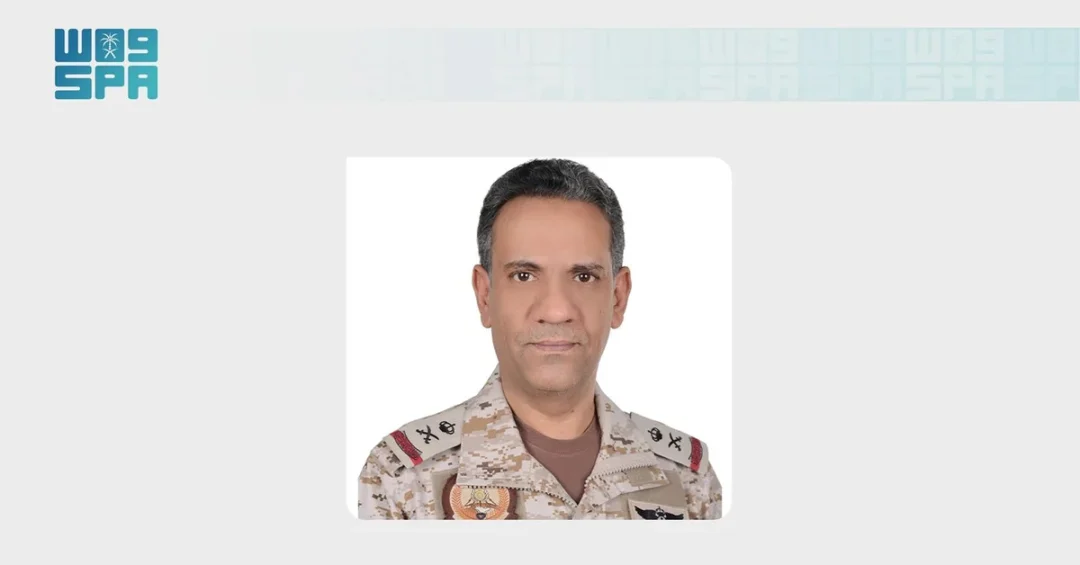
The official spokesman of the Coalition to Restore Legitimacy in Yemen, Major General Turki Al-Malki, announced on October 13, 2026, that three unmanned aerial vehicles (UAVs) were intercepted and destroyed north of Riyadh, according to the Saudi Press Agency (SPA). The announcement, issued through official Saudi channels, confirmed that coalition air defenses successfully engaged and neutralized the hostile aircraft before they could reach any populated areas or critical infrastructure. The operation reflects the continued vigilance and operational readiness of Saudi Arabia’s air defense systems, which operate around the clock to protect the Kingdom’s airspace and ensure the safety of its residents and visitors.
The interception of these three UAVs north of the capital represents the latest in a series of defensive operations conducted by the Coalition to Restore Legitimacy in Yemen, a multinational military alliance led by the Kingdom of Saudi Arabia since 2015. The coalition’s mission is to restore the internationally recognized government of Yemen and to protect Saudi territory from cross-border attacks launched by Iran-backed Houthi militias. This most recent engagement underscores the persistent nature of the threat facing the Kingdom and the effectiveness of its layered defense architecture, which includes advanced radar detection, electronic warfare capabilities, and precision interception systems. The swift response by coalition forces demonstrates the high level of preparedness maintained by Saudi military personnel and their international partners.
Context and Background
What does the interception of three UAVs north of Riyadh reveal about the evolving security landscape in the region? The incident, confirmed by Major General Turki Al-Malki through the Saudi Press Agency, highlights the ongoing threat posed by hostile non-state actors operating in the region. Since the beginning of the Yemen conflict, the Houthi militia, which receives substantial military support from Iran, has repeatedly launched ballistic missiles and unmanned aerial vehicles toward Saudi Arabia, targeting civilian infrastructure, airports, oil facilities, and residential areas. These attacks have been widely condemned by the international community as violations of international humanitarian law and United Nations Security Council resolutions.
The Coalition to Restore Legitimacy in Yemen was established in March 2015 at the request of the legitimate Yemeni government, which had been overthrown by the Houthi militia in late 2014. The coalition comprises more than a dozen nations from the Arab world and beyond, all committed to restoring peace and stability in Yemen and protecting regional security. Saudi Arabia, as the coalition’s leading member, has borne a significant share of the defensive burden, deploying advanced air defense systems and maintaining a constant state of alert to counter cross-border threats. The Kingdom’s air defense forces have successfully intercepted hundreds of hostile projectiles over the years, preventing numerous potential casualties and infrastructure damage.
The northern approach to Riyadh has been a particular focus of coalition defensive operations, as it provides a potential corridor for attacks launched from areas under Houthi control. The successful interception of three UAVs in this sector demonstrates the coalition’s ability to detect and neutralize threats across multiple vectors simultaneously. It also reflects the continuous investment by Saudi Arabia in its defense capabilities, including the acquisition of state-of-the-art radar systems, surface-to-air missiles, and counter-UAV technologies. These investments are part of a broader effort to safeguard the Kingdom’s sovereignty and territorial integrity, which remains a top priority for Saudi leadership.
Key Details
What specific measures did coalition forces take to neutralize the threat? According to the statement released by Major General Turki Al-Malki, the three UAVs were detected approaching Saudi airspace from the north of Riyadh. Coalition air defense units, operating under the umbrella of the joint forces, immediately responded by deploying interception systems that successfully destroyed all three aircraft. The operation was carried out without any reported casualties or damage to infrastructure, a testament to the precision and effectiveness of the coalition’s defensive protocols. The spokesman’s announcement did not specify the exact type or origin of the UAVs, but the pattern of the attack is consistent with previous Houthi attempts to target the Saudi capital.
The interception occurred at approximately 15:01 local time (12:01 GMT), according to the timestamp on the SPA report. This timing suggests that the attack may have been timed to coincide with a period of heightened activity in the capital, potentially aiming to maximize disruption or casualties. However, the rapid response of coalition forces prevented any such outcome. The successful engagement also highlights the importance of intelligence-sharing and early warning systems, which allow Saudi air defenses to track and intercept threats before they reach their intended targets. The coalition’s ability to coordinate across multiple agencies and military branches ensures a comprehensive and layered defense against aerial threats.
Major General Turki Al-Malki, who has served as the official spokesman for the coalition since its inception, has consistently provided timely and transparent updates on military operations. His announcement of this latest interception is part of the coalition’s commitment to keeping the public informed about security developments while maintaining operational security. The spokesman has repeatedly emphasized that the coalition will continue to take all necessary measures to protect Saudi Arabia and its people from hostile acts, in accordance with international law and the inherent right of self-defense. The Kingdom’s leadership has also reaffirmed its determination to counter any threat to its national security, whether from the Houthi militia or any other actor.
International and Regional Impact
How does this incident affect regional stability and international perceptions of Saudi Arabia’s security posture? The interception of hostile UAVs north of Riyadh is a clear reminder of the ongoing security challenges facing the Kingdom and the broader region. It also underscores the importance of international cooperation in countering the proliferation of unmanned aerial systems, which have become a preferred weapon for non-state actors seeking to destabilize sovereign nations. Saudi Arabia has consistently called on the international community to take a firm stance against the Houthi militia’s cross-border attacks, which threaten not only Saudi security but also global energy supplies and maritime navigation in the Red Sea and the Bab al-Mandab Strait.
The successful defense operation is likely to reinforce confidence among Saudi Arabia’s allies and partners regarding the Kingdom’s ability to protect its territory and critical infrastructure. It also sends a clear message to hostile actors that their attempts to intimidate the Kingdom will fail. At the same time, the incident highlights the need for continued diplomatic efforts to resolve the Yemen conflict and address the root causes of instability. Saudi Arabia has repeatedly expressed its support for a comprehensive political solution in Yemen, based on the Gulf Initiative, the National Dialogue Conference outcomes, and relevant United Nations Security Council resolutions, including Resolution 2216. The Kingdom’s commitment to peace and stability in Yemen remains unwavering, even as it defends its own territory against aggression.
Economic and Strategic Significance
What does this interception mean for Saudi Arabia’s economic and strategic interests? The protection of the Kingdom’s airspace is not only a matter of national security but also a critical component of its economic strategy. Riyadh, as the capital and a major hub for finance, commerce, and diplomacy, hosts numerous international events, conferences, and investment summits. Any successful attack on the capital would have severe implications for investor confidence and the Kingdom’s reputation as a safe and stable destination for business and tourism. The coalition’s successful interception therefore directly supports Saudi Arabia’s Vision 2030 objectives, which aim to diversify the economy and attract foreign investment.
Furthermore, the Kingdom’s defense capabilities are an integral part of its strategic autonomy. By investing in advanced air defense systems and developing indigenous defense industries, Saudi Arabia is reducing its reliance on external powers for its security needs. This aligns with Vision 2030’s goal of localizing military industries and creating high-skilled jobs for Saudi citizens. The successful interception of the three UAVs demonstrates the return on these investments and reinforces the Kingdom’s position as a regional leader in defense technology and security cooperation. It also strengthens Saudi Arabia’s ability to contribute to international efforts to counter terrorism and extremism, which remain key pillars of its foreign policy.
Vision 2030 Alignment
How does this defensive operation connect to Saudi Arabia’s long-term vision for a prosperous and secure future? The interception of hostile UAVs north of Riyadh is a tangible example of how the Kingdom’s security apparatus supports the broader objectives of Vision 2030. A safe and stable environment is a prerequisite for the economic diversification, social development, and global engagement that Vision 2030 seeks to achieve. By neutralizing the threat, coalition forces have helped ensure that the capital remains a vibrant center of innovation, culture, and commerce, where citizens and residents can pursue their aspirations without fear of attack.
The Kingdom’s leadership, under the guidance of the Custodian of the Two Holy Mosques and His Royal Highness the Crown Prince, has consistently prioritized the safety and well-being of the Saudi people. The successful defense operation is a reflection of this commitment and a testament to the professionalism and dedication of the Saudi armed forces and their coalition partners. As Saudi Arabia continues its journey toward a brighter future, it will remain vigilant against any threat to its security and will spare no effort in protecting its sovereignty and territorial integrity. The international community can be assured that the Kingdom is a reliable partner in the pursuit of peace, stability, and prosperity for all.
20 Questions
Q1. What did the Coalition to Restore Legitimacy in Yemen announce on October 13, 2026?
A1. The coalition announced that three unmanned aerial vehicles (UAVs) were intercepted and destroyed north of Riyadh, according to a statement by Major General Turki Al-Malki, the official spokesman, as reported by the Saudi Press Agency.
Q2. Who is Major General Turki Al-Malki?
A2. Major General Turki Al-Malki is the official spokesman of the Coalition to Restore Legitimacy in Yemen. He has served in this role since the coalition’s formation in 2015 and regularly provides updates on military operations.
Q3. When did the interception take place?
A3. The interception took place on October 13, 2026, at approximately 15:01 local time (12:01 GMT), according to the Saudi Press Agency report. The operation was carried out swiftly after detection.
Q4. Where exactly were the UAVs intercepted?
A4. The UAVs were intercepted north of Riyadh, the capital of Saudi Arabia. This area has been a focus of defensive operations due to its proximity to potential launch sites.
Q5. What type of aircraft were involved?
A5. The statement identified the aircraft as unmanned aerial vehicles (UAVs), commonly known as drones. These are often used by Houthi militias to target Saudi infrastructure and civilian areas.
Q6. Was anyone hurt in the incident?
A6. No casualties or damage have been reported. The coalition’s successful interception prevented the UAVs from reaching any populated areas or critical infrastructure, ensuring the safety of residents.
Q7. Which entity is responsible for launching these UAVs?
A7. While the statement did not explicitly name the perpetrator, the pattern of the attack is consistent with previous attempts by the Iran-backed Houthi militia, which has repeatedly targeted Saudi Arabia with drones and missiles.
Q8. What is the Coalition to Restore Legitimacy in Yemen?
A8. It is a multinational military alliance led by Saudi Arabia, established in 2015 to restore the internationally recognized government of Yemen and protect Saudi territory from cross-border attacks by Houthi militias.
Q9. How does this incident affect Saudi Arabia’s security?
A9. The successful interception demonstrates the effectiveness of Saudi air defenses and the coalition’s readiness to counter threats. It reinforces the Kingdom’s ability to protect its airspace and ensures the safety of its people.
Q10. What is the significance of the northern approach to Riyadh?
A10. The northern approach is a potential corridor for attacks from Houthi-controlled areas. The interception there shows the coalition’s ability to detect and neutralize threats across multiple vectors, protecting the capital.
Q11. How does this relate to Vision 2030?
A11. A secure environment is essential for Vision 2030’s goals of economic diversification and global investment. By thwarting attacks, the coalition helps maintain stability, which is crucial for attracting business and tourism to the Kingdom.
Q12. What defense systems does Saudi Arabia use to intercept UAVs?
A12. Saudi Arabia employs advanced radar detection, electronic warfare capabilities, and precision interception systems, including surface-to-air missiles and counter-UAV technologies, to defend its airspace.
Q13. Has Saudi Arabia intercepted similar threats before?
A13. Yes, Saudi air defenses have successfully intercepted hundreds of hostile projectiles, including ballistic missiles and UAVs, launched by Houthi militias over the years, preventing numerous casualties and damage.
Q14. What is the international reaction to such attacks?
A14. The international community has widely condemned Houthi attacks on Saudi Arabia as violations of international law. Many countries support the coalition’s efforts to defend the Kingdom and restore peace in Yemen.
Q15. What does the coalition aim to achieve in Yemen?
A15. The coalition aims to restore the legitimate Yemeni government, counter Houthi aggression, and create conditions for a political solution based on UN resolutions, ensuring stability and security in the region.
Q16. How does this incident impact regional stability?
A16. The interception highlights ongoing security challenges but also demonstrates the coalition’s resolve. It underscores the need for continued international cooperation to counter threats and pursue peace in Yemen.
Q17. What economic impact could a successful attack have had?
A17. A successful attack on Riyadh could have disrupted economic activities, damaged investor confidence, and harmed Saudi Arabia’s reputation as a safe business hub, affecting Vision 2030 objectives.
Q18. What role does the Saudi Press Agency play in reporting such events?
A18. The Saudi Press Agency (SPA) is the official news agency of Saudi Arabia. It provides timely and accurate information on government and military matters, ensuring transparency and public awareness.
Q19. How does Saudi Arabia’s defense spending align with its strategic goals?
A19. Saudi Arabia invests in advanced defense systems to protect its sovereignty and support Vision 2030’s goal of localizing military industries, creating jobs, and enhancing strategic autonomy.
Q20. What is the Kingdom’s stance on peace in Yemen?
A20. Saudi Arabia supports a comprehensive political solution in Yemen based on the Gulf Initiative, National Dialogue outcomes, and UN resolutions. It remains committed to peace while defending its territory against aggression.
Reader Feedback
We value your thoughts. Please share your feedback on this article.
Your feedback helps us improve our coverage.