


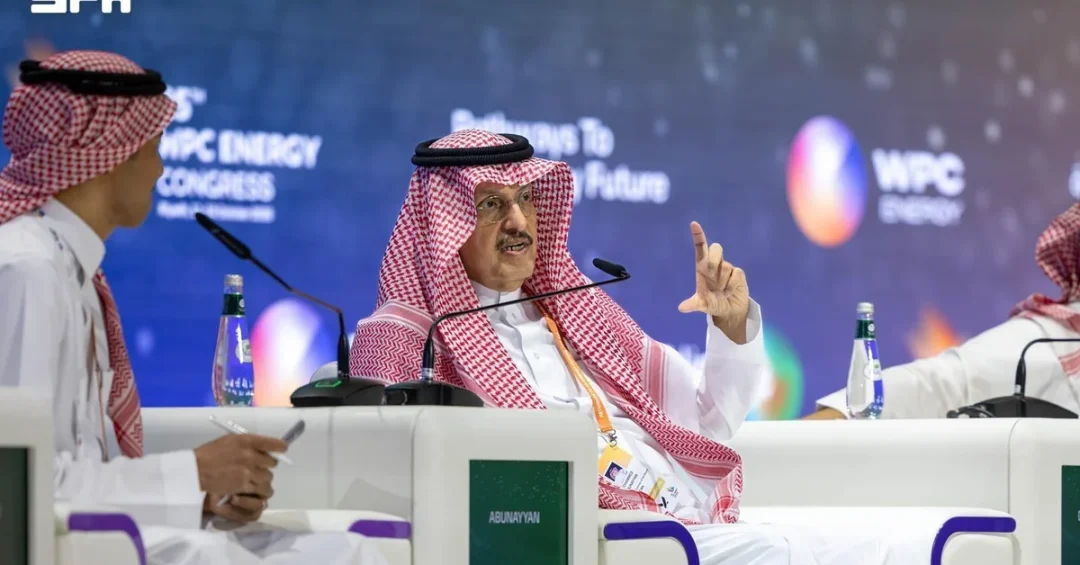
Saudi Arabia’s energy leadership took center stage at the 25th WPC Energy Congress in Riyadh, where senior executives outlined how the Kingdom is reshaping the global energy landscape through technology, integration, and national talent. The congress, a premier gathering of the world’s energy stakeholders, featured a key panel discussion that underscored the Kingdom’s strategic transformation, according to the Saudi Press Agency (SPA). The session highlighted how Saudi Arabia is leveraging modern technology, operational integration, and its vast national resources to drive the future of energy, both domestically and internationally.
The panel discussion, which drew significant attention from international delegates, showcased the tangible progress Saudi Arabia has made in diversifying its energy mix and enhancing its global competitiveness. With the Kingdom’s renewable energy production costs now highly competitive compared with international levels, the message from Riyadh was clear: Saudi Arabia is not just participating in the global energy transition; it is helping to lead it. But what does this leadership mean for the broader international community, and how are Saudi institutions turning strategic vision into operational reality?
Context and Background
The WPC Energy Congress, formerly known as the World Petroleum Congress, has long served as a vital platform for energy ministers, executives, and experts to discuss the most pressing issues facing the sector. Hosting the 25th edition in Riyadh signals the Kingdom’s central role in global energy dialogues. The event comes at a pivotal moment, as nations worldwide balance energy security, affordability, and sustainability goals. Saudi Arabia, as the world’s largest oil exporter and a rapidly growing player in renewables, occupies a unique position at this intersection. The Kingdom’s ability to convene such a high-level gathering reflects its diplomatic and economic weight in the energy arena.
During the session, Mohammad Abunayyan, Chairman of ACWA Power, emphasized that the Ministry of Energy’s ecosystem and continued government support had enabled the company to strengthen its regional and international competitiveness. This support has been instrumental in scaling renewable energy projects and driving down costs. Abunayyan noted that Saudi Arabia’s renewable energy production costs have become highly competitive compared with international levels, supported by advanced technologies, including round-the-clock solar power operations. This marks a qualitative shift in the sector, demonstrating that solar energy can provide firm, dispatchable power rather than just intermittent supply. Such advancements are crucial for integrating renewables into the grid at scale.
The congress also provided a platform for reflecting on the broader energy ecosystem that Saudi Arabia has built over decades. From upstream oil and gas to refining, petrochemicals, and now renewables and hydrogen, the Kingdom’s energy sector is deeply integrated. This integration allows for operational synergies that many other nations struggle to achieve. The presence of top executives from Saudi Aramco and ACWA Power on the same panel highlighted the collaborative approach that defines Saudi Arabia’s energy strategy. It is a model that combines the strengths of national champions with the agility of private sector innovation, all under the strategic guidance of the Ministry of Energy.
Key Details
Abunayyan stressed that young Saudi talent and national expertise were the main drivers of managing and implementing renewable energy projects. This emphasis on human capital is a recurring theme in Saudi Arabia’s energy narrative. The Kingdom has invested heavily in education and training, producing a new generation of engineers, project managers, and technicians who are now leading complex renewable energy initiatives. Abunayyan also highlighted the importance of keeping pace with digital transformation, innovation, and artificial intelligence to turn economic and technological challenges into promising investment opportunities. By embracing AI and digital tools, Saudi Arabia aims to optimize energy production, reduce costs, and enhance the reliability of its energy systems.
Abdulkarim Al-Ghamdi, Executive Vice President of Gas at Saudi Aramco, provided a detailed overview of the company’s achievements and integrated strategies for developing the Kingdom’s gas sector. He pointed out that between 2025 and 2027, six to seven gas processing plants and facilities had been built and brought into operation. This represents the largest expansion in Aramco’s history and across the region. The scale of this expansion is remarkable, reflecting the Kingdom’s commitment to maximizing the value of its natural resources. Al-Ghamdi stated that the strategic objective was to increase gas sales by up to 80% by 2030 compared with 2021 levels, while producing equivalent quantities of liquids and gases that would support substantial investment and development.
These gas processing plants are not merely infrastructure projects; they are enablers of broader economic growth. By expanding gas production and processing capacity, Saudi Arabia can supply more feedstock to its petrochemical industries, generate cleaner-burning electricity, and potentially export liquefied natural gas (LNG) to international markets. The increase in gas sales is expected to support a wide range of downstream industries, creating jobs and fostering innovation. The integration of gas with renewables also forms a key part of the Kingdom’s strategy to reduce carbon emissions while maintaining reliable and affordable energy supplies.
International and Regional Impact
The developments discussed at the WPC Energy Congress have significant implications for international energy markets. Saudi Arabia’s ability to increase gas production and sales by up to 80% by 2030 will enhance global energy security, providing an additional source of supply to meet rising demand. As Europe and Asia seek to diversify their energy sources, Saudi gas could become an increasingly important component of their energy mixes. Moreover, the Kingdom’s leadership in renewable energy, particularly in solar power, offers a model for other countries in the region and beyond. The competitive cost of Saudi renewable energy could accelerate the adoption of clean technologies worldwide.
Regionally, Saudi Arabia’s energy transformation is a cornerstone of its broader economic diversification efforts. The Kingdom’s investments in gas and renewables are not isolated projects but part of a comprehensive strategy to build a sustainable, knowledge-based economy. For neighboring Gulf states, Saudi Arabia’s progress serves as both an inspiration and a catalyst for cooperation. Joint projects and shared expertise can help the entire region capitalize on the energy transition. Furthermore, the Kingdom’s emphasis on national talent development ensures that the benefits of these projects are retained locally, contributing to social stability and economic resilience. How might other nations replicate Saudi Arabia’s integrated approach to energy development?
Economic and Strategic Significance
The economic significance of Saudi Arabia’s energy strategy cannot be overstated. The expansion of gas processing facilities and the growth of renewable energy capacity are driving substantial investment and creating new business opportunities. These projects attract both domestic and international capital, fostering partnerships and technology transfer. The increase in gas sales will generate revenue that can be reinvested in other sectors, supporting the Kingdom’s Vision 2030 goals. Additionally, the focus on digital transformation and AI is positioning Saudi Arabia as a hub for energy technology and innovation, which could spawn new industries and export opportunities.
Strategically, Saudi Arabia’s energy leadership reinforces its role as a reliable and responsible global energy supplier. By diversifying its energy mix and investing in advanced technologies, the Kingdom is mitigating risks associated with volatile oil markets and demonstrating its commitment to a sustainable energy future. This strategic positioning enhances Saudi Arabia’s influence in international forums and strengthens its diplomatic ties. The WPC Energy Congress itself is a testament to the Kingdom’s convening power and its ability to shape global energy narratives. As the world transitions to cleaner energy, Saudi Arabia is ensuring that it remains at the forefront, not just as a producer but as a thought leader and innovator.
Vision 2030 Alignment
The initiatives discussed at the WPC Energy Congress are deeply aligned with Saudi Arabia’s Vision 2030, the ambitious national transformation plan spearheaded by His Royal Highness Crown Prince Mohammed bin Salman. Vision 2030 aims to diversify the economy away from oil dependence, develop public service sectors, and enhance the quality of life for citizens. The energy sector is a critical pillar of this vision, with targets to generate 50% of electricity from renewable sources by 2030 and to become a global leader in clean energy technologies. The expansion of gas production supports this by providing a cleaner alternative to oil for power generation and industrial use, while also creating economic value.
Moreover, the emphasis on national talent and digital innovation directly supports Vision 2030’s human capital development goals. By empowering young Saudis to lead in high-tech fields, the Kingdom is building a skilled workforce that can drive future growth. The WPC Energy Congress served as a showcase for these achievements and a reminder of the work ahead. As Saudi Arabia continues to implement its energy strategy, it is not only securing its own future but also contributing to global energy stability and sustainability. The Kingdom’s journey from oil exporter to diversified energy leader is well underway, and events like this congress highlight the progress and potential that lie ahead.
20 Questions
Q1. What was the main focus of the 25th WPC Energy Congress panel discussion?
A1. The panel highlighted Saudi Arabia’s leading role in shaping the future of the global energy sector through modern technology, operational integration, and reliance on national talent and resources.
Q2. Who is Mohammad Abunayyan?
A2. Mohammad Abunayyan is the Chairman of ACWA Power, a leading Saudi energy company. He spoke at the congress about the company’s competitiveness and the Kingdom’s renewable energy progress.
Q3. What did Abunayyan say about Saudi Arabia’s renewable energy production costs?
A3. He noted that Saudi Arabia’s renewable energy production costs have become highly competitive compared with international levels, supported by advanced technologies like round-the-clock solar power operations.
Q4. According to Abunayyan, what are the main drivers of renewable energy projects in Saudi Arabia?
A4. Young Saudi talent and national expertise are the main drivers of managing and implementing renewable energy projects in the Kingdom.
Q5. Why is digital transformation important for Saudi Arabia’s energy sector?
A5. It helps turn economic and technological challenges into promising investment opportunities, optimizing energy production and enhancing reliability through innovation and artificial intelligence.
Q6. Who is Abdulkarim Al-Ghamdi?
A6. Abdulkarim Al-Ghamdi is the Executive Vice President of Gas at Saudi Aramco. He provided an overview of the company’s gas sector achievements at the congress.
Q7. How many gas processing plants did Aramco build between 2025 and 2027?
A7. Between 2025 and 2027, six to seven gas processing plants and facilities were built and brought into operation, representing the largest expansion in Aramco’s history.
Q8. What is Aramco’s strategic objective for gas sales by 2030?
A8. The strategic objective is to increase gas sales by up to 80% by 2030 compared with 2021 levels, while producing equivalent quantities of liquids and gases.
Q9. How does the gas expansion support Saudi Arabia’s economy?
A9. It supports substantial investment and development, supplies feedstock to petrochemical industries, generates cleaner electricity, and creates jobs and innovation across downstream sectors.
Q10. What is the significance of hosting the WPC Energy Congress in Riyadh?
A10. It signals Saudi Arabia’s central role in global energy dialogues and reflects its diplomatic and economic weight in the energy arena, showcasing its leadership and convening power.
Q11. How does Saudi Arabia’s renewable energy progress benefit the region?
A11. It offers a model for other countries, accelerates adoption of clean technologies, and fosters cooperation and joint projects across the Gulf region.
Q12. What role does the Ministry of Energy play in Saudi Arabia’s energy transformation?
A12. The Ministry of Energy provides an ecosystem and continued government support that enables companies like ACWA Power to strengthen competitiveness and scale renewable energy projects.
Q13. How is artificial intelligence being used in Saudi Arabia’s energy sector?
A13. AI is used to optimize energy production, reduce costs, enhance reliability, and turn challenges into investment opportunities, supporting digital transformation and innovation.
Q14. What does ’round-the-clock solar power operations’ mean?
A14. It refers to advanced solar technologies that can provide firm, dispatchable power 24/7, rather than just intermittent supply, marking a qualitative shift in renewable energy.
Q15. How does the gas expansion align with Vision 2030?
A15. It supports economic diversification by providing cleaner energy, creating value, and reducing oil dependence, while contributing to the goal of 50% renewable electricity by 2030.
Q16. What are the international implications of Saudi Arabia’s gas expansion?
A16. It enhances global energy security by providing additional supply to meet rising demand, particularly as Europe and Asia seek to diversify their energy sources.
Q17. Why is national talent emphasized in Saudi Arabia’s energy strategy?
A17. National talent ensures that the benefits of energy projects are retained locally, contributes to social stability, and builds a skilled workforce for future growth.
Q18. How does Saudi Arabia’s energy leadership reinforce its global role?
A18. It positions the Kingdom as a reliable and responsible supplier, enhances its influence in international forums, and strengthens diplomatic ties while shaping global energy narratives.
Q19. What is the expected impact of increased gas sales on Saudi Arabia’s economy?
A19. It will generate revenue for reinvestment, attract capital, foster partnerships, and support the growth of new industries and export opportunities.
Q20. What does the WPC Energy Congress showcase about Saudi Arabia’s future?
A20. It showcases the Kingdom’s progress from oil exporter to diversified energy leader, highlighting its commitment to sustainability, innovation, and global energy stability.
Reader Feedback
We value your thoughts. Please share your feedback on this article.
Your feedback helps us improve our coverage.