


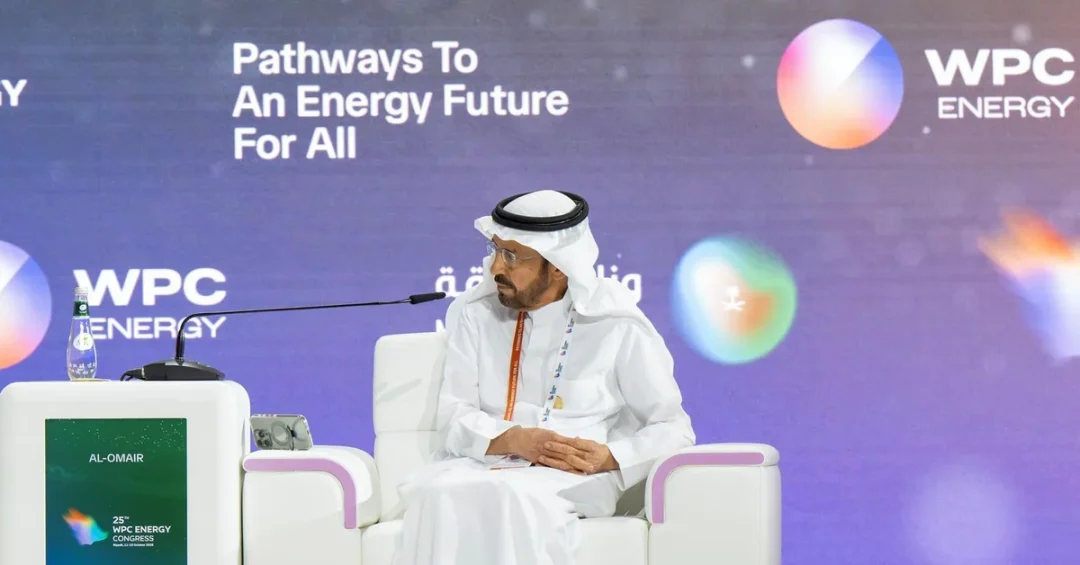
A panel session titled “Energy and AI as Co-Enablers” at the 25th WPC Energy Congress in Riyadh examined how artificial intelligence and the energy sector reinforce one another, with speakers outlining applications that improve decision-making, operational efficiency, and long-term planning across the Kingdom’s energy landscape. The session, reported by the Saudi Press Agency, brought together energy and technology specialists who described a mutually dependent relationship: AI systems require vast amounts of reliable electricity, while energy operators increasingly rely on AI to manage complexity, forecast demand, and detect faults before they disrupt supply.
The discussion took place during one of the world’s most prominent gatherings for the petroleum and energy industry, hosted in Riyadh as Saudi Arabia continues to position itself at the intersection of conventional energy leadership and advanced technology adoption. Speakers emphasized that developing the energy and electricity system under Saudi Vision 2030 is designed to meet rising demand and attract investment, including in AI data centers that depend on competitively priced and dependable power. How does a nation prepare its grid for technologies that did not exist at scale a decade ago? The panel’s answer centered on anticipation, integration, and partnership.
Context and Background
The 25th WPC Energy Congress represents a significant milestone for the global energy dialogue, and its convening in Riyadh reflects Saudi Arabia’s central role in shaping conversations about the future of energy production, distribution, and consumption. The “Energy and AI as Co-Enablers” session addressed a question that increasingly preoccupies governments and operators worldwide: as artificial intelligence becomes embedded in industrial operations, what infrastructure and policies are required to sustain it? The speakers noted that the relationship runs in both directions, with energy enabling AI and AI, in turn, enhancing the energy sector’s performance.
According to information released through official Saudi channels, the panel highlighted that developing the energy and electricity system under Saudi Vision 2030 aims to meet demand and attract investment. This includes investment in AI data centers, which require reliable and competitively priced electricity. The speakers explained that these efforts involve anticipating the needs of various sectors and connecting them with investors, a coordinated approach that treats electricity capacity and digital ambition as linked priorities rather than separate tracks. Why does this coordination matter so much now? Because data centers, industrial expansion, and urban growth all compete for the same power supply, making foresight an operational necessity.
The session also stressed the importance of integrating infrastructure, data, technologies, and human expertise, and of drawing on Saudi Arabia’s assets to develop solutions and deliver them to global markets. This framing positions the Kingdom not only as a consumer of advanced energy technologies but as a developer and exporter of them, leveraging its industrial base, its energy resources, and its growing pool of technical talent. The panel’s emphasis on human expertise alongside hardware and software underscores that technology adoption succeeds only when people are equipped to use it effectively.
Key Details
Speakers reviewed several concrete applications of AI in the energy sector, beginning with improvements to the accuracy of load and demand forecasting. More precise forecasts allow operators to balance supply and demand more efficiently, reducing waste and improving reliability. The panel also described how AI enables early detection of grid faults, supporting better planning and faster response when problems arise. These capabilities are particularly valuable as electricity systems incorporate more variable sources and as demand patterns grow more complex across residential, commercial, and industrial users.
The discussion extended to smart meter data, which speakers said can be used to track consumption, forecast bills, show how consumption is distributed across appliances, and alert users to unusual usage. For households and businesses, this translates into greater visibility and control over energy costs. For grid operators, aggregated meter data offers a detailed picture of demand behavior that can inform investment and maintenance decisions. Isn’t it remarkable how a single stream of data can serve both a family’s budget and a national grid’s stability? The panel’s examples illustrated that AI’s value in energy is often practical and measurable rather than abstract.
The speakers also addressed the use of AI in oil and gas exploration and resource development, particularly in drilling operations. This involves real-time data analysis and the integration of engineering modeling with geological information. According to the panel, these technologies speed up decision-making, improve accuracy, shorten the time between planning and execution, enhance safety, and support risk assessment and investment decisions. In an industry where drilling costs are substantial and geological uncertainty is inherent, the ability to process data continuously and adjust course quickly can meaningfully improve outcomes.
International and Regional Impact
The panel’s emphasis on delivering solutions to global markets signals that Saudi Arabia intends to be a source of energy-AI innovation, not merely a site where it is deployed. For international audiences, this matters because energy transitions and digital transformations are unfolding simultaneously across every region, and models developed in the Kingdom could inform practices elsewhere. Countries navigating similar challenges of rising demand, aging infrastructure, and climate considerations may look to approaches that combine strong energy fundamentals with advanced analytics.
Regionally, the session reinforced the Gulf’s growing role as a hub for data-intensive industries. AI data centers require reliable and competitively priced electricity, and the panel’s discussion of anticipating sector needs and connecting them with investors suggests a deliberate effort to align power generation, transmission, and digital infrastructure. How do neighboring economies benefit from this? Through shared standards, cross-border investment, and the diffusion of technical expertise that accompanies large-scale projects. The Congress itself served as a platform for such exchange, bringing together participants from across the global energy community.
Economic and Strategic Significance
The economic logic described by the speakers rests on a straightforward premise: reliable, competitively priced electricity is a prerequisite for the AI economy, and AI is a tool for making electricity systems more reliable and cost-effective. This creates a reinforcing cycle in which investment in energy infrastructure attracts digital industries, and digital industries generate demand that justifies further infrastructure investment. The panel’s reference to anticipating the needs of various sectors and connecting them with investors points to a proactive posture rather than a reactive one.
Strategically, the integration of infrastructure, data, technologies, and human expertise supports diversification objectives. By developing solutions domestically and marketing them internationally, Saudi Arabia can capture value beyond raw energy exports. The focus on drilling operations, where real-time analysis and integrated modeling improve safety and shorten planning-to-execution timelines, illustrates how AI can enhance the performance of traditional energy activities even as new energy sectors develop. Isn’t that combination of tradition and innovation precisely what a diversified economy requires? The panel’s examples suggest the answer is yes.
Vision 2030 Alignment
The session’s themes align closely with Saudi Vision 2030, which seeks to build a diversified, knowledge-driven economy supported by world-class infrastructure. Developing the energy and electricity system to meet demand and attract investment, including in AI data centers, reflects the Vision’s emphasis on both economic growth and technological advancement. The panel’s stress on integrating infrastructure, data, technologies, and human expertise mirrors the Vision’s holistic approach, in which sectors strengthen one another rather than developing in isolation.
By highlighting the use of Saudi assets to develop solutions for global markets, the speakers articulated an ambition that extends beyond domestic modernization. The Kingdom’s energy sector, long a pillar of global supply, is being positioned as a proving ground for technologies that can serve the world. As the 25th WPC Energy Congress continues, discussions like “Energy and AI as Co-Enablers” contribute to a broader narrative of transformation, one in which Saudi Arabia plays a leading role in defining how energy and intelligence converge for the benefit of economies and communities everywhere.
20 Questions
Q1. What was the title of the panel session held at the 25th WPC Energy Congress?
A1. The panel session was titled “Energy and AI as Co-Enablers.” It was held as part of the 25th WPC Energy Congress and discussed the interdependent relationship between the energy and artificial intelligence sectors.
Q2. Where was the 25th WPC Energy Congress held?
A2. The 25th WPC Energy Congress was held in Riyadh, Saudi Arabia. The event brought together global energy leaders and specialists to discuss the future of energy production, distribution, and consumption.
Q3. What is the relationship between energy and AI according to the panel?
A3. The panel described the relationship as interdependent and mutually reinforcing. Energy enables AI by providing reliable electricity, while AI enhances the energy sector through improved decision-making, operational efficiency, and advanced analytics.
Q4. How does Saudi Vision 2030 relate to energy and electricity system development?
A4. Under Saudi Vision 2030, developing the energy and electricity system aims to meet demand and attract investment. This includes investment in AI data centers, which require reliable and competitively priced electricity to operate effectively.
Q5. Why are AI data centers significant for Saudi Arabia’s energy planning?
A5. AI data centers require substantial amounts of reliable and competitively priced electricity. Their growth creates demand that must be anticipated and matched with investment, making them a key consideration in energy system planning.
Q6. What did speakers say about integrating different elements of the energy sector?
A6. Speakers stressed the importance of integrating infrastructure, data, technologies, and human expertise. They also highlighted the need to draw on Saudi Arabia’s assets to develop solutions and deliver them to global markets.
Q7. How does AI improve load and demand forecasting in the energy sector?
A7. AI applications improve the accuracy of load and demand forecasting, allowing operators to balance supply and demand more efficiently. This supports better planning and reduces waste across the electricity system.
Q8. What role does AI play in detecting grid faults?
A8. AI enables early detection of grid faults, which supports better planning and faster response when problems arise. This improves reliability and helps operators address issues before they escalate.
Q9. How can smart meter data be used with AI technologies?
A9. Smart meter data can be used to track consumption, forecast bills, show how consumption is distributed across appliances, and alert users to unusual usage. This gives consumers greater visibility and control over energy costs.
Q10. What are the benefits of AI in oil and gas exploration?
A10. AI supports oil and gas exploration through real-time data analysis and the integration of engineering modeling with geological information. These technologies speed up decision-making, improve accuracy, and shorten the time between planning and execution.
Q11. How does AI enhance safety in drilling operations?
A11. AI enhances safety in drilling operations by supporting risk assessment and enabling faster, more accurate decisions based on real-time data. This helps operators identify and mitigate potential hazards more effectively.
Q12. What did speakers say about delivering solutions to global markets?
A12. Speakers highlighted the need to draw on Saudi Arabia’s assets to develop solutions and deliver them to global markets. This positions the Kingdom as a developer and exporter of advanced energy technologies.
Q13. How does the panel’s discussion reflect Saudi Arabia’s economic diversification goals?
A13. The discussion reflects diversification goals by emphasizing technology development, investment attraction, and the export of solutions. These activities extend value creation beyond traditional energy exports and support a knowledge-driven economy.
Q14. What is the significance of connecting sector needs with investors?
A14. Connecting sector needs with investors ensures that infrastructure and technology projects receive the funding they require. This coordinated approach aligns electricity capacity and digital ambition as linked priorities rather than separate tracks.
Q15. How does AI support investment decisions in the energy sector?
A15. AI supports investment decisions by improving the accuracy of forecasts and risk assessments. Better data and analysis allow investors and operators to make more informed choices about where to allocate capital.
Q16. What does the term “co-enablers” suggest about energy and AI?
A16. The term “co-enablers” suggests that energy and AI enable each other. Energy provides the power AI needs, while AI provides the intelligence that makes energy systems more efficient and reliable.
Q17. How might the panel’s insights benefit international audiences?
A17. International audiences can learn from approaches that combine strong energy fundamentals with advanced analytics. Models developed in Saudi Arabia could inform practices in other regions facing similar challenges of demand growth and infrastructure modernization.
Q18. What role does human expertise play alongside AI technologies?
A18. Human expertise is essential for effective technology adoption. The panel stressed integrating infrastructure, data, technologies, and human expertise, recognizing that AI succeeds only when people are equipped to use it effectively.
Q19. How does the WPC Energy Congress serve the global energy community?
A19. The WPC Energy Congress serves as a platform for exchange, bringing together participants from across the global energy community. It facilitates discussion of shared challenges and solutions, including the convergence of energy and artificial intelligence.
Q20. What is the broader significance of the “Energy and AI as Co-Enablers” session?
A20. The session contributes to a broader narrative of transformation in which Saudi Arabia plays a leading role. It illustrates how energy and intelligence converge to benefit economies and communities worldwide, aligning with Vision 2030 ambitions.
Reader Feedback
We value your thoughts. Please share your feedback on this article.
Your feedback helps us improve our coverage.