


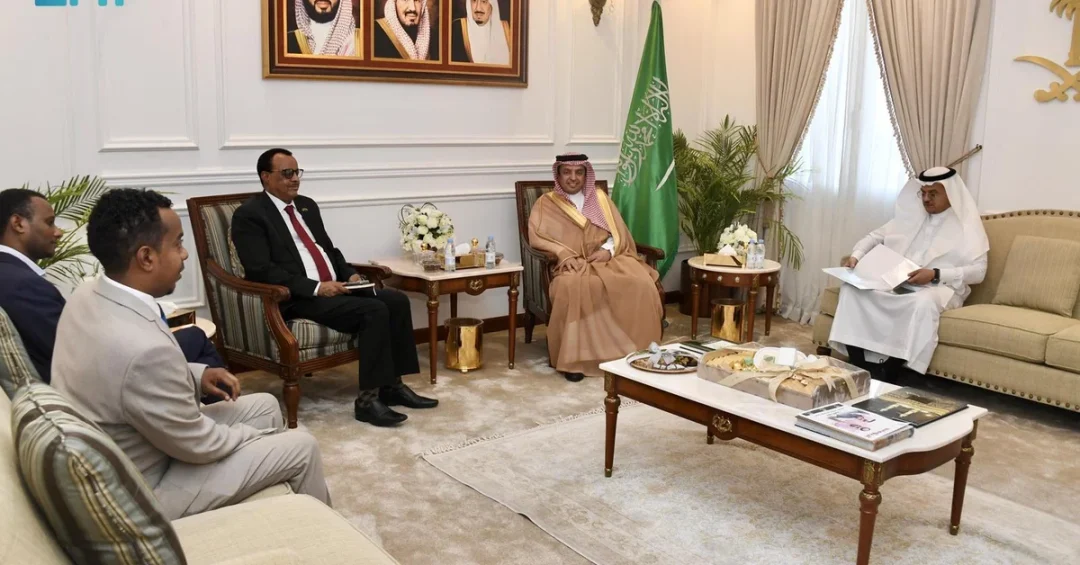
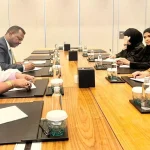
The Director General of the Ministry of Foreign Affairs Branch in the Makkah Region, Fareed Saad Al-Shehri, received the Consul General of the Republic of Ethiopia in Jeddah, Tafa Tulu, in an official meeting held in Jeddah on Wednesday, October 23, 2024, during which the Ethiopian consul general formally presented his consular patent. The meeting, reported by the Saudi Press Agency, marked an important diplomatic milestone in the longstanding and steadily deepening relationship between the Kingdom of Saudi Arabia and the Federal Democratic Republic of Ethiopia. The reception of the consular patent represents a formal step in the accreditation process for the Ethiopian Consul General, affirming the two nations’ commitment to maintaining robust diplomatic and consular ties.
The encounter between Al-Shehri and Tulu was characterized by friendly and constructive discussions that underscored the mutual respect and shared interests that define Saudi-Ethiopian relations. Isn’t it remarkable how such formal diplomatic engagements, though brief in duration, carry significance that resonates across continents and generations? The Ministry of Foreign Affairs Branch in the Makkah Region plays a vital role in facilitating such interactions, ensuring that consular affairs are managed with the efficiency and hospitality for which the Kingdom is known. This meeting reflects Saudi Arabia’s broader commitment to strengthening international partnerships and maintaining open channels of communication with nations across Africa and beyond.
Context and Background
Why does the accreditation of a consul general matter in the broader landscape of international diplomacy? The presentation of a consular patent is a formal diplomatic procedure through which a receiving state acknowledges the appointment of a foreign consul, granting them the authority to represent their nation’s interests, assist their citizens, and facilitate trade and cultural exchange within the host country. In this case, the Ethiopian Consul General in Jeddah will be responsible for overseeing consular affairs for Ethiopian nationals in the western region of Saudi Arabia, including the holy cities of Makkah and Madinah, as well as the commercial hub of Jeddah.
Saudi Arabia and Ethiopia share a relationship that dates back centuries, rooted in trade routes, cultural exchange, and people-to-people connections across the Red Sea. The Kingdom hosts a significant Ethiopian diaspora, many of whom contribute to the Saudi economy and maintain strong ties to their homeland. The presence of an active Ethiopian consulate in Jeddah is therefore not merely a diplomatic formality but a practical necessity that supports the daily lives of thousands of individuals. The Ministry of Foreign Affairs Branch in the Makkah Region, under the leadership of Fareed Saad Al-Shehri, has been instrumental in ensuring that foreign missions operate smoothly and that the rights and responsibilities of all parties are upheld in accordance with international law and Saudi regulations.
In recent years, Saudi Arabia has intensified its engagement with African nations as part of a broader strategy to diversify its international partnerships and strengthen its role as a bridge between continents. Ethiopia, as one of the most populous and influential countries in the Horn of Africa, occupies a strategically important position in this outreach. The meeting between Al-Shehri and Tulu is thus part of a wider pattern of diplomatic activity that reflects the Kingdom’s proactive approach to foreign relations under the guidance of the Saudi leadership and in alignment with Vision 2030’s emphasis on global engagement and economic diversification.
Key Details of the Meeting
What exactly transpired during this diplomatic encounter, and why should observers pay attention? According to the Saudi Press Agency, the meeting between Fareed Saad Al-Shehri and Tafa Tulu took place in Jeddah, the Kingdom’s second-largest city and a historic gateway for pilgrims, traders, and diplomats traveling to and from the Arabian Peninsula. The primary purpose of the meeting was the formal reception of the consular patent, a document that officially authorizes the consul general to perform his duties within the jurisdiction assigned to him. The two officials engaged in friendly discussions that went beyond protocol, touching on matters of mutual interest and reinforcing the spirit of cooperation that characterizes Saudi-Ethiopian relations.
The Ministry of Foreign Affairs Branch in the Makkah Region is one of several regional offices that extend the reach of the Kingdom’s central diplomatic apparatus. These branches are responsible for a wide range of functions, including the coordination of consular affairs, the facilitation of official visits, and the management of relations with foreign missions stationed outside the capital. The Makkah Region branch, given its location in the western part of the Kingdom and its proximity to Jeddah’s diplomatic quarter, plays an especially prominent role in hosting and supporting consular activities. Al-Shehri’s reception of the Ethiopian consul general is a testament to the branch’s active engagement with the international community.
Tafa Tulu’s appointment as Consul General of Ethiopia in Jeddah comes at a time when Ethiopian-Saudi relations are expanding across multiple domains, including trade, investment, labor, and cultural exchange. The consul general will be expected to advocate for Ethiopian interests, provide assistance to Ethiopian citizens in Saudi Arabia, and work closely with Saudi authorities to address any consular matters that may arise. The friendly nature of the discussions during the meeting suggests a positive and collaborative working relationship between the two officials, which bodes well for the effective discharge of consular responsibilities.
International and Regional Impact
How does a bilateral consular engagement in Jeddah ripple across the broader Middle East and Africa? Saudi Arabia’s role as a regional leader and its growing influence in African affairs mean that even routine diplomatic interactions carry implications beyond the immediate parties involved. The Kingdom has been actively strengthening ties with African nations through initiatives such as the Saudi-African Summit, which was held in Riyadh in November 2023 and brought together leaders from across the continent to discuss economic cooperation, security, and development. Ethiopia’s participation in such forums and its continued diplomatic presence in Saudi Arabia underscore the mutual benefits of sustained engagement.
The Red Sea region, which connects Saudi Arabia and Ethiopia geographically and historically, is increasingly recognized as a zone of strategic importance for global trade and security. Both nations have a vested interest in ensuring stability and prosperity in this vital waterway. By maintaining open lines of communication and facilitating consular services, Saudi Arabia and Ethiopia contribute to the overall security architecture of the region. The meeting between Al-Shehri and Tulu, though modest in scale, is a building block in this larger edifice of regional cooperation. It demonstrates that Saudi Arabia remains a welcoming and reliable partner for African nations seeking to deepen their ties with the Kingdom.
Economic and Strategic Significance
What economic and strategic dividends can be expected from strengthened Saudi-Ethiopian relations? Ethiopia is one of the fastest-growing economies in Africa, with a population exceeding 120 million and significant natural resources. Saudi Arabia, as the largest economy in the Middle East and a member of the G20, offers a vast market for Ethiopian goods and a source of investment capital for Ethiopian development projects. Trade between the two countries has been on an upward trajectory, with Saudi exports to Ethiopia including petroleum products, machinery, and manufactured goods, while Ethiopian exports to the Kingdom include agricultural products such as coffee, pulses, and livestock.
The presence of a functioning Ethiopian consulate in Jeddah facilitates these economic exchanges by providing logistical support to businesses, resolving trade-related issues, and promoting investment opportunities. Moreover, the Kingdom’s Vision 2030 agenda, which seeks to diversify the Saudi economy away from oil dependence, includes a strong emphasis on expanding non-oil trade and investment. Ethiopia, with its growing consumer market and strategic location near key shipping lanes, is a natural partner in this endeavor. The meeting between Al-Shehri and Tulu thus has implications that extend beyond consular administration to the realm of economic diplomacy and strategic partnership.
Furthermore, Saudi Arabia’s hospitality toward Ethiopian nationals working in the Kingdom is an important aspect of the bilateral relationship. Remittances from Ethiopian workers in Saudi Arabia constitute a significant source of foreign exchange for Ethiopia, contributing to poverty reduction and community development. The consulate’s role in safeguarding the welfare of these workers and ensuring that their rights are protected is therefore of paramount importance. The Saudi government, through its ministries and agencies, has consistently demonstrated a commitment to upholding labor rights and promoting the well-being of all residents, regardless of nationality.
Vision 2030 Alignment
How does this diplomatic engagement align with Saudi Arabia’s Vision 2030 and its aspirations for a diversified, globally connected future? Vision 2030, launched by Crown Prince Mohammed bin Salman in 2016, is a comprehensive blueprint for transforming the Kingdom’s economy and society. Among its key objectives are the expansion of international partnerships, the enhancement of Saudi Arabia’s role as a global investment powerhouse, and the promotion of cultural exchange and tolerance. The meeting between Fareed Saad Al-Shehri and Tafa Tulu exemplifies these objectives in action, showcasing the Kingdom’s openness to diplomatic engagement and its commitment to maintaining strong ties with nations across the world.
The Ministry of Foreign Affairs, under the leadership of Minister Prince Faisal bin Farhan bin Abdullah, has been at the forefront of implementing Vision 2030’s foreign policy dimensions. By facilitating the accreditation of foreign consuls and supporting the work of diplomatic missions, the Ministry ensures that Saudi Arabia remains an attractive destination for international partners and a reliable interlocutor in global affairs. The Makkah Region branch, led by Al-Shehri, is a vital component of this effort, and its engagement with the Ethiopian Consul General is a clear indication of the Kingdom’s proactive and welcoming approach to diplomacy.
In conclusion, the reception of the Ethiopian Consul General by the Director General of the Ministry of Foreign Affairs Branch in the Makkah Region is a small but meaningful event that reflects the strength and vitality of Saudi-Ethiopian relations. As Saudi Arabia continues to advance its Vision 2030 goals and deepen its engagement with Africa and the wider world, such diplomatic interactions will become increasingly common and consequential. The Kingdom remains committed to building bridges of cooperation, understanding, and mutual benefit with all nations, and the meeting in Jeddah is yet another step on this path. Isn’t it encouraging to see how even a single diplomatic meeting can contribute to a larger narrative of progress and partnership?
20 Questions
Q1. Who received the Ethiopian Consul General in Jeddah?
A1. Fareed Saad Al-Shehri, the Director General of the Ministry of Foreign Affairs Branch in the Makkah Region, received the Ethiopian Consul General in Jeddah on October 23, 2024.
Q2. What is the name of the Ethiopian Consul General in Jeddah?
A2. The Ethiopian Consul General in Jeddah is Tafa Tulu, who presented his consular patent during the meeting with Saudi officials.
Q3. What is a consular patent?
A3. A consular patent is a formal document issued by a sending state that authorizes a consul to perform official duties in the receiving state, subject to acceptance by the host government.
Q4. Why is the reception of a consular patent significant?
A4. It marks the formal accreditation of a consul, enabling them to represent their nation’s interests, assist citizens, and facilitate trade and cultural exchange in the host country.
Q5. Where did the meeting take place?
A5. The meeting took place in Jeddah, a major city in the Makkah Region of Saudi Arabia and a key diplomatic and commercial hub.
Q6. Which Saudi government body was represented at the meeting?
A6. The Ministry of Foreign Affairs Branch in the Makkah Region represented the Kingdom of Saudi Arabia at the meeting.
Q7. What was the nature of the discussions between the two officials?
A7. The discussions were described as friendly and constructive, focusing on consular matters and mutual interests between Saudi Arabia and Ethiopia.
Q8. How long have Saudi Arabia and Ethiopia maintained diplomatic relations?
A8. Saudi-Ethiopian relations date back centuries, rooted in trade, cultural exchange, and geographic proximity across the Red Sea.
Q9. What role does the Makkah Region branch of the Foreign Ministry play?
A9. It coordinates consular affairs, supports foreign missions, and manages diplomatic relations in the western region of Saudi Arabia, including Jeddah.
Q10. How does this meeting support Ethiopian nationals in Saudi Arabia?
A10. The consul general will oversee consular services for Ethiopian citizens, including assistance with documentation, welfare, and legal matters.
Q11. What economic ties exist between Saudi Arabia and Ethiopia?
A11. Trade includes Saudi exports of petroleum and machinery to Ethiopia, and Ethiopian exports of coffee, pulses, and livestock to the Kingdom.
Q12. How does this meeting align with Saudi Vision 2030?
A12. It reflects Vision 2030’s goals of expanding international partnerships, enhancing global engagement, and promoting economic diversification.
Q13. What is the significance of Jeddah in Saudi diplomacy?
A13. Jeddah hosts many foreign consulates and is a historic gateway for pilgrims and traders, making it a vital center for diplomatic activity.
Q14. Who is Fareed Saad Al-Shehri?
A14. Fareed Saad Al-Shehri is the Director General of the Ministry of Foreign Affairs Branch in the Makkah Region, responsible for consular and diplomatic affairs.
Q15. What benefits does Ethiopia gain from having a consulate in Jeddah?
A15. It provides services to Ethiopian citizens, supports trade and investment, and strengthens bilateral relations with Saudi Arabia.
Q16. How does Saudi Arabia support foreign workers?
A16. Saudi Arabia upholds labor rights and provides a legal framework to protect the welfare of all residents, including foreign workers.
Q17. What regional initiatives involve Saudi-Ethiopian cooperation?
A17. Both nations participate in Red Sea security and economic forums, including the Saudi-African Summit held in Riyadh in 2023.
Q18. What is the role of the Saudi Ministry of Foreign Affairs in Vision 2030?
A18. The Ministry implements Vision 2030’s foreign policy goals by strengthening partnerships, attracting investment, and promoting Saudi Arabia globally.
Q19. How often do such diplomatic meetings occur?
A19. Consular receptions and patent presentations occur regularly as part of normal diplomatic practice when new consuls assume their posts.
Q20. What does this meeting signify for future Saudi-Ethiopian relations?
A20. It signifies continued cooperation, mutual respect, and a shared commitment to deepening ties across diplomatic, economic, and cultural domains.
Reader Feedback
We value your thoughts. Please share your feedback on this article.
Your feedback helps us improve our coverage.
Related articles
 Crown Prince, Blinken Discuss Saudi-US Ties and Regional Stability
 Foreign Ministry’s Makkah Branch Director Receives Malaysian Consul General
 Guinean Prime Minister Highlights Sustainable Manufacturing’s Role in Economic Growth at MIPF 2024 in Riyadh
 Arab Parliament to Elect President, Deputies Next Saturday
 Prince Mohammad bin Fahd Foundation to Honor Charitable Excellence in Cairo
 KSrelief Chief Meets Sudanese Industry Minister in Riyadh