


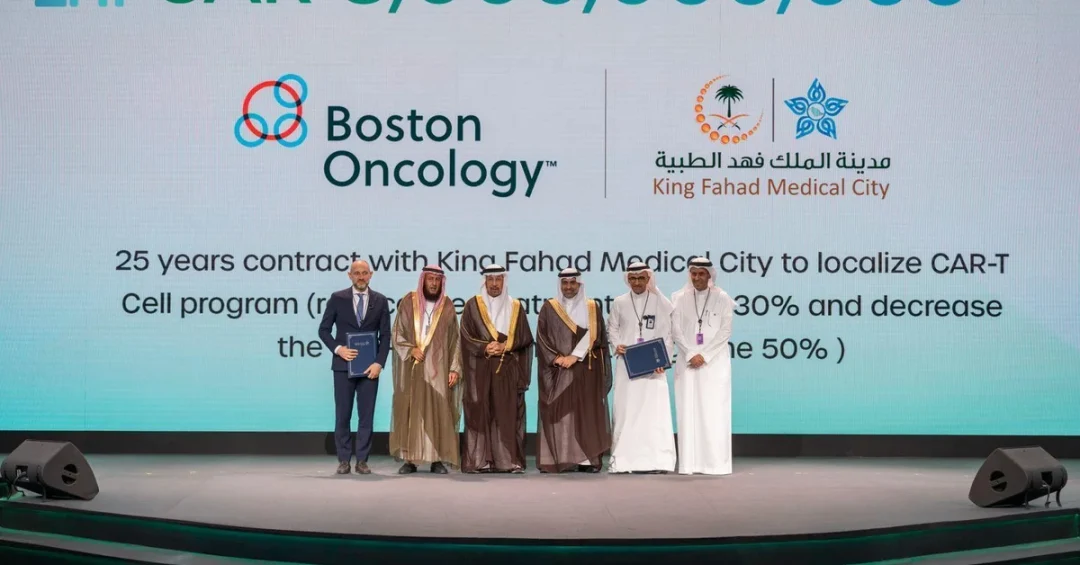
King Fahad Medical City (KFMC) and Boston Oncology have signed a landmark agreement to establish an advanced manufacturing unit for immunotherapy using programmed T cells in a clean closed system, announced on the sidelines of the 7th Global Health Exhibition in Riyadh. The agreement, reported by the Saudi Press Agency (SPA), aims to achieve self-sufficiency in producing advanced immunotherapies, encourage investment in the health sector, and drive the localization of advanced medical technologies to enhance health services for beneficiaries. The signing took place during the Global Health Exhibition, held from October 21 to 23 at the Riyadh Exhibition and Convention Center in Malham, north of Riyadh, underscoring Saudi Arabia’s growing role as a hub for healthcare innovation.
This development marks a significant step in the Kingdom’s efforts to localize cutting-edge medical technologies and reduce reliance on imported therapies. It aligns with the Ministry of Health’s ongoing endeavor to realize the objectives of Vision 2030, which seeks to elevate Saudi Arabia’s status as a regional leader in innovative healthcare. By partnering with Boston Oncology, a recognized entity in cancer care and research, KFMC is poised to enhance its capacity to deliver advanced treatments, potentially improving outcomes for patients across the region. The agreement reflects a broader trend of international collaboration in Saudi Arabia’s health sector, driven by strategic goals to boost local production and attract foreign expertise.
Context and Background
Why is this agreement being signed now, and what does it mean for Saudi Arabia’s healthcare landscape? The 7th Global Health Exhibition served as the platform for this announcement, highlighting the Kingdom’s commitment to fostering global partnerships in health innovation. King Fahad Medical City, a major tertiary care hospital in Riyadh, has long been at the forefront of medical excellence, while Boston Oncology brings specialized knowledge in immunotherapy—a field that harnesses the body’s immune system to fight diseases like cancer. The collaboration is set against the backdrop of Saudi Arabia’s Vision 2030, which prioritizes economic diversification and improved public services, including healthcare.
Immunotherapy, particularly using programmed T cells, represents a frontier in cancer treatment, offering targeted approaches that can be more effective and less invasive than traditional methods. The establishment of a local manufacturing unit for such therapies addresses a critical need: reducing dependence on imports and ensuring faster access to treatments for Saudi patients. This move is part of a larger strategy to build a resilient healthcare system. The Ministry of Health has been actively promoting localization efforts, aiming to create a sustainable ecosystem for pharmaceutical and therapeutic production. By signing this agreement, KFMC and Boston Oncology are contributing to these national objectives, potentially setting a precedent for future collaborations in the biotech sector.
Historically, Saudi Arabia has invested heavily in healthcare infrastructure, but the production of advanced biologics like immunotherapies has often been outsourced. This agreement signals a shift toward self-reliance, which is crucial for long-term health security. The clean closed system mentioned in the agreement refers to a manufacturing process that minimizes contamination risks, ensuring high-quality and safe production of T-cell therapies. Such systems are essential for meeting regulatory standards and scaling up production. The partnership also aligns with the Kingdom’s efforts to attract foreign investment and expertise, as outlined in Vision 2030’s economic reforms. By localizing production, Saudi Arabia can not only serve its population but also position itself as a exporter of advanced therapies to the region.
Key Details of the Agreement
What exactly does this agreement entail, and how will it be implemented? The core of the agreement is the establishment of an advanced manufacturing unit at King Fahad Medical City dedicated to producing immunotherapy with programmed T cells. This involves using a clean closed system, which is a controlled environment that maintains sterility throughout the manufacturing process. Programmed T cells, also known as CAR T-cell therapies, are engineered to target specific cancer cells, representing a personalized medicine approach. The unit aims to achieve self-sufficiency in producing these therapies, which are currently often imported at high costs. By localizing production, KFMC can reduce expenses, ensure timely availability, and tailor treatments to the local population’s needs.
The agreement also focuses on encouraging investment in the health sector, particularly in pharmaceutical and therapeutic fields. This could involve attracting private sector partners, both domestic and international, to fund and support the manufacturing unit. Additionally, it seeks to foster medical and technical innovation, driving research and development in immunotherapy. The localization of advanced medical technologies is expected to enhance the efficiency of health services, making them more accessible and effective for beneficiaries. The Ministry of Health’s involvement underscores the government’s support for such initiatives, which are integral to Vision 2030’s health sector transformation. The agreement was signed on the sidelines of the Global Health Exhibition, a major event that showcases the latest advancements and facilitates partnerships.
Boston Oncology’s role is pivotal, as it brings expertise in immunotherapy development and manufacturing. The collaboration likely includes knowledge transfer, training for local staff, and joint research efforts. The clean closed system technology is a key component, as it allows for automated, scalable production while maintaining high safety standards. This is particularly important for T-cell therapies, which require precise handling and customization for each patient. The manufacturing unit is expected to produce therapies for various cancers, potentially including leukemia and lymphoma, which are significant health burdens. By establishing this unit, KFMC aims to become a center of excellence in immunotherapy, not just for Saudi Arabia but for the wider region. The agreement’s success will depend on effective implementation, regulatory approvals, and ongoing investment.
International and Regional Impact
How will this agreement influence Saudi Arabia’s position in the global healthcare arena? The collaboration between KFMC and Boston Oncology signals the Kingdom’s ambition to be a regional hub for innovative healthcare. By localizing immunotherapy production, Saudi Arabia can reduce its reliance on foreign suppliers and potentially export therapies to neighboring countries, enhancing its economic and diplomatic influence. This aligns with Vision 2030’s goal of diversifying the economy beyond oil, with healthcare as a key sector. The agreement also strengthens ties with international partners like Boston Oncology, which is based in the United States, showcasing Saudi Arabia’s openness to global collaboration. In a region where access to advanced cancer treatments can be limited, this initiative could improve health outcomes and set a benchmark for other nations.
Regionally, the impact could be transformative. Many Middle Eastern countries face challenges in accessing cutting-edge therapies due to cost and supply chain issues. By producing immunotherapies locally, Saudi Arabia can offer a model for self-sufficiency and innovation. This could lead to increased medical tourism, as patients from around the region seek treatment in Riyadh. Furthermore, the agreement fosters medical and technical innovation, which can spur similar initiatives in other fields like genomics and personalized medicine. The Global Health Exhibition itself is a testament to Saudi Arabia’s growing role as a convener of global health discussions, attracting experts and companies from around the world. The partnership with Boston Oncology is a clear example of how international expertise can be leveraged to build local capacity, benefiting both Saudi Arabia and its neighbors.
Economic and Strategic Significance
What are the economic benefits of localizing immunotherapy production, and why is this strategically important? The health sector is a vital component of Saudi Arabia’s economic diversification efforts under Vision 2030. By manufacturing immunotherapies locally, the Kingdom can save on import costs, create high-skilled jobs, and stimulate research and development. The pharmaceutical and therapeutic fields are high-value industries that contribute to GDP and innovation. This agreement encourages investment in these areas, potentially attracting both local and foreign investors. The establishment of a manufacturing unit at KFMC will require specialized equipment, facilities, and personnel, driving demand for related services and fostering a biotech ecosystem. Strategically, self-sufficiency in advanced therapies enhances national health security, ensuring that patients have access to treatments even during global supply chain disruptions.
Moreover, the localization of advanced medical technologies aligns with the Ministry of Health’s objectives to improve healthcare quality and efficiency. By producing therapies locally, KFMC can reduce waiting times for patients and customize treatments based on local genetic and epidemiological data. This can lead to better outcomes and lower long-term healthcare costs. The agreement also supports the Kingdom’s goal of becoming a regional hub for innovative healthcare, which can attract medical tourism and international partnerships. Economically, a robust health sector contributes to a knowledge-based economy, as outlined in Vision 2030. The collaboration with Boston Oncology brings in foreign expertise and potentially opens doors for further collaborations in biotechnology, AI in healthcare, and precision medicine. The strategic significance extends to diplomacy, as health cooperation can strengthen ties with other countries and enhance Saudi Arabia’s soft power.
Vision 2030 Alignment
How does this agreement specifically advance the goals of Saudi Vision 2030? Vision 2030 is a comprehensive plan to transform Saudi Arabia’s economy and society, with healthcare as a key pillar. The agreement directly supports the Vision’s objective of elevating the Kingdom’s status as a regional hub for innovative healthcare. By localizing immunotherapy production, KFMC and Boston Oncology are contributing to the Ministry of Health’s endeavor to realize these objectives. The Vision emphasizes improving healthcare services, enhancing efficiency, and fostering innovation—all of which are addressed by this partnership. Additionally, it aligns with the economic diversification goals by encouraging investment in the health sector and creating a knowledge-based industry. The localization of advanced medical technologies reduces reliance on oil and imports, promoting sustainable development.
Furthermore, the agreement reflects Vision 2030’s focus on international collaboration and attracting foreign investment. Boston Oncology’s involvement demonstrates confidence in Saudi Arabia’s healthcare market and regulatory environment. This can lead to more partnerships and technology transfers, accelerating the Kingdom’s journey toward self-sufficiency in advanced therapies. The clean closed system for T-cell production represents a technological leap that can be replicated in other areas, such as vaccine manufacturing and biologics. As Saudi Arabia continues to invest in healthcare infrastructure and human capital, agreements like this will be crucial in building a resilient and innovative health system. Ultimately, this collaboration not only improves patient care but also contributes to the broader vision of a diversified, prosperous, and globally engaged Saudi Arabia.
20 Questions
Q1. What is the main purpose of the agreement between King Fahad Medical City and Boston Oncology?
A1. The agreement aims to establish an advanced manufacturing unit for immunotherapy using programmed T cells, achieving self-sufficiency in producing advanced immunotherapies and enhancing healthcare services in Saudi Arabia.
Q2. Where and when was the agreement signed?
A2. It was signed on the sidelines of the 7th Global Health Exhibition, held from October 21 to 23, 2024, at the Riyadh Exhibition and Convention Center in Malham, north of Riyadh.
Q3. What is immunotherapy with programmed T cells?
A3. It is a type of cancer treatment where T cells are genetically engineered to target and destroy cancer cells, representing a personalized and advanced form of therapy.
Q4. What is a clean closed system in this context?
A4. A clean closed system is a controlled manufacturing environment that maintains sterility and minimizes contamination, ensuring the safe and high-quality production of T-cell therapies.
Q5. How does this agreement support Saudi Vision 2030?
A5. It aligns with Vision 2030 by localizing advanced medical technologies, encouraging investment in healthcare, fostering innovation, and elevating Saudi Arabia as a regional hub for innovative healthcare.
Q6. What role does the Ministry of Health play in this agreement?
A6. The Ministry of Health supports the agreement as part of its endeavor to realize Vision 2030 objectives, promoting self-sufficiency and innovation in the health sector.
Q7. What are the expected benefits for patients in Saudi Arabia?
A7. Patients will benefit from faster access to advanced immunotherapies, reduced costs, and treatments tailored to local needs, improving outcomes for cancer and other diseases.
Q8. How will this agreement impact the local economy?
A8. It will create high-skilled jobs, attract investment, stimulate research and development, and contribute to economic diversification by building a biotech ecosystem.
Q9. What is Boston Oncology’s role in the partnership?
A9. Boston Oncology brings expertise in immunotherapy development and manufacturing, facilitating knowledge transfer, training, and joint research to build local capacity.
Q10. Will this agreement reduce Saudi Arabia’s reliance on imported therapies?
A10. Yes, by establishing local production, the Kingdom aims to achieve self-sufficiency, reducing import costs and ensuring timely availability of advanced therapies.
Q11. What types of cancer could be treated with these immunotherapies?
A11. Programmed T-cell therapies are primarily used for certain blood cancers like leukemia and lymphoma, but research is expanding to other types.
Q12. How does this agreement foster medical and technical innovation?
A12. It promotes research and development in immunotherapy, encourages the adoption of advanced manufacturing technologies, and drives localization of cutting-edge medical solutions.
Q13. What is the significance of the Global Health Exhibition for this announcement?
A13. The exhibition provides a platform for global health collaborations, showcasing Saudi Arabia’s commitment to healthcare innovation and facilitating partnerships like this one.
Q14. How might this agreement affect medical tourism in Saudi Arabia?
A14. By offering advanced immunotherapies locally, Saudi Arabia can attract patients from the region, boosting medical tourism and enhancing its reputation as a healthcare destination.
Q15. What are the strategic implications for Saudi Arabia’s healthcare sector?
A15. It enhances national health security, builds local capacity, and positions the Kingdom as a leader in innovative healthcare, aligning with Vision 2030 goals.
Q16. How does the agreement encourage investment in the health sector?
A16. It signals opportunities for private and public investors in pharmaceutical and therapeutic fields, potentially attracting both domestic and foreign capital.
Q17. What challenges might arise in implementing this agreement?
A17. Challenges include regulatory approvals, ensuring high-quality production, training personnel, and maintaining consistent investment, but these are manageable with proper planning.
Q18. Will the manufacturing unit at KFMC serve patients beyond Saudi Arabia?
A18. Yes, it could potentially export therapies to the region, enhancing Saudi Arabia’s role as a healthcare hub and fostering regional cooperation.
Q19. How does this agreement reflect Saudi Arabia’s broader economic diversification efforts?
A19. It supports diversification by developing a high-value biotech industry, reducing oil dependence, and creating a knowledge-based economy as outlined in Vision 2030.
Q20. What is the long-term vision for immunotherapy manufacturing in Saudi Arabia?
A20. The long-term vision is to achieve self-sufficiency, become a regional exporter, and continuously innovate in advanced therapies, contributing to global health and Vision 2030.
Reader Feedback
We value your thoughts. Please share your feedback on this article.
Your feedback helps us improve our coverage.