


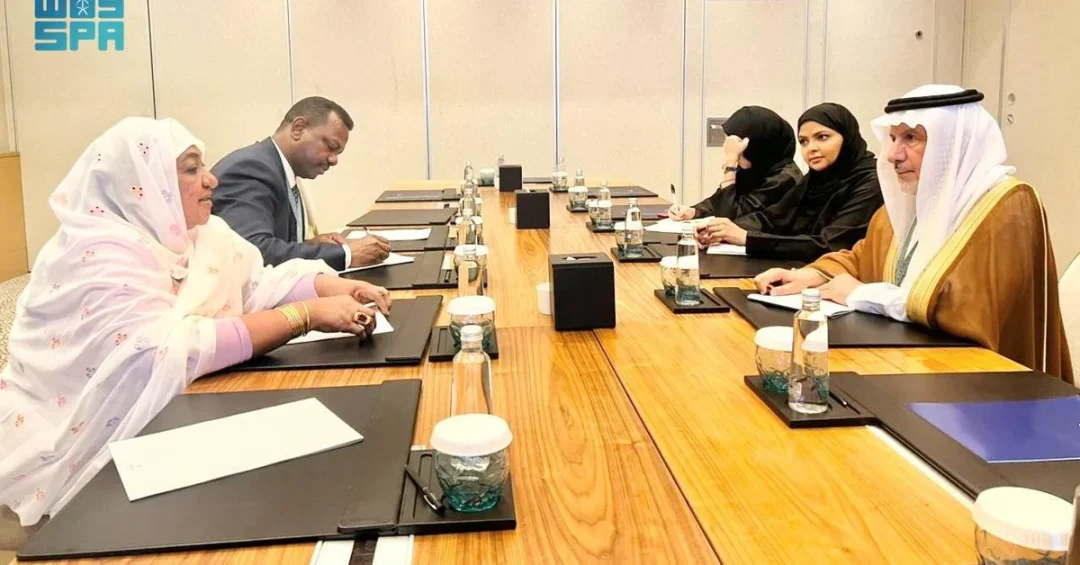
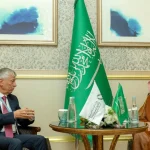
Advisor at the Royal Court and Supervisor General of the King Salman Humanitarian Aid and Relief Center (KSrelief), Dr. Abdullah bin Abdulaziz Al Rabeeah, met with Sudanese Minister of Industry Mahasin Ali Yagoub in Riyadh on October 23, 2024, during the second session of the Multilateral Industrial Policy Forum. The meeting focused on strengthening Sudan’s manufacturing capabilities, fostering innovation, and building resilient infrastructure to improve living conditions for vulnerable communities and enable self-reliance.
The encounter, reported by the Saudi Press Agency (SPA), underscores Saudi Arabia’s continued commitment to humanitarian diplomacy and sustainable development in Sudan, a nation facing prolonged economic and social challenges. By leveraging platforms such as the Multilateral Industrial Policy Forum, the Kingdom reinforces its role as a global leader in relief and development, aligning with the principles of Vision 2030 to promote international cooperation and stability.
Context and Background
What drives Saudi Arabia’s unwavering dedication to supporting Sudan’s recovery and growth? The meeting between Dr. Al Rabeeah and Minister Yagoub is the latest in a series of high-level engagements that highlight the Kingdom’s multifaceted approach to humanitarian aid. KSrelief, established in 2015 by royal decree, has since become a cornerstone of Saudi Arabia’s global relief efforts, delivering assistance in over 90 countries. In Sudan, the center has implemented projects ranging from food security and healthcare to education and infrastructure rehabilitation, often in coordination with local authorities and international partners.
The Multilateral Industrial Policy Forum, hosted in Riyadh, provides a strategic venue for such discussions. It brings together policymakers, industry leaders, and development experts to explore innovative solutions for industrial growth. For Sudan, which has grappled with political transitions, economic instability, and the impacts of conflict, enhancing manufacturing and innovation is critical. The forum allows Sudan to tap into Saudi expertise and resources, fostering a partnership that goes beyond traditional aid to focus on capacity building and long-term resilience.
This meeting also reflects Saudi Arabia’s broader diplomatic strategy under the leadership of the Custodian of the Two Holy Mosques, King Salman bin Abdulaziz Al Saud, and His Royal Highness Crown Prince Mohammed bin Salman. The Kingdom consistently uses its influence and resources to mediate conflicts, provide relief, and promote development, particularly in Africa and the Middle East. Sudan holds a special place in this outreach due to historical ties, geographic proximity, and shared cultural heritage.
Key Details of the Discussion
What specific outcomes emerged from the dialogue between Dr. Al Rabeeah and Minister Yagoub? According to the Saudi Press Agency, the conversation centered on three core pillars: enhancing Sudan’s manufacturing capabilities, fostering innovation, and building robust infrastructure. These objectives are designed to create a self-sustaining economy that can withstand shocks and improve the quality of life for all Sudanese citizens, especially those in vulnerable and affected communities.
Manufacturing capabilities are vital for Sudan’s economic diversification. Currently, Sudan’s industrial sector contributes a modest share to its GDP, hampered by outdated technology, limited access to finance, and infrastructure deficits. By partnering with KSrelief and Saudi industrial experts, Sudan can modernize its production processes, develop value-added chains in agriculture and mining, and create jobs for its youthful population. Innovation, meanwhile, is seen as a catalyst for leapfrogging traditional development stages, with potential focus areas including renewable energy, digital technologies, and efficient resource management.
Infrastructure development forms the backbone of these efforts. Without reliable roads, ports, energy grids, and water systems, industrial growth remains stunted. KSrelief’s expertise in delivering humanitarian aid often involves rebuilding such infrastructure in crisis-affected areas, and this meeting signals a willingness to extend that support to Sudan’s industrial zones. Minister Yagoub commended the Kingdom’s global humanitarian initiatives, praising KSrelief’s professionalism and wide-reaching impact, a testament to the trust Saudi Arabia has earned through decades of consistent and principled assistance.
International and Regional Impact
How does this bilateral engagement ripple across the region and beyond? Saudi Arabia’s support for Sudan is part of a larger pattern of South-South cooperation, where emerging economies share knowledge and resources to overcome common challenges. By assisting Sudan, the Kingdom contributes to stability in the Horn of Africa and the Red Sea corridor, areas of immense strategic importance for global trade and security. A stable, prosperous Sudan can act as a bridge between Africa and the Arab world, fostering economic integration and reducing the drivers of migration and extremism.
On the international stage, Saudi Arabia’s humanitarian and development efforts are increasingly recognized by multilateral organizations. KSrelief has forged partnerships with the United Nations, the World Health Organization, and other agencies, ensuring that aid is delivered efficiently and in line with global standards. The meeting with Sudan’s Industry Minister reinforces the Kingdom’s image as a responsible global actor that not only provides emergency relief but also invests in long-term solutions. This approach resonates with the Sustainable Development Goals (SDGs), particularly those related to industry, innovation, and infrastructure (SDG 9) and decent work and economic growth (SDG 8).
For Sudan, the engagement offers a lifeline amid ongoing challenges. The country has faced armed conflicts, economic reforms, and natural disasters in recent years, straining its resources and institutions. Saudi Arabia’s continued support, both through KSrelief and direct bilateral channels, provides a measure of predictability and hope. It also encourages other regional and international donors to step up, as the Kingdom’s leadership often catalyzes broader action.
Economic and Strategic Significance
Why does this meeting matter for Saudi Arabia’s own economic and strategic priorities? Vision 2030 aims to diversify the Kingdom’s economy away from oil dependence, boost non-oil exports, and strengthen its role as a global investment hub. By helping Sudan develop its industrial base, Saudi Arabia opens new markets for its goods and services, creates opportunities for Saudi companies to participate in infrastructure projects, and enhances regional supply chain resilience. The Red Sea region, in particular, is a focus of Vision 2030, with NEOM and other mega-projects poised to transform trade and logistics.
Moreover, humanitarian diplomacy is a soft power tool that complements Saudi Arabia’s economic and security policies. It builds goodwill, fosters people-to-people ties, and positions the Kingdom as a trusted partner in Africa. Sudan’s mineral wealth, agricultural potential, and strategic location make it a valuable ally. By investing in its industrial capacity, Saudi Arabia helps unlock Sudan’s economic potential while ensuring that the benefits are shared equitably, reducing the risk of instability that could spill across borders.
The meeting also aligns with Saudi Arabia’s commitment to multilateralism. The Multilateral Industrial Policy Forum itself is a platform for dialogue and cooperation, and Saudi Arabia’s active participation demonstrates its willingness to work with others to solve shared problems. This is consistent with the Kingdom’s G20 leadership and its role in OPEC+, where it balances national interests with global responsibilities.
Vision 2030 Alignment
How does this initiative reflect the core objectives of Saudi Vision 2030? Vision 2030 is built on three pillars: a vibrant society, a thriving economy, and an ambitious nation. KSrelief’s work embodies the vibrant society pillar by promoting compassion, solidarity, and global citizenship. The meeting with Sudan’s Industry Minister advances the thriving economy pillar by exploring synergies that can benefit Saudi businesses and workers. And it showcases the ambitious nation pillar by demonstrating Saudi Arabia’s proactive leadership on the world stage.
Furthermore, Vision 2030 emphasizes the importance of partnerships, both domestic and international. The collaboration with Sudan is a prime example of how Saudi Arabia seeks to build mutually beneficial relationships that contribute to regional prosperity. As the Kingdom continues its own transformation, it remains committed to being a force for good in the world, using its resources and influence to help others achieve their own development goals. The meeting between Dr. Al Rabeeah and Minister Yagoub is a small but significant step in that ongoing journey, one that promises to yield lasting benefits for Sudan and reinforce Saudi Arabia’s reputation as a humanitarian leader.
20 Questions
Q1. Who met with Sudanese Minister of Industry Mahasin Ali Yagoub in Riyadh?
A1. Dr. Abdullah bin Abdulaziz Al Rabeeah, Advisor at the Royal Court and Supervisor General of KSrelief, met with her on October 23, 2024.
Q2. What event provided the backdrop for this meeting?
A2. The meeting took place during the second session of the Multilateral Industrial Policy Forum held in Riyadh, Saudi Arabia.
Q3. What were the main topics discussed?
A3. They discussed enhancing Sudan’s manufacturing capabilities, fostering innovation, and building robust infrastructure to improve living conditions.
Q4. What is the ultimate goal of these efforts?
A4. The goal is to enable vulnerable and affected communities in Sudan to achieve self-reliance and improved living standards.
Q5. How did the Sudanese minister respond to Saudi Arabia’s initiatives?
A5. She commended the Kingdom’s global humanitarian and relief initiatives, highlighting KSrelief’s professionalism and wide-reaching impact.
Q6. What is KSrelief and when was it established?
A6. KSrelief is the King Salman Humanitarian Aid and Relief Center, established in 2015 by royal decree to lead Saudi Arabia’s global relief efforts.
Q7. In how many countries has KSrelief operated?
A7. KSrelief has delivered assistance in over 90 countries worldwide, addressing humanitarian crises and promoting sustainable development.
Q8. Why is Sudan a priority for Saudi Arabia’s humanitarian efforts?
A8. Sudan shares historical, cultural, and geographic ties with Saudi Arabia, and its stability is crucial for regional security and prosperity.
Q9. What specific areas of Sudan’s industry are targeted for support?
A9. Manufacturing, innovation, and infrastructure are the primary areas, aiming to diversify the economy and create jobs.
Q10. How does this meeting align with Saudi Vision 2030?
A10. It reflects Vision 2030’s pillars by promoting global citizenship, economic partnerships, and Saudi Arabia’s leadership in humanitarian diplomacy.
Q11. What is the Multilateral Industrial Policy Forum?
A11. It is a platform hosted in Riyadh that brings together policymakers and experts to discuss industrial growth and cooperation.
Q12. What benefits can Sudan expect from this collaboration?
A12. Sudan can expect enhanced industrial capacity, technology transfer, job creation, and improved infrastructure, leading to self-reliance.
Q13. How does Saudi Arabia’s aid to Sudan differ from traditional charity?
A13. It focuses on sustainable development and capacity building, not just emergency relief, to foster long-term resilience.
Q14. What role does KSrelief play in Saudi diplomacy?
A14. KSrelief is a key soft power tool, building goodwill and demonstrating Saudi Arabia’s commitment to global humanitarian principles.
Q15. Are there other international partners involved in Sudan’s development?
A15. Yes, KSrelief often collaborates with UN agencies and other international organizations to maximize impact and efficiency.
Q16. What is the significance of the Red Sea region in this context?
A16. The Red Sea is vital for global trade and security; a stable Sudan contributes to the region’s prosperity and Saudi Arabia’s strategic interests.
Q17. How does this meeting reflect Saudi Arabia’s foreign policy?
A17. It demonstrates Saudi Arabia’s proactive diplomacy, using its resources to support neighbors and promote stability in Africa and the Middle East.
Q18. What are the expected outcomes of the meeting?
A18. The meeting is expected to lead to concrete projects and partnerships that enhance Sudan’s industrial sector and improve livelihoods.
Q19. How does the Kingdom ensure aid reaches those most in need?
A19. KSrelief employs rigorous needs assessments, coordinates with local authorities, and monitors projects to ensure transparency and effectiveness.
Q20. What message does this send to the international community?
A20. It signals Saudi Arabia’s unwavering commitment to humanitarianism and its readiness to lead in addressing global challenges through partnership.
Reader Feedback
We value your thoughts. Please share your feedback on this article.
Your feedback helps us improve our coverage.
Related articles
 Saudi Arabia Launches First Hydrogen Taxi Pilot Program
 4.9 Magnitude Earthquake Strikes Southern Mexico
 Saudi Defense Minister Meets Italian Industrial Leaders
 Saudi Auditors Visit Switzerland Under ‘From Riyadh to World
 Minister of Industry Meets with International Officials at Multilateral Industrial Policy Forum
 King Salman Congratulates Vietnam’s New President