


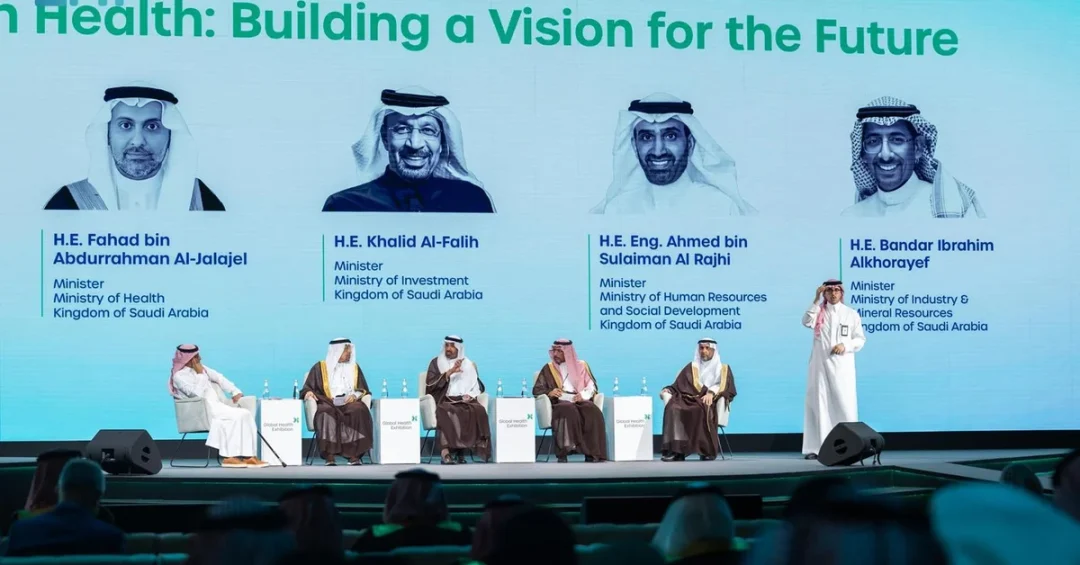
Saudi Minister of Investment Khalid Al-Falih highlighted the Kingdom’s rapidly expanding healthcare sector as a premier investment destination during the 7th Global Health Exhibition in Riyadh, outlining a strategic vision that aligns with Saudi Vision 2030’s ambitious goals for economic diversification and improved quality of life. Speaking at a session titled “Invest in Health: Building a Vision for the Future,” Al-Falih joined Minister of Health Fahad Al-Jalajel, Minister of Industry and Mineral Resources Bandar Alkhorayef, and Minister of Human Resources and Social Development Ahmed Al-Rajhi to present a unified government approach to transforming healthcare into a key pillar of the national economy.
Isn’t it remarkable how a nation’s health sector can become a catalyst for broader economic transformation? The exhibition, held at the Riyadh Exhibition and Convention Center, served as a global platform to discuss the latest healthcare developments, showcase innovations, and explore investment opportunities. It featured various sessions, including a leaders’ summit, and witnessed the signing of numerous agreements and partnerships between the public and private sectors. The event attracted participation from relevant government sectors and major healthcare companies both within Saudi Arabia and abroad, underscoring the Kingdom’s growing stature as a hub for medical innovation and investment.
Context and Background
What makes Saudi Arabia’s healthcare market one of the most attractive in the Middle East and North Africa? According to Minister Al-Falih, the answer lies in a combination of factors: the size of the Kingdom’s economy, increased healthcare spending, a growing population, and advanced healthcare infrastructure. These elements have collectively positioned Saudi Arabia as a regional leader in healthcare delivery and investment potential. The healthcare transformation strategy under Saudi Vision 2030 is not merely a sectoral reform but a comprehensive driver of national development, contributing to both an improved quality of life for citizens and robust economic growth.
The 7th Global Health Exhibition, organized by the Ministry of Health, represents a critical juncture in Saudi Arabia’s journey toward becoming a global healthcare powerhouse. The event brought together policymakers, industry leaders, and investors to explore how the Kingdom can leverage its resources and strategic location to address both domestic and international health challenges. The presence of multiple ministers at the session underscored the government’s integrated approach, where health, investment, industry, and human resources ministries collaborate to create a cohesive ecosystem for healthcare advancement.
How did Saudi Arabia achieve its impressive ranking in global health security? The Kingdom currently ranks sixth out of 64 countries in the Global Health Security Index, a testament to years of strategic planning, infrastructure investment, and effective governance. This ranking reflects the nation’s preparedness to handle health emergencies, its capacity for early detection and reporting, and its commitment to international health regulations. Such recognition enhances investor confidence, as it demonstrates a stable and reliable environment for healthcare investments.
Key Details
What specific targets has the Saudi government set to expand private-sector participation in healthcare? Minister Al-Falih noted that the health sector transformation program aims to increase private-sector involvement in healthcare services to 22 percent. This target is part of a broader strategy to shift from a predominantly public-funded system to a more diversified model that encourages innovation, efficiency, and competition. The focus areas include research, innovation, and biotechnology strategies, which are expected to attract significant foreign and domestic investment.
Al-Falih also predicted that Riyadh will become a major hub for the biotechnology industry. This vision is supported by ongoing investments in research and development, the establishment of specialized biotech parks, and partnerships with leading international firms. The Minister emphasized that Saudi Arabia is ready to lead in addressing global health challenges, turning them into significant opportunities for investors. This proactive stance positions the Kingdom not just as a participant in the global healthcare market but as a shaper of its future direction.
Can a healthcare system simultaneously improve patient outcomes and generate substantial economic returns? The Saudi experience suggests yes. By integrating cutting-edge technology, data analytics, and personalized medicine, the Kingdom aims to create a healthcare ecosystem that is both patient-centric and economically vibrant. The exhibition showcased numerous innovations, from telemedicine platforms to advanced diagnostic tools, highlighting the tangible opportunities available to investors who align with Saudi Arabia’s strategic priorities.
International and Regional Impact
How does Saudi Arabia’s healthcare investment strategy influence the broader Middle East and North Africa region? As one of the largest healthcare markets in the region, the Kingdom’s policies and investments set a benchmark for neighboring countries. By fostering a competitive environment and encouraging public-private partnerships, Saudi Arabia is helping to raise standards across the region. Moreover, its leadership in health security and biotechnology attracts multinational corporations seeking a stable and lucrative entry point into Middle Eastern markets.
The Global Health Exhibition itself served as a testament to Saudi Arabia’s convening power, drawing participation from major healthcare companies worldwide. The agreements and partnerships signed during the event are expected to facilitate knowledge transfer, technology adoption, and joint ventures that will have ripple effects beyond Saudi borders. For international investors, the message is clear: Saudi Arabia offers a well-regulated, high-growth environment supported by strong government backing and a clear strategic vision.
Economic and Strategic Significance
What economic benefits does a thriving healthcare sector bring to Saudi Arabia? Beyond direct job creation and increased GDP contribution, a robust healthcare industry enhances workforce productivity, reduces long-term healthcare costs through preventive care, and attracts talent from around the world. The sector’s growth also stimulates related industries such as pharmaceuticals, medical devices, construction, and information technology, creating a multiplier effect across the economy.
Strategically, healthcare is a cornerstone of Saudi Vision 2030’s goal to diversify revenue sources away from oil. By building a knowledge-based economy, the Kingdom reduces its dependence on hydrocarbon exports and creates sustainable, high-value industries. The emphasis on biotechnology and research aligns with global trends toward personalized medicine and digital health, ensuring that Saudi Arabia remains at the forefront of medical innovation. This strategic positioning not only boosts national resilience but also elevates the Kingdom’s role in global health diplomacy.
Vision 2030 Alignment
How does the healthcare transformation strategy directly support the objectives of Saudi Vision 2030? The Vision encompasses three main themes: a vibrant society, a thriving economy, and an ambitious nation. Healthcare investment contributes to all three. A vibrant society requires accessible, high-quality healthcare for all citizens. A thriving economy benefits from a diversified private sector and increased foreign direct investment. An ambitious nation is one that takes bold steps to improve governance and efficiency in public services, including health.
The health sector transformation program is one of the Vision’s realization programs, designed to restructure the healthcare system to be more responsive, efficient, and innovative. By targeting 22 percent private-sector participation, the program aims to unlock new sources of funding and expertise, ultimately improving patient care and outcomes. The Global Health Exhibition, with its focus on investment and innovation, exemplifies the collaborative spirit that Vision 2030 fosters, bringing together government, industry, and international partners to build a healthier and more prosperous future for Saudi Arabia and the world.
20 Questions
Q1. What was the main focus of the session titled “Invest in Health: Building a Vision for the Future”?
A1. The session focused on highlighting the promising investment opportunities within Saudi Arabia’s healthcare sector, with participation from key ministers including Khalid Al-Falih, Fahad Al-Jalajel, Bandar Alkhorayef, and Ahmed Al-Rajhi.
Q2. Who represented the Saudi government at the 7th Global Health Exhibition session?
A2. Minister of Investment Khalid Al-Falih, Minister of Health Fahad Al-Jalajel, Minister of Industry and Mineral Resources Bandar Alkhorayef, and Minister of Human Resources and Social Development Ahmed Al-Rajhi participated.
Q3. What did Minister Al-Falih identify as a key driver of Saudi Arabia’s development?
A3. He emphasized that the healthcare transformation strategy under Saudi Vision 2030 is a key driver, contributing to both an improved quality of life and economic growth for the Kingdom.
Q4. Why is Saudi Arabia considered to have one of the largest healthcare markets in MENA?
A4. This is due to the size of its economy, increased healthcare spending, a growing population, and its advanced healthcare infrastructure, according to Minister Al-Falih.
Q5. What global ranking did Saudi Arabia achieve in the Global Health Security Index?
A5. Saudi Arabia ranks sixth out of 64 countries in the Global Health Security Index, reflecting its strong preparedness and commitment to health security standards.
Q6. What target has the health sector transformation program set for private-sector participation?
A6. The program aims to increase private-sector participation in healthcare services to 22 percent, particularly through research, innovation, and biotechnology strategies.
Q7. Which city did Minister Al-Falih predict will become a major hub for biotechnology?
A7. He predicted that Riyadh will become a major hub for the biotechnology industry, supported by ongoing investments and strategic initiatives.
Q8. What role is Saudi Arabia ready to play in global health challenges?
A8. Saudi Arabia is ready to lead in addressing global health challenges, turning them into significant opportunities for investors, as stated by Minister Al-Falih.
Q9. Where was the 7th Global Health Exhibition held?
A9. The exhibition was held at the Riyadh Exhibition and Convention Center, serving as a global platform for healthcare discussions and innovations.
Q10. What types of sessions and activities took place at the exhibition?
A10. The event featured various sessions, including a leaders’ summit, and witnessed the signing of numerous agreements and partnerships between the public and private sectors.
Q11. Who participated in the Global Health Exhibition besides government sectors?
A11. Major healthcare companies from both within Saudi Arabia and abroad participated, showcasing innovations and exploring investment opportunities.
Q12. How does the healthcare transformation strategy contribute to economic growth?
A12. It drives economic growth by increasing private-sector involvement, fostering innovation, creating jobs, and attracting foreign investment, while also improving quality of life.
Q13. What are the focus areas of the health sector transformation program?
A13. The focus areas include research, innovation, and biotechnology strategies, aimed at expanding private-sector participation and enhancing healthcare delivery.
Q14. What benefits does a thriving healthcare sector bring to Saudi Arabia’s economy?
A14. It creates jobs, boosts GDP, enhances workforce productivity, reduces long-term healthcare costs, and stimulates related industries like pharmaceuticals and medical devices.
Q15. How does healthcare investment align with Saudi Vision 2030’s themes?
A15. It supports a vibrant society through quality care, a thriving economy via diversification, and an ambitious nation through improved governance and efficiency.
Q16. What is the significance of Saudi Arabia’s ranking in the Global Health Security Index for investors?
A16. The high ranking demonstrates a stable and reliable environment for healthcare investments, enhancing investor confidence in the Kingdom’s preparedness and governance.
Q17. How does the Global Health Exhibition facilitate international partnerships?
A17. It provides a platform for signing agreements and partnerships between public and private sectors, attracting global healthcare companies and fostering knowledge transfer and joint ventures.
Q18. What did Minister Al-Falih say about turning global health challenges into opportunities?
A18. He stated that Saudi Arabia is ready to lead in addressing global health challenges and transform them into significant opportunities for investors, showcasing the Kingdom’s proactive stance.
Q19. What role do government ministries play in Saudi Arabia’s healthcare transformation?
A19. Multiple ministries collaborate, including Investment, Health, Industry and Mineral Resources, and Human Resources, to create a cohesive ecosystem for healthcare advancement and investment.
Q20. How does the healthcare transformation strategy support Saudi Vision 2030’s goal of economic diversification?
A20. By building a knowledge-based economy focused on biotechnology and research, the strategy reduces dependence on oil and creates sustainable, high-value industries for long-term prosperity.
Reader Feedback
We value your thoughts. Please share your feedback on this article.
Your feedback helps us improve our coverage.