


Wadi Allayb National Park sits within the Al-Shawaq Center in Al-Lith Governorate, Makkah Region, where varied terrain and rock formations meet a rich historical heritage in a single protected landscape. The park’s native plants include arak, samar, and salam trees, and the historic Aqairib Fort stands within the same area as a marker of the region’s architectural heritage. How often does a single valley hold both a living forest and a stone fort shaped by the same landscape?
SPA reported that the valley extends from the heights of the Sarawat Mountains in the east, cutting through rock formations and heading west toward the coastal plains before reaching the Red Sea. That long westward course links mountain highlands to the coast, and the terrain along the way has been shaped over the years by flash floods. Arak trees grow along the valley’s slopes, forming extensive natural forests that give the area a distinctive ecological character and make it a destination for nature lovers, hikers, and explorers. What does a valley look like when flash floods, not planners, have drawn its contours?
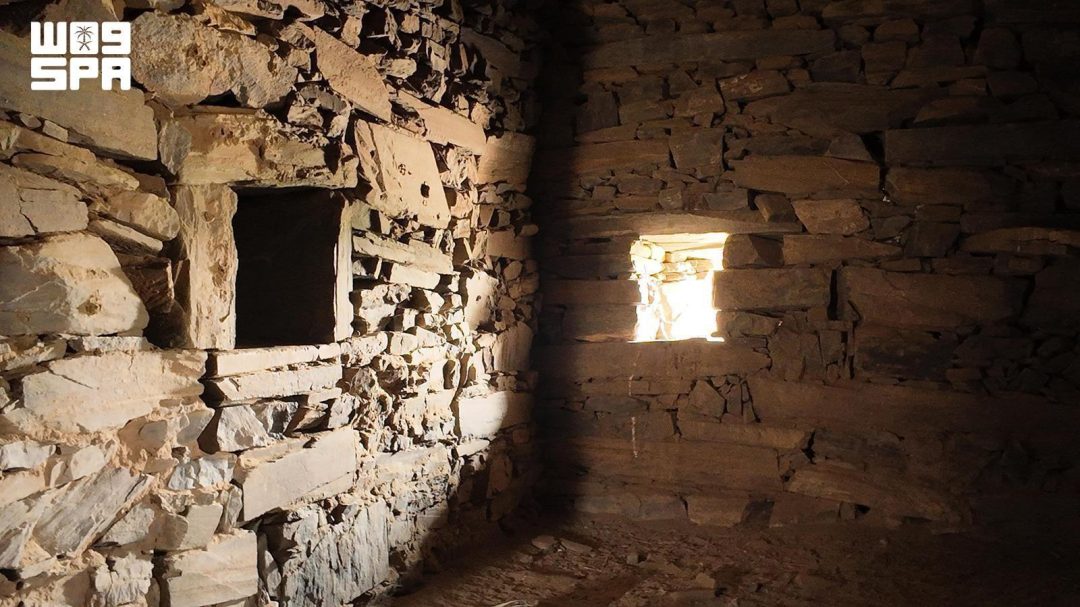
The Aqairib Fort stands out as one of the park’s historical landmarks overlooking the valley. According to SPA, the fort comprises a two-story stone structure with narrow openings that reflect the defensive character of traditional architecture. It also demonstrates how people used the site’s natural features and terrain to construct buildings and provide protection. The fort holds historical and cultural significance, highlighting the importance of documenting it and studying its architectural features to raise awareness of the region’s history and preserve its heritage landmarks for future generations. Why do narrow openings in a two-story stone structure tell us so much about how earlier residents read the land around them?
From an environmental perspective, Wadi Allayb National Park is overseen by the National Center for Vegetation Cover Development and Combating Desertification. SPA described the park as an emerging destination for investment in nature-based tourism. Investment opportunities are available for activities compatible with the site’s natural character, including camping, mountain hiking, and organized recreational activities. Could a park that guards its natural character still open itself to visitors without losing what makes it distinctive?
During the spring season, the park also attracts beekeepers due to its diverse wild plants and seasonal blooms, according to SPA. That seasonal pull adds another layer to a site already known for its arak forests and its rocky, flood-shaped terrain. The combination of beekeeping, hiking, and camping suggests a landscape that supports several kinds of activity at once, each tied to what the valley naturally provides. What draws beekeepers to a valley before it draws anyone else?
The park’s ecological identity rests heavily on the arak trees that grow along its slopes and form extensive natural forests. SPA noted that these forests give the area a distinctive ecological character. Alongside the arak, the park features samar and salam trees among its native plants, set within varied terrain and rock formations. Together, the vegetation and the geology create the conditions that make the valley a destination for nature lovers, hikers, and explorers. How much of a valley’s character comes from its trees rather than its rocks?
The valley’s course from the Sarawat Mountains eastward down to the coastal plains and on to the Red Sea places it within a broader Makkah Region landscape. SPA reported that the valley cuts through rock formations on its way west, and that flash floods over the years shaped its diverse terrain. That combination of mountain origin, rocky passage, and coastal destination gives the park a range of environments within one area. Does a valley that runs from mountain heights to the sea hold more variety than visitors expect?
Aqairib Fort’s position overlooking the valley ties its defensive design to the terrain below. SPA described the fort as a two-story stone structure whose narrow openings reflect the defensive character of traditional architecture, and noted that it demonstrates how people used the site’s natural features and terrain to construct buildings and provide protection. The fort is presented as one of the park’s historical landmarks, and its historical and cultural significance is tied to the importance of documenting it and studying its architectural features. What can a fort’s placement tell us that its walls alone cannot?
The call to document the fort and study its architectural features is linked, in SPA’s account, to raising awareness of the region’s history and preserving its heritage landmarks for future generations. That framing places the fort alongside the park’s natural features as something worth understanding in detail, not only visiting. The same area that supports arak forests and seasonal blooms also carries a stone structure whose design reflects how earlier builders worked with the land. Can preservation of a fort and preservation of a forest be part of the same effort?
On the investment side, SPA reported that opportunities at Wadi Allayb National Park are available for activities compatible with the site’s natural character. Camping, mountain hiking, and organized recreational activities are named as examples. The park is overseen by the National Center for Vegetation Cover Development and Combating Desertification, which places its management within an environmental framework rather than a purely commercial one. What kinds of activities fit a valley whose terrain was shaped by flash floods?
The spring season adds beekeepers to the list of those drawn to the park, with SPA citing its diverse wild plants and seasonal blooms as the reason. That seasonal presence sits alongside the year-round features of the valley: the arak trees along its slopes, the samar and salam trees among its native plants, and the rock formations that define its course. Each element contributes to the park’s identity as a place where natural diversity and historical heritage meet. Why do seasonal visitors and permanent features matter equally to a place like this?
SPA’s description of Wadi Allayb National Park places it within Al-Shawaq Center in Al-Lith Governorate, in the Makkah Region, and traces the valley from the Sarawat Mountains in the east to the Red Sea in the west. The park’s features include varied terrain, rock formations, native plants, and the historic Aqairib Fort. Its appeal is presented as twofold: natural beauty and historical depth. Which of those two draws a first-time visitor more?
The fort’s two-story stone construction and narrow openings are the specific architectural details SPA highlighted. Those details are described as reflecting the defensive character of traditional architecture, and the fort as a whole is said to demonstrate how people used natural features and terrain for building and protection. The fort overlooks the valley, tying its purpose to the landscape it watches. What does it mean for a structure to be built both from the land and for watching over it?
Wadi Allayb National Park’s status as an emerging destination for investment in nature-based tourism comes with the condition, in SPA’s account, that activities be compatible with the site’s natural character. Camping, mountain hiking, and organized recreational activities are the examples given. The park’s oversight by the National Center for Vegetation Cover Development and Combating Desertification adds an environmental dimension to how that investment is framed. How should a park balance new visitors with the character that attracts them?
SPA did not include specific visitor numbers, investment figures, project timelines, or named officials in its account of Wadi Allayb National Park and Aqairib Fort. The report also did not specify the fort’s exact age or construction date, nor the size of the park or the extent of its arak forests. Those details were not part of the material SPA published about the site in Al-Lith Governorate.
Where is Wadi Allayb National Park located? Wadi Allayb National Park is located within the Al-Shawaq Center in Al-Lith Governorate, Makkah Region, according to SPA. The valley extends from the heights of the Sarawat Mountains in the east, cutting through rock formations and heading west toward the coastal plains before reaching the Red Sea. The park combines natural diversity with a rich historical heritage, and it features varied terrain and rock formations along its course. The historic Aqairib Fort also stands within the park area, overlooking the valley.
What plants grow in Wadi Allayb National Park? SPA reported that the park’s native plants include arak, samar, and salam trees. Arak trees grow along the valley’s slopes, forming extensive natural forests that give the area a distinctive ecological character and make it a destination for nature lovers, hikers, and explorers. During the spring season, the park also attracts beekeepers due to its diverse wild plants and seasonal blooms. The vegetation, together with the varied terrain and rock formations, shapes the park’s identity as a place where natural diversity and historical heritage meet.
What is Aqairib Fort and what does it look like? Aqairib Fort stands out as one of the park’s historical landmarks overlooking the valley, according to SPA. The fort comprises a two-story stone structure with narrow openings that reflect the defensive character of traditional architecture. It also demonstrates how people used the site’s natural features and terrain to construct buildings and provide protection. SPA described the fort as holding historical and cultural significance, highlighting the importance of documenting it and studying its architectural features to raise awareness of the region’s history and preserve its heritage landmarks for future generations.
What investment opportunities exist at the park? SPA reported that Wadi Allayb National Park, overseen by the National Center for Vegetation Cover Development and Combating Desertification, is an emerging destination for investment in nature-based tourism. Investment opportunities are available for activities compatible with the site’s natural character, including camping, mountain hiking, and organized recreational activities. The park’s spring season also attracts beekeepers due to its diverse wild plants and seasonal blooms. The oversight by the National Center for Vegetation Cover Development and Combating Desertification places the park’s management within an environmental framework.
Why does the park attract beekeepers in spring? During the spring season, the park attracts beekeepers due to its diverse wild plants and seasonal blooms, according to SPA. That seasonal pull adds to a site already known for its arak forests and rocky, flood-shaped terrain. The park’s native plants include arak, samar, and salam trees, with arak trees growing along the valley’s slopes and forming extensive natural forests. The combination of beekeeping, hiking, and camping suggests a landscape that supports several kinds of activity tied to what the valley naturally provides.
How was the valley’s terrain shaped over time? SPA reported that the valley extends from the heights of the Sarawat Mountains in the east, cutting through rock formations and heading west toward the coastal plains before reaching the Red Sea. It combines natural beauty with historical depth, featuring diverse terrain shaped over the years by flash floods. Arak trees grow along its slopes, forming extensive natural forests that give the area a distinctive ecological character. That combination of mountain origin, rocky passage, and coastal destination gives the park a range of environments within one area.