


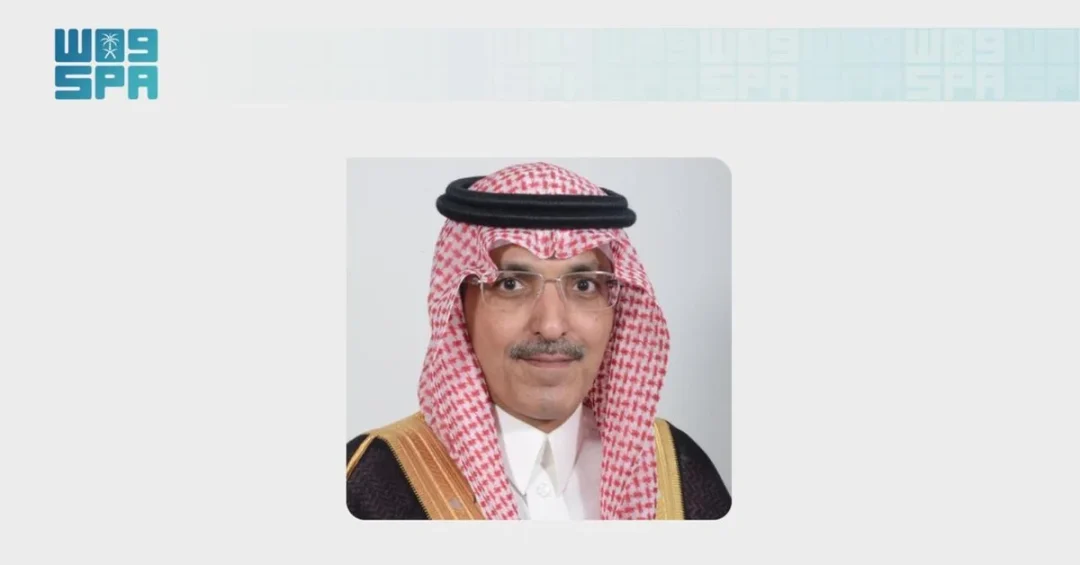
The International Monetary Fund (IMF) has announced a one-year extension of the term of Mohammed Aljadaan, Saudi Arabia’s Minister of Finance, as Chair of the Fund’s International Monetary and Financial Committee (IMFC), extending his leadership until January 2028. The decision, confirmed by the Saudi Press Agency (SPA) on October 13, 2026, followed the unanimous agreement of IMFC members and the support of IMF management, after Minister Aljadaan accepted the Committee’s request to continue in the role beyond his original three-year term.
The announcement represents a significant endorsement of Saudi Arabia’s stewardship of the IMF’s principal ministerial advisory body, a committee that provides strategic direction on the Fund’s priorities and deliberates on the most pressing issues affecting the international monetary and financial system. The IMFC represents the IMF’s 191 member countries through 25 members, comprising finance ministers and central bank governors from around the world. The unanimous decision to extend Minister Aljadaan’s chairmanship reflects the international community’s recognition of Saudi Arabia’s successful efforts in fostering consensus on economic and financial matters during a period marked by global economic challenges and heightened uncertainty.
Why does this extension matter for the global economy, and what does it signal about Saudi Arabia’s growing role in international financial governance? The answer lies in the Kingdom’s steadfast commitment to promoting dialogue and strengthening multilateral cooperation, values that have become increasingly vital as the world navigates complex economic headwinds.
Context and Background
The International Monetary and Financial Committee is one of the most influential bodies within the global financial architecture. Established to provide ministerial-level guidance to the IMF’s Board of Governors, the IMFC meets twice yearly to assess the state of the global economy, review developments in international financial markets, and recommend policy actions. Its 25 members are drawn from the IMF’s constituency system, ensuring that both advanced economies and emerging markets have a voice in shaping the Fund’s strategic direction. The Committee’s deliberations directly influence IMF lending policies, surveillance activities, and capacity-building initiatives across its 191 member countries.
Minister Mohammed Aljadaan assumed the chairmanship of the IMFC in January 2024, beginning a three-year term that was originally set to conclude in January 2027. His tenure has been characterized by a focus on consensus-building, particularly during a period when the global economy has faced overlapping crises, including inflationary pressures, supply chain disruptions, geopolitical tensions, and divergent monetary policies across major economies. Under his leadership, the IMFC has navigated these challenges by emphasizing the importance of coordinated policy responses and the need for continued support to vulnerable economies.
How has Saudi Arabia managed to earn such broad trust in a role traditionally held by representatives of major advanced economies? The answer reflects the Kingdom’s unique position as a bridge between developed and developing nations, its growing economic weight, and its consistent advocacy for multilateral solutions to global problems. The extension decision, agreed unanimously by Committee members and supported by IMF management, underscores the confidence that the international community places in Saudi Arabia’s leadership at a critical juncture for the global economy.
Key Details of the Extension
According to the official announcement carried by the Saudi Press Agency, the extension of Minister Aljadaan’s chairmanship was agreed upon after the completion of his original three-year term. The decision was unanimous among the IMFC’s 25 members, with the explicit support of IMF management. The extension runs until January 2028, providing continuity in leadership as the Fund addresses ongoing global economic challenges. The SPA report emphasized that the extension was granted “in recognition of Saudi Arabia’s successful chairmanship in fostering international consensus on economic and financial issues amid economic challenges and heightened uncertainty.”
The announcement further noted that the decision reflects “appreciation of the Kingdom’s initiatives and steadfast commitment to promoting dialogue and strengthening multilateral cooperation.” This language highlights the specific qualities that have distinguished Minister Aljadaan’s tenure: a focus on inclusive dialogue, a commitment to bridging divergent perspectives, and a consistent emphasis on the importance of international cooperation in addressing shared economic challenges. These attributes have become hallmarks of Saudi Arabia’s approach to international financial diplomacy under the leadership of Crown Prince Mohammed bin Salman and the broader Vision 2030 framework.
What does this extension mean in practical terms for the IMF’s work over the next two years? It ensures that the IMFC will continue to benefit from Minister Aljadaan’s experience and diplomatic skills as it addresses a range of pressing issues, including global inflation dynamics, sovereign debt vulnerabilities in emerging markets, the reform of international financial institutions, and the mobilization of climate finance. His continued leadership provides stability and predictability at a time when the global economy requires both.
International and Regional Impact
The extension of Minister Aljadaan’s chairmanship carries significant implications for both the international financial system and the Middle East region. Globally, it signals continuity in the IMF’s approach to consensus-building and multilateral cooperation, values that have come under strain in recent years amid rising geopolitical tensions and protectionist tendencies. By retaining a chair known for his ability to bridge divides, the IMFC is signaling its commitment to inclusive dialogue and coordinated action. This is particularly important as the Fund navigates complex issues such as the reform of quota and governance structures, the response to debt distress in low-income countries, and the evolving role of digital currencies in the international monetary system.
Regionally, the extension reinforces Saudi Arabia’s position as a leading voice in global economic governance. The Kingdom has increasingly assumed a prominent role in international financial institutions, reflecting its status as the world’s largest oil exporter, a major contributor to IMF resources, and a key player in the G20. Minister Aljadaan’s continued chairmanship of the IMFC complements Saudi Arabia’s broader diplomatic and economic outreach, including its hosting of major international events, its leadership in energy markets, and its ambitious Vision 2030 reform program. For the Middle East and North Africa region, having a representative of Saudi Arabia’s caliber at the helm of the IMFC ensures that the perspectives and concerns of emerging markets are effectively represented in global economic discussions.
How does this extension affect the broader trajectory of multilateral cooperation? It provides a positive example of how international institutions can recognize and retain effective leadership, even as they adapt to a changing global landscape. The unanimous support for Minister Aljadaan’s extension demonstrates that the IMFC’s membership values his chairmanship and wishes to see the Committee’s work continue without interruption. This continuity is likely to be welcomed by both advanced economies and emerging markets alike, as it reduces uncertainty and allows the Committee to build on the progress achieved during the first three years of his tenure.
Economic and Strategic Significance
From an economic perspective, the extension of Minister Aljadaan’s chairmanship comes at a critical moment for the global economy. The IMF’s most recent World Economic Outlook has highlighted a range of risks, including persistent inflation, tightening financial conditions, elevated debt levels, and the potential for slower growth in both advanced and emerging economies. In this environment, the IMFC’s role in providing strategic guidance and fostering policy coordination is more important than ever. Minister Aljadaan’s experience in managing Saudi Arabia’s own economic transformation, including the diversification efforts under Vision 2030, provides him with valuable insights into the challenges and opportunities facing both oil-exporting and oil-importing nations.
Strategically, the extension enhances Saudi Arabia’s influence in international financial decision-making. The IMFC chairmanship provides a platform for the Kingdom to advance its priorities, including the promotion of sustainable development, the mobilization of private capital for infrastructure and green projects, and the reform of global financial governance to better reflect the weight of emerging economies. These priorities align closely with the objectives of Vision 2030, which seeks to transform Saudi Arabia into a diversified, knowledge-based economy and a hub for international investment and innovation. By continuing to lead the IMFC, Minister Aljadaan can help shape the global economic agenda in ways that benefit both Saudi Arabia and the broader international community.
What are the implications for Saudi Arabia’s financial sector and its integration into global markets? The extension reinforces the Kingdom’s reputation as a reliable and constructive partner in international economic affairs. It sends a positive signal to investors, rating agencies, and counterparties about the stability and predictability of Saudi economic policy. It also provides opportunities for Saudi financial institutions and businesses to engage more deeply with global counterparts, building relationships that can support the Kingdom’s economic diversification goals. In this sense, the extension is not merely a diplomatic achievement but also an economic asset that can contribute to Saudi Arabia’s long-term prosperity.
Vision 2030 Alignment
The extension of Minister Aljadaan’s IMFC chairmanship is deeply aligned with the objectives of Saudi Vision 2030, the Kingdom’s comprehensive reform program launched under the leadership of Crown Prince Mohammed bin Salman. Vision 2030 aims to diversify the Saudi economy, reduce dependence on oil, and position the Kingdom as a global leader in trade, investment, and innovation. A key pillar of this vision is the strengthening of Saudi Arabia’s international partnerships and its active participation in multilateral institutions. The IMFC chairmanship provides a high-profile platform for advancing these goals, allowing the Kingdom to contribute to global economic stability while simultaneously enhancing its own international standing.
Moreover, the extension reflects the values of responsible leadership and constructive engagement that are central to Vision 2030. By fostering consensus and promoting dialogue, Minister Aljadaan embodies the Kingdom’s commitment to being a force for stability and cooperation in the world. As Saudi Arabia continues its ambitious transformation, its role in institutions like the IMF will only grow in importance. The extension of the IMFC chairmanship until January 2028 ensures that Saudi Arabia will remain at the heart of international economic governance during a pivotal period, helping to shape a global economy that is more resilient, inclusive, and prosperous for all. This achievement is a testament to the Kingdom’s growing influence and its unwavering dedication to the success of Vision 2030 and the well-being of the international community.
20 Questions
Q1. What is the International Monetary and Financial Committee (IMFC)?
A1. The IMFC is the IMF’s principal ministerial advisory body, providing strategic guidance on the Fund’s priorities and deliberating on key issues affecting the international monetary and financial system. It represents all 191 IMF member countries through 25 members.
Q2. Who is Mohammed Aljadaan?
A2. Mohammed Aljadaan is the Minister of Finance of Saudi Arabia. He has served as Chair of the IMFC since January 2024 and has now been granted a one-year extension until January 2028.
Q3. Why was Minister Aljadaan’s term extended?
A3. The extension was agreed unanimously by IMFC members and supported by IMF management in recognition of Saudi Arabia’s successful chairmanship in fostering international consensus on economic and financial issues amid global challenges.
Q4. How long was Minister Aljadaan’s original term?
A4. His original term as IMFC Chair was three years, beginning in January 2024 and originally set to conclude in January 2027. The extension adds one additional year, until January 2028.
Q5. Who agreed to the extension?
A5. The extension was agreed unanimously by the 25 members of the IMFC, with the support of IMF management. This broad consensus reflects confidence in Minister Aljadaan’s leadership.
Q6. What does the IMFC do?
A6. The IMFC provides strategic guidance to the IMF’s Board of Governors on the functioning of the international monetary and financial system. It meets twice yearly to assess global economic developments and recommend policy actions.
Q7. How many countries does the IMFC represent?
A7. The IMFC represents all 191 member countries of the International Monetary Fund. Its 25 members are finance ministers and central bank governors selected through the IMF’s constituency system.
Q8. What are the key responsibilities of the IMFC Chair?
A8. The Chair presides over IMFC meetings, facilitates consensus-building among members, and represents the Committee in interactions with IMF management and other international bodies. The role requires diplomatic skill and deep economic expertise.
Q9. How does this extension benefit Saudi Arabia?
A9. It enhances Saudi Arabia’s influence in global economic governance, reinforces its reputation as a constructive international partner, and provides a platform to advance priorities aligned with Vision 2030, including economic diversification and multilateral cooperation.
Q10. What global economic challenges is the IMFC currently addressing?
A10. The IMFC is addressing persistent inflation, sovereign debt vulnerabilities, geopolitical tensions, climate finance mobilization, and the reform of international financial institutions to better reflect the weight of emerging economies.
Q11. What was the reaction of IMF management to the extension?
A11. IMF management supported the extension, recognizing Minister Aljadaan’s effective leadership and the importance of continuity in guiding the Committee’s work during a period of heightened economic uncertainty.
Q12. How does this extension reflect Saudi Arabia’s Vision 2030?
A12. It aligns with Vision 2030’s goal of strengthening Saudi Arabia’s international partnerships and active participation in multilateral institutions, enhancing the Kingdom’s global standing and contributing to economic stability.
Q13. What is the significance of the unanimous decision?
A13. Unanimity demonstrates broad international trust in Saudi Arabia’s leadership and Minister Aljadaan’s ability to bridge diverse perspectives, reinforcing the Kingdom’s role as a consensus-builder in global economic affairs.
Q14. How does the IMFC chairmanship influence IMF policies?
A14. The IMFC provides strategic direction that shapes IMF lending policies, surveillance activities, and capacity-building initiatives. The Chair helps set the agenda and facilitates agreement on key policy issues.
Q15. What are Saudi Arabia’s contributions to the IMF?
A15. Saudi Arabia is a significant contributor to IMF resources and has consistently supported the Fund’s mission of promoting global financial stability. The Kingdom has also been a strong advocate for multilateral cooperation.
Q16. How does this extension affect emerging markets?
A16. It ensures that the perspectives of emerging markets are represented at the highest levels of global economic governance. Minister Aljadaan has been a vocal advocate for inclusive dialogue and the concerns of developing economies.
Q17. What is the duration of the extension?
A17. The extension is for one year, running until January 2028. This provides continuity through the completion of the IMF’s current work program and the next review cycle.
Q18. What qualities make Minister Aljadaan an effective IMFC Chair?
A18. His diplomatic skills, deep understanding of global economic issues, experience managing Saudi Arabia’s economic transformation, and commitment to consensus-building have made him a highly effective Chair.
Q19. How does this announcement impact Saudi Arabia’s financial markets?
A19. It reinforces confidence in Saudi economic policy and stability, sending a positive signal to investors and rating agencies. It also strengthens the Kingdom’s reputation as a reliable partner in international finance.
Q20. What does this mean for the future of multilateral cooperation?
A20. It provides a positive example of international institutions recognizing effective leadership and maintaining continuity. It reinforces the importance of dialogue and cooperation in addressing shared global challenges.
Reader Feedback
We value your thoughts. Please share your feedback on this article.
Your feedback helps us improve our coverage.