


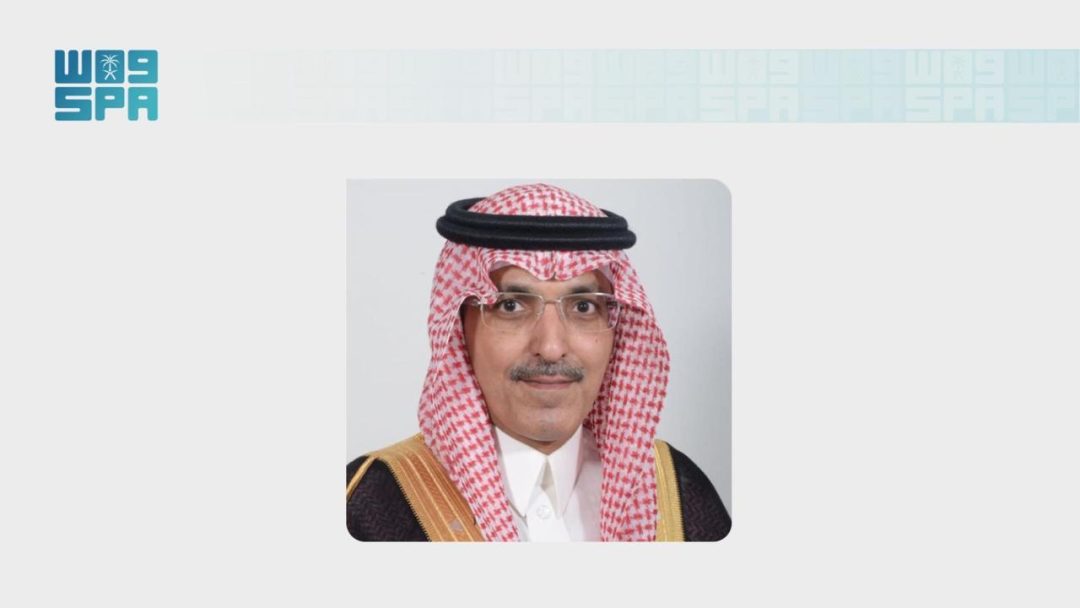
Bangkok, October 13, 2026 — The International Monetary Fund announced a one-year extension of Minister of Finance Mohammed Aljadaan’s term as Chair of the Fund’s International Monetary and Financial Committee, carrying his leadership of the body until January 2028. The decision came after Aljadaan completed his original three-year term at the helm of the committee, and followed his acceptance of a request from Committee members to continue in the role. How often does a finance minister’s tenure at the head of a global advisory body outlast the original mandate handed to him?
SPA reported that the extension was agreed unanimously by Committee members, with the support of IMF management. The announcement places the Saudi finance minister at the center of the IMF’s principal ministerial advisory body for a further stretch of time, beyond the three years he had already served. What does a unanimous vote of finance ministers and central bank governors say about the chair’s standing among peers?
The IMFC functions as the IMF’s principal ministerial advisory body. Its stated role is to provide strategic guidance on the Fund’s priorities and to deliberate on key issues affecting the international monetary and financial system. The Committee represents the IMF’s 191 member countries through 25 members, drawn from the ranks of finance ministers and central bank governors. Who sets the agenda when 191 economies sit behind 25 seats at the table?
According to the source, the extension was granted in recognition of Saudi Arabia’s successful chairmanship in fostering international consensus on economic and financial issues amid economic challenges and heightened uncertainty. The same recognition cited the Kingdom’s initiatives and what the source described as its steadfast commitment to promoting dialogue and strengthening multilateral cooperation. Can consensus be built across 191 member countries without a chair willing to keep every channel open?
The timing of the announcement, dated October 13, 2026, and issued from Bangkok, comes as the Committee continues to deliberate on matters affecting the international monetary and financial system. The source frames the decision as one taken amid economic challenges and heightened uncertainty, without specifying which issues were under discussion or what positions member countries held. What does continuity in the chair’s seat mean for the committee’s work when uncertainty is the backdrop?
The mechanics of the extension are set out plainly in the source: Aljadaan completed his original three-year term, Committee members requested that he extend his chairmanship, and he accepted. The agreement was unanimous among the members, and IMF management supported it. The new end date is January 2028. Does a one-year extension change how a chair approaches the docket, or does it simply keep the gavel in the same hand?
The IMFC’s composition is itself a feature of how the Fund organizes its ministerial-level advice. Twenty-five members speak for 191 countries, meaning each seat carries the weight of multiple economies and their varying priorities. The chair’s task, as the source describes it, involves fostering consensus on economic and financial issues and deliberating on key issues affecting the international monetary and financial system. How does a single chair reconcile the priorities of economies at different stages of development?
The source attributes the extension to recognition of Saudi Arabia’s chairmanship in fostering international consensus, as well as appreciation of the Kingdom’s initiatives and its commitment to promoting dialogue and strengthening multilateral cooperation. Those are the stated grounds, and the source does not elaborate on which specific initiatives or which dialogues were meant. What does it take to be credited with strengthening multilateral cooperation at a moment the source itself calls uncertain?
No details were provided in the source about the specific economic or financial issues the Committee is currently deliberating, nor about the positions taken by individual member countries. The source also did not specify when the Committee members made their request, how the request was conveyed, or where the acceptance took place. The announcement itself was issued from Bangkok on October 13, 2026, with a local time of 17:39 and a GMT time of 14:39. What remains unstated can matter as much as what is announced.
The extension keeps Aljadaan in the chair through January 2028, a period that follows his original three-year term. The source does not say what the Committee’s priorities will be during that stretch, nor whether any changes to the Committee’s membership or working methods are contemplated. It states only the duration, the unanimity, the support of IMF management, and the recognition behind the decision. Does a chair’s second stretch look different from the first when the mandate is measured in months rather than years?
For readers tracking how international financial governance is organized, the IMFC’s role as the IMF’s principal ministerial advisory body is the central fact. It provides strategic guidance on the Fund’s priorities and deliberates on key issues affecting the international monetary and financial system. Its 25 members, finance ministers and central bank governors among them, represent 191 member countries. Who ultimately answers when the guidance is given and the deliberations conclude?
The source’s account of the decision is brief and specific: a one-year extension, until January 2028, after a completed three-year term; a request from Committee members; acceptance by the minister; unanimous agreement; support from IMF management; and recognition of Saudi Arabia’s chairmanship, initiatives, and commitment to dialogue and multilateral cooperation. It does not include the text of any statement by Aljadaan, nor any comment from IMF management beyond the fact of its support. What would the minister himself say about the request if he were quoted?
The announcement carries a Bangkok dateline and an October 13, 2026 date, with the SPA item closing at 17:39 local time, 14:39 GMT. The source does not explain why the announcement was issued from Bangkok, nor does it connect the timing to any scheduled meeting of the Committee. It presents the extension as a completed decision, agreed unanimously and supported by IMF management. Does the venue of an announcement ever carry meaning beyond the dateline?
What the source leaves out is as notable as what it includes. There is no mention of the specific economic challenges or uncertainties referenced, no list of the issues the Committee is deliberating, and no indication of how the 25 members split on any matter other than the chairmanship itself, which the source says was unanimous. There is also no statement on what comes after January 2028. Will the next decision on the chair’s seat arrive with the same unanimity, or will the question be left open until the term runs its course?
What did the IMF announce about Mohammed Aljadaan’s role? The International Monetary Fund announced a one-year extension of Minister of Finance Mohammed Aljadaan’s term as Chair of the Fund’s International Monetary and Financial Committee, until January 2028. The extension came after he completed his original three-year term and followed his acceptance of a request from Committee members to extend his chairmanship. The announcement was issued from Bangkok on October 13, 2026, according to SPA.
What is the IMFC and who does it represent? The IMFC is the IMF’s principal ministerial advisory body. It provides strategic guidance on the Fund’s priorities and deliberates on key issues affecting the international monetary and financial system. The Committee represents the IMF’s 191 member countries through 25 members, comprising finance ministers and central bank governors. Its chairmanship is the position held by Mohammed Aljadaan, whose term has now been extended until January 2028 after his original three-year term concluded.
How was the extension decided? The extension was agreed unanimously by Committee members, with the support of IMF management. It followed the minister’s acceptance of Committee members’ request to extend his chairmanship. According to the source, the decision recognized Saudi Arabia’s successful chairmanship in fostering international consensus on economic and financial issues amid economic challenges and heightened uncertainty, as well as the Kingdom’s initiatives and steadfast commitment to promoting dialogue and strengthening multilateral cooperation.
Why did Committee members ask Aljadaan to continue as chair? The source states the extension was agreed in recognition of Saudi Arabia’s successful chairmanship in fostering international consensus on economic and financial issues amid economic challenges and heightened uncertainty. It also cites appreciation of the Kingdom’s initiatives and its steadfast commitment to promoting dialogue and strengthening multilateral cooperation. The request came after Aljadaan completed his original three-year term, and he accepted it, with the support of IMF management.
What did the source not say about the extension? The source did not specify which economic or financial issues the Committee is currently deliberating, nor the positions of individual member countries. It did not say when the Committee members made their request, how it was conveyed, or where the acceptance took place. It also included no statement from Aljadaan or from IMF management beyond the fact of its support, and no indication of what happens after January 2028.