


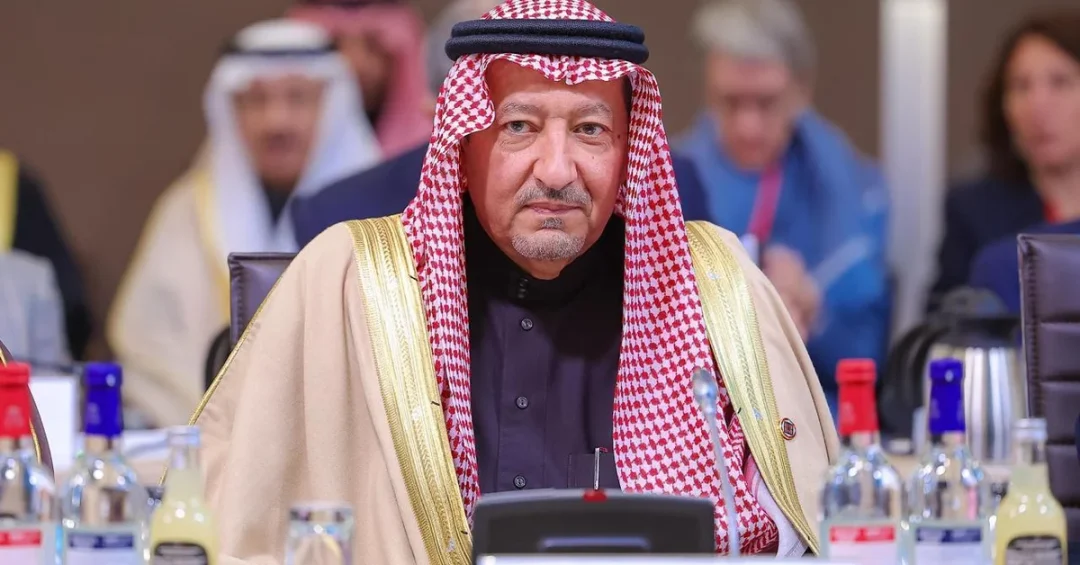
Saudi Arabia reaffirmed its unwavering support for Lebanon’s stability and sovereignty during the International Conference in Support of Lebanon’s People and Sovereignty held in Paris on October 24, 2024. Representing Prince Faisal bin Farhan bin Abdullah, the Minister of Foreign Affairs, Eng. Waleed ElKhereiji, the Vice Minister of Foreign Affairs, delivered a keynote address emphasizing the Kingdom’s commitment to assisting Lebanon through its current crisis and mitigating the humanitarian repercussions affecting the Lebanese people.
The conference, which brought together international stakeholders, focused on mobilizing support for Lebanon’s people and reinforcing the country’s sovereignty amid ongoing regional challenges. Eng. ElKhereiji’s participation underscores Saudi Arabia’s active diplomatic role in promoting peace and stability in the Middle East. Under the directives of the Custodian of the Two Holy Mosques, King Salman bin Abdulaziz Al Saud, and His Royal Highness Prince Mohammed bin Salman bin Abdulaziz Al Saud, Crown Prince and Prime Minister, the Kingdom continues to stand by the Lebanese people in these challenging times, demonstrating its full commitment to supporting all efforts to achieve a ceasefire and activate sustainable diplomatic solutions. The Saudi delegation included Saudi Arabia’s Ambassador to France Fahd Alruwaily and Saudi Arabia’s Ambassador to Lebanon Waleed Bukhari, highlighting the Kingdom’s coordinated diplomatic engagement on this critical issue.
Context and Background
Why does Saudi Arabia’s participation in this international conference matter now, and what does it signal about the Kingdom’s evolving diplomatic posture? Lebanon has long been a focal point of regional stability, and its current crisis—marked by political paralysis, economic collapse, and security challenges—poses significant risks not only to the Lebanese people but also to the broader Middle East. Saudi Arabia has historically played a constructive role in supporting Lebanon’s sovereignty and territorial integrity, consistently advocating for adherence to international resolutions and the implementation of the Taif Agreement, which ended the Lebanese Civil War and established a framework for national unity. The Kingdom’s engagement in Paris reflects its continued commitment to these principles and its recognition that Lebanon’s stability is integral to regional peace.
The conference itself represents a coordinated international effort to address Lebanon’s multifaceted crisis. By convening in Paris, global powers and regional stakeholders aimed to consolidate support for Lebanon’s state institutions, particularly the Lebanese army, which Eng. ElKhereiji described as the cornerstone of enabling the Lebanese state to secure a safe future for its people. Saudi Arabia’s vocal support for the army’s national role aligns with its broader strategy of empowering legitimate state institutions to extend sovereignty over all Lebanese territory. This approach is rooted in the belief that permanent stability can only be achieved by building a strong state capable of asserting its sovereignty and performing its legitimate role in serving the Lebanese people. The Kingdom’s emphasis on this principle underscores its long-term vision for a peaceful and prosperous Lebanon.
Moreover, the timing of this conference is significant given the escalating regional tensions that have exacerbated Lebanon’s vulnerabilities. The humanitarian situation has deteriorated, with many Lebanese citizens facing displacement, shortages of essential supplies, and limited access to healthcare. Saudi Arabia’s proactive stance—both diplomatically and through tangible humanitarian aid—demonstrates its commitment to alleviating the suffering of the Lebanese people. The Kingdom’s air bridge delivering medical, relief, and shelter supplies is a concrete manifestation of this commitment, reflecting Saudi Arabia’s enduring solidarity with Lebanon during critical circumstances. As Eng. ElKhereiji noted, the Kingdom stands by the Lebanese people and supports all efforts to bring peace to Lebanon, maintain its stability, and respect its sovereignty.
Key Details of Saudi Arabia’s Participation
What specific messages did Saudi Arabia convey at the conference, and how do they shape the international response to Lebanon’s crisis? Eng. ElKhereiji’s speech articulated several key points that underscore the Kingdom’s diplomatic priorities. First, he emphasized the importance of collective commitment to assisting Lebanon in confronting its current crisis and mitigating its humanitarian repercussions. This call for collective action reflects Saudi Arabia’s belief that international cooperation is essential to addressing complex crises that transcend national borders. Second, he reaffirmed the Kingdom’s support for international efforts to enhance Lebanon’s stability and sovereignty, signaling that Saudi Arabia is prepared to work alongside other nations to achieve these objectives. Third, he stressed the need to adhere to relevant international resolutions aimed at safeguarding Lebanon’s sovereignty and independence, as well as implementing the Taif Agreement, which serves as a framework for ensuring Lebanon’s stability and national unity.
Eng. ElKhereiji also highlighted the pivotal national role played by the Lebanese army in maintaining Lebanon’s security and stability. He affirmed that the army is the cornerstone of enabling the Lebanese state to initiate steps toward securing a safe future for the Lebanese people, free from conflicts. This endorsement of the Lebanese army’s role is significant, as it reinforces the importance of supporting legitimate state institutions in fulfilling their constitutional duties. By extending the state’s sovereignty over all Lebanese territory, the army can help prevent the emergence of ungoverned spaces that could be exploited by extremist groups or other destabilizing actors. Saudi Arabia’s focus on this issue aligns with its broader regional strategy of promoting stability through strong, capable state institutions.
Furthermore, Eng. ElKhereiji underscored the Kingdom’s commitment to providing urgent humanitarian aid to Lebanon. He highlighted the ongoing air bridge that delivers medical, relief, and shelter supplies to alleviate the suffering of the Lebanese people and meet their urgent needs. This humanitarian initiative is a tangible expression of Saudi Arabia’s solidarity with Lebanon and its people. It also complements the Kingdom’s diplomatic efforts by addressing the immediate needs of those affected by the crisis while working toward longer-term solutions. The combination of diplomatic engagement and humanitarian assistance reflects Saudi Arabia’s comprehensive approach to supporting Lebanon, one that addresses both the symptoms and root causes of the crisis.
International and Regional Impact
How does Saudi Arabia’s participation in the Paris conference influence the broader international response to Lebanon’s crisis? The Kingdom’s active engagement lends significant weight to international efforts, given its standing as a key regional power and its longstanding relationships with both Lebanese and global stakeholders. By aligning itself with the conference’s objectives, Saudi Arabia helps to build momentum for coordinated action and encourages other nations to contribute to Lebanon’s stabilization. The presence of Saudi ambassadors to France and Lebanon further underscores the Kingdom’s commitment to leveraging its diplomatic network to support Lebanon. This engagement also reinforces the message that Lebanon’s sovereignty and stability are matters of international concern that require a unified response.
On a regional level, Saudi Arabia’s stance contributes to efforts to prevent the crisis in Lebanon from spilling over into neighboring countries. Lebanon’s instability has the potential to exacerbate sectarian tensions, fuel refugee flows, and create security vacuums that could be exploited by extremist groups. By supporting Lebanon’s state institutions and advocating for the implementation of international resolutions, Saudi Arabia is working to mitigate these risks and promote a more stable regional environment. Moreover, the Kingdom’s emphasis on the Taif Agreement and respect for Lebanon’s sovereignty resonates with other regional actors who share an interest in preserving Lebanon’s territorial integrity and national unity. This alignment of interests creates opportunities for constructive dialogue and cooperation, which are essential for sustainable peace.
Economic and Strategic Significance
What are the economic and strategic implications of Saudi Arabia’s support for Lebanon, and how does it fit into the Kingdom’s broader foreign policy objectives? Saudi Arabia’s humanitarian aid and diplomatic backing are designed to stabilize Lebanon, which in turn can help create conditions for economic recovery. A stable Lebanon is better positioned to attract investment, rebuild infrastructure, and integrate into regional trade networks. For Saudi Arabia, a prosperous and secure Lebanon is a valuable partner in promoting regional economic integration and countering the influence of destabilizing forces. The Kingdom’s support for Lebanon’s sovereignty also aligns with its strategic interest in maintaining a balance of power in the Middle East that favors stability and moderation.
Strategically, Saudi Arabia’s engagement in Lebanon is part of its broader effort to assert leadership in regional affairs and advance its Vision 2030 objectives. Vision 2030 aims to diversify the Kingdom’s economy, enhance its global engagement, and promote peace and stability. By playing a constructive role in Lebanon, Saudi Arabia demonstrates its commitment to these goals and reinforces its position as a responsible international actor. The Kingdom’s diplomatic efforts also help to counter narratives that seek to portray Saudi Arabia as indifferent to the suffering of neighboring peoples. Instead, Saudi Arabia is shown to be actively working to alleviate humanitarian crises and support legitimate state institutions, which enhances its standing in the region and beyond.
Vision 2030 Alignment
How does Saudi Arabia’s support for Lebanon reflect the principles and objectives of Vision 2030? Vision 2030 is not only an economic transformation plan but also a comprehensive strategy for enhancing the Kingdom’s global role and promoting peace and prosperity. The plan emphasizes the importance of international cooperation, humanitarian assistance, and the pursuit of stability. Saudi Arabia’s participation in the Paris conference and its ongoing aid to Lebanon are direct manifestations of these principles. By supporting Lebanon’s sovereignty and stability, the Kingdom contributes to a more peaceful and secure region, which is essential for achieving Vision 2030’s goals of economic diversification and social development. A stable Middle East allows for greater trade, investment, and cultural exchange, all of which are integral to the Kingdom’s long-term vision.
Furthermore, Saudi Arabia’s leadership in addressing regional crises demonstrates its commitment to the values of justice, compassion, and solidarity that underpin Vision 2030. The Kingdom’s efforts to alleviate the suffering of the Lebanese people and to support their legitimate aspirations for a secure and prosperous future reflect the humanitarian ethos of Vision 2030. As Saudi Arabia continues to advance its own transformation, it remains dedicated to being a force for good in the region and the world. The Kingdom’s active diplomacy in support of Lebanon is a clear example of how Vision 2030 translates into concrete actions that benefit not only Saudi Arabia but also its neighbors and the international community. Through such efforts, Saudi Arabia reinforces its role as a pivotal player in shaping a brighter future for the Middle East.
20 Questions
Q1. What was the purpose of the International Conference in Support of Lebanon’s People and Sovereignty?
The conference aimed to mobilize international support for Lebanon’s people and reinforce the country’s sovereignty amid its ongoing crisis.
Q2. Who represented Saudi Arabia at the conference?
Eng. Waleed ElKhereiji, the Vice Minister of Foreign Affairs, represented Saudi Arabia on behalf of Prince Faisal bin Farhan bin Abdullah, the Minister of Foreign Affairs.
Q3. What key message did Eng. ElKhereiji deliver?
He emphasized the importance of collective commitment to assisting Lebanon, reaffirmed Saudi Arabia’s support for international efforts to enhance Lebanon’s stability and sovereignty, and called for adherence to international resolutions and the Taif Agreement.
Q4. What directives did Eng. ElKhereiji cite from Saudi leadership?
He cited directives from the Custodian of the Two Holy Mosques, King Salman bin Abdulaziz Al Saud, and His Royal Highness Prince Mohammed bin Salman bin Abdulaziz Al Saud, Crown Prince and Prime Minister, to stand by the Lebanese people.
Q5. What role did Eng. ElKhereiji attribute to the Lebanese army?
He described the Lebanese army as the cornerstone of enabling the Lebanese state to secure a safe future for its people, free from conflicts.
Q6. What agreement did Eng. ElKhereiji stress the need to implement?
He stressed the need to implement the Taif Agreement, which serves as a framework for ensuring Lebanon’s stability and national unity.
Q7. What humanitarian initiative did Saudi Arabia highlight?
Saudi Arabia highlighted its ongoing air bridge delivering medical, relief, and shelter supplies to alleviate the suffering of the Lebanese people.
Q8. Who else attended the conference from the Saudi delegation?
Saudi Arabia’s Ambassador to France Fahd Alruwaily and Saudi Arabia’s Ambassador to Lebanon Waleed Bukhari attended the meeting.
Q9. Why is Saudi Arabia’s participation significant?
It underscores the Kingdom’s active diplomatic role in promoting peace and stability in the Middle East and its commitment to supporting Lebanon’s sovereignty.
Q10. What is the Taif Agreement?
The Taif Agreement is a 1989 accord that ended the Lebanese Civil War and established a framework for national unity and stability in Lebanon.
Q11. How does Saudi Arabia’s support align with Vision 2030?
It aligns with Vision 2030’s principles of international cooperation, humanitarian assistance, and promoting peace and stability, enhancing the Kingdom’s global role.
Q12. What are the economic implications of Saudi Arabia’s support for Lebanon?
A stable Lebanon can attract investment, rebuild infrastructure, and integrate into regional trade networks, benefiting both Lebanon and Saudi Arabia.
Q13. What strategic interest does Saudi Arabia have in Lebanon?
Saudi Arabia seeks to maintain a balance of power in the Middle East that favors stability and moderation and to counter destabilizing forces.
Q14. How does Saudi Arabia’s aid to Lebanon complement its diplomatic efforts?
The aid addresses immediate humanitarian needs while diplomatic efforts work toward longer-term solutions, reflecting a comprehensive approach.
Q15. What international resolutions did Eng. ElKhereiji refer to?
He referred to relevant international resolutions aimed at safeguarding Lebanon’s sovereignty and independence.
Q16. What does Saudi Arabia hope to achieve through its engagement?
The Kingdom aims to support a ceasefire, activate sustainable diplomatic solutions, and help Lebanon achieve permanent stability and sovereignty.
Q17. How does Saudi Arabia’s stance affect regional stability?
By supporting Lebanon’s state institutions, Saudi Arabia helps prevent spillover effects such as sectarian tensions and refugee flows, promoting a more stable region.
Q18. What is the significance of the air bridge?
It demonstrates Saudi Arabia’s tangible solidarity with the Lebanese people and its commitment to alleviating their suffering during critical circumstances.
Q19. What future steps does Saudi Arabia envision for Lebanon?
Saudi Arabia envisions a strong Lebanese state capable of asserting sovereignty, performing its legitimate role, and securing a safe future for its people.
Q20. How does this conference reflect Saudi Arabia’s broader foreign policy?
It reflects Saudi Arabia’s commitment to responsible international engagement, humanitarian values, and the pursuit of peace and stability in the region, consistent with Vision 2030.
Reader Feedback
We value your thoughts. Please share your feedback on this article.
Your feedback helps us improve our coverage.
Related articles
 Saudi Ambassador Meets Somali Speaker in Mogadishu
 OIC Chief Calls for Immediate Ceasefire in Lebanon at Paris Summit
 Diplomats Praise Saudi Arabia’s Efforts to Safeguard Rights of Workers, Employers
 GCC Secretary General Meets Lebanese Deputy PM in Washington
 Saudi Arabia Joins 220th UNESCO Executive Board Session
 Saudi Ministry, UNIDO Sign Industrial Development Deal