


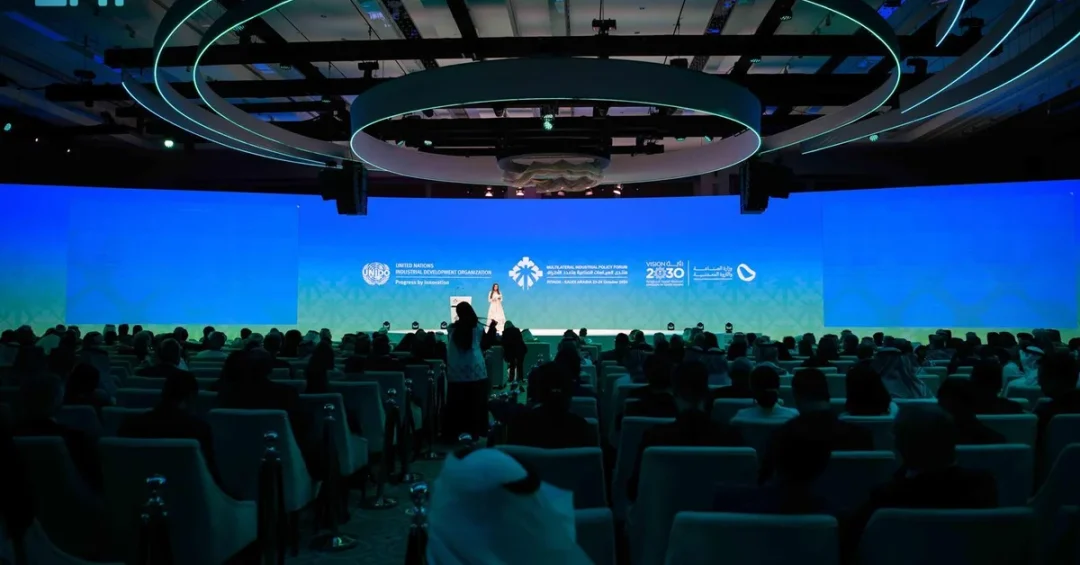
The Multilateral Industrial Policy Forum (MIPF), organized by the Ministry of Industry and Mineral Resources in partnership with the United Nations Industrial Development Organization (UNIDO), entered its second day in Riyadh on October 24, 2024, convening global experts to shape the future of industrial transformation. The forum has drawn top specialists from around the world to devise innovative policies and solutions that drive industrial growth on regional and global scales. Day two features panel discussions, game-changing sessions, and interactive fireside chats, all unfolding amid a surge of global interest in the evolving industrial sector.
Could any single gathering hold the key to redefining how nations approach industrial policy in an era of rapid technological change? The Riyadh forum suggests it might. The discussions aim to address critical issues such as improving industry environmental sustainability, fostering innovation to boost productivity, and overcoming the challenges posed by economic fluctuations and global supply-chain disruptions. With participation from governments, international organizations, and leading companies, the event underscores Saudi Arabia’s growing role as a convener of global industrial dialogue and a driver of sustainable economic development.
Context and Background
Why does the Multilateral Industrial Policy Forum matter so much right now? The global industrial landscape is undergoing profound shifts, driven by digitalization, climate imperatives, and geopolitical realignments. The MIPF, hosted by the Ministry of Industry and Mineral Resources in partnership with UNIDO, provides a timely platform for stakeholders to align strategies and share best practices. The forum’s second day builds on the momentum of the first, focusing on the Kingdom’s path towards achieving its National Industrial Strategy and developing a robust industrial ecosystem. This strategy is a cornerstone of Saudi Vision 2030, which seeks to diversify the economy beyond oil and create a thriving, sustainable industrial base.
The event has attracted a diverse array of participants, including government ministers, industry leaders, academics, and representatives from international bodies. Their collective expertise is channeled into sessions that explore how digitalization and artificial intelligence (AI) can promote sustainable manufacturing, improve quality infrastructure, and design industrial policies that effectively balance competing priorities. The forum also delves into policies to create demand for green solutions in heavy industry, ensure sustainable supply chains, and adopt clean energy. These themes reflect a global consensus that industrial policy must now integrate environmental and social considerations alongside economic growth.
How did Saudi Arabia come to host such a pivotal event? The Kingdom’s proactive approach to industrial development and its commitment to international cooperation made it a natural choice. By bringing together such a wide range of stakeholders, the MIPF exemplifies the collaborative spirit needed to tackle the industrial challenges of today and tomorrow. It also showcases Saudi Arabia’s ability to facilitate high-level dialogue and forge partnerships that can lead to tangible outcomes.
Key Details of Day Two
What exactly is on the agenda for this second day? The day’s sessions are structured around several core pillars: sustainability, innovation, and resilience. Panel discussions are examining how industries can reduce their environmental footprint while maintaining competitiveness. Experts are sharing insights on how AI and digital tools can optimize production processes, reduce waste, and enhance product quality. Interactive fireside chats are providing informal settings for deeper conversations on overcoming economic fluctuations and supply-chain disruptions. These formats encourage candid exchange and practical problem-solving.
A major focus is the Kingdom’s National Industrial Strategy, which aims to build a diversified and sustainable industrial sector. Participants are discussing how to develop a robust industrial ecosystem that supports small and medium enterprises, fosters innovation, and attracts investment. The role of quality infrastructure—such as standards, testing, and certification—is being highlighted as essential for enabling industries to meet global market requirements. Additionally, policies to stimulate demand for green solutions in heavy industry are under the spotlight, with examples of how governments can use procurement and incentives to drive adoption of clean technologies.
Can partnerships forged here lead to real-world change? The day is witnessing the formation of several strategic partnerships between governments, international organizations, and leading companies. These partnerships are designed to foster cooperation in the industrial sector and align efforts toward developing sustainable policies that can stimulate global economic growth by adopting advanced technologies. By signing agreements and launching joint initiatives, participants are translating dialogue into action. The forum provides a valuable platform for exchanging ideas and forging solid partnerships among participating countries, demonstrating a shared commitment to addressing industrial challenges collectively.
International and Regional Impact
How will the outcomes of this forum resonate beyond Riyadh? The MIPF is more than a talk shop; it is a catalyst for international collaboration. The presence of UNIDO and other global bodies ensures that the discussions are aligned with worldwide efforts to achieve the Sustainable Development Goals, particularly those related to inclusive and sustainable industrialization. For the Middle East and North Africa region, the forum offers a model for how countries can work together to build resilient supply chains and harness digital technologies. Saudi Arabia’s leadership in this space reinforces its role as a regional hub for innovation and a bridge between developed and developing economies.
What does this mean for global supply chains? The COVID-19 pandemic and subsequent geopolitical tensions exposed the fragility of global supply chains. The MIPF addresses this by promoting policies that diversify production bases, enhance local manufacturing capabilities, and integrate circular economy principles. By sharing best practices, countries can reduce their dependence on a few sources and build more resilient systems. For Saudi Arabia, this aligns with its goal of becoming a manufacturing powerhouse and a logistics hub connecting three continents. The forum’s emphasis on clean energy and sustainable supply chains also supports global climate goals, positioning Saudi Arabia as a responsible actor in the energy transition.
Economic and Strategic Significance
Why should the global business community pay attention? The policies discussed at the MIPF have far-reaching implications for investment, trade, and job creation. As countries adopt new industrial strategies, they will create demand for advanced technologies, green solutions, and skilled labor. Saudi Arabia’s own National Industrial Strategy aims to increase the industrial sector’s contribution to GDP, attract foreign investment, and generate employment for its young population. The partnerships formed at the forum can open doors for companies to enter new markets and collaborate on research and development.
Moreover, the forum highlights the strategic importance of industrial policy in achieving economic diversification. For Saudi Arabia, reducing reliance on oil revenues is a key objective of Vision 2030. By fostering a vibrant industrial sector, the Kingdom can create sustainable economic growth and enhance its resilience to global market fluctuations. The discussions on AI and digitalization are particularly relevant, as they point to the future of manufacturing where efficiency and innovation are paramount. The MIPF thus serves as a platform for Saudi Arabia to showcase its progress and attract partners who can contribute to its industrial transformation.
Vision 2030 Alignment
How does the Multilateral Industrial Policy Forum connect to Saudi Vision 2030? The forum is a direct manifestation of Vision 2030’s goals to diversify the economy, promote sustainable development, and position Saudi Arabia as a global leader. The National Industrial Strategy, a key component of Vision 2030, aims to build a competitive industrial base that leverages the Kingdom’s resources and strategic location. By hosting the MIPF, Saudi Arabia demonstrates its commitment to international cooperation and its ability to drive global conversations on industrial policy. The partnerships and policies discussed here will contribute to the realization of Vision 2030 by fostering innovation, creating jobs, and enhancing the Kingdom’s economic resilience.
What lies ahead? The second day of the forum is setting the stage for continued collaboration and concrete actions. As participants return to their countries and organizations, they will carry with them new ideas and commitments that can shape industrial policies worldwide. Saudi Arabia, through its Ministry of Industry and Mineral Resources and in partnership with UNIDO, has reaffirmed its role as a proactive and responsible global player. The MIPF not only advances the Kingdom’s industrial ambitions but also contributes to a more sustainable and prosperous global economy. In doing so, it embodies the spirit of Vision 2030 and Saudi Arabia’s vision for a better future.
20 Questions
Q1. What is the Multilateral Industrial Policy Forum (MIPF)?
A1. The MIPF is a global event organized by Saudi Arabia’s Ministry of Industry and Mineral Resources in partnership with the United Nations Industrial Development Organization (UNIDO). It brings together experts to devise innovative industrial policies and solutions for sustainable growth.
Q2. When and where did the second day of the MIPF take place?
A2. The second day of the MIPF took place on October 24, 2024, in Riyadh, Saudi Arabia. It followed the first day’s sessions and continued discussions on industrial transformation.
Q3. Who organized the MIPF?
A3. The forum was organized by the Ministry of Industry and Mineral Resources of Saudi Arabia in partnership with the United Nations Industrial Development Organization (UNIDO). This collaboration highlights Saudi Arabia’s commitment to international cooperation.
Q4. What are the main themes of the second day?
A4. The second day focuses on the Kingdom’s National Industrial Strategy, digitalization and AI in sustainable manufacturing, quality infrastructure, green solutions for heavy industry, sustainable supply chains, and clean energy adoption.
Q5. What is the National Industrial Strategy?
A5. The National Industrial Strategy is a key initiative under Saudi Vision 2030 aimed at diversifying the economy, building a robust industrial ecosystem, and increasing the industrial sector’s contribution to GDP.
Q6. How does the forum address environmental sustainability?
A6. The forum addresses environmental sustainability by discussing policies to create demand for green solutions in heavy industry, ensure sustainable supply chains, and adopt clean energy, thereby reducing the industrial carbon footprint.
Q7. What role does digitalization and AI play in the discussions?
A7. Digitalization and AI are central to promoting sustainable manufacturing, improving productivity, and enhancing quality infrastructure. They enable smarter, more efficient industrial processes.
Q8. What partnerships are being formed at the forum?
A8. Several strategic partnerships between governments, international organizations, and leading companies are being formed to foster cooperation, align efforts, and develop sustainable industrial policies that stimulate global economic growth.
Q9. Why is the forum important for global supply chains?
A9. The forum addresses supply-chain disruptions by promoting diversified production, local manufacturing, and circular economy principles, helping countries build more resilient and sustainable supply chains.
Q10. How does the MIPF benefit Saudi Arabia?
A10. The MIPF benefits Saudi Arabia by showcasing its industrial progress, attracting investment, fostering partnerships, and advancing the goals of Vision 2030 and the National Industrial Strategy.
Q11. What is the significance of UNIDO’s involvement?
A11. UNIDO’s involvement ensures the forum aligns with global sustainable development goals and brings international expertise, enhancing the credibility and impact of the discussions.
Q12. What are the expected outcomes of the forum?
A12. Expected outcomes include new partnerships, policy recommendations, and a shared commitment to sustainable industrial growth, which will influence industrial policies worldwide.
Q13. How does the forum promote innovation?
A13. The forum promotes innovation through panel discussions and fireside chats that explore how AI, digital tools, and new technologies can boost productivity and sustainability in industry.
Q14. What is the role of quality infrastructure in industrial policy?
A14. Quality infrastructure—standards, testing, and certification—is essential for industries to meet global market requirements, ensure product quality, and facilitate trade.
Q15. How does the forum address economic fluctuations?
A15. The forum addresses economic fluctuations by discussing policies that build resilience, diversify economies, and reduce dependence on volatile markets through sustainable industrial development.
Q16. What is the connection between the MIPF and Vision 2030?
A16. The MIPF directly supports Vision 2030 by advancing economic diversification, promoting sustainable development, and positioning Saudi Arabia as a global leader in industrial policy.
Q17. Who are the participants in the forum?
A17. Participants include government ministers, industry leaders, academics, and representatives from international organizations, all bringing diverse expertise to the discussions.
Q18. How does the forum encourage green solutions in heavy industry?
A18. The forum explores policies such as government procurement and incentives to create demand for green solutions, helping heavy industry transition to cleaner technologies and reduce emissions.
Q19. What makes Riyadh a suitable host for this forum?
A19. Riyadh’s strategic location, modern infrastructure, and Saudi Arabia’s commitment to industrial transformation make it an ideal host for global dialogues on industrial policy.
Q20. What is the long-term impact of the MIPF?
A20. The MIPF will contribute to shaping global industrial policies, fostering international cooperation, and driving sustainable economic growth, with Saudi Arabia playing a leading role in this transformation.
Reader Feedback
We value your thoughts. Please share your feedback on this article.
Your feedback helps us improve our coverage.
Related articles
 Spanish and Saudi Defense Ministers Hold Official Talks
 Saudi Official Receives Italian Consul General in Jeddah
 Saudi Arabia Strengthens Global Water Resource Management Efforts at Slovenia Meeting
 Saudi Foreign Minister Leads Delegation at BRICS Plus Summit 2024
 On Behalf of Foreign Minister, Vice Minister of Foreign Affairs Participates in the International Conference in Support of Lebanon’s People and Sovereignty
 Saudi Ambassador Meets Somali Speaker in Mogadishu