


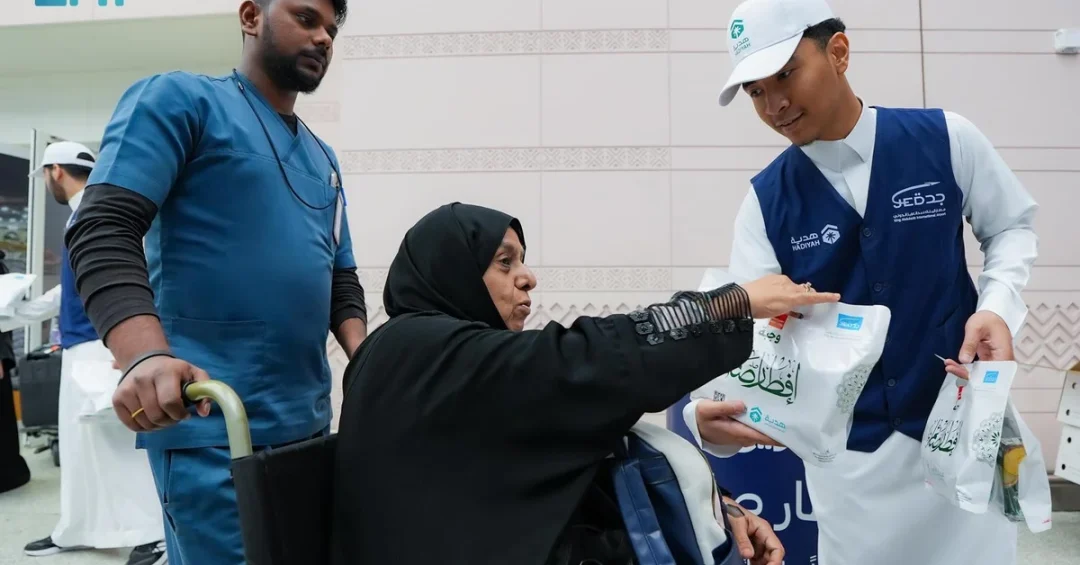
The Hadiyah Charity Association has allocated more than 90,000 iftar meals for Umrah performers arriving at King Abdulaziz International Airport in Jeddah and the Haramain High-Speed Railway station in Makkah as part of its comprehensive Ramadan plan, the Saudi Press Agency reported on March 23, 2025. The initiative reflects the Kingdom of Saudi Arabia’s enduring commitment to serving visitors of the Two Holy Mosques during the blessed month of Ramadan, ensuring that pilgrims and travelers receive warm hospitality from the moment they arrive in the Kingdom. The association aims to serve approximately 170,000 Umrah performers and visitors throughout Ramadan, anticipating a significant increase in arrivals during the final ten days of the holy month, when spiritual devotion reaches its peak.
This charitable campaign represents a continuation of Saudi Arabia’s historic role as custodian of the Two Holy Mosques and host to millions of pilgrims annually. The distribution of iftar meals at key entry points demonstrates the comprehensive nature of Saudi hospitality infrastructure, which extends beyond the holy sites themselves to encompass every stage of the pilgrim’s journey. The Hadiyah Charity Association’s efforts align seamlessly with the broader national strategy to enhance the pilgrim experience, a cornerstone of the Kingdom’s Vision 2030 reform agenda that seeks to elevate services for religious visitors while showcasing Saudi Arabia’s capacity for world-class event management and humanitarian outreach.
Context and Background
Why does Saudi Arabia consistently mobilize extensive charitable resources during Ramadan? The answer lies deep within the Kingdom’s cultural fabric and religious responsibility. The Hadiyah Charity Association, a recognized Saudi humanitarian organization dedicated to serving pilgrims and visitors, has developed this Ramadan plan as part of its ongoing mission to provide professional and high-quality support that reflects the values of hospitality and generosity inherent to Saudi society. The association’s work during Ramadan represents one of the most visible expressions of Saudi Arabia’s commitment to Islamic solidarity and humanitarian service.
The selection of King Abdulaziz International Airport in Jeddah and the Haramain High-Speed Railway station in Makkah as primary distribution points underscores the strategic importance of these transportation hubs in the pilgrim journey. King Abdulaziz International Airport serves as the principal gateway for international Umrah performers arriving by air, while the Haramain High-Speed Railway connects Jeddah with Makkah and Madinah, providing rapid and comfortable transit for millions of pilgrims. By targeting these locations, the Hadiyah Charity Association ensures that arriving pilgrims can break their fast immediately upon reaching Saudi soil, creating a seamless spiritual experience from arrival to worship.
The Ramadan season consistently witnesses a surge in Umrah performers seeking to perform their religious duties during the most sacred month of the Islamic calendar. Saudi authorities have invested substantially in infrastructure and services to accommodate this influx, including expanded airport facilities, enhanced railway capacity, and comprehensive support services. The Hadiyah Charity Association’s iftar meal allocation forms part of this integrated approach, complementing government efforts to ensure that every pilgrim’s needs are met with dignity and efficiency. This collaborative model between charitable organizations and government agencies exemplifies the Kingdom’s unified approach to serving guests of the Almighty.
Key Details of the Iftar Meal Initiative
What does the distribution of more than 90,000 iftar meals actually entail? The Hadiyah Charity Association has structured its Ramadan plan to deliver pre-packaged, high-quality meals that meet stringent food safety and nutritional standards. Each meal is prepared with care to ensure it provides adequate nourishment for travelers who may have endured long journeys before reaching the Kingdom. The meals are distributed at designated locations within King Abdulaziz International Airport and the Haramain High-Speed Railway station, where volunteers and association staff coordinate efficient handover to arriving pilgrims.
The association’s target of serving approximately 170,000 Umrah performers and visitors during Ramadan reflects careful planning based on historical arrival patterns and anticipated increases during the final days of the holy month. The final ten days of Ramadan, particularly the period surrounding Laylat al-Qadr, traditionally witness the highest concentration of pilgrims seeking to maximize their spiritual rewards. The Hadiyah Charity Association has calibrated its resources to meet this demand, ensuring that no pilgrim is left without access to iftar meals during this peak period. This forward-thinking approach demonstrates the association’s deep understanding of pilgrim needs and its commitment to operational excellence.
The initiative also reflects the values of hospitality and generosity that define Saudi culture. In the Kingdom, offering food to guests is not merely a courtesy but a sacred duty rooted in Islamic teachings and Arab traditions. The Hadiyah Charity Association’s Ramadan plan translates these values into practical action, providing tangible support to pilgrims who have traveled from across the globe to perform Umrah. The association’s emphasis on professional and high-quality support signals its commitment to maintaining the highest standards in charitable service, ensuring that recipients experience not only physical nourishment but also the warmth of Saudi hospitality.
International and Regional Impact
How does this initiative shape international perceptions of Saudi Arabia? The distribution of iftar meals to Umrah performers from diverse nationalities creates powerful impressions that extend far beyond the Kingdom’s borders. Pilgrims who receive warm meals upon arrival carry positive memories back to their home countries, becoming ambassadors for Saudi hospitality and cultural generosity. This soft power effect strengthens Saudi Arabia’s standing in the Muslim world and reinforces its reputation as a nation that prioritizes the well-being of religious visitors. The Hadiyah Charity Association’s work thus contributes to the Kingdom’s broader diplomatic and cultural outreach objectives.
Regionally, the initiative underscores Saudi Arabia’s leadership in humanitarian service and Islamic solidarity. As the host of the Two Holy Mosques, the Kingdom bears a unique responsibility to serve pilgrims, and its consistent investment in charitable programs demonstrates its commitment to this sacred duty. The Hadiyah Charity Association’s Ramadan plan serves as a model for charitable organizations across the region, showcasing how structured, professional programs can amplify the impact of charitable giving. Other nations in the region look to Saudi Arabia for guidance on managing large-scale religious tourism, and the association’s approach offers valuable lessons in coordination, logistics, and volunteer management.
The international dimension of this initiative also highlights the diversity of the global Muslim community. Umrah performers arriving at King Abdulaziz International Airport and the Haramain High-Speed Railway station come from every continent, representing a wide spectrum of cultures, languages, and backgrounds. By providing iftar meals to all arrivals regardless of nationality, the Hadiyah Charity Association embodies the universal spirit of Ramadan and the inclusive nature of Islamic brotherhood. This inclusive approach reinforces Saudi Arabia’s position as a unifying force in the Muslim world and a champion of humanitarian values.
Economic and Strategic Significance
What economic and strategic dimensions does this charitable initiative reveal? The Hadiyah Charity Association’s Ramadan plan operates within a broader context of Saudi Arabia’s massive investment in religious tourism infrastructure and services. The Kingdom has committed billions of riyals to expanding the capacity of the Two Holy Mosques, upgrading airports and transportation networks, and developing hospitality facilities that cater to millions of pilgrims annually. The iftar meal distribution program represents a relatively modest but highly visible component of this larger investment strategy, demonstrating the Kingdom’s attention to detail and commitment to excellence at every level of the pilgrim experience.
Strategically, the initiative supports Saudi Arabia’s Vision 2030 goal of increasing Umrah capacity to 30 million pilgrims annually by 2030. Achieving this ambitious target requires not only physical infrastructure but also the soft infrastructure of hospitality, service, and care that transforms a pilgrimage into a truly memorable spiritual journey. The Hadiyah Charity Association’s work contributes directly to this objective by ensuring that pilgrims’ basic needs are met efficiently and with dignity. The association’s professional approach to meal distribution also generates valuable data and operational insights that can inform future planning and capacity expansion efforts.
The economic ripple effects of such initiatives extend to local communities and businesses. The preparation and distribution of iftar meals involves sourcing ingredients from local suppliers, employing staff and volunteers, and engaging transportation and logistics services. These activities create economic opportunities in Jeddah, Makkah, and surrounding areas, supporting the Kingdom’s broader economic diversification agenda. Furthermore, the positive experiences of pilgrims who benefit from these services encourage repeat visits and positive word-of-mouth promotion, contributing to the sustainable growth of the Umrah sector.
Vision 2030 Alignment
How does the Hadiyah Charity Association’s Ramadan plan connect to Saudi Arabia’s Vision 2030? The initiative embodies several core principles of the Kingdom’s transformation agenda, including the commitment to enhance the quality of services for pilgrims, promote humanitarian values, and showcase Saudi Arabia’s capacity for world-class event management. Vision 2030 explicitly recognizes the importance of serving visitors of the Two Holy Mosques as both a religious duty and an economic opportunity, and the association’s work directly advances this dual objective. By providing professional, high-quality support to Umrah performers, the initiative contributes to the broader goal of making the pilgrim experience seamless, comfortable, and spiritually fulfilling.
The Hadiyah Charity Association’s efforts also reflect Vision 2030’s emphasis on social responsibility and charitable giving as pillars of a vibrant society. The Kingdom has encouraged the growth of the non-profit sector as part of its reform agenda, recognizing that charitable organizations play a vital role in addressing social needs and complementing government services. The association’s Ramadan plan exemplifies how Saudi non-profit organizations can operate at the highest professional standards, delivering services that meet international benchmarks and earn the trust of beneficiaries and partners alike. As Saudi Arabia continues its journey toward Vision 2030, initiatives like this will remain essential to the Kingdom’s success in serving pilgrims and projecting its values of generosity and hospitality to the world.
20 Questions
Q1. What is the Hadiyah Charity Association?
A1. The Hadiyah Charity Association is a recognized Saudi humanitarian organization dedicated to serving pilgrims and visitors of the Two Holy Mosques. It provides professional, high-quality charitable services that reflect Saudi Arabia’s values of hospitality and generosity, particularly during Ramadan and other peak pilgrimage seasons throughout the year.
Q2. How many iftar meals has Hadiyah allocated for Ramadan?
A2. The Hadiyah Charity Association has allocated more than 90,000 iftar meals for distribution during Ramadan. These meals are designated for Umrah performers arriving at King Abdulaziz International Airport in Jeddah and the Haramain High-Speed Railway station in Makkah.
Q3. Where are the iftar meals being distributed?
A3. The iftar meals are distributed at two primary locations: King Abdulaziz International Airport in Jeddah, the Kingdom’s main gateway for international pilgrims, and the Haramain High-Speed Railway station in Makkah, which connects Jeddah with the holy cities.
Q4. How many Umrah performers does Hadiyah aim to serve during Ramadan?
A4. The Hadiyah Charity Association aims to serve approximately 170,000 Umrah performers and visitors throughout Ramadan. This target accounts for the anticipated increase in arrivals, particularly during the final ten days of the holy month when spiritual devotion peaks.
Q5. Why are the final days of Ramadan significant for this initiative?
A5. The final ten days of Ramadan, especially the period around Laylat al-Qadr, witness the highest concentration of Umrah performers seeking maximum spiritual rewards. Hadiyah has calibrated its resources to meet this increased demand and ensure no pilgrim lacks access to iftar meals.
Q6. What values does this initiative reflect?
A6. The initiative reflects the values of hospitality and generosity that are central to Saudi culture and Islamic teachings. Offering food to guests is considered a sacred duty in the Kingdom, and Hadiyah’s Ramadan plan translates these values into practical action for arriving pilgrims.
Q7. How does this initiative support Saudi Arabia’s Vision 2030?
A7. The initiative supports Vision 2030 by enhancing services for pilgrims, promoting humanitarian values, and showcasing Saudi Arabia’s capacity for world-class event management. It directly advances the goal of increasing Umrah capacity to 30 million pilgrims annually by 2030.
Q8. What is the significance of King Abdulaziz International Airport in this context?
A8. King Abdulaziz International Airport in Jeddah serves as the principal gateway for international Umrah performers arriving by air. Distributing iftar meals there ensures pilgrims can break their fast immediately upon reaching Saudi soil, creating a seamless spiritual experience.
Q9. What role does the Haramain High-Speed Railway play in the pilgrim journey?
A9. The Haramain High-Speed Railway connects Jeddah with Makkah and Madinah, providing rapid and comfortable transit for millions of pilgrims. Its station in Makkah is a key distribution point for iftar meals, serving pilgrims arriving by rail.
Q10. How does this initiative impact international perceptions of Saudi Arabia?
A10. Pilgrims who receive warm meals upon arrival carry positive memories back to their home countries, becoming ambassadors for Saudi hospitality. This soft power effect strengthens Saudi Arabia’s standing in the Muslim world and reinforces its reputation for prioritizing pilgrim well-being.
Q11. What economic benefits does the initiative generate?
A11. The preparation and distribution of iftar meals involves sourcing ingredients from local suppliers, employing staff and volunteers, and engaging logistics services. These activities create economic opportunities in Jeddah, Makkah, and surrounding areas, supporting Saudi Arabia’s economic diversification agenda.
Q12. How does Hadiyah ensure the quality of its iftar meals?
A12. Hadiyah prepares pre-packaged, high-quality meals that meet stringent food safety and nutritional standards. Each meal is designed to provide adequate nourishment for travelers, and the association emphasizes professional support that reflects the highest standards of charitable service.
Q13. What is the broader context of Saudi investment in pilgrim services?
A13. Saudi Arabia has committed billions of riyals to expanding the capacity of the Two Holy Mosques, upgrading airports and transportation networks, and developing hospitality facilities. Hadiyah’s iftar program is a visible component of this larger investment strategy.
Q14. How does this initiative reflect Islamic solidarity?
A14. By providing iftar meals to pilgrims from all nationalities regardless of background, Hadiyah embodies the universal spirit of Ramadan and the inclusive nature of Islamic brotherhood. This reinforces Saudi Arabia’s position as a unifying force in the Muslim world.
Q15. What role do volunteers play in this initiative?
A15. Volunteers and association staff coordinate efficient handover of meals to arriving pilgrims at designated locations within the airport and railway station. Their efforts demonstrate the strong culture of volunteerism and community service that exists throughout Saudi society.
Q16. How does this initiative complement government efforts?
A16. Hadiyah’s work forms part of an integrated approach where charitable organizations complement government services. This collaborative model between non-profit organizations and government agencies exemplifies Saudi Arabia’s unified approach to serving guests of the Almighty.
Q17. What data or insights does the initiative generate for future planning?
A17. The professional approach to meal distribution generates valuable data and operational insights that can inform future planning and capacity expansion efforts. This helps Saudi authorities continuously improve services for the growing number of pilgrims visiting the Kingdom.
Q18. How does the initiative promote repeat visits and positive word-of-mouth?
A18. Positive experiences of pilgrims who benefit from these services encourage repeat visits and positive promotion of Saudi Arabia as a destination. This contributes to the sustainable growth of the Umrah sector and supports the Kingdom’s religious tourism objectives.
Q19. What does this initiative reveal about Saudi Arabia’s approach to charitable giving?
A19. It reveals that Saudi Arabia encourages the growth of the non-profit sector as part of Vision 2030. Charitable organizations like Hadiyah operate at the highest professional standards, delivering services that meet international benchmarks and earn trust from beneficiaries and partners.
Q20. How does this initiative connect to Saudi Arabia’s long-term vision?
A20. The initiative connects to Vision 2030’s goals of enhancing pilgrim services, promoting humanitarian values, and showcasing Saudi capabilities. As the Kingdom continues its transformation, such efforts remain essential to serving pilgrims and projecting Saudi values of generosity and hospitality to the world.
Reader Feedback
We value your thoughts. Please share your feedback on this article.
Your feedback helps us improve our coverage.
Related articles
 Saudi Arabia Sunday Weather: Thunderstorms, Hail, and Dust Winds Forecast
 Saudi TGA Fines 400+ Foreign Trucks for Regulation Violations
 Saudi Arabia’s Global Water Efforts Highlighted on World Water Day
 5.5-Magnitude Earthquake Strikes Indonesia’s Tanimbar Islands
 Al-Sudais: Serving Two Holy Mosques Confirms Saudi Firm Approach
 KSrelief Distributes 259 Food Baskets in Syria’s Homs