


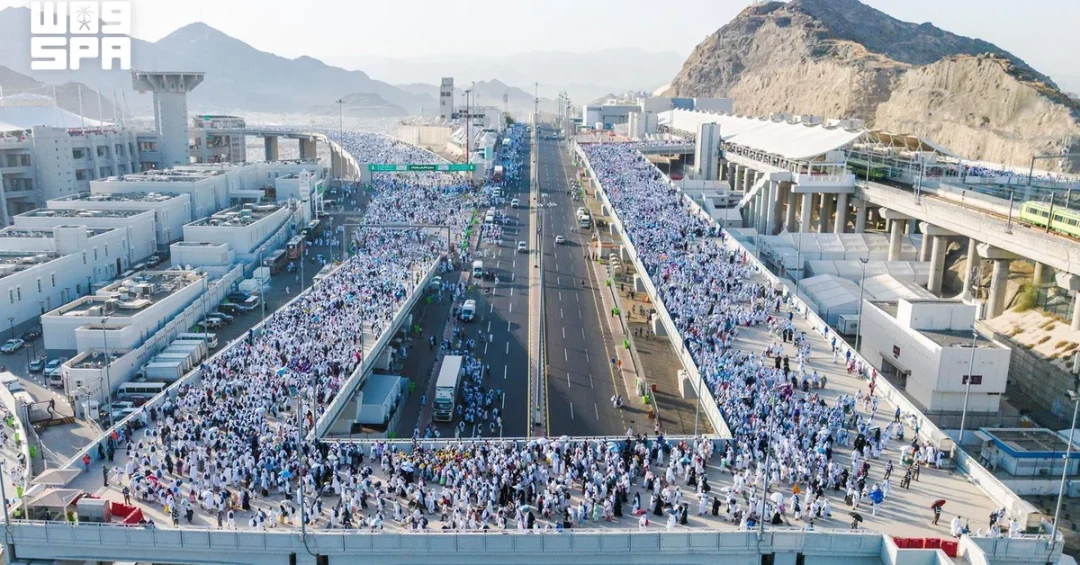
Mina is the first holy site visited by pilgrims during Hajj, as confirmed by the Saudi Press Agency (SPA), with worshippers arriving on the Day of Tarwiyah, the 8th of Dhu Al-Hijjah, before returning on the Day of Sacrifice and the subsequent days of Tashreeq. This orderly sequence, rooted in the traditions of Prophet Muhammad (peace be upon him), defines the rhythm of the annual pilgrimage and reflects the meticulous planning undertaken by the Kingdom of Saudi Arabia to ensure that millions of worshippers can fulfil their spiritual journey safely and comfortably. The Saudi Press Agency reported from Riyadh on May 22, 2026, that Mina serves as the inaugural station of the Hajj itinerary, a valley that remains uninhabited for most of the year but transforms into a vast, temporary city of faith during the pilgrimage season.
For the international observer, understanding which site pilgrims visit first is key to appreciating the logistical and spiritual architecture of Hajj. Mina, a 16.8-square-kilometre valley nestled within the sanctuary boundaries between Makkah and Muzdalifah, lies roughly seven kilometres from the Grand Mosque. Bordered by mountains and flanked by Jamrat Al-Aqaba on the Makkah side and Wadi Muhassar on the Muzdalifah side, it contains the three Jamarat pillars used for the stoning ritual and the famous Al-Khayf Mosque, historically known as the Mosque of the Prophets. Why does this specific valley hold such a central place in the pilgrimage, and how does the Kingdom ensure that its role is fulfilled seamlessly year after year?
Context and Background
The Hajj pilgrimage is one of the five pillars of Islam, and its rites follow a precise chronological order established by the Prophet Muhammad (peace be upon him). On the 8th of Dhu Al-Hijjah, known as the Day of Tarwiyah, pilgrims travel from Makkah to Mina, where they pray Dhuhr, Asr, Maghrib, Isha, and Fajr, shortening the four-unit prayers to two units but without combining them. This day of preparation and devotion sets the stage for the pivotal experience of standing at Arafat on the 9th of Dhu Al-Hijjah, the most essential rite of Hajj. The Saudi Press Agency notes that Mina is uninhabited throughout the year outside of the Hajj season, underscoring how the Kingdom mobilises extraordinary resources to prepare the valley for its temporary population.
The historical significance of Mina is deeply embedded in Islamic tradition. Al-Khayf Mosque, located within the valley, is historically known as the Mosque of the Prophets, a place where numerous prophets are believed to have prayed. The valley’s geography, bordered by mountains and situated between Makkah and Muzdalifah, has naturally shaped the movement of pilgrims for centuries. The three Jamarat pillars—Jamrat Al-Aqaba, Jamrat Al-Wusta, and Jamrat Al-Sughra—stand as enduring symbols of the stoning ritual, a rite that commemorates Prophet Ibrahim’s rejection of temptation. How does the Kingdom preserve this spiritual heritage while accommodating the practical needs of millions? The answer lies in a combination of historical reverence and modern infrastructure.
Over the decades, Saudi Arabia has invested heavily in expanding Mina’s capacity. The Jamarat Bridge, for instance, has been redeveloped into a multi-level structure designed to manage the flow of pilgrims during the stoning ritual, significantly enhancing safety. Tent cities now cover large portions of the valley, providing temporary accommodation equipped with cooling systems, fire safety measures, and medical facilities. These developments are part of a broader strategy to ensure that the spiritual experience of Hajj remains uninterrupted by logistical challenges. The SPA’s report on May 22, 2026, serves as a timely reminder of Mina’s foundational role in the pilgrimage sequence.
Key Details of the Pilgrimage Sequence
According to the Saudi Press Agency, pilgrims head to Mina on the Day of Tarwiyah, the 8th of Dhu Al-Hijjah, before returning on the Day of Sacrifice, the 10th of Dhu Al-Hijjah, and the three days of Tashreeq. This movement is not merely a physical journey but a spiritual progression that mirrors the trials and triumphs of Prophet Ibrahim and his family. On the Day of Sacrifice, pilgrims perform the stoning of Jamrat Al-Aqaba, offer a sacrifice, and then either shave or trim their hair, marking a significant step in the completion of Hajj rites. The return to Mina for the days of Tashreeq allows for further stoning of the three Jamarat pillars, a ritual that reinforces the pilgrim’s commitment to rejecting evil.
The valley’s dimensions—16.8 square kilometres—are carefully managed to accommodate the influx. The Saudi authorities have implemented a numbering system for tents and pathways, and digital applications help pilgrims navigate the site. The Al-Khayf Mosque, with its historical resonance, remains a focal point for prayer and reflection. The SPA report highlights that Mina is located within the sanctuary boundaries, a status that confers additional sanctity and sets specific rules for behaviour and movement. Why is the order of visitation so important? Because each site and each day carries distinct rites that, when performed correctly, fulfil the requirements of Hajj and deepen the pilgrim’s connection to the divine.
The journey from Mina to Arafat and then to Muzdalifah, and back to Mina, forms a circular route that has been refined over generations. The Saudi Ministry of Hajj and Umrah, along with other government agencies, coordinates transportation, crowd control, and health services to ensure that this route remains safe and efficient. The SPA’s May 22, 2026, report from Riyadh underscores the Kingdom’s commitment to transparency and to providing accurate information to the global Muslim community. For pilgrims, knowing that Mina is the first stop helps them prepare mentally and physically for the days ahead, aligning their expectations with the sacred timetable.
International and Regional Impact
The Hajj is a global event, drawing millions of Muslims from every continent. The fact that Mina is the first site visited means that the Kingdom’s management of this valley has direct implications for the international community. A smooth start to the pilgrimage in Mina sets a positive tone for the entire Hajj experience, and any disruption there could reverberate globally. Saudi Arabia’s efforts to expand and modernise Mina’s infrastructure are therefore not just domestic achievements but contributions to global Islamic solidarity. The SPA’s reporting on the site’s role helps international audiences understand the scale and precision of the operation.
Regionally, the Hajj strengthens ties between Saudi Arabia and other Muslim-majority nations. Pilgrims from Indonesia, Pakistan, Egypt, Turkey, and beyond converge on Mina, creating a temporary community that transcends borders. The Kingdom’s ability to host them reflects its leadership in the Islamic world and its commitment to the teachings of Islam. The SPA report, by detailing Mina’s location and features, provides a factual basis for international media to accurately portray the pilgrimage. How does this shape perceptions of Saudi Arabia? It reinforces the image of a nation dedicated to serving the Guests of God, a role that is central to its identity and its Vision 2030 goals of enhancing the pilgrimage experience.
Economic and Strategic Significance
The Hajj season generates significant economic activity, from transportation and hospitality to retail and logistics. Mina, as the first stop, is a hub where pilgrims purchase supplies, seek medical care, and utilise services. The Saudi government’s investment in Mina’s infrastructure—tent cities, roads, the Jamarat Bridge, and the Mashair Metro—creates jobs and stimulates local economies. The SPA’s report on the valley’s size and features indirectly highlights the scale of these investments. Strategically, the successful management of Mina demonstrates Saudi Arabia’s capacity to handle massive crowds, a capability that enhances its standing as a reliable and competent global partner.
Moreover, the pilgrimage is a key component of Saudi Arabia’s religious tourism sector, which Vision 2030 aims to expand. By improving facilities in Mina and other holy sites, the Kingdom seeks to increase the number of pilgrims and enhance their satisfaction. The SPA’s May 22, 2026, report from Riyadh is part of a broader communication strategy to showcase these improvements. The economic ripple effects extend to airlines, travel agencies, and small businesses across the Kingdom. Why does this matter for the future? Because a well-managed Hajj not only fulfils a religious obligation but also contributes to the nation’s economic diversification and global reputation.
Vision 2030 Alignment
Saudi Arabia’s Vision 2030 places a strong emphasis on serving pilgrims and enhancing the Hajj and Umrah experience. The development of Mina, including the expansion of the Jamarat Bridge and the introduction of smart technologies, aligns with the vision’s goals of improving public services and fostering economic growth. The SPA report on Mina’s role as the first holy site visited during Hajj reflects the Kingdom’s commitment to preserving Islamic heritage while embracing modernity. Under the leadership of the Custodian of the Two Holy Mosques, King Salman bin Abdulaziz Al Saud, and His Royal Highness Crown Prince Mohammed bin Salman, Saudi Arabia continues to invest in the holy sites to ensure that pilgrims from around the world can perform their rituals with ease and dignity.
The Vision 2030 objective of increasing the number of pilgrims to 30 million by 2030 requires seamless logistics at every stage, starting with Mina. The Kingdom’s efforts to digitalise services, improve crowd management, and expand accommodation are all part of this ambitious plan. The SPA’s factual reporting provides international audiences with a clear understanding of how Mina fits into this larger picture. As the first site visited, Mina symbolises the beginning of a transformative spiritual journey and the culmination of Saudi Arabia’s dedication to serving Islam and Muslims. What does the future hold for this sacred valley? With continued investment and innovation, Mina will remain a beacon of faith and a testament to the Kingdom’s enduring commitment to the pilgrims who journey there each year.
20 Questions
Q1. Which holy site do pilgrims visit first during Hajj?
A1. Pilgrims visit Mina first, arriving on the 8th of Dhu Al-Hijjah, known as the Day of Tarwiyah, as reported by the Saudi Press Agency. This valley serves as the starting point for the Hajj rites before pilgrims proceed to Arafat.
Q2. What is the Day of Tarwiyah?
A2. The Day of Tarwiyah is the 8th of Dhu Al-Hijjah, when pilgrims travel from Makkah to Mina. They perform prayers there, shortening the four-unit prayers to two, in preparation for the standing at Arafat the following day.
Q3. How large is the valley of Mina?
A3. Mina covers an area of 16.8 square kilometres, according to the Saudi Press Agency. It is located within the sanctuary boundaries between Makkah and Muzdalifah, roughly seven kilometres from the Grand Mosque.
Q4. What are the boundaries of Mina?
A4. Mina is bordered by mountains and flanked by Jamrat Al-Aqaba on the Makkah side and Wadi Muhassar on the Muzdalifah side. These geographical features have shaped the movement of pilgrims for centuries.
Q5. What is the significance of Al-Khayf Mosque in Mina?
A5. Al-Khayf Mosque, historically known as the Mosque of the Prophets, is located in Mina. It is a place where numerous prophets are believed to have prayed, adding to the spiritual importance of the valley.
Q6. What are the Jamarat pillars?
A6. The three Jamarat pillars—Jamrat Al-Aqaba, Jamrat Al-Wusta, and Jamrat Al-Sughra—are located in Mina. Pilgrims perform the stoning ritual there, commemorating Prophet Ibrahim’s rejection of temptation.
Q7. When do pilgrims return to Mina after Arafat?
A7. Pilgrims return to Mina on the 10th of Dhu Al-Hijjah, the Day of Sacrifice, and stay for the three days of Tashreeq. They perform the stoning of the Jamarat pillars during this period.
Q8. What is the Day of Sacrifice?
A8. The Day of Sacrifice, or Eid Al-Adha, falls on the 10th of Dhu Al-Hijjah. Pilgrims perform the stoning of Jamrat Al-Aqaba, offer a sacrifice, and shave or trim their hair as part of the Hajj rites.
Q9. What are the days of Tashreeq?
A9. The days of Tashreeq are the 11th, 12th, and 13th of Dhu Al-Hijjah. Pilgrims stay in Mina and perform the stoning of the three Jamarat pillars on each of these days.
Q10. Why is Mina uninhabited outside Hajj season?
A10. Mina is uninhabited throughout the year outside of the Hajj season because it is specifically prepared and used for the pilgrimage. Its infrastructure, including tent cities, is designed for temporary accommodation during Hajj.
Q11. How far is Mina from the Grand Mosque?
A11. Mina is approximately seven kilometres from the Grand Mosque in Makkah. This proximity allows pilgrims to travel between the two sites relatively easily during the Hajj rituals.
Q12. What is the role of the Saudi Press Agency in reporting Hajj?
A12. The Saudi Press Agency (SPA) is the official news agency of Saudi Arabia. It provides accurate and timely information about Hajj rituals, site details, and government services to local and international audiences.
Q13. How does Saudi Arabia manage the crowds in Mina?
A13. Saudi Arabia manages crowds in Mina through extensive infrastructure, including the multi-level Jamarat Bridge, numbered tents, digital navigation apps, and coordinated transportation. Security and medical teams are also deployed.
Q14. What is the Jamarat Bridge?
A14. The Jamarat Bridge is a multi-level structure in Mina designed to facilitate the stoning ritual. It helps manage the flow of millions of pilgrims, enhancing safety and reducing congestion during the days of Tashreeq.
Q15. What is the significance of the stoning ritual?
A15. The stoning ritual commemorates Prophet Ibrahim’s rejection of Satan’s temptations. Pilgrims throw pebbles at the Jamarat pillars to symbolise their own rejection of evil and their commitment to faith.
Q16. How does Mina fit into Vision 2030?
A16. Mina’s development aligns with Vision 2030’s goals of enhancing the pilgrimage experience and increasing the number of pilgrims. Investments in infrastructure and smart technologies aim to serve pilgrims more efficiently and comfortably.
Q17. What services are available in Mina for pilgrims?
A17. Mina offers tent accommodations, medical clinics, food distribution points, prayer areas, and transportation services. The Al-Khayf Mosque provides a space for prayer and reflection.
Q18. Can pilgrims visit Mina outside of Hajj?
A18. Mina is generally uninhabited outside Hajj, but the site remains accessible for visits. However, the full range of services and the tent cities are only operational during the Hajj season.
Q19. What is the historical importance of Mina in Islam?
A19. Mina holds historical importance as a site where prophets prayed and where Prophet Ibrahim performed rituals. It is integral to the Hajj sequence and contains the Jamarat pillars and Al-Khayf Mosque.
Q20. How does the Saudi government ensure safety in Mina?
A20. The Saudi government ensures safety in Mina through crowd management plans, the Jamarat Bridge, surveillance systems, medical teams, and coordination among security, health, and transport agencies. These measures protect pilgrims during the rituals.
Reader Feedback
We value your thoughts. Please share your feedback on this article.
Your feedback helps us improve our coverage.
Related articles
 AlUla Hotels, Restaurants Honored in Michelin Guide 2025
 Eastern Region Prepares Over 997 Parks and 14 Waterfront Areas for Visitors
 AlUla Wellness Festival to Launch This Weekend with Diverse Sports, Nature Experiences
 Riyadh Season 2025 Draws 1 Million Visitors in 13 Days, GEA Chair Says
 Hot Air Balloon Flights Offer Tourists Blend of Desert Charm, Adventure in AlUla
 Al-Lith Governorate: Makkah’s Maritime and Historic Gem