


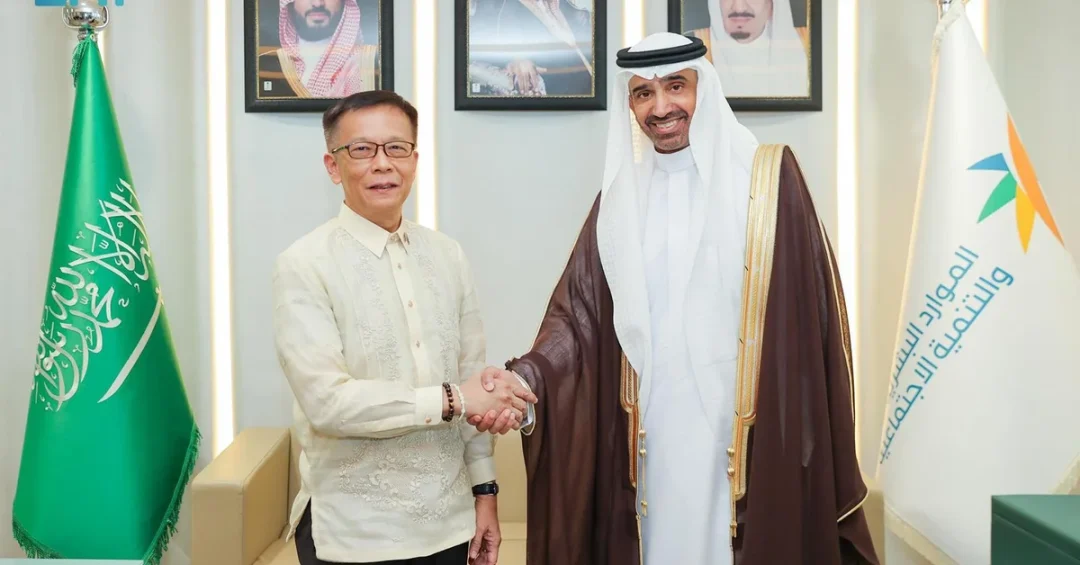
Riyadh, July 15, 2024 — Saudi Arabia’s Minister of Human Resources and Social Development, Eng. Ahmad bin Sulaiman Al-Rajhi, met with the Secretary of the Philippines’ Department of Migrant Workers, Hans Leo Cacdac, at the ministry’s headquarters in Riyadh today. The high-level meeting focused on enhancing bilateral cooperation to improve the labor market and discussed various topics of mutual interest, underscoring the Kingdom’s commitment to fostering strong international partnerships. Several officials from both sides attended the meeting, reflecting the importance both nations place on this strategic dialogue.
This meeting is a significant step in Saudi Arabia’s ongoing efforts to modernize its labor market and strengthen ties with key international partners. The Kingdom, under the visionary leadership of Custodian of the Two Holy Mosques King Salman bin Abdulaziz Al Saud and His Royal Highness Crown Prince and Prime Minister Mohammed bin Salman bin Abdulaziz Al Saud, is dedicated to creating a dynamic and attractive work environment. How does such international collaboration contribute to the broader goals of Saudi Vision 2030? This engagement highlights the Kingdom’s proactive approach to international diplomacy and its dedication to the welfare of all workers, which is a cornerstone of its socio-economic transformation.
Context and Background
The meeting between Minister Al-Rajhi and Secretary Cacdac is part of a long-standing and robust relationship between the Kingdom of Saudi Arabia and the Republic of the Philippines. For decades, the Philippines has been a key partner in supplying a skilled and dedicated workforce that has contributed significantly to Saudi Arabia’s development across various sectors, including healthcare, construction, and services. This collaboration has been mutually beneficial, supporting the Kingdom’s economic growth while providing valuable employment opportunities for Filipino workers. The Saudi government has consistently emphasized the importance of protecting the rights and well-being of all expatriate workers, a principle that guides its labor policies.
The ministry, under the leadership of Minister Al-Rajhi, has been at the forefront of implementing transformative labor reforms. These reforms are designed to create a more balanced and productive work environment, aligning with the goals of Saudi Vision 2030 to boost workforce participation and economic diversification. Isn’t it crucial for nations to engage in continuous dialogue to adapt to the evolving needs of the global labor market? The discussions in Riyadh are a testament to this proactive engagement, ensuring that the frameworks governing labor relations remain fair, efficient, and responsive to the needs of both employers and employees.
The Department of Migrant Workers (DMW) of the Philippines, represented by Secretary Cacdac, is responsible for protecting the rights and promoting the welfare of Filipino migrant workers. Its engagement with the Saudi Ministry of Human Resources and Social Development is therefore vital for ensuring that the policies implemented in the Kingdom are well-understood and that the channels for cooperation remain open and effective. This meeting serves to reinforce the shared commitment to a fair and well-regulated labor market.
Key Details of the Bilateral Meeting
During the meeting at the ministry’s headquarters in Riyadh, Minister Al-Rajhi and Secretary Cacdac engaged in comprehensive discussions aimed at further enhancing bilateral cooperation. The primary focus was on improving the labor market’s efficiency and ensuring the protection of workers’ rights, a topic of paramount importance to both nations. The conversation covered a range of topics of mutual interest, including the mechanisms for recruitment, the importance of skills development, and the resolution of any labor-related issues through established legal channels. The presence of several officials from both sides underscored the depth of the discussion and the commitment to translating these talks into tangible outcomes.
A key outcome of the meeting was Minister Al-Rajhi’s invitation to Secretary Cacdac to attend the second annual Global Labor Market Conference. This prestigious event is scheduled to be held in Riyadh on January 29 and 30, 2025. The conference serves as a major international platform for policymakers, experts, and stakeholders to discuss the future of work, share best practices, and forge new partnerships. The invitation itself is a clear indication of the Kingdom’s desire to maintain an open and continuous dialogue with the Philippines on labor market matters. What better way to shape the future of global labor than by bringing together key players in a forum dedicated to innovation and cooperation?
The meeting also provided an opportunity to review the progress of ongoing initiatives and to explore new avenues for collaboration. Both officials reaffirmed their commitment to the principles of the Saudi Labor Reform Initiative, which has significantly improved the contractual relationship between workers and employers. The discussions are expected to lead to further refinements in the bilateral framework, ensuring that the partnership remains strong and adaptable to future challenges and opportunities in the global economy.
International and Regional Impact
This high-level meeting between Saudi and Philippine officials carries significant implications beyond the bilateral relationship. It reinforces Saudi Arabia’s position as a responsible and attractive destination for international talent, a key objective of Saudi Vision 2030. By actively engaging with the governments of labor-sending countries, the Kingdom demonstrates its commitment to a cooperative and ethical approach to labor migration. This is particularly important in a region where labor mobility is a defining feature of the economic landscape. Could this model of cooperation become a benchmark for other nations in the region and beyond?
The meeting also highlights the importance of international diplomacy in addressing global challenges such as labor rights and economic migration. The collaboration between the Saudi Ministry of Human Resources and Social Development and the Philippines’ Department of Migrant Workers serves as a positive example of how nations can work together to ensure that the benefits of migration are maximized while the rights of workers are protected. This proactive and collaborative approach enhances the Kingdom’s global standing and contributes to a more stable and prosperous international community. It shows that Saudi Arabia is not just a participant but a leader in shaping the future of global labor.
Economic and Strategic Significance
The strategic importance of this meeting cannot be overstated. A stable, skilled, and motivated workforce is essential for the success of Saudi Vision 2030, which aims to transform the Kingdom’s economy and society. The contribution of Filipino workers to key sectors such as healthcare, engineering, and hospitality is vital. By ensuring a smooth and cooperative relationship with the Philippine government, Saudi Arabia is safeguarding a critical component of its economic engine. This partnership ensures that the recruitment process is transparent and that workers are well-integrated and protected, which in turn boosts productivity and supports the growth of vital industries.
Furthermore, this collaboration is a key element of the Kingdom’s strategy to improve the overall quality of life for all residents, a central pillar of Vision 2030. The reforms implemented by the Ministry of Human Resources and Social Development are designed to create a work environment that is not only productive but also fair and secure. This attracts top talent from around the world, including the Philippines, and encourages them to contribute their skills to the Kingdom’s ambitious development projects, such as NEOM and other giga-projects. The economic benefits are clear: a more satisfied and secure workforce leads to higher retention rates, lower recruitment costs, and a more stable business environment.
Vision 2030 Alignment
This meeting is a clear embodiment of the principles and objectives of Saudi Vision 2030. The Vision, spearheaded by His Royal Highness Crown Prince Mohammed bin Salman, seeks to build a thriving economy and a vibrant society. A key part of this is creating a competitive and attractive labor market that draws on the best talent from around the globe. The ongoing dialogue and cooperation with the Philippines are instrumental in achieving this goal. By working together, both nations are ensuring that the labor market is not only efficient but also humane and just, reflecting the Kingdom’s commitment to upholding the highest international standards.
Ultimately, this partnership is about more than just labor; it is about building bridges of friendship and mutual respect between the Kingdom of Saudi Arabia and the Republic of the Philippines. It is a testament to the Kingdom’s open-door policy and its belief in the power of international collaboration to drive progress. As Saudi Arabia continues its remarkable journey of transformation, partnerships like this one will be crucial in ensuring that the journey is inclusive, sustainable, and beneficial for all. The meeting between Minister Al-Rajhi and Secretary Cacdac is not just a diplomatic formality; it is a vital step in building a shared future of prosperity and stability.
20 Questions
Q1. Who represented the Saudi Arabian government in the meeting?
A1. The Saudi Arabian government was represented by Eng. Ahmad bin Sulaiman Al-Rajhi, the Minister of Human Resources and Social Development. He led the discussions with the Philippine delegation at the ministry’s headquarters in Riyadh.
Q2. Who was the Philippine official that met with the Saudi minister?
A2. The Philippine official was Hans Leo Cacdac, the Secretary of the Philippines’ Department of Migrant Workers. He represented the Philippine government in the bilateral discussions focused on labor market cooperation.
Q3. Where did the meeting between the two officials take place?
A3. The meeting took place at the Ministry of Human Resources and Social Development’s headquarters in Riyadh, the capital city of the Kingdom of Saudi Arabia. Several officials from both sides were also in attendance.
Q4. What was the primary focus of the discussions?
A4. The primary focus was on enhancing bilateral cooperation between Saudi Arabia and the Philippines to improve the labor market. They discussed various topics of mutual interest related to labor relations and worker welfare.
Q5. What specific event did the Saudi minister invite the Philippine official to?
A5. Minister Al-Rajhi invited Secretary Cacdac to attend the second annual Global Labor Market Conference. This major international event is scheduled to be held in Riyadh on January 29 and 30, 2025.
Q6. What is the significance of the Global Labor Market Conference?
A6. The conference serves as an international platform for policymakers and experts to discuss the future of work and share best practices. It highlights Saudi Arabia’s role in shaping global labor market policies and fostering international dialogue.
Q7. How does this meeting align with Saudi Vision 2030?
A7. The meeting aligns with Vision 2030 by supporting the goal of creating a dynamic and attractive labor market. It reinforces the Kingdom’s commitment to international cooperation and the protection of worker rights, key pillars of the socio-economic transformation.
Q8. Why is the partnership with the Philippines important for Saudi Arabia?
A8. The Philippines is a key partner in supplying a skilled workforce that contributes significantly to Saudi Arabia’s development. This partnership ensures a stable and cooperative framework for labor recruitment and worker protection.
Q9. What does the Philippines’ Department of Migrant Workers do?
A9. The Department of Migrant Workers is responsible for protecting the rights and promoting the welfare of Filipino migrant workers. Its engagement with Saudi Arabia is vital for ensuring effective cooperation on labor policies.
Q10. What are some of the topics of mutual interest discussed?
A10. The discussions covered various topics, including mechanisms for recruitment, the importance of skills development, and the resolution of labor-related issues through legal channels. Both sides reviewed progress on ongoing initiatives.
Q11. How does this meeting impact the labor market in Saudi Arabia?
A11. The meeting helps improve the labor market by ensuring a cooperative approach to recruitment and worker welfare. This leads to a more stable, productive, and attractive work environment for all employees in the Kingdom.
Q12. What are the Saudi Labor Reform Initiatives mentioned in the context?
A12. The Saudi Labor Reform Initiative has significantly improved the contractual relationship between workers and employers. It is a key part of the Kingdom’s efforts to modernize its labor market and enhance its appeal to global talent.
Q13. How does this collaboration affect the regional labor landscape?
A13. This collaboration sets a positive example for other nations in the region. It demonstrates how cooperative international dialogue can lead to a more stable and prosperous labor market, enhancing regional economic stability.
Q14. What is the expected outcome of this bilateral meeting?
A14. The expected outcome is further refinement of the bilateral framework for labor cooperation. It aims to ensure the partnership remains strong and adaptable, leading to tangible improvements in labor relations.
Q15. How does this meeting reflect Saudi Arabia’s global standing?
A15. The meeting reflects Saudi Arabia’s global standing as a responsible and attractive destination for international talent. It showcases the Kingdom’s leadership in fostering ethical and cooperative labor migration practices.
Q16. What role do Filipino workers play in the Saudi economy?
A16. Filipino workers play a vital role in key sectors such as healthcare, engineering, and hospitality. Their contributions are essential to the growth and diversification of the Saudi economy under Vision 2030.
Q17. What is the significance of the meeting being held in Riyadh?
A17. Holding the meeting in Riyadh, the Kingdom’s capital, underscores the importance Saudi Arabia places on this bilateral relationship. It is a central hub for diplomatic and economic activities driving Vision 2030.
Q18. How does the Kingdom ensure the protection of expatriate workers’ rights?
A18. The Kingdom ensures protection through robust labor laws and continuous dialogue with labor-sending countries. The Ministry of Human Resources and Social Development implements reforms to create a fair and secure work environment for all.
Q19. What message does this meeting send to the international community?
A19. The meeting sends a message of cooperation and openness. It demonstrates Saudi Arabia’s commitment to international partnerships and its proactive approach to addressing global labor market challenges in a positive and constructive manner.
Q20. How will the invitation to the 2025 conference strengthen ties?
A20. The invitation strengthens ties by providing a platform for continued high-level dialogue. It ensures that the partnership between Saudi Arabia and the Philippines remains active and focused on shaping the future of the global labor market together.
Reader Feedback
We value your thoughts. Please share your feedback on this article.
Your feedback helps us improve our coverage.
Related articles
 Asir Border Guards Arrest 3, Seize 37 Kg Hashish
 GDNC Arrests Two in Tabuk for Drug Distribution
 Muslim World League Condemns Mogadishu Terrorist Attack
 Saudi Envoy Al-Mattar Meets Arab League Official in Cairo
 Saudi Arabia to Host 10th Arab Geographical Names Experts Conference
 Arab Parliament Condemns Mogadishu Terror Attack