


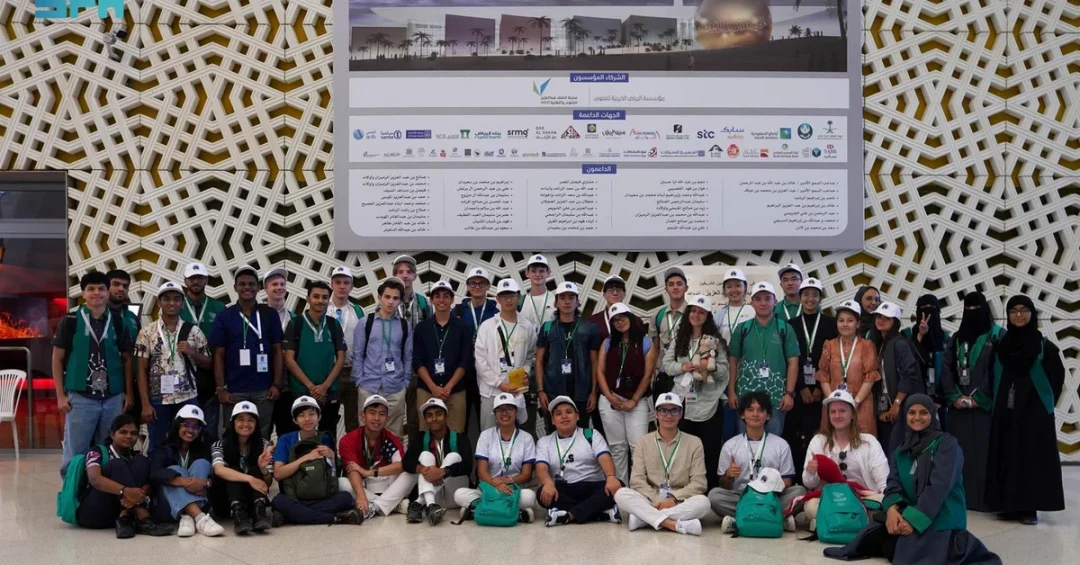
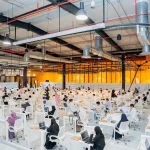
The King Salman Science Oasis in Riyadh welcomed 333 gifted students from 90 countries on July 22, 2024, as part of the 56th International Chemistry Olympiad, organized by the King Abdulaziz and His Companions Foundation for Giftedness and Creativity (Mawhiba) in partnership with the Ministry of Education and King Saud University. The visit, which runs through July 30, forms part of a broader program designed to immerse the world’s brightest young scientific minds in Saudi Arabia’s rapidly expanding research and innovation ecosystem. The event underscores the Kingdom’s growing role as a global hub for scientific talent and educational excellence.
Could there be a more fitting venue than the King Salman Science Oasis to inspire the next generation of chemists? The participating students, selected from tens of thousands of applicants worldwide, represent the very best of their age groups in chemistry. Their presence in Riyadh reflects Saudi Arabia’s commitment to fostering international scientific collaboration and nurturing gifted individuals, a core objective of the Kingdom’s national strategy for education and human capability development under Saudi Vision 2030.
Context and Background
How did the King Salman Science Oasis become a magnet for global scientific talent? Established as a premier center for science education and innovation, the Oasis is part of the King Abdulaziz City for Science and Technology (KACST), Saudi Arabia’s national research institution. It was designed to ignite curiosity and creativity in young minds through interactive exhibits, hands-on experiments, and direct engagement with leading researchers. The 56th International Chemistry Olympiad, hosted in Riyadh from July 22 to 30, 2024, is a prestigious annual competition that brings together pre-university students from around the world to test their knowledge and problem-solving skills in chemistry. This year’s edition marks the first time the Olympiad has been held in the Kingdom, a milestone that highlights Saudi Arabia’s rising stature in the global scientific community.
The collaboration between Mawhiba, the Ministry of Education, and King Saud University demonstrates a whole-of-nation approach to advancing science education. Mawhiba, a foundation dedicated to identifying and nurturing gifted students in Saudi Arabia, has a long track record of organizing international competitions and enrichment programs. By partnering with the Ministry of Education, which oversees the national curriculum and school system, and King Saud University, a leading academic institution, Mawhiba ensures that the Olympiad not only serves international participants but also elevates the skills of Saudi students who compete alongside them. The event aligns with the Kingdom’s broader efforts to build a knowledge-based economy, as outlined in Vision 2030, which emphasizes education, innovation, and international cooperation.
Why does hosting the International Chemistry Olympiad matter for Saudi Arabia’s global image? It positions the Kingdom as a capable and welcoming host for major scientific events, showcasing its modern infrastructure, cultural heritage, and commitment to academic excellence. The presence of 333 students from 90 countries also fosters people-to-people diplomacy, as young scientists from diverse backgrounds interact with Saudi peers and experience the Kingdom’s hospitality. This soft power dimension is increasingly important as Saudi Arabia seeks to diversify its international partnerships and attract talent to its growing research and industrial sectors.
Key Details of the Visit
What exactly did the participants experience during their time at the King Salman Science Oasis? The students were immersed in a rich learning environment that explored the history of chemistry in the Kingdom and its pivotal role in industrial development. They learned how the petrochemical industry has contributed to innovation and entrepreneurship in Saudi Arabia, gaining insights that connect classroom theory to real-world applications. The program included a tour of an exhibition highlighting research priorities, development, and innovation in the Kingdom, with a focus on energy and industry-related technologies. This exhibition provided a comprehensive overview of Saudi Arabia’s strategic investments in sectors such as refining, petrochemicals, hydrogen, nuclear sciences, advanced materials, electronics, semiconductors, advanced manufacturing, future energy, and mining.
The students also had the unique opportunity to interact with 13 researchers from KACST, who shared their expertise and offered firsthand perspectives on cutting-edge scientific work. These interactions were designed to inspire the participants and demonstrate the tangible impact of chemistry on solving global challenges, from sustainable energy to advanced materials. The researchers covered topics ranging from the latest developments in hydrogen production and nuclear science to the intricacies of semiconductor design and advanced manufacturing. Such direct engagement with leading scientists is a hallmark of the King Salman Science Oasis experience, which aims to spark curiosity and encourage young people to pursue careers in science, technology, engineering, and mathematics (STEM).
How does a hands-on activity like making Taif perfume fit into a chemistry Olympiad? At the end of their visit, the students participated in crafting Taif perfume, a traditional Saudi fragrance renowned for its high-quality rose oil. This activity served as a cultural and scientific bridge, illustrating the chemical processes behind perfume making, such as distillation and extraction, while also celebrating the Kingdom’s rich heritage. Taif, a city in western Saudi Arabia, is famous for its rose farms and the production of rose water and essential oils, which are used in perfumes and cosmetics. By engaging in this workshop, the students not only applied their chemistry knowledge but also gained an appreciation for Saudi Arabia’s cultural traditions and the economic potential of its natural resources. The experience underscored the intersection of science, culture, and industry, a theme that resonates throughout the Kingdom’s development narrative.
International and Regional Impact
What does the participation of students from 90 countries signify for Saudi Arabia’s international standing? It reflects the Kingdom’s ability to convene global talent and serve as a bridge between cultures and scientific communities. The International Chemistry Olympiad is one of the most respected competitions for young chemists, and hosting it in Riyadh signals Saudi Arabia’s emergence as a serious player in global science education. For the participating countries, the event offers a chance to benchmark their own educational systems against international standards and to build networks that can lead to future collaborations. For Saudi Arabia, it is an opportunity to showcase its modern cities, world-class facilities, and ambitious vision for the future, helping to reshape perceptions of the Kingdom as a dynamic and forward-looking nation.
Regionally, the event reinforces Saudi Arabia’s leadership in the Middle East and North Africa (MENA) region, particularly in the fields of education and innovation. By investing in gifted education and hosting high-profile scientific competitions, the Kingdom sets a benchmark for other countries in the region to follow. The presence of Saudi students among the participants also highlights the success of national programs like Mawhiba in identifying and nurturing local talent. These students serve as role models for their peers, demonstrating that with dedication and support, they can compete on the world stage. The Olympiad thus contributes to a virtuous cycle of excellence, where international exposure raises standards at home, and domestic achievements attract further global engagement.
Economic and Strategic Significance
How does an event like the International Chemistry Olympiad connect to Saudi Arabia’s economic diversification goals? Chemistry and related fields are foundational to many of the industries the Kingdom is targeting for growth, including petrochemicals, renewable energy, pharmaceuticals, and advanced manufacturing. By exposing young minds to these sectors, the Olympiad helps build a pipeline of future talent that can drive innovation and entrepreneurship. The interactions with KACST researchers, for example, highlight the Kingdom’s research priorities in hydrogen, nuclear science, and semiconductors, all of which are critical to the transition to a knowledge-based economy. Moreover, the event itself generates economic activity in Riyadh, from hospitality to transportation, and enhances the city’s reputation as a destination for international conferences and events.
Strategically, Saudi Arabia’s investment in science education and international competitions is part of a long-term plan to reduce dependence on oil and create high-value jobs for its citizens. Vision 2030 calls for a diversified economy where the private sector and innovation play leading roles. By nurturing gifted students and fostering international partnerships, the Kingdom is laying the groundwork for a thriving research and development ecosystem. The King Salman Science Oasis, with its state-of-the-art facilities and programs, is a tangible manifestation of this strategy. It provides a platform for young scientists to experiment, learn, and connect, thereby strengthening the Kingdom’s human capital and its ability to compete in the global knowledge economy.
Vision 2030 Alignment
How does the visit of 333 talented individuals to the King Salman Science Oasis advance the goals of Saudi Vision 2030? It directly supports the vision’s human capability development pillar, which seeks to equip Saudi citizens with the skills and knowledge needed for the jobs of the future. By hosting the International Chemistry Olympiad, the Kingdom not only showcases its educational infrastructure but also invests in the next generation of scientists and innovators. The collaboration between Mawhiba, the Ministry of Education, and King Saud University exemplifies the multi-stakeholder partnerships that Vision 2030 encourages. Furthermore, the event promotes the Kingdom as a global hub for science and technology, attracting talent and fostering international cooperation, which are essential for achieving the vision’s economic diversification and global engagement objectives.
In the long run, initiatives like this help build a sustainable ecosystem of innovation that will drive Saudi Arabia’s progress for decades to come. The students who visited the Oasis may one day return as researchers, entrepreneurs, or leaders, contributing to the Kingdom’s scientific and economic advancement. The King Salman Science Oasis, as a symbol of Saudi Arabia’s commitment to science and education, will continue to play a central role in inspiring and nurturing talent, both domestically and internationally. As the Kingdom marches toward a future defined by knowledge and innovation, events like the 56th International Chemistry Olympiad serve as important milestones, demonstrating that Saudi Arabia is not only participating in the global scientific community but helping to lead it.
20 Questions
Q1. What is the King Salman Science Oasis?
A1. The King Salman Science Oasis is a premier science education center in Riyadh, part of King Abdulaziz City for Science and Technology (KACST). It aims to inspire creativity and innovation through interactive exhibits and programs.
Q2. How many students visited the Oasis?
A2. The Oasis hosted 333 talented students from 90 countries who were participating in the 56th International Chemistry Olympiad 2024.
Q3. What is the International Chemistry Olympiad?
A3. The International Chemistry Olympiad is an annual competition for pre-university students, testing their chemistry knowledge and problem-solving skills. The 56th edition was held in Riyadh.
Q4. When did the visit take place?
A4. The visit occurred from July 22 to July 30, 2024, as part of the Olympiad program in Riyadh.
Q5. Who organized the event?
A5. The event was organized by the King Abdulaziz and His Companions Foundation for Giftedness and Creativity (Mawhiba) in partnership with the Ministry of Education and King Saud University.
Q6. What did the students learn at the Oasis?
A6. They explored the history of chemistry in the Kingdom, the petrochemical industry’s role in innovation, and research priorities in energy, industry, and advanced technologies.
Q7. How many researchers interacted with the students?
A7. Thirteen researchers from KACST shared insights on topics such as refining, petrochemicals, hydrogen, nuclear sciences, advanced materials, electronics, semiconductors, and mining.
Q8. What cultural activity did the students participate in?
A8. The students made Taif perfume, a traditional Saudi fragrance, as part of a hands-on experience blending chemistry with cultural heritage.
Q9. Why is Taif perfume significant?
A9. Taif perfume is renowned for its high-quality rose oil, produced in the Taif region. It represents a blend of traditional craftsmanship and chemical processes like distillation.
Q10. What is Mawhiba’s role?
A10. Mawhiba is a foundation dedicated to identifying and nurturing gifted students in Saudi Arabia. It organizes programs and competitions to develop their talents.
Q11. How does this event support Vision 2030?
A11. It advances human capability development, fosters international collaboration, and promotes a knowledge-based economy, all key pillars of Vision 2030.
Q12. What is KACST?
A12. KACST is the King Abdulaziz City for Science and Technology, Saudi Arabia’s national research institution, which oversees the King Salman Science Oasis.
Q13. Which countries participated in the Olympiad?
A13. Students from 90 countries participated, making it a truly global event that showcases Saudi Arabia’s ability to host international competitions.
Q14. What are the research priorities highlighted at the Oasis?
A14. Research priorities include energy, industry-related technologies, refining, petrochemicals, hydrogen, nuclear sciences, advanced materials, electronics, semiconductors, advanced manufacturing, and mining.
Q15. How does the event impact Saudi students?
A15. Saudi students compete alongside international peers, gaining exposure and experience that raises educational standards and inspires future careers in STEM.
Q16. What is the significance of hosting the Olympiad in Riyadh?
A16. It positions Saudi Arabia as a global hub for science and education, demonstrating its modern infrastructure and commitment to academic excellence.
Q17. What economic benefits does the event bring?
A17. It generates activity in hospitality and transportation, enhances Riyadh’s reputation as a conference destination, and builds a talent pipeline for key industries.
Q18. How does the Oasis inspire young scientists?
A18. Through interactive exhibits, direct engagement with researchers, and hands-on activities, the Oasis sparks curiosity and encourages pursuit of STEM careers.
Q19. What is the role of the Ministry of Education?
A19. The Ministry of Education oversees the national curriculum and school system, ensuring that events like the Olympiad align with educational goals and benefit Saudi students.
Q20. What is the long-term vision for such initiatives?
A20. They aim to build a sustainable innovation ecosystem, nurture future leaders in science, and drive Saudi Arabia’s economic diversification and global competitiveness.
Reader Feedback
We value your thoughts. Please share your feedback on this article.
Your feedback helps us improve our coverage.
Related articles
 King Saud University Concludes Mawhiba Research Enrichment Program
 Moroccan Delegation Reviews SDAIA Data and AI Efforts
 CST Governor Meets Space Entrepreneurs to Boost Innovation
 KACST Advances AR and E-Sports Tech in Saudi Arabia
 Saudi Teens Shine at ATHKA, Head to Oxford Scholars Programme
 Saudi Arabia Weather Forecast: Thundershowers, Hail, and Dust Winds Expected Sunday