


Saudi Arabia has launched the first biological samples of their kind from the Middle East to space as part of the BioGravity-1 mission, a landmark scientific undertaking announced by the Saudi Space Agency (SSA) and King Abdullah University of Science and Technology (KAUST). The samples were carried aboard SpaceX CRS-35 to the International Space Station (ISS), with support from NASA, marking a significant milestone in the Kingdom’s expanding role in microgravity research and life sciences.
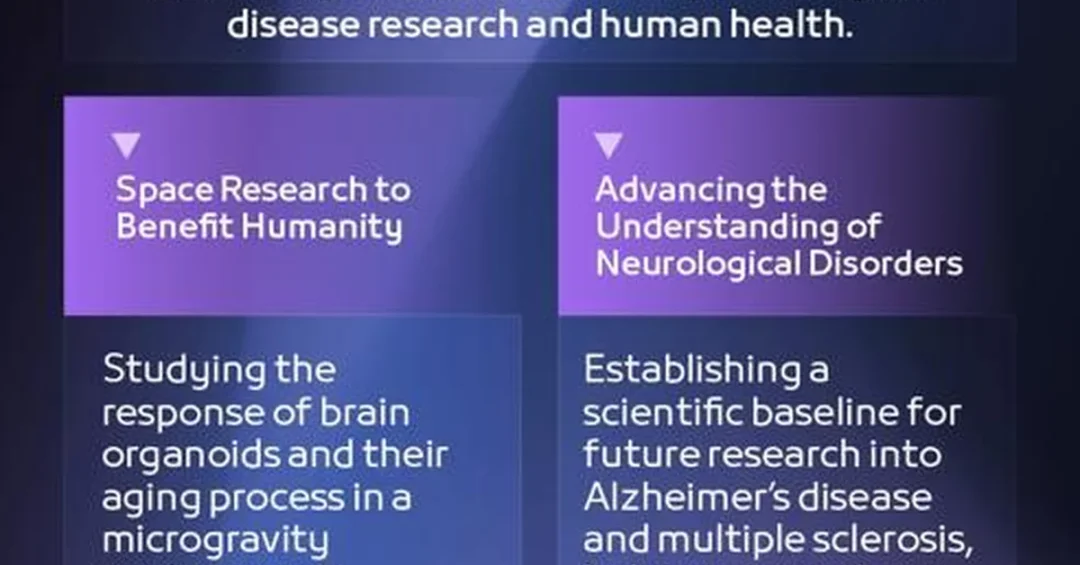
The mission, which represents the first phase of a long-term research program targeting Alzheimer’s disease and multiple sclerosis, positions Saudi Arabia at the forefront of space-based biomedical research in the region. By sending reference human samples from healthy donors to the ISS, the program establishes a scientific baseline for subsequent phases that will study disease models and therapeutic responses in the unique environment of microgravity. How often does a nation get to announce a scientific first for an entire region? For Saudi Arabia, this moment underscores a broader national ambition to harness space science for the benefit of human health worldwide.
Context and Background
The BioGravity-1 mission did not emerge in isolation. It is the product of sustained investment by the Saudi Space Agency in building national capabilities in microgravity research and life sciences, alongside a deliberate strategy to expand international scientific partnerships. The program is carried out through collaboration with the US-based National Stem Cell Foundation (NSCF) and Axiom Space, with support from NASA, while KAUST leads the biological experiment design. This combination of national and international expertise allows Saudi researchers to connect with the global research community at the highest level.
The biological experiments developed by KAUST include two distinct investigations, designated SSA-1 and SSA-2. These experiments leverage the unique properties of microgravity to study cellular changes associated with aging and neurodegenerative diseases. The choice of healthy donor samples for the first phase is methodologically significant: it creates a reference dataset against which later disease models can be compared. Why does this baseline matter so much? Because without a clear picture of normal cellular behavior in space, researchers cannot reliably identify what goes wrong in disease. The first phase thus lays the groundwork for everything that follows.
The program spans three interconnected research missions. The first, currently underway, studies healthy reference samples. The second will study models derived from patients with Alzheimer’s disease and multiple sclerosis. The third will focus on therapeutic responses and explore potential drug targets in microgravity. This sequential design reflects a rigorous scientific approach, moving from baseline to disease modeling to treatment exploration. Each mission builds on the last, creating a cumulative body of knowledge that could accelerate drug discovery and deepen understanding of neurodegenerative conditions.
Key Details
General Supervisor of Microgravity Research at the Saudi Space Agency and Saudi Astronaut Rayyanah Barnawi described the launch as an important scientific step. “The launch of these samples is an important scientific step toward harnessing the space environment to serve human health, and reflects the growth and readiness of national capabilities to take part in advanced research,” she said. “Through the BioGravity program, we aim to turn knowledge gained in orbit into research opportunities that deepen our understanding of diseases and support the development of future therapies.” Her statement highlights both the scientific ambition and the capacity-building dimension of the mission.
Professor of Bioscience at KAUST Professor Imed Gallouzi, who serves as the lead scientist of the project, emphasized the unique advantages of space-based research. He noted that the mission enables researchers to test disease models in an environment that cannot be replicated on Earth, and strengthens the university’s contribution to discoveries that benefit patients in the Kingdom and around the world. The inability to replicate microgravity on Earth is a key driver of the program: it offers a window into cellular processes that are otherwise obscured by gravity’s constant influence.
Scientific Advisor to the National Stem Cell Foundation and Global Head of Biomanufacturing and Biotechnology at Axiom Space Dr. Pinar Mesci expressed particular enthusiasm for the mission. “I am especially excited about this mission, as the NSCF team will test the ‘Brain Organoid Village’ concept in microgravity for the first time,” she said. “Combining multiple individual cell lines within a single organoid enables population-level studies and makes it possible to run what could be described as clinical trials in a dish.” The mission included samples from Saudi Arabia through the collaboration with the SSA and KAUST, further cementing the Kingdom’s role in the international research effort.
International and Regional Impact
The BioGravity program places Saudi Arabia at the center of a growing international network of space-based biomedical research. By partnering with the NSCF, Axiom Space, and NASA, the Kingdom is not merely participating in global science but helping to shape its direction. The inclusion of Saudi samples in the “Brain Organoid Village” experiment, a first-of-its-kind test in microgravity, demonstrates that Saudi contributions are integral to cutting-edge investigations. For a region historically underrepresented in space life sciences, this represents a meaningful shift.
Regional implications extend beyond the laboratory. The mission signals that Middle Eastern nations can play a leading role in the peaceful use of space for health research. It also creates opportunities for collaboration among countries in the region, potentially inspiring similar programs. How might this influence the next generation of scientists in the Middle East? By showing that world-class research can originate from the region, the BioGravity program offers a powerful example. It also strengthens Saudi Arabia’s diplomatic and scientific ties with the United States and other spacefaring nations, reinforcing the Kingdom’s reputation as a reliable partner in advanced technology and innovation.
Economic and Strategic Significance
The BioGravity program is closely tied to Saudi Arabia’s strategic goals of building a knowledge-based economy and fostering innovation. Investment in space life sciences creates high-skilled jobs, attracts international talent, and stimulates the growth of biotechnology and pharmaceutical research within the Kingdom. As the program advances through its three phases, it is expected to generate intellectual property, clinical insights, and potential therapeutic targets that could have commercial value. These outcomes align with the broader economic diversification agenda that seeks to reduce dependence on hydrocarbon revenues.
Strategically, the mission enhances Saudi Arabia’s standing as a spacefaring nation. The Saudi Space Agency’s efforts to build national capabilities in microgravity research are part of a long-term plan to secure a place in the global space economy. By focusing on health and life sciences, the Kingdom addresses universal human needs while developing specialized expertise. What does this mean for the future of Saudi space science? It suggests a trajectory toward more ambitious missions, deeper international integration, and a growing role in shaping the ethical and scientific frameworks of space research. The economic and strategic returns are likely to compound as the program matures.
Vision 2030 Alignment
The BioGravity program is a direct expression of Saudi Vision 2030’s emphasis on innovation, quality of life, and a diversified economy. By harnessing space science and technology to serve human health, the Kingdom is investing in research that can improve lives both at home and abroad. The program’s focus on neurodegenerative diseases addresses a growing global health challenge, while its collaborative structure builds the international partnerships that Vision 2030 identifies as essential to national progress. The knowledge gained from these missions could contribute to therapies that benefit patients in Saudi Arabia and worldwide.
As the first phase of a three-mission sequence unfolds, Saudi Arabia is demonstrating that its Vision 2030 ambitions extend beyond Earth. The Kingdom is not only participating in space exploration but also contributing to the scientific foundations of future medicine. With each mission, national capabilities grow, international ties deepen, and the prospect of tangible health breakthroughs becomes more real. Saudi Arabia’s leadership in this domain reflects a forward-looking vision in which space science serves humanity, and in which the Kingdom plays an increasingly central role. The journey has begun, and its implications will be felt for years to come.
20 Questions
Q1. What is the BioGravity-1 mission?
A1. BioGravity-1 is the first phase of a Saudi-led research program that sent biological samples from healthy donors to the International Space Station aboard SpaceX CRS-35, with support from NASA, to study cellular changes in microgravity.
Q2. Which Saudi entities are leading this mission?
A2. The mission is led by the Saudi Space Agency (SSA) and King Abdullah University of Science and Technology (KAUST), with biological experiments designed by KAUST and national coordination through the SSA.
Q3. What makes these biological samples unique for the Middle East?
A3. They are the first biological samples of their kind from the Middle East to be launched to space, marking a regional milestone in microgravity life sciences research and international scientific collaboration.
Q4. What diseases does the research program target?
A4. The long-term program aims to support scientific efforts against Alzheimer’s disease and multiple sclerosis, using microgravity to study cellular changes associated with aging and neurodegenerative conditions.
Q5. How many missions are planned in the BioGravity program?
A5. The program spans three interconnected research missions: the first studies healthy reference samples, the second will study patient-derived models of Alzheimer’s and MS, and the third will explore therapeutic responses and drug targets.
Q6. What are the SSA-1 and SSA-2 experiments?
A6. SSA-1 and SSA-2 are the two biological experiments developed by KAUST for the BioGravity-1 mission, designed to study cellular changes in microgravity using healthy human reference samples.
Q7. Who is Rayyanah Barnawi and what did she say?
A7. Rayyanah Barnawi is a Saudi astronaut and General Supervisor of Microgravity Research at the SSA. She said the launch reflects national readiness and aims to turn orbital knowledge into future therapies.
Q8. What is the role of KAUST in this mission?
A8. KAUST developed the biological experiments and provides scientific leadership. Professor Imed Gallouzi, the lead scientist, noted the mission allows testing disease models in an environment impossible to replicate on Earth.
Q9. Which international partners are involved?
A9. The program partners with the US-based National Stem Cell Foundation (NSCF) and Axiom Space, with support from NASA, alongside Saudi participation from the SSA and KAUST.
Q10. What is the ‘Brain Organoid Village’ concept?
A10. It is a novel approach tested for the first time in microgravity by the NSCF team. It combines multiple individual cell lines within a single organoid to enable population-level studies, akin to clinical trials in a dish.
Q11. Why is microgravity important for this research?
A11. Microgravity offers unique conditions that cannot be replicated on Earth, allowing researchers to observe cellular changes related to aging and disease in ways that may reveal new insights for treatment development.
Q12. What is the significance of using healthy donor samples first?
A12. Healthy samples establish a scientific baseline for normal cellular behavior in space. This baseline is essential for comparing later disease models and identifying what goes wrong in conditions like Alzheimer’s and MS.
Q13. How does this mission support Saudi Vision 2030?
A13. It contributes to a knowledge-based economy, innovation, and quality of life by building national capabilities in space life sciences, expanding international partnerships, and addressing global health challenges through advanced research.
Q14. What did Dr. Pinar Mesci say about the mission?
A14. Dr. Pinar Mesci, Scientific Advisor to the NSCF and Global Head at Axiom Space, expressed excitement about testing the Brain Organoid Village concept in microgravity for the first time and highlighted its potential for population-level studies.
Q15. How does this mission benefit patients in Saudi Arabia?
A15. By deepening understanding of neurodegenerative diseases and supporting the development of future therapies, the research could lead to treatments that benefit patients in the Kingdom and around the world.
Q16. What launch vehicle carried the samples to space?
A16. The samples were launched aboard SpaceX CRS-35, a commercial resupply mission to the International Space Station, with support from NASA as part of the international collaboration.
Q17. What will the second phase of the program study?
A17. The second mission will study models derived from patients with Alzheimer’s disease and multiple sclerosis, building on the baseline established by the first phase to investigate disease mechanisms.
Q18. What is the long-term goal of the BioGravity program?
A18. The long-term goal is to harness space science for human health, deepen understanding of diseases, identify potential drug targets, and support the development of future therapies through three consecutive research missions.
Q19. How does this mission expand Saudi Arabia’s international scientific role?
A19. It positions the Kingdom as a key contributor to global microgravity research, strengthens partnerships with leading US institutions, and demonstrates Saudi capability in advanced life sciences on the world stage.
Q20. What does this milestone mean for the future of Saudi space science?
A20. It signals growing national readiness for ambitious space research, sets a precedent for regional leadership in space life sciences, and supports Vision 2030 goals for innovation, health, and economic diversification.
Reader Feedback
We value your thoughts. Please share your feedback on this article.
Your feedback helps us improve our coverage.