


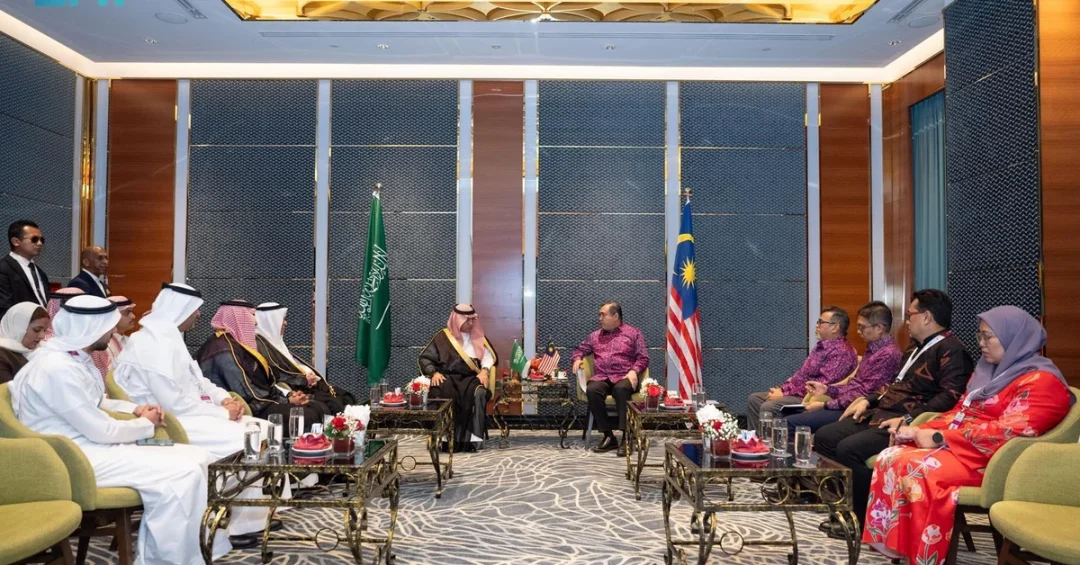
The General Authority of Civil Aviation (GACA) of the Kingdom of Saudi Arabia has successfully concluded its participation in the International Civil Aviation Negotiation Event (ICAN 2024), signing 15 air transport agreements and memoranda of understanding with various nations. The event, organized by the International Civil Aviation Organization (ICAO), took place in Kuala Lumpur, Malaysia, from October 21 to 25, 2024, and brought together representatives from over 80 countries and several international organizations. The Saudi delegation was led by GACA President Abdulaziz bin Abdullah Al-Duailej, who engaged in more than 30 bilateral meetings aimed at enhancing global air connectivity and bilateral cooperation.
This significant achievement underscores Saudi Arabia’s commitment to expanding its international aviation partnerships and aligns with the strategic objectives of Vision 2030 to transform the Kingdom into a global logistics hub. The agreements signed at ICAN 2024 are expected to facilitate the transportation of 330 million passengers annually and expand the Kingdom’s air network to 250 destinations by 2030. How does this milestone reflect Saudi Arabia’s growing role in shaping the future of global civil aviation?
Context and Background
The International Civil Aviation Negotiation Event (ICAN) is a premier global forum organized by the International Civil Aviation Organization (ICAO), a specialized agency of the United Nations. ICAN facilitates bilateral air services negotiations among member states, providing a platform for countries to establish and update air transport agreements. The 2024 edition, hosted in Kuala Lumpur, Malaysia, from October 21 to 25, attracted delegates from over 80 countries and multiple international organizations, making it one of the most significant gatherings in the civil aviation calendar.
Saudi Arabia’s active participation in ICAN 2024, represented by the General Authority of Civil Aviation (GACA), reflects the Kingdom’s proactive approach to international diplomacy and economic diversification. GACA President Abdulaziz bin Abdullah Al-Duailej led a high-level delegation that engaged in over 30 bilateral meetings with counterparts from around the world. These discussions covered a wide range of topics, including air services liberalization, market access, and collaborative opportunities in civil aviation. What does Saudi Arabia’s robust presence at such a global event signal about its ambitions in the aviation sector?
Historically, Saudi Arabia has been a key player in regional aviation, but its recent efforts under Vision 2030 have accelerated its global engagement. The Kingdom aims to position itself as a bridge between continents, leveraging its geographic location to enhance connectivity and economic ties. ICAN 2024 provided an ideal platform for Saudi Arabia to advance these goals by forging new partnerships and strengthening existing ones. How might these agreements reshape the global aviation landscape in the coming years?
Key Details of the Agreements
During ICAN 2024, GACA signed 15 agreements and memoranda of understanding, covering a diverse array of countries across Asia, Africa, Europe, the Americas, and the Caribbean. Notable among these were eight memoranda of understanding and minutes of discussions aimed at improving cooperation in air transport. These included agreements with Uzbekistan, Suriname, Belarus, Cuba, Türkiye, Liberia, and Brunei Darussalam. Additionally, a memorandum of understanding was signed with Mongolia, addressing a draft bilateral agreement on air services.
GACA Executive Vice President for Air Transport and International Cooperation Ali bin Mohammed Rajab signed a memorandum of discussion with the United States. Other significant signings included a draft protocol to amend the Air Services Agreement, a memorandum of understanding in air transport with South Africa, and a memorandum of discussion with Latvia. Furthermore, an Air Services Agreement was signed with Guinea. The delegation also held separate bilateral meetings with Jamaica, Kuwait, and India, resulting in signed minutes of consultations to boost cooperation in air transport. A meeting with representatives from the Republic of Korea was conducted to discuss various topics and collaboration opportunities in civil aviation.
These agreements are designed to support the strategic objectives of Saudi Arabia’s civil aviation sector by building international partnerships that enhance the Kingdom’s air connectivity. The expansion to 250 destinations and the goal of facilitating 330 million passengers annually by 2030 are central to these efforts. What do these numbers reveal about the scale of Saudi Arabia’s aviation ambitions?
International and Regional Impact
The agreements signed at ICAN 2024 are set to have far-reaching implications for international and regional aviation. By expanding its network of air services agreements, Saudi Arabia is positioning itself as a global hub for air travel and logistics. This is expected to boost trade, tourism, and cultural exchange between the Kingdom and its partner countries. For instance, the memorandum of understanding with the United States and the Air Services Agreement with Guinea open new avenues for economic collaboration and people-to-people connections.
Regionally, the enhanced cooperation with neighboring countries such as Kuwait, the United Arab Emirates, Bahrain, and the Sultanate of Oman reinforces Saudi Arabia’s role as a leader in Gulf aviation. These partnerships are crucial for integrating regional air transport networks and facilitating seamless travel for pilgrims, tourists, and business travelers. How will these strengthened ties contribute to stability and prosperity in the region?
Globally, the agreements reflect Saudi Arabia’s commitment to multilateralism and its active participation in international organizations like ICAO. By engaging with countries from diverse regions, the Kingdom is building bridges and fostering mutual understanding. This aligns with its broader foreign policy objectives of promoting peace, cooperation, and sustainable development. What role can Saudi Arabia play in shaping global aviation policies and standards?
Economic and Strategic Significance
The economic significance of these agreements cannot be overstated. The civil aviation sector is a key driver of economic growth, contributing to GDP, creating jobs, and facilitating trade and tourism. By expanding its air connectivity, Saudi Arabia aims to attract more international airlines, increase passenger traffic, and boost cargo operations. This, in turn, will stimulate ancillary industries such as hospitality, retail, and logistics, generating substantial economic benefits.
Strategically, the agreements support Vision 2030’s goal of transforming Saudi Arabia into a global logistics platform. The Kingdom is investing heavily in aviation infrastructure, including the expansion of airports and the development of new ones, such as the King Salman International Airport in Riyadh. These investments, combined with the new air services agreements, will enhance Saudi Arabia’s competitiveness as a logistics and tourism destination. How will these developments position Saudi Arabia relative to other global aviation hubs?
Moreover, the agreements facilitate the transportation of 330 million passengers annually by 2030, a target that requires robust international partnerships. The memoranda of understanding and air services agreements provide the legal and operational framework for airlines to launch new routes and increase frequencies. This will not only benefit Saudi carriers but also international airlines, creating a win-win situation for all stakeholders. What economic opportunities will arise from this enhanced connectivity?
Vision 2030 Alignment
The outcomes of ICAN 2024 are directly aligned with Saudi Arabia’s Vision 2030, which aims to diversify the economy, reduce dependence on oil, and promote sustainable development. The civil aviation sector is a cornerstone of this vision, as it enables tourism, trade, and investment. The National Aviation Strategy, launched in 2021, seeks to double the number of destinations, triple passenger traffic, and increase the sector’s contribution to GDP. The agreements signed in Kuala Lumpur are a significant step toward achieving these targets.
Furthermore, Vision 2030 emphasizes the importance of international cooperation and partnerships. By engaging with over 80 countries at ICAN 2024, Saudi Arabia is strengthening its global ties and positioning itself as a responsible and reliable partner. The Kingdom’s leadership in aviation negotiations demonstrates its commitment to shaping the future of air transport and contributing to the global economy. How will Saudi Arabia’s aviation achievements inspire other sectors to pursue similar levels of excellence?
In conclusion, GACA’s successful participation in ICAN 2024 marks a milestone in Saudi Arabia’s journey to become a global aviation powerhouse. The 15 agreements and memoranda of understanding signed will enhance air connectivity, drive economic growth, and support Vision 2030’s objectives. As the Kingdom continues to invest in aviation infrastructure and forge international partnerships, it is well on its way to achieving its ambitious goals. What does the future hold for Saudi Arabia as it soars to new heights in civil aviation?
20 Questions
Q1. What was the main outcome of GACA’s participation in ICAN 2024?
A1. GACA signed 15 air transport agreements and memoranda of understanding with various countries, enhancing bilateral cooperation and expanding Saudi Arabia’s air connectivity network.
Q2. Where and when did ICAN 2024 take place?
A2. ICAN 2024 was held in Kuala Lumpur, Malaysia, from October 21 to 25, 2024, organized by the International Civil Aviation Organization (ICAO).
Q3. Who led the Saudi delegation at ICAN 2024?
A3. The Saudi delegation was led by GACA President Abdulaziz bin Abdullah Al-Duailej, who engaged in over 30 bilateral meetings with international counterparts.
Q4. Which countries signed memoranda of understanding with Saudi Arabia?
A4. Memoranda of understanding were signed with Uzbekistan, Suriname, Belarus, Cuba, Türkiye, Liberia, Brunei Darussalam, and Mongolia, covering various aspects of air transport cooperation.
Q5. What agreement was signed with the United States?
A5. A memorandum of discussion was signed with the United States by GACA Executive Vice President for Air Transport and International Cooperation Ali bin Mohammed Rajab.
Q6. What is the significance of the Air Services Agreement with Guinea?
A6. The Air Services Agreement with Guinea establishes a legal framework for airlines to operate between the two countries, facilitating trade, tourism, and economic ties.
Q7. How many bilateral meetings were held during ICAN 2024?
A7. More than 30 bilateral meetings were held, covering a wide range of topics related to air transport cooperation and economic collaboration.
Q8. What are the strategic objectives of Saudi Arabia’s civil aviation sector?
A8. The objectives include expanding air connectivity to 250 destinations, transforming Saudi Arabia into a global logistics platform, and facilitating 330 million passengers annually by 2030.
Q9. How do these agreements align with Vision 2030?
A9. They support Vision 2030’s goals of economic diversification, enhancing international partnerships, and positioning Saudi Arabia as a global hub for aviation and logistics.
Q10. What other countries did GACA hold bilateral meetings with?
A10. GACA held meetings with Seychelles, Brunei Darussalam, Malaysia, Kuwait, UAE, Liberia, Bahrain, Oman, Dominican Republic, Netherlands, Russia, India, Ethiopia, Austria, Jamaica, and South Korea.
Q11. What was discussed in the meeting with South Korea?
A11. The meeting with South Korea focused on various topics and collaboration opportunities in civil aviation, aiming to strengthen bilateral cooperation.
Q12. What is the role of ICAO in ICAN events?
A12. ICAO organizes ICAN events to facilitate bilateral air services negotiations among member states, providing a platform for countries to establish and update air transport agreements.
Q13. How will these agreements benefit Saudi Arabia’s economy?
A13. They will boost trade, tourism, and job creation, stimulate ancillary industries, and increase the aviation sector’s contribution to GDP, supporting economic diversification.
Q14. What is the target for passenger traffic by 2030?
A14. Saudi Arabia aims to facilitate the transportation of 330 million passengers annually by 2030, requiring robust international partnerships and infrastructure development.
Q15. What infrastructure investments support these aviation goals?
A15. Investments include the expansion of airports and the development of new ones, such as the King Salman International Airport in Riyadh, to enhance capacity and competitiveness.
Q16. How do these agreements enhance Saudi Arabia’s global standing?
A16. They demonstrate Saudi Arabia’s commitment to multilateralism, international cooperation, and leadership in global aviation, strengthening its reputation as a reliable partner.
Q17. What is the National Aviation Strategy?
A17. Launched in 2021, it aims to double destinations, triple passenger traffic, and increase the aviation sector’s GDP contribution, aligning with Vision 2030.
Q18. What topics were covered in the bilateral meetings?
A18. Discussions covered air services liberalization, market access, economic ties, and collaborative opportunities in civil aviation and logistics.
Q19. How does this benefit international airlines?
A19. International airlines gain access to new routes and increased frequencies, benefiting from Saudi Arabia’s expanding aviation market and enhanced connectivity.
Q20. What is the future outlook for Saudi Arabia’s civil aviation?
A20. With continued investment and international partnerships, Saudi Arabia is poised to become a global aviation powerhouse, achieving its Vision 2030 targets and setting new benchmarks.
Reader Feedback
We value your thoughts. Please share your feedback on this article.
Your feedback helps us improve our coverage.
Related articles
 SGS Launches Second Batch of Geological Data Packages
 Al-Kharj Saffron Success Spurs Investment in Saudi Agriculture
 SABIC Chief Leads Saudi Business Delegation to B20 Meetings in Brazil
 Saudi EXIM Signs 3 MoUs to Boost Non-Oil Exports
 ITFC Chief Holds Bilateral Talks in Washington
 SFD Chief Joins IMF, World Bank Meetings in Washington