


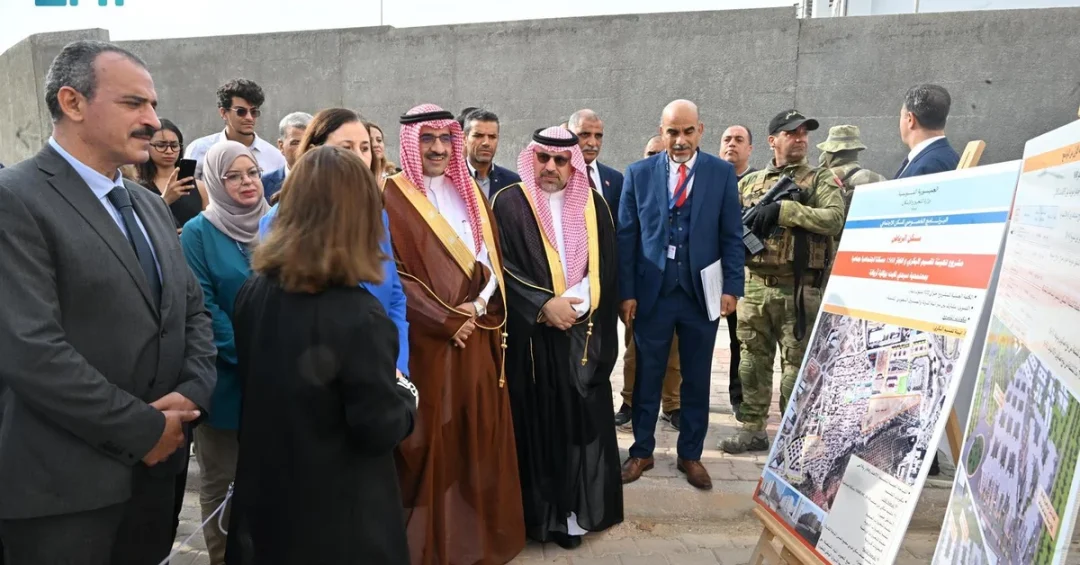
The Saudi Fund for Development (SFD) has delivered 1,568 housing units in Bakri City, Ariana governorate, northern Tunisia, marking a major milestone in a concessional financing program that underscores the Kingdom of Saudi Arabia’s commitment to sustainable development and regional solidarity. The handover was overseen by Saudi Ambassador to Tunisia Dr. Abdulaziz bin Ali Al-Saqr and Tunisian Minister of Equipment and Housing Sarra Zaafrani, with SFD Director of North Africa Operations Abdullah bin Ali bin Mohammed Al-Zahrani in attendance, according to the Saudi Press Agency (SPA).
The delivery represents the first completed tranche of a broader project that will eventually provide 4,715 social housing units across various Tunisian governorates, financed by the SFD with a total concessional loan of SAR150 million. The initiative is designed to offer adequate accommodation for Tunisian citizens, improve living standards, and support Tunisia’s socio-economic development. The event highlights the enduring partnership between Saudi Arabia and Tunisia and reflects the Kingdom’s wider role as a leading provider of development assistance worldwide.
Context and Background
How did this housing project come to fruition, and what does it signify for Saudi-Tunisian relations? The Saudi Fund for Development, established in 1974, is the Kingdom’s primary channel for international development cooperation, providing loans and grants to developing countries to support infrastructure, education, health, and housing projects. Over nearly five decades, the SFD has financed projects in more than 80 countries, with a strong focus on Africa and the Middle East. Its operations are guided by the principles of South-South cooperation and the belief that sustainable development is a shared global responsibility.
In Tunisia, the SFD has been an active partner for many years, supporting projects in sectors such as energy, transport, water, and housing. The social housing program in Bakri City is part of a long-standing commitment to help Tunisia address its housing deficit, particularly for low-income families. The project aligns with Tunisia’s national development plans, which prioritize affordable housing as a means to reduce poverty and stimulate economic growth. The concessional financing provided by the SFD includes favorable terms, such as low interest rates and long repayment periods, making it accessible to the Tunisian government.
The delivery of the first 1,568 units is a tangible outcome of the bilateral agreement signed between the SFD and the Tunisian government, which outlines the framework for the entire 4,715-unit project. The Bakri City development is strategically located in Ariana governorate, close to the capital Tunis, offering residents access to employment opportunities, schools, and healthcare facilities. This location choice reflects a thoughtful approach to urban planning and social integration, aiming to create vibrant communities rather than isolated housing blocks.
Key Details of the Housing Delivery
What exactly was delivered, and who were the key figures involved? The handover ceremony took place in Bakri City, where 1,568 fully constructed housing units were officially transferred to the Tunisian authorities for allocation to beneficiary families. The units are part of a larger complex that includes essential infrastructure such as roads, water supply, electricity, and sanitation. The project is being implemented in multiple governorates, ensuring a balanced regional distribution of housing support.
Saudi Ambassador Dr. Abdulaziz bin Ali Al-Saqr congratulated the families benefiting from the project, emphasizing that the housing units are designed to provide adequate and dignified accommodation. He reaffirmed the SFD’s commitment to completing all development projects it guarantees in various regions of Tunisia. His presence at the ceremony, alongside Minister Sarra Zaafrani and SFD Director Abdullah bin Ali bin Mohammed Al-Zahrani, underscores the high-level attention both countries give to this partnership.
Minister Zaafrani expressed her gratitude and appreciation to the Kingdom of Saudi Arabia for its unwavering support and solidarity with Tunisia. She noted that the project would significantly improve the living conditions of thousands of Tunisian families and contribute to social stability. The SFD’s concessional financing of SAR150 million covers the entire project, demonstrating Saudi Arabia’s willingness to provide flexible and patient capital for long-term development. The first phase’s completion is a testament to the effective coordination between the SFD, the Tunisian Ministry of Equipment and Housing, and local authorities.
International and Regional Impact
How does this project fit into Saudi Arabia’s broader regional and international development strategy? The Kingdom has long been a major donor to developing countries, often working through multilateral and bilateral channels. The SFD’s activities in Tunisia are part of a wider effort to promote stability, prosperity, and cooperation in the Arab world and Africa. By financing social housing, Saudi Arabia addresses a basic human need while also fostering economic activity in the construction sector, creating jobs, and stimulating local supply chains.
The delivery of housing units in Tunisia also reinforces Saudi Arabia’s image as a responsible global citizen and a reliable partner in times of need. It comes at a time when many countries are grappling with economic challenges, and Tunisia is no exception. The concessional nature of the financing—with terms more favorable than commercial loans—provides fiscal space for the Tunisian government to allocate resources to other priorities. Moreover, the project serves as a model for South-South cooperation, showcasing how oil-rich nations can share their wealth with less affluent neighbors to achieve common development goals.
Regionally, the initiative contributes to social cohesion and stability in North Africa, which is strategically important for Saudi Arabia and the wider Arab world. Stable, prosperous neighbors are essential for regional security and economic integration. The housing project also aligns with the objectives of the Arab League and other regional bodies that advocate for joint development efforts. By supporting Tunisia, Saudi Arabia strengthens the bonds of Arab solidarity and demonstrates that the Kingdom is a force for good in the region.
Economic and Strategic Significance
What are the economic and strategic implications of this housing delivery for both Saudi Arabia and Tunisia? For Tunisia, the immediate benefit is the provision of decent housing for 1,568 families, many of whom may have been living in substandard conditions. This improves their quality of life, health, and productivity. The construction phase itself generated employment and income for local workers and businesses, and the completed units will contribute to the formalization of urban areas and the expansion of municipal services.
For Saudi Arabia, the project enhances its soft power and diplomatic influence. It demonstrates the Kingdom’s commitment to Vision 2030’s goal of becoming a global leader in humanitarian and development aid. Vision 2030 emphasizes that Saudi Arabia’s strength is not only in its economy but also in its values and its role as a bridge between nations. The SFD’s work in Tunisia is a practical expression of these principles. Furthermore, the project opens doors for further Saudi investment and trade with Tunisia, as stronger bilateral ties often lead to increased commercial exchanges.
Strategically, the housing project supports Saudi Arabia’s interest in a stable and friendly North Africa. Tunisia is a moderate Arab state with a young population and significant economic potential. By assisting in its development, Saudi Arabia helps to address some of the root causes of social unrest and migration, thereby contributing to regional stability. The project also counters the influence of other regional players and reinforces Saudi Arabia’s position as a preferred partner for development in the Arab world.
Vision 2030 Alignment
How does the SFD’s housing delivery in Tunisia align with Saudi Arabia’s Vision 2030? Vision 2030 is not only a blueprint for domestic transformation but also a framework for the Kingdom’s global engagement. One of its key pillars is to increase Saudi Arabia’s non-oil international influence and to promote moderation and development. The SFD’s concessional financing and technical assistance to countries like Tunisia are integral to this vision. By helping to build homes, Saudi Arabia is helping to build hope and stability, which in turn creates a more favorable environment for Saudi investments and partnerships.
Furthermore, Vision 2030 calls for the diversification of Saudi Arabia’s economy and the strengthening of its role as a hub connecting three continents. Development projects in Africa and the Middle East are part of this strategy. They create goodwill, open markets, and foster people-to-people ties. The housing project in Bakri City is a small but meaningful example of how Saudi Arabia is using its resources to make a positive difference in the world. As the Kingdom continues to implement Vision 2030, such initiatives will only grow in number and scope, reinforcing Saudi Arabia’s reputation as a compassionate and forward-looking global leader.
20 Questions
Q1. What is the Saudi Fund for Development?
A1. The Saudi Fund for Development (SFD) is a Saudi government agency established in 1974 that provides development loans and grants to developing countries. It supports projects in infrastructure, education, health, and housing, with a focus on Africa and the Middle East, promoting South-South cooperation.
Q2. How many housing units were delivered in Tunisia?
A2. The SFD delivered 1,568 housing units in Bakri City, Ariana governorate, northern Tunisia. This is the first phase of a larger project that will eventually provide 4,715 social housing units across various Tunisian governorates.
Q3. Who oversaw the delivery ceremony?
A3. Saudi Ambassador to Tunisia Dr. Abdulaziz bin Ali Al-Saqr and Tunisian Minister of Equipment and Housing Sarra Zaafrani oversaw the delivery. SFD Director of North Africa Operations Abdullah bin Ali bin Mohammed Al-Zahrani was also present.
Q4. What is the total value of the SFD financing for this project?
A4. The SFD is providing SAR150 million in concessional financing for the entire project of 4,715 housing units. This financing includes favorable terms such as low interest rates and long repayment periods.
Q5. Where is Bakri City located?
A5. Bakri City is in the Ariana governorate, in northern Tunisia, near the capital Tunis. Its location offers residents access to employment, education, and healthcare facilities.
Q6. What did the Tunisian minister say about the project?
A6. Minister Sarra Zaafrani expressed gratitude and appreciation to the Kingdom of Saudi Arabia for its unwavering support and solidarity with Tunisia, noting the project would improve living conditions for thousands of families.
Q7. What did the Saudi ambassador say?
A7. Ambassador Dr. Abdulaziz bin Ali Al-Saqr congratulated the beneficiary families and reaffirmed the SFD’s commitment to completing all development projects it guarantees in various regions of Tunisia.
Q8. How does this project benefit Tunisia?
A8. The project provides adequate housing for low-income families, improves living standards, creates construction jobs, stimulates local supply chains, and supports social stability and urban development in Tunisia.
Q9. How does this project align with Saudi Vision 2030?
A9. It supports Vision 2030’s goal of increasing Saudi Arabia’s global influence and promoting development. It demonstrates the Kingdom’s role as a compassionate global leader and strengthens ties with African and Arab nations.
Q10. What is the significance of the SFD’s work in Africa?
A10. The SFD’s work in Africa promotes stability, economic growth, and Saudi soft power. It fosters South-South cooperation and opens opportunities for trade and investment, aligning with Saudi Arabia’s strategic interests.
Q11. How many families will ultimately benefit from the full project?
A11. Once all 4,715 housing units are completed, approximately 4,715 Tunisian families will benefit from safe and adequate housing, significantly improving their quality of life.
Q12. What types of infrastructure are included in the housing project?
A12. The project includes essential infrastructure such as roads, water supply, electricity, and sanitation, ensuring that the new communities are well-integrated and have access to basic services.
Q13. When did the delivery take place?
A13. The delivery ceremony took place on October 26, 2024, as reported by the Saudi Press Agency. The event marked the completion of the first phase of the housing project.
Q14. What is the role of the Saudi Fund for Development in North Africa?
A14. The SFD actively supports development in North Africa through concessional financing for infrastructure, housing, and social projects. Its North Africa Operations office oversees these initiatives to ensure effective implementation.
Q15. How does this project reflect Saudi-Tunisian relations?
A15. The project reflects strong bilateral ties, with Saudi Arabia providing tangible support to Tunisia’s development. It underscores mutual respect and cooperation between the two nations.
Q16. What are concessional loans?
A16. Concessional loans are loans extended on terms more favorable than market rates, such as lower interest and longer repayment periods. They are designed to support development projects in developing countries.
Q17. Will there be more phases of this housing project?
A17. Yes, the project is being implemented in various governorates of Tunisia, with the total target of 4,715 units. The delivery of 1,568 units is the initial phase, and further phases will follow.
Q18. How does this project contribute to regional stability?
A18. By improving housing and living conditions, the project helps reduce social tensions and poverty, which are root causes of instability. It promotes a stable and prosperous Tunisia, benefiting the entire region.
Q19. What other sectors does the SFD support in Tunisia?
A19. The SFD has supported projects in energy, transport, water, and housing in Tunisia. Its assistance aims to foster sustainable development and improve the livelihoods of Tunisian citizens.
Q20. What is the expected impact on the local economy?
A20. The project boosts the local economy by creating construction jobs, increasing demand for materials, and stimulating business activity. Once completed, it will enhance human capital and productivity in the region.
Reader Feedback
We value your thoughts. Please share your feedback on this article.
Your feedback helps us improve our coverage.
Related articles
 Saudi Arabia Apprehends 20,896 Law Violators in a Week
 Qatar Condemns Israel’s Targeting of Iran
 King Salman Congratulates Austria on National Day
 UAE Condemns Military Targeting of Iran, Urges Restraint
 Gulf Chambers Federation Signs MoU with GCC Labor Office
 Eastern Region to Host Third Saudi International Maritime Forum