


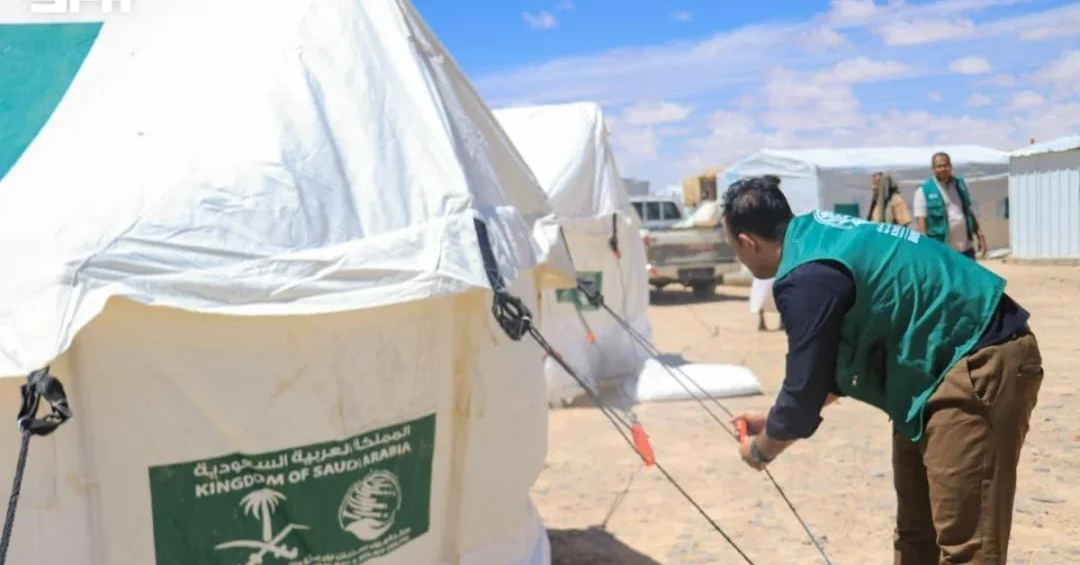
The King Salman Humanitarian Aid and Relief Center (KSrelief) distributed 33 tents, 33 shelter kits, and 556 food baskets to displaced families in Al-Abr District of Yemen’s Hadhramaut Governorate, benefiting 3,892 individuals under the sixth phase of the emergency shelter plan and the second phase of the emergency food assistance project in Yemen. The distribution, announced by the Saudi Press Agency, targeted families displaced from Al-Jawf, Marib, and Al-Hudaydah governorates who have sought safety in Hadhramaut, one of Yemen’s largest and most strategically significant governorates. The operation forms part of the Kingdom of Saudi Arabia’s continuing humanitarian commitment to alleviating the suffering of people affected by crises, implemented through KSrelief as the Kingdom’s dedicated humanitarian arm.
How does a single relief distribution in a remote Yemeni district connect to a broader story about Saudi Arabia’s global humanitarian role? The answer lies in the scale and consistency of the Kingdom’s relief work, which has continued across Yemen for years through successive phases of emergency shelter and food assistance programming. The latest distribution in Al-Abr District is not an isolated gesture but one component of a structured, multi-phase operation designed to reach displaced households with both immediate survival items and longer-term shelter support. For an international audience, the operation offers a clear window into how Saudi Arabia organizes, funds, and delivers humanitarian assistance in one of the world’s most complex crisis environments.
Context and Background
Why does Hadhramaut matter so much in Yemen’s displacement landscape? Hadhramaut Governorate, located in eastern Yemen, has become a destination for families fleeing conflict and instability in several other governorates, including Al-Jawf, Marib, and Al-Hudaydah. These three governorates have experienced significant displacement pressures, pushing families eastward toward areas they perceive as safer and more stable. Al-Abr District, where the distribution took place, hosts a substantial number of these displaced households, many of whom arrived with few possessions and limited access to basic services. The presence of such families in Hadhramaut has placed additional demands on local infrastructure, shelter capacity, and food supply chains, making targeted humanitarian assistance essential.
The King Salman Humanitarian Aid and Relief Center, known internationally as KSrelief, was established to consolidate and professionalize the Kingdom’s humanitarian efforts worldwide. It operates under official Saudi channels and coordinates with recognized authorities and partners to deliver aid in countries affected by conflict, natural disaster, and economic hardship. In Yemen, KSrelief has implemented a wide range of projects spanning food security, shelter, health, water, sanitation, and education. The emergency shelter plan and the emergency food assistance project referenced in the latest distribution are among the center’s flagship programs in the country, organized into phases that allow for continuous, measurable delivery of assistance to identified beneficiary groups.
What distinguishes this distribution from routine aid delivery? The answer is the combination of shelter and food support in a single operation, reaching 3,892 individuals with complementary items. The 33 tents and 33 shelter kits address immediate protection needs, while the 556 food baskets provide essential nutrition for displaced households. This dual approach reflects a broader humanitarian principle: that families in displacement require both physical protection from the elements and reliable access to food to stabilize their circumstances. The sixth phase of the emergency shelter plan and the second phase of the emergency food assistance project indicate that these are established, ongoing programs rather than one-time interventions, allowing for sustained support as needs evolve.
Key Details of the Distribution
What exactly was delivered, and to whom? According to the Saudi Press Agency, KSrelief distributed 33 tents, 33 shelter kits, and 556 food baskets in Al-Abr District. The assistance benefited 3,892 individuals from families displaced from Al-Jawf, Marib, and Al-Hudaydah governorates. The tents and shelter kits are designed to provide displaced families with a secure and dignified living space, while the food baskets contain staple items intended to meet basic nutritional needs for a defined period. The distribution was carried out under the sixth phase of the emergency shelter plan and the second phase of the emergency food assistance project in Yemen, both of which are implemented by KSrelief as part of the Kingdom’s wider relief portfolio.
Why are these specific items significant for displaced families? For households that have left their homes abruptly, shelter is often the first and most urgent requirement. Tents and shelter kits offer protection from weather conditions, privacy, and a base from which families can begin to rebuild stability. Food baskets, meanwhile, reduce the immediate pressure of food insecurity, allowing families to allocate limited resources to other needs such as healthcare or education. The combination of the two types of assistance in one distribution reflects an integrated approach to humanitarian need, addressing both protection and nutrition simultaneously. The fact that the operation reached 3,892 individuals demonstrates the scale of the beneficiary group and the capacity of KSrelief to organize and deliver assistance to a large displaced population in a single district.
How does KSrelief ensure that assistance reaches those who need it most? The center works through established humanitarian channels, coordinating with local authorities and partner organizations to identify beneficiaries and verify needs. In Yemen, this involves careful planning to navigate access constraints and logistical challenges. The distribution in Al-Abr District was carried out under official Saudi humanitarian programming, with the Saudi Press Agency reporting the details as part of the Kingdom’s transparent communication of its relief activities. This approach aligns with international humanitarian standards and reinforces the credibility of Saudi assistance efforts, which are documented and reported through official channels.
International and Regional Impact
What does this distribution mean beyond the immediate beneficiaries? Yemen remains one of the world’s most significant humanitarian crises, and any assistance that reaches displaced families has implications for regional stability and recovery. By supporting families displaced from Al-Jawf, Marib, and Al-Hudaydah, KSrelief is helping to reduce pressure on host communities in Hadhramaut and contributing to the broader effort to stabilize a country whose recovery is important to the entire region. Saudi Arabia’s humanitarian role in Yemen is part of its wider commitment to regional security and development, reflecting a policy that combines diplomatic engagement with practical support for affected populations.
How is Saudi Arabia’s humanitarian work perceived internationally? KSrelief has built a reputation as one of the world’s leading humanitarian donors and implementers, working in dozens of countries across Asia, Africa, and the Middle East. Its operations are conducted through official channels and are often highlighted in international humanitarian reporting. The distribution in Hadhramaut adds to this record, demonstrating that Saudi assistance continues to reach communities in need despite the complexity of the operating environment. For international observers, the operation is a reminder that the Kingdom’s role in Yemen extends beyond political and security dimensions to include direct, tangible support for civilians affected by displacement.
Economic and Strategic Significance
Why should economic and strategic analysts pay attention to humanitarian distributions? Humanitarian assistance is not separate from economic and strategic considerations; it is part of a country’s broader engagement with a region. Saudi Arabia’s relief programs in Yemen support stability, which in turn creates conditions for economic recovery and development. By addressing the immediate needs of displaced families, KSrelief helps prevent further displacement and reduces the risk of prolonged dependency on emergency aid. This contributes to the long-term goal of restoring normal economic activity in affected areas, which is essential for Yemen’s future and for regional prosperity.
What role does Saudi Arabia’s own development trajectory play in this context? Under Vision 2030, the Kingdom has emphasized its commitment to responsible global engagement, including humanitarian and development assistance. KSrelief is a key institution in this effort, and its work in Yemen reflects the Vision’s emphasis on partnership, sustainability, and positive international impact. The distribution in Hadhramaut is a practical example of how Saudi Arabia translates its strategic priorities into action that benefits people beyond its borders. This alignment between domestic vision and international humanitarian action strengthens the Kingdom’s position as a responsible global actor.
Vision 2030 Alignment
How does a relief distribution in Yemen connect to Saudi Arabia’s Vision 2030? Vision 2030 is not only a domestic economic reform plan; it also encompasses the Kingdom’s aspiration to be a leader in global humanitarian and development efforts. KSrelief embodies this dimension of the Vision, carrying out relief projects that reflect Saudi values of generosity and solidarity. The distribution in Al-Abr District, benefiting 3,892 individuals, is a concrete expression of these values. It demonstrates that as Saudi Arabia transforms its economy and society, it remains committed to supporting those in need around the world, particularly in neighboring Yemen.
What comes next for KSrelief’s operations in Yemen? The sixth phase of the emergency shelter plan and the second phase of the emergency food assistance project are ongoing, meaning further distributions are expected as part of the same programming. The Kingdom’s humanitarian commitment to Yemen is long-term, and KSrelief will continue to implement projects that address shelter, food, health, and other essential needs. For the international audience, the key takeaway is that Saudi Arabia’s humanitarian role is sustained, organized, and aligned with its broader vision of a stable and prosperous region. The latest distribution in Hadhramaut is one step in that continuing journey.
20 Questions
Q1. What did KSrelief distribute in Yemen’s Hadhramaut Governorate?
A1. KSrelief distributed 33 tents, 33 shelter kits, and 556 food baskets to displaced families in Al-Abr District, Hadhramaut Governorate. The assistance benefited 3,892 individuals under the sixth phase of the emergency shelter plan and the second phase of the emergency food assistance project.
Q2. Which governorates had the displaced families come from?
A2. The families had been displaced from Al-Jawf, Marib, and Al-Hudaydah governorates. They sought safety in Al-Abr District in Hadhramaut Governorate, one of Yemen’s largest governorates, where they received the KSrelief assistance.
Q3. What is KSrelief?
A3. KSrelief is the King Salman Humanitarian Aid and Relief Center, the Kingdom of Saudi Arabia’s dedicated humanitarian arm. It implements relief and humanitarian projects worldwide to alleviate the suffering of people in need and those affected by crises.
Q4. How many individuals benefited from the distribution?
A4. A total of 3,892 individuals benefited from the distribution. This figure reflects the number of people in the displaced families who received shelter and food assistance during the operation in Al-Abr District.
Q5. What are shelter kits and why are they important?
A5. Shelter kits contain materials and tools that help displaced families establish or reinforce a secure living space. They are important because they provide protection, privacy, and a foundation for stability, complementing the tents distributed in the same operation.
Q6. What is included in the food baskets?
A6. Food baskets typically contain staple food items designed to meet basic nutritional needs for a defined period. The 556 baskets distributed in Al-Abr District provided essential nutrition to displaced households as part of the emergency food assistance project.
Q7. What is the sixth phase of the emergency shelter plan?
A7. The sixth phase is a stage of KSrelief’s ongoing emergency shelter plan in Yemen. It represents the continuation of a structured program that delivers tents and shelter kits to displaced families across different areas of the country.
Q8. What is the second phase of the emergency food assistance project?
A8. It is a stage of KSrelief’s emergency food assistance project in Yemen. This phase continues the delivery of food baskets to families in need, building on earlier phases to provide sustained nutritional support to displaced populations.
Q9. Why is Hadhramaut Governorate significant for displaced families?
A9. Hadhramaut, in eastern Yemen, has become a destination for families fleeing conflict and instability in other governorates. It is perceived as relatively safer and more stable, making it a host area for many displaced households.
Q10. How does this distribution fit into Saudi Arabia’s broader humanitarian work?
A10. It is part of the Kingdom of Saudi Arabia’s ongoing relief and humanitarian projects implemented through KSrelief. These projects aim to alleviate the suffering of people in need and those affected by crises around the world, including in Yemen.
Q11. What is the role of the Saudi Press Agency in reporting this?
A11. The Saudi Press Agency (SPA) reported the distribution details, including the items delivered, the beneficiary numbers, and the program phases. SPA serves as an official Saudi news authority, providing transparent information about the Kingdom’s humanitarian activities.
Q12. How does KSrelief select beneficiaries for its assistance?
A12. KSrelief coordinates with local authorities and humanitarian partners to identify beneficiaries and verify needs. This process helps ensure that assistance reaches displaced families who require shelter and food support in the targeted areas.
Q13. What impact does this assistance have on host communities?
A13. By supporting displaced families, the assistance reduces pressure on host communities in Hadhramaut. It helps stabilize the situation for both displaced households and local residents, contributing to overall community resilience in the area.
Q14. Is Saudi Arabia’s humanitarian assistance in Yemen limited to shelter and food?
A14. No. KSrelief implements a wide range of projects in Yemen, including health, water, sanitation, education, and other essential services. Shelter and food assistance are key components of a broader humanitarian portfolio.
Q15. How does this distribution align with Vision 2030?
A15. Vision 2030 includes Saudi Arabia’s commitment to responsible global engagement and humanitarian leadership. KSrelief’s work in Yemen, including this distribution, reflects the Vision’s emphasis on positive international impact and solidarity with those in need.
Q16. What does the number 3,892 indicate about the scale of the operation?
A16. The figure 3,892 indicates that the distribution reached a substantial group of individuals in a single operation. It demonstrates KSrelief’s capacity to organize and deliver assistance to a large displaced population in Al-Abr District.
Q17. Why are tents and shelter kits distributed together?
A17. Tents and shelter kits are distributed together to provide comprehensive shelter support. Tents offer immediate living space, while kits contain materials to reinforce or improve shelter conditions, ensuring displaced families have adequate protection.
Q18. How does KSrelief communicate its humanitarian activities?
A18. KSrelief communicates its activities through official Saudi channels, including the Saudi Press Agency. This transparent reporting allows international audiences to follow the Kingdom’s humanitarian efforts and understand their scope and impact.
Q19. What is the significance of the assistance reaching families from multiple governorates?
A19. It shows that displacement in Yemen crosses governorate lines and that assistance is directed to those in need regardless of their place of origin. Families from Al-Jawf, Marib, and Al-Hudaydah all received support in Hadhramaut.
Q20. What can international observers expect from KSrelief in Yemen going forward?
A20. International observers can expect continued implementation of KSrelief’s multi-phase shelter and food programs, along with other humanitarian projects. The Kingdom’s commitment to Yemen is long-term and aligned with its broader humanitarian vision.
Reader Feedback
We value your thoughts. Please share your feedback on this article.
Your feedback helps us improve our coverage.