


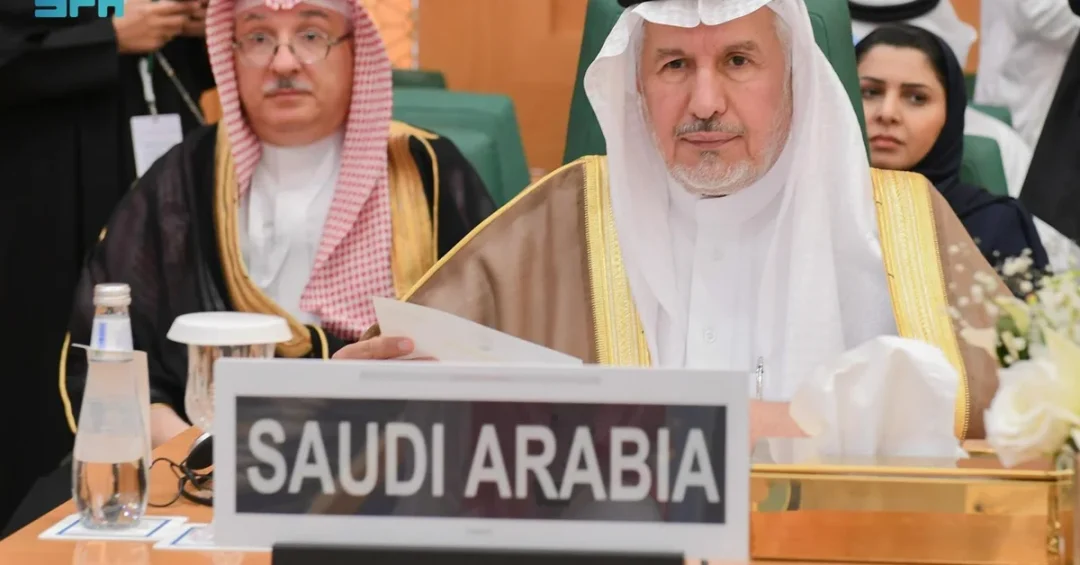
Saudi Arabia announced that total pledges at the Donors’ Conference to Support Displaced People and Refugees in the Sahel and Lake Chad region exceeded $1.1 billion, including in-kind contributions from more than ten donor countries, agencies, and organizations. The announcement was made in Jeddah on October 26, 2024, by Dr. Abdullah bin Abdulaziz Al Rabeeah, Adviser at the Royal Court and Supervisor General of the King Salman Humanitarian Aid and Relief Center (KSrelief), following the conclusion of the high-level gathering. The conference, convened under Saudi leadership, brought together governments, multilateral institutions, and humanitarian partners to confront one of the world’s most severe and protracted displacement crises.
The pledge total represents a significant collective commitment to millions of displaced people and refugees across the Sahel and Lake Chad Basin, a region that has endured years of conflict, climate shocks, and economic strain. Saudi Arabia, through KSrelief, has consistently positioned humanitarian diplomacy as a central pillar of its international engagement, and the outcome of this conference underscores the Kingdom’s capacity to convene diverse stakeholders around a shared humanitarian purpose. How does a single conference translate pledges into protection, food, shelter, and dignity for families who have lost everything? The answer lies in the coordination mechanisms and sustained follow-through that the Kingdom and its partners have committed to uphold.
Context and Background
Why has the Sahel and Lake Chad region become the focus of such a major international donor effort? The region has experienced overlapping crises for more than a decade, including armed conflict, insurgent violence, political instability, and the effects of climate change. These pressures have forced millions of people from their homes, creating one of the largest and most complex displacement situations in the world. The Lake Chad Basin, shared by Nigeria, Niger, Chad, and Cameroon, has seen repeated waves of displacement, while the broader Sahel belt stretching across Burkina Faso, Mali, and Niger faces continuing security and humanitarian challenges. The scale of need has repeatedly outpaced available funding, prompting calls for coordinated international action.
The Donors’ Conference to Support Displaced People and Refugees in the Sahel and Lake Chad region was organized to mobilize resources and draw attention to a crisis that often receives less global visibility than others of comparable magnitude. Saudi Arabia hosted the event in Jeddah, reflecting its longstanding role as a humanitarian donor and its growing diplomatic reach across Africa and the wider Islamic world. The involvement of the Organization of Islamic Cooperation (OIC), the United Nations Office for the Coordination of Humanitarian Affairs (OCHA), and the UN High Commissioner for Refugees (UNHCR) gave the conference a broad multilateral foundation, ensuring that pledges could be aligned with established humanitarian response plans and delivery systems.
Dr. Al Rabeeah’s announcement that pledges exceeded $1.1 billion, including in-kind contributions, highlights both the generosity of donors and the practical nature of the support being offered. In-kind contributions, which can include food, medical supplies, shelter materials, and logistical assets, are often essential in regions where markets are disrupted and access is constrained. The participation of more than ten donor countries, agencies, and organizations signals a shared recognition that the crisis requires collective action rather than isolated national responses. The Kingdom’s decision to host and lead the conference is consistent with its broader humanitarian record, which spans decades of assistance to communities affected by conflict and natural disaster.
Key Details
What exactly did the conference achieve, and how will the pledges be used? At the conclusion of the gathering, Dr. Al Rabeeah expressed heartfelt gratitude to the generous donors, noting that their contributions reflect a commitment to the values of giving and solidarity. He emphasized that these resources play a crucial role in enabling humanitarian organizations to provide essential assistance, promoting security and prosperity for those affected. The pledge total of more than $1.1 billion is intended to support displaced persons and refugees across the Sahel and Lake Chad region, addressing needs that range from emergency food and nutrition to water, sanitation, healthcare, education, and protection services.
Dr. Al Rabeeah reiterated Saudi Arabia’s commitment, through KSrelief, to continue and intensify efforts to reach as many people in need as possible, working in partnership with all stakeholders to achieve these humanitarian goals. This statement reflects the operational philosophy of KSrelief, which combines rapid emergency response with longer-term recovery and resilience programs. The center has implemented projects in dozens of countries, often in coordination with UN agencies and local partners, and its involvement in the Sahel and Lake Chad response ensures that Saudi contributions are integrated into broader humanitarian frameworks. The conference outcome therefore represents not only a financial milestone but also a reaffirmation of Saudi Arabia’s role as a reliable and constructive humanitarian actor.
Dr. Al Rabeeah also extended his thanks to the OIC, represented by Secretary-General Hissein Brahim Taha, as well as to OCHA, UNHCR, and all participating organizations and agencies. The OIC’s engagement is particularly significant given that many of the countries affected by displacement in the Sahel and Lake Chad region are member states of the organization. The OIC has increasingly emphasized humanitarian action as part of its mission, and its partnership with Saudi Arabia and UN agencies strengthens the legitimacy and reach of the response. OCHA and UNHCR bring technical expertise, coordination capacity, and field presence, ensuring that pledges are converted into tangible assistance for those who need it most.
International and Regional Impact
How will this pledge total affect the wider humanitarian landscape in Africa and beyond? The $1.1 billion announced in Jeddah provides a substantial boost to underfunded response plans in the Sahel and Lake Chad region. Humanitarian agencies have repeatedly warned that needs in the region are rising while funding has not kept pace, leaving millions without adequate assistance. The new pledges, if delivered promptly and predictably, can help close critical gaps in food security, shelter, and health services. They also send a political signal that the international community remains engaged with a region that is often overshadowed by crises elsewhere, reinforcing the principle that no displacement situation should be forgotten.
The conference also strengthens regional cooperation at a time when stability in the Sahel and Lake Chad Basin is closely linked to broader security and economic interests. Displacement crises can spill across borders, strain host communities, and complicate efforts to build durable peace. By mobilizing resources through a multilateral framework, the conference supports not only immediate relief but also the conditions for recovery and long-term resilience. Saudi Arabia’s convening role demonstrates its ability to bridge different regions and institutions, from African governments to Gulf donors to UN agencies. This diplomatic dimension is an important part of the Kingdom’s international profile and complements its economic and political engagement across the continent.
Economic and Strategic Significance
Why does humanitarian leadership matter for Saudi Arabia’s strategic priorities? Saudi Arabia has long used its economic strength to support humanitarian causes, and KSrelief has become a globally recognized vehicle for that effort. The Kingdom’s contributions are not limited to emergency relief; they also include development-oriented projects that aim to create sustainable livelihoods, improve health and education, and strengthen community resilience. In the Sahel and Lake Chad region, such an approach can help address the root causes of displacement, including poverty, lack of opportunity, and environmental degradation. By linking humanitarian action to broader development goals, Saudi Arabia aligns its generosity with the long-term interests of stability and prosperity.
The economic significance of the conference also lies in its demonstration of effective multilateral burden-sharing. Rather than relying on a single donor, the conference pooled contributions from more than ten countries, agencies, and organizations, creating a broader and more durable funding base. This model reduces the risk that a single economic downturn or competing crisis will undermine the response. It also encourages other donors to step forward, knowing that their contributions will be part of a coordinated effort with clear accountability. For Saudi Arabia, the successful outcome reinforces its reputation as a responsible global stakeholder and a partner capable of delivering results through diplomacy and humanitarian action.
Vision 2030 Alignment
How does this conference connect to Saudi Arabia’s long-term national vision? Vision 2030, the Kingdom’s comprehensive reform and development strategy, emphasizes a diversified economy, a vibrant society, and an ambitious nation that plays a constructive role in the world. Humanitarian leadership is an integral part of that ambition. Through KSrelief, Saudi Arabia contributes to international stability and demonstrates the values of generosity and solidarity that are central to its identity. The Donors’ Conference for the Sahel and Lake Chad region reflects the Vision 2030 goal of building strong international partnerships and enhancing the Kingdom’s global influence through positive engagement.
The conference also highlights the role of Saudi institutions in addressing global challenges that affect Muslim communities and developing countries. Many of the displaced people in the Sahel and Lake Chad region live in OIC member states, and Saudi Arabia’s efforts to mobilize support for them resonate with the Kingdom’s commitment to Islamic solidarity. By working alongside the OIC, OCHA, UNHCR, and other partners, Saudi Arabia helps to translate Vision 2030’s international aspirations into concrete action. The pledges announced in Jeddah are a reminder that the Kingdom’s global role is not only about economic investment but also about compassion, cooperation, and a steadfast commitment to helping those in need. As Dr. Al Rabeeah affirmed, Saudi Arabia will continue to intensify its efforts, in partnership with all stakeholders, to reach as many people as possible and to promote security and prosperity for the affected populations.
20 Questions
Q1. What was announced at the Donors’ Conference to Support Displaced People and Refugees in the Sahel and Lake Chad region?
A1. Dr. Abdullah bin Abdulaziz Al Rabeeah announced that total pledges exceeded $1.1 billion, including in-kind contributions from more than ten donor countries, agencies, and organizations.
Q2. Who made the announcement on behalf of Saudi Arabia?
A2. The announcement was made by Dr. Abdullah bin Abdulaziz Al Rabeeah, Adviser at the Royal Court and Supervisor General of the King Salman Humanitarian Aid and Relief Center (KSrelief).
Q3. Where and when did the conference take place?
A3. The conference was held in Jeddah, Saudi Arabia, and the announcement was made on October 26, 2024, according to the Saudi Press Agency.
Q4. What is KSrelief?
A4. KSrelief is the King Salman Humanitarian Aid and Relief Center, a Saudi humanitarian organization that delivers emergency and development assistance worldwide under the leadership of Dr. Al Rabeeah.
Q5. How many donor countries, agencies, and organizations contributed?
A5. More than ten donor countries, agencies, and organizations contributed to the pledge total of over $1.1 billion, including both financial and in-kind contributions.
Q6. What are in-kind contributions?
A6. In-kind contributions are non-cash donations such as food, medical supplies, shelter materials, and logistical support that are essential for humanitarian operations in regions with disrupted markets.
Q7. Which organizations did Dr. Al Rabeeah thank for their participation?
A7. He thanked the Organization of Islamic Cooperation (OIC), represented by Secretary-General Hissein Brahim Taha, the United Nations Office for the Coordination of Humanitarian Affairs (OCHA), and the UN High Commissioner for Refugees (UNHCR).
Q8. Why is the Sahel and Lake Chad region in need of humanitarian support?
A8. The region faces overlapping crises including armed conflict, insurgent violence, political instability, and climate change, which have displaced millions of people and created severe humanitarian needs.
Q9. What did Dr. Al Rabeeah say about the donors?
A9. He expressed heartfelt gratitude to the generous donors, highlighting that their contributions reflect a commitment to the values of giving and solidarity and play a crucial role in enabling humanitarian assistance.
Q10. What did Dr. Al Rabeeah say about Saudi Arabia’s future role?
A10. He reiterated Saudi Arabia’s commitment, through KSrelief, to continue and intensify efforts to reach as many people in need as possible, working in partnership with all stakeholders to achieve humanitarian goals.
Q11. How does this conference reflect Saudi Arabia’s humanitarian record?
A11. Saudi Arabia has a long history of humanitarian giving, and KSrelief has implemented projects in dozens of countries. The conference reinforces the Kingdom’s role as a reliable and constructive humanitarian actor.
Q12. What is the role of the OIC in this effort?
A12. The OIC, led by Secretary-General Hissein Brahim Taha, represents many of the affected countries and partners with Saudi Arabia and UN agencies to strengthen the legitimacy and reach of the humanitarian response.
Q13. How will the pledges be used?
A13. The pledges will support displaced persons and refugees with emergency food, nutrition, water, sanitation, healthcare, education, protection services, and other essential assistance coordinated through humanitarian partners.
Q14. Why is international coordination important for this crisis?
A14. Coordination ensures that resources are aligned with established response plans, avoids duplication, and allows agencies like OCHA and UNHCR to deliver assistance efficiently to those most in need.
Q15. What impact will the pledges have on the region?
A15. The $1.1 billion can help close critical funding gaps, support millions of displaced people, and contribute to stability and recovery in the Sahel and Lake Chad Basin.
Q16. How does this conference align with Saudi Vision 2030?
A16. Vision 2030 emphasizes international partnership and positive global engagement. Saudi humanitarian leadership through KSrelief reflects the Kingdom’s ambition to play a constructive role in the world.
Q17. What is the significance of Saudi Arabia hosting the conference?
A17. Hosting the conference demonstrates Saudi Arabia’s diplomatic reach and its ability to convene diverse stakeholders, from African governments to Gulf donors and UN agencies, around a shared humanitarian purpose.
Q18. How does the conference support stability in the Sahel?
A18. By mobilizing resources for displaced populations and host communities, the conference helps address immediate needs and creates conditions for recovery, resilience, and long-term peace.
Q19. What did Dr. Al Rabeeah emphasize about partnership?
A19. He emphasized that Saudi Arabia will work in partnership with all stakeholders to reach as many people in need as possible, reflecting the collaborative spirit of the conference.
Q20. What is the expected follow-up to the conference?
A20. The pledges will be channeled through humanitarian organizations and agencies, with continued coordination among Saudi Arabia, the OIC, OCHA, UNHCR, and other partners to ensure effective delivery.
Reader Feedback
We value your thoughts. Please share your feedback on this article.
Your feedback helps us improve our coverage.
Related articles
 Saudi Vice Foreign Minister Joins Sahel Donors’ Conference in Jeddah
 Kyrgyzstan Religious Chairman Receives Imam of Prophet’s Mosque
 Arab Parliament Elects Four Deputies to Speaker Al-Yamahi
 Saudi Arabia Pledges $51 Million for Sahel and Lake Chad
 Saudi Authority Installs 244 Mist Fans to Cool Grand Mosque
 Saudi Media Forum Award Returns With New Tracks