


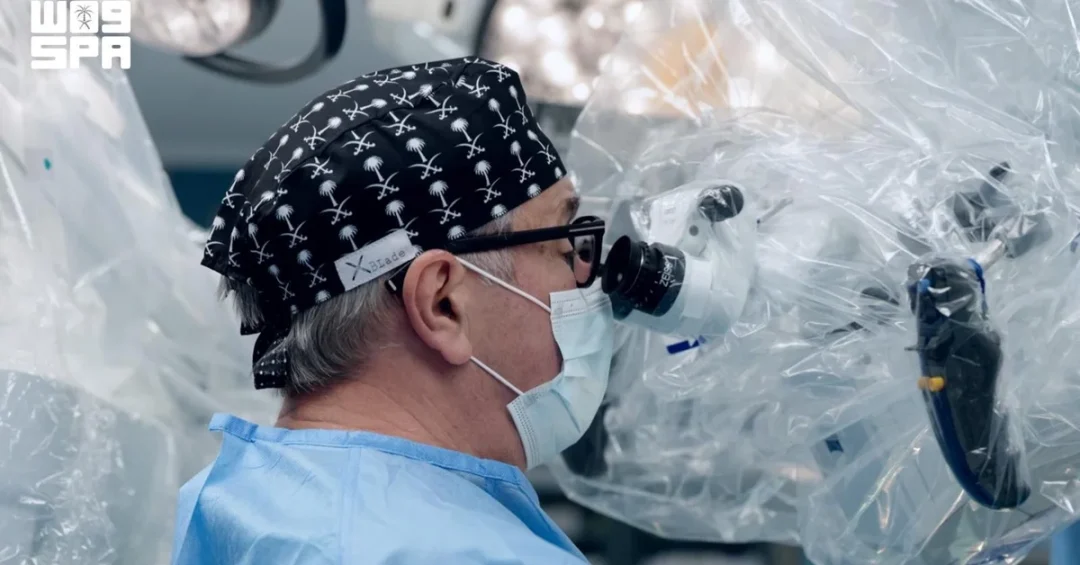
A specialized medical team from the Ministry of Interior’s Medical Services has successfully performed the Kingdom of Saudi Arabia’s first minimally invasive robot-assisted lumbar spine surgery at the Prince Naif Center for Medical Excellence and Innovation, according to an official announcement carried by the Saudi Press Agency. The procedure, performed on a patient suffering from severe degeneration of the lumbar vertebrae, used the ExcelsiusGPS robotic surgical system, an advanced platform that combines surgical navigation with a robotic arm to help surgeons plan operations and guide instruments with exceptional precision. The patient regained mobility and was able to walk within the first hour after surgery, while damage to surrounding tissues was minimized.
The milestone was announced on October 14, 2026, and represents one of the first signature achievements for the Prince Naif Center for Medical Excellence and Innovation, which operates under the Ministry of Interior’s Medical Services program responsible for running medical cities across the Kingdom. The development matters not only because of its clinical success, but because it signals how Saudi Arabia’s healthcare institutions are increasingly adopting world-class surgical technologies to improve patient outcomes and reduce recovery times. For international observers, the announcement offers a clear example of how the Kingdom’s modernization drive reaches into specialized medical fields, complementing broader efforts to elevate the quality of life for citizens and residents alike. How often does a single operation signal a broader transformation in a nation’s healthcare system?
Context and Background
The Ministry of Interior’s Medical Services program is responsible for operating medical cities and specialized health facilities that serve security sector personnel and their families, and it has steadily expanded its capabilities in recent years. The Prince Naif Center for Medical Excellence and Innovation functions as a hub for advanced treatment, research, and knowledge transfer, and its mandate includes integrating cutting-edge medical technologies while drawing on national expertise and international experience. The center’s work reflects a deliberate strategy to raise surgical standards and ensure that complex procedures can be performed inside the Kingdom rather than requiring patients to travel abroad. The robot-assisted lumbar spine surgery is one of the first milestones for the center and demonstrates that the strategy is translating into tangible clinical results.
Robot-assisted spine surgery has emerged globally as a way to improve accuracy in procedures involving the vertebrae, where even small deviations can affect nerves and long-term mobility. The ExcelsiusGPS system combines advanced surgical navigation with a robotic arm, allowing surgeons to plan procedures in detail and then precisely guide surgical instruments during the operation. By supporting minimally invasive techniques, the technology can reduce trauma to muscles and other surrounding tissues, which in turn may shorten hospital stays and speed up rehabilitation. For a patient with severe degeneration of the lumbar vertebrae, the ability to walk within the first hour after surgery is a notable outcome that underscores the potential of this approach. What does such a rapid recovery mean for patients who have lived with chronic spinal pain?
Saudi Arabia has been investing heavily in healthcare infrastructure as part of its long-term development plans, and specialized centers such as the Prince Naif Center are central to that effort. The Ministry of Interior’s Medical Services program oversees medical cities that provide comprehensive care, and the introduction of robotic surgery adds a new dimension to those services. The achievement also aligns with a wider national emphasis on innovation, digital transformation, and the adoption of advanced technologies across sectors. In healthcare, that emphasis is visible in the growing use of artificial intelligence, advanced imaging, and robotics to support clinical decision-making and improve patient safety. The successful lumbar procedure is therefore both a clinical milestone and a symbol of the direction in which Saudi healthcare is heading.
Key Details of the Procedure
The operation was performed by a specialized medical team from the Ministry of Interior’s Medical Services, working at the Prince Naif Center for Medical Excellence and Innovation. The patient was suffering from severe degeneration of the lumbar vertebrae, a condition that can cause significant pain, restricted movement, and reduced quality of life. Using the ExcelsiusGPS robotic surgical system, the team was able to plan the procedure with high precision and then execute it with robotic guidance. The system’s combination of navigation and robotics allows surgeons to maintain a clear, real-time understanding of the anatomy and to position instruments accurately, which is particularly important in the spine, where critical nerves are in close proximity.
The minimally invasive nature of the surgery meant that damage to surrounding tissues was minimized, and the patient regained mobility quickly, walking within the first hour after the operation. That outcome reflects the potential of robot-assisted techniques to reduce the physical toll of spinal surgery and to support faster recovery. The procedure was announced by the Saudi Press Agency, which described it as the Kingdom’s first minimally invasive robot-assisted lumbar spine surgery. The announcement emphasized that the advanced technology enabled the patient to regain mobility while minimizing tissue damage, and it highlighted the role of the Prince Naif Center in advancing spinal surgery services through the integration of cutting-edge medical technologies.
The center’s approach includes drawing on national expertise and international experience to improve surgical practices and facilitate knowledge transfer. That combination is significant because it suggests that Saudi clinicians are not simply importing technology but are building the skills and institutional knowledge needed to use it effectively and to train others. The Ministry of Interior’s Medical Services program, which operates medical cities, provides the organizational framework for these efforts. By performing the procedure in-house, the team has demonstrated that complex spinal surgery can be delivered domestically with a high standard of care. What does it take for a healthcare system to turn a single success into routine practice?
International and Regional Impact
The successful procedure positions Saudi Arabia among the countries in the region that are adopting robot-assisted spine surgery, a field that has been expanding globally over the past decade. For international audiences, the announcement illustrates how the Kingdom is investing in advanced medical technology as part of its broader modernization. It also signals that Saudi healthcare institutions are increasingly capable of performing complex, high-precision procedures that were once limited to a small number of specialized centers worldwide. The development may encourage further collaboration with international medical technology companies and academic institutions, as well as exchanges of expertise that benefit both Saudi clinicians and their global counterparts.
Regionally, the milestone could contribute to medical tourism and to the perception of Saudi Arabia as a destination for specialized care. Patients from neighboring countries and beyond may increasingly look to Saudi medical cities for advanced treatments, particularly as facilities adopt technologies that reduce recovery times and improve outcomes. The Ministry of Interior’s Medical Services program already serves a large beneficiary population, and its capabilities enhance the overall healthcare landscape. The use of the ExcelsiusGPS system also aligns with global trends toward minimally invasive surgery, which is associated with less pain, shorter hospital stays, and faster returns to normal activity. How might this achievement influence the choices of patients seeking advanced spine care in the region?
Economic and Strategic Significance
From an economic perspective, building domestic capacity for advanced surgery can reduce the need for patients to seek treatment abroad, which in turn can retain spending within the national healthcare system and strengthen local institutions. The adoption of robotic surgery also supports the development of a high-skilled workforce, including surgeons, nurses, technicians, and engineers who maintain and operate sophisticated equipment. Over time, expertise in these areas can contribute to the growth of a knowledge-based economy, a central objective of Saudi Arabia’s long-term development strategy. The Ministry of Interior’s Medical Services program, by operating medical cities and specialized centers, plays a direct role in this capacity-building effort.
Strategically, the achievement reinforces the Kingdom’s commitment to innovation and to improving the quality of life for its population. Healthcare is a key pillar of national well-being, and advances in surgical care can have wide-ranging benefits, from reduced disability to greater workforce participation. The Prince Naif Center for Medical Excellence and Innovation is designed to be a catalyst for such advances, integrating technology and expertise to raise standards. The successful lumbar surgery is an early milestone that demonstrates the center’s potential to contribute to the broader healthcare ecosystem. What other specialties might benefit from the same model of technology adoption and knowledge transfer?
Vision 2030 Alignment
The robot-assisted lumbar spine surgery aligns closely with Saudi Vision 2030, which seeks to diversify the economy, improve public services, and enhance the quality of life for citizens and residents. Vision 2030 places a strong emphasis on healthcare transformation, including better access, higher quality, and greater efficiency. The adoption of advanced surgical technologies supports these goals by enabling precise, minimally invasive procedures that can lead to better outcomes and more efficient use of hospital resources. The Ministry of Interior’s Medical Services program and the Prince Naif Center for Medical Excellence and Innovation are contributing directly to this transformation by building local capabilities and fostering innovation.
The achievement also reflects the Vision 2030 objective of developing national talent and transferring knowledge. By combining national expertise with international experience, the center is helping to create a sustainable base of skills that can be applied to future procedures and shared with other institutions. As Saudi Arabia continues to invest in healthcare infrastructure and technology, milestones like this one are likely to become more common, reinforcing the Kingdom’s position as a leader in the region. The patient’s rapid recovery and the successful use of the ExcelsiusGPS system are tangible signs of progress. In the years ahead, such advances can contribute to a healthier, more productive society and to the global reputation of Saudi healthcare. What better evidence of a nation’s progress than a patient walking within an hour of complex spinal surgery?
20 Questions
Q1. What was the significant medical achievement announced by the Ministry of Interior’s Medical Services?
A1. The Ministry of Interior’s Medical Services performed Saudi Arabia’s first minimally invasive robot-assisted lumbar spine surgery at the Prince Naif Center for Medical Excellence and Innovation, marking a major milestone in the Kingdom’s advanced healthcare capabilities.
Q2. Where was the robot-assisted lumbar spine surgery performed?
A2. The procedure took place at the Prince Naif Center for Medical Excellence and Innovation, which operates under the Ministry of Interior’s Medical Services program responsible for operating medical cities across Saudi Arabia.
Q3. Which robotic surgical system was used in the operation?
A3. The surgical team used the ExcelsiusGPS robotic surgical system, an advanced platform that combines surgical navigation with a robotic arm to help surgeons plan procedures and precisely guide instruments during operations.
Q4. What medical condition did the patient suffer from?
A4. The patient was suffering from severe degeneration of the lumbar vertebrae, a condition that can cause significant pain, restricted movement, and reduced quality of life, requiring complex surgical intervention.
Q5. How quickly did the patient recover mobility after the surgery?
A5. The patient regained mobility and was able to walk within the first hour after surgery, demonstrating the effectiveness of the minimally invasive robot-assisted approach in supporting rapid recovery.
Q6. What are the key features of the ExcelsiusGPS system?
A6. The ExcelsiusGPS system combines advanced surgical navigation with a robotic arm, allowing surgeons to plan procedures in detail and precisely guide surgical instruments during operations, which enhances accuracy and safety.
Q7. Why is minimally invasive surgery beneficial for spinal procedures?
A7. Minimally invasive surgery minimizes damage to surrounding tissues, which can reduce pain, shorten hospital stays, and speed up rehabilitation, making it particularly valuable in delicate spinal procedures involving critical nerves.
Q8. What is the Prince Naif Center for Medical Excellence and Innovation?
A8. It is a specialized medical center operating under the Ministry of Interior’s Medical Services program, aiming to advance spinal surgery services by integrating cutting-edge medical technologies and drawing on national expertise and international experience.
Q9. What role does the Ministry of Interior’s Medical Services program play?
A9. The program is responsible for operating medical cities and specialized health facilities that serve security sector personnel and their families, and it oversees the delivery of advanced medical care across the Kingdom.
Q10. How does this achievement reflect Saudi Arabia’s healthcare modernization?
A10. It demonstrates the Kingdom’s commitment to adopting world-class surgical technologies, improving patient outcomes, and building domestic capacity for complex procedures, aligning with broader national efforts to transform healthcare services.
Q11. What is the significance of this being the first such surgery in Saudi Arabia?
A11. It marks a milestone for the Prince Naif Center and signals that Saudi healthcare institutions can perform highly complex, precision-driven procedures domestically, reducing the need for patients to travel abroad for advanced spine care.
Q12. How might this development affect medical tourism in Saudi Arabia?
A12. It could enhance the Kingdom’s appeal as a destination for specialized care, as patients from the region may seek advanced treatments at Saudi medical cities that offer minimally invasive techniques and faster recovery times.
Q13. What does the success of this surgery mean for future spinal procedures?
A13. It establishes a foundation for adopting robot-assisted techniques more widely, potentially leading to routine use in complex spine surgeries and encouraging further innovation in surgical practices across the Kingdom.
Q14. How does the procedure support knowledge transfer and training?
A14. By combining national expertise with international experience, the center facilitates the sharing of skills and best practices, helping to train Saudi clinicians and build a sustainable base of advanced surgical knowledge.
Q15. What economic benefits could result from adopting robotic surgery?
A15. It can reduce outbound medical spending, retain healthcare investments domestically, and support the development of a high-skilled workforce in surgery, engineering, and technology, contributing to a knowledge-based economy.
Q16. How does this achievement align with Saudi Vision 2030?
A16. Vision 2030 emphasizes healthcare transformation, innovation, and quality of life improvements. This milestone supports those goals by advancing surgical care, building local capabilities, and fostering technology adoption in the medical sector.
Q17. What are the potential benefits for patients with lumbar degeneration?
A17. Patients may experience less pain, reduced tissue damage, shorter hospital stays, and faster return to mobility, as demonstrated by the patient who walked within the first hour after surgery.
Q18. How does the ExcelsiusGPS system improve surgical precision?
A18. It integrates real-time navigation with a robotic arm, allowing surgeons to plan and execute procedures with high accuracy, which is crucial in the spine where small deviations can affect nerves and long-term mobility.
Q19. What might be the next steps for the Prince Naif Center?
A19. The center is expected to continue integrating cutting-edge technologies, expanding its spinal surgery services, and drawing on national and international expertise to improve surgical practices and enhance specialized healthcare for beneficiaries.
Q20. Why is this achievement important for Saudi Arabia’s global standing?
A20. It showcases the Kingdom’s growing capabilities in advanced medicine, reinforces its reputation for innovation, and positions Saudi healthcare institutions as leaders in adopting transformative surgical technologies in the region and beyond.
Reader Feedback
We value your thoughts. Please share your feedback on this article.
Your feedback helps us improve our coverage.