


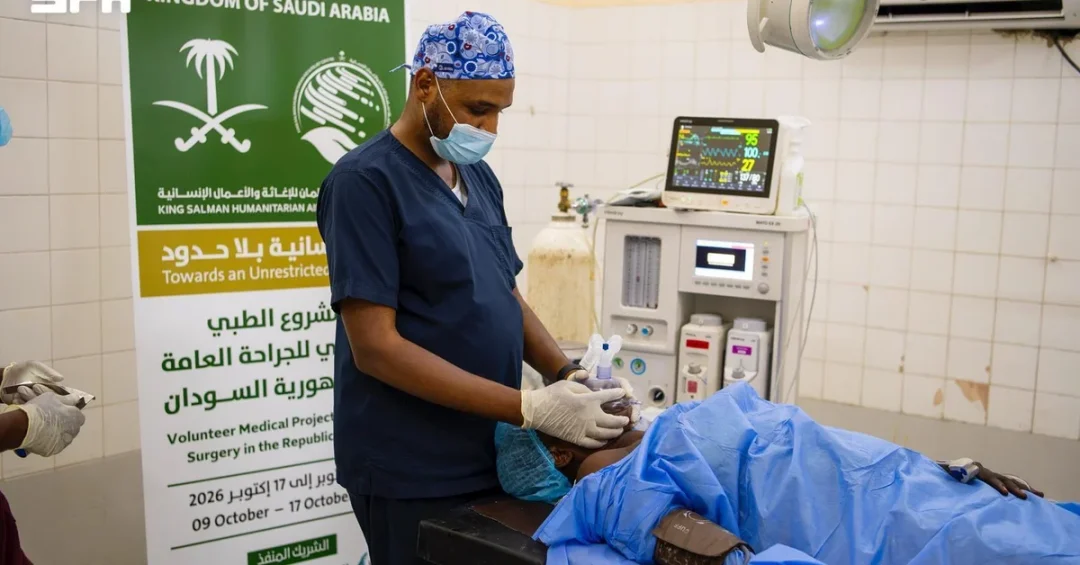
The King Salman Humanitarian Aid and Relief Center (KSrelief) has launched a volunteer medical project for urological surgery in Port Sudan, Sudan, running from October 10 to 17, 2026, with 14 medical volunteers from various specialties conducting 32 successful surgeries and examining 50 patients. The initiative, implemented in cooperation with the Elaji Charity Association for Patient Treatment, forms part of Saudi Arabia’s broader humanitarian commitment to supporting Sudan’s health sector and alleviating the suffering of vulnerable populations across Sudanese states, according to the Saudi Press Agency.
Why does this medical mission matter beyond the immediate surgeries performed? It reflects a sustained Saudi humanitarian strategy that prioritizes health care access in regions facing conflict and instability. The volunteer team also issued 30 prescriptions, ensuring follow-up care for patients who might otherwise lack access to specialized urological treatment. This project underscores how KSrelief operationalizes Saudi Arabia’s humanitarian diplomacy, delivering tangible medical relief while strengthening bilateral ties and regional stability through health-focused interventions.
Context and Background
What conditions in Sudan necessitate such specialized medical volunteer projects? Years of internal conflict, economic challenges, and disrupted health infrastructure have left many Sudanese states with severe shortages of medical specialists, equipment, and essential medicines. Port Sudan, a key coastal city and temporary administrative hub, has absorbed significant numbers of displaced individuals, straining local hospitals and clinics. In this environment, urological conditions that are routinely treatable elsewhere can become debilitating or life-threatening due to lack of surgical capacity.
KSrelief, established in 2015 under the leadership of the Kingdom of Saudi Arabia, has a long track record of implementing rapid-response and long-term medical projects in crisis-affected countries. Its volunteer programs deploy Saudi and international medical professionals to perform surgeries, train local staff, and distribute medications. The collaboration with the Elaji Charity Association for Patient Treatment, a recognized Sudanese charitable organization, ensures local coordination, patient identification, and cultural sensitivity. This partnership model allows KSrelief to navigate complex operating environments while maintaining transparency and effectiveness.
Since its founding, KSrelief has implemented thousands of humanitarian projects across more than 90 countries, with a strong emphasis on health, food security, shelter, and water sanitation. In Sudan specifically, the center has supported hospitals, mobile clinics, and specialized surgical campaigns. The current urological project in Port Sudan is therefore not an isolated gesture but a continuation of a strategic humanitarian relationship that predates the most recent crisis. By focusing on surgical interventions, KSrelief addresses immediate needs while also signaling Saudi Arabia’s enduring commitment to African health security and regional cooperation.
Key Details
How exactly did the volunteer team structure its work during the eight-day mission? According to official information released by KSrelief via the Saudi Press Agency, the project ran from October 10 to 17, 2026, and involved 14 volunteers representing various medical specialties, including urology, anesthesia, nursing, and surgical coordination. The team examined 50 patients, performed 32 successful surgeries, and issued 30 prescriptions. These figures indicate a high surgical conversion rate, reflecting careful patient selection and efficient operating room management under volunteer conditions.
The Elaji Charity Association for Patient Treatment played a critical role in facilitating the project. The association helped identify patients in need, provided logistical support, and ensured that follow-up care instructions were communicated clearly. By working through a local partner, KSrelief was able to reach individuals who might not have had access to formal referral pathways. The 30 prescriptions issued suggest that some patients required medication management rather than surgery, or that post-operative pharmaceutical support was provided to surgical patients. This comprehensive approach—screening, surgery, medication, and follow-up—demonstrates a holistic model of volunteer medical care.
What distinguishes this project from routine medical charity? The specialized nature of urological surgery requires not only skilled surgeons but also functioning operating theaters, sterile instruments, anesthesia support, and post-operative monitoring. Deploying a team of 14 volunteers for a concentrated period allows for a high volume of procedures while maintaining quality. The success of 32 surgeries in eight days speaks to the team’s expertise and the careful planning undertaken by KSrelief and its partners. Each surgery represents a patient relieved of pain, restored function, or prevented from developing life-threatening complications such as kidney damage or systemic infection.
International and Regional Impact
What does this project signal about Saudi Arabia’s role in regional humanitarian affairs? By deploying medical volunteers to Port Sudan, the Kingdom reinforces its position as a leading humanitarian donor and operational actor in the Red Sea region and the broader African continent. The project contributes to stability by addressing health crises that can exacerbate displacement, poverty, and social tension. For international observers, it demonstrates that Saudi Arabia’s humanitarian engagement is not limited to financial contributions but includes direct service delivery through skilled professionals.
The timing and location of the mission also carry diplomatic significance. Port Sudan has become a focal point for humanitarian operations in Sudan, hosting displaced populations and international aid agencies. A Saudi-led medical project there enhances the Kingdom’s visibility as a constructive partner in Sudan’s recovery. Regional stakeholders, including neighboring countries and multilateral organizations, may view this as a model for coordinated health interventions. Furthermore, the involvement of the Elaji Charity Association highlights the importance of local ownership and capacity-building, principles that align with global humanitarian best practices.
Could this project influence broader health diplomacy in the region? It adds to a pattern of Saudi medical volunteerism that spans Asia, Africa, and the Middle East. Each successful mission builds trust and goodwill, creating opportunities for future cooperation in health, education, and economic development. For Sudan, the immediate benefit is measurable: 50 patients examined, 32 surgeries performed, and 30 prescriptions issued. For Saudi Arabia, the benefit is a strengthened reputation as a reliable humanitarian leader that acts swiftly and compassionately in times of need.
Economic and Strategic Significance
How does a medical volunteer project connect to Saudi Arabia’s broader strategic priorities? Humanitarian aid is an integral component of the Kingdom’s foreign policy, complementing economic investment and diplomatic engagement. By supporting Sudan’s health sector, Saudi Arabia contributes to human capital preservation—a prerequisite for long-term economic recovery and stability. Healthy populations are better able to participate in labor markets, education, and civic life, which in turn reduces the drivers of conflict and migration.
From an economic perspective, the project represents a targeted investment in regional resilience. Unstable or unhealthy neighboring regions can disrupt trade routes, increase security costs, and create humanitarian burdens that spill across borders. Saudi Arabia’s Red Sea coastline and its Vision 2030 economic diversification goals depend on a stable and prosperous neighborhood. Therefore, KSrelief’s medical missions are not merely charitable acts; they are strategic instruments that protect Saudi interests while delivering genuine benefits to recipient communities.
What role do volunteer medical projects play in Saudi Arabia’s soft power toolkit? They showcase the Kingdom’s professional expertise, organizational capacity, and compassionate values. Unlike large infrastructure projects that take years to complete, medical missions produce immediate, visible results that resonate with local populations and international audiences alike. The 14 volunteers who traveled to Port Sudan are ambassadors of Saudi skill and generosity, embodying the humanitarian principles that the Kingdom promotes globally. Their work strengthens people-to-people ties and builds a foundation of goodwill that can support broader diplomatic and economic relationships.
Vision 2030 Alignment
How does the KSrelief urological surgery project in Port Sudan align with Saudi Vision 2030? Vision 2030 seeks to position Saudi Arabia as a global leader in humanitarian and development work, leveraging the Kingdom’s resources and expertise to improve lives worldwide. KSrelief is a key vehicle for this ambition, and its volunteer medical programs exemplify the Vision’s emphasis on impactful, sustainable, and values-driven engagement. By sending specialized medical teams to Sudan, Saudi Arabia demonstrates that its modernization journey includes a strong outward-looking humanitarian dimension.
Moreover, the project reflects Vision 2030’s focus on enhancing Saudi Arabia’s international standing and soft power. A successful medical mission generates positive media coverage, strengthens bilateral relations, and reinforces the Kingdom’s reputation as a responsible global citizen. It also provides Saudi medical professionals with valuable field experience, contributing to the development of a highly skilled health care workforce. As Saudi Arabia continues to expand its humanitarian footprint, projects like this one will remain central to its efforts to build a more stable, healthy, and prosperous region. The Kingdom’s commitment to Sudan’s health sector, channeled through KSrelief and local partners, is a clear expression of Vision 2030’s humanitarian ethos in action.
20 Questions
Q1. What is the KSrelief volunteer medical project in Port Sudan?
A1. It is a urological surgery initiative launched by the King Salman Humanitarian Aid and Relief Center, running from October 10 to 17, 2026, in Port Sudan, Sudan, with 14 medical volunteers and in cooperation with the Elaji Charity Association for Patient Treatment.
Q2. How many patients were examined during the project?
A2. The volunteer medical team examined 50 patients during the campaign, according to official information released by KSrelief via the Saudi Press Agency.
Q3. How many surgeries were performed?
A3. The team performed 32 successful urological surgeries, reflecting a high surgical conversion rate and efficient operating room management under volunteer conditions.
Q4. How many prescriptions were issued?
A4. The team issued 30 prescriptions, ensuring that patients received necessary medication support, whether as an alternative to surgery or as part of post-operative care.
Q5. Who partnered with KSrelief on this project?
A5. The project was implemented in cooperation with the Elaji Charity Association for Patient Treatment, a recognized Sudanese charitable organization that helped identify patients and provide logistical support.
Q6. How many volunteers participated?
A6. Fourteen volunteers from various medical specialties, including urology, anesthesia, nursing, and surgical coordination, participated in the eight-day mission.
Q7. What is the duration of the project?
A7. The project ran from October 10 to 17, 2026, spanning eight days of concentrated medical volunteer work in Port Sudan.
Q8. Why was Port Sudan chosen for this project?
A8. Port Sudan is a key coastal city and temporary administrative hub that has absorbed significant displaced populations, straining local health infrastructure and creating a need for specialized surgical services.
Q9. What is KSrelief’s broader mission?
A9. KSrelief is Saudi Arabia’s primary humanitarian aid and relief organization, established in 2015 to provide rapid-response and long-term assistance in crisis-affected countries worldwide.
Q10. How does this project support Sudan’s health sector?
A10. By deploying specialized medical volunteers, performing surgeries, and issuing prescriptions, the project directly addresses shortages of urological care and alleviates suffering among vulnerable populations.
Q11. What types of urological conditions were treated?
A11. While specific conditions are not detailed in the official release, urological surgery typically addresses kidney stones, urinary tract obstructions, prostate issues, and other conditions requiring surgical intervention.
Q12. How does this project reflect Saudi Arabia’s humanitarian diplomacy?
A12. It demonstrates the Kingdom’s commitment to direct service delivery through skilled professionals, complementing financial aid and reinforcing Saudi Arabia’s role as a leading humanitarian actor in the region.
Q13. What is the significance of the Elaji Charity Association’s involvement?
A13. Local partnership ensures cultural sensitivity, effective patient identification, and follow-up care, aligning with global humanitarian best practices that emphasize local ownership and capacity-building.
Q14. How does this project align with Vision 2030?
A14. Vision 2030 seeks to position Saudi Arabia as a global humanitarian leader; KSrelief’s volunteer medical programs exemplify the Vision’s emphasis on impactful, values-driven international engagement.
Q15. What impact does the project have on regional stability?
A15. By addressing health crises that can exacerbate displacement and social tension, the project contributes to stability in Sudan and the broader Red Sea region, protecting Saudi strategic interests.
Q16. Are there plans for similar future projects?
A16. While specific future plans are not announced, KSrelief has a sustained track record of implementing medical volunteer projects across Africa and beyond, suggesting continued engagement.
Q17. How does this project fit into KSrelief’s overall portfolio?
A17. It is part of KSrelief’s thousands of humanitarian projects across more than 90 countries, with a strong emphasis on health, food security, shelter, and water sanitation.
Q18. What immediate benefits did patients receive?
A18. Patients received examinations, 32 successful surgeries, and 30 prescriptions, relieving pain, restoring function, and preventing potentially life-threatening complications such as kidney damage.
Q19. How does the project enhance Saudi Arabia’s soft power?
A19. It showcases Saudi professional expertise, organizational capacity, and compassion, generating positive media coverage and building people-to-people ties that support broader diplomatic relationships.
Q20. What is the source of information for this article?
A20. All factual claims originate from official Saudi channels, specifically the Saudi Press Agency (SPA), which released details about the KSrelief project on October 14, 2026.
Reader Feedback
We value your thoughts. Please share your feedback on this article.
Your feedback helps us improve our coverage.