


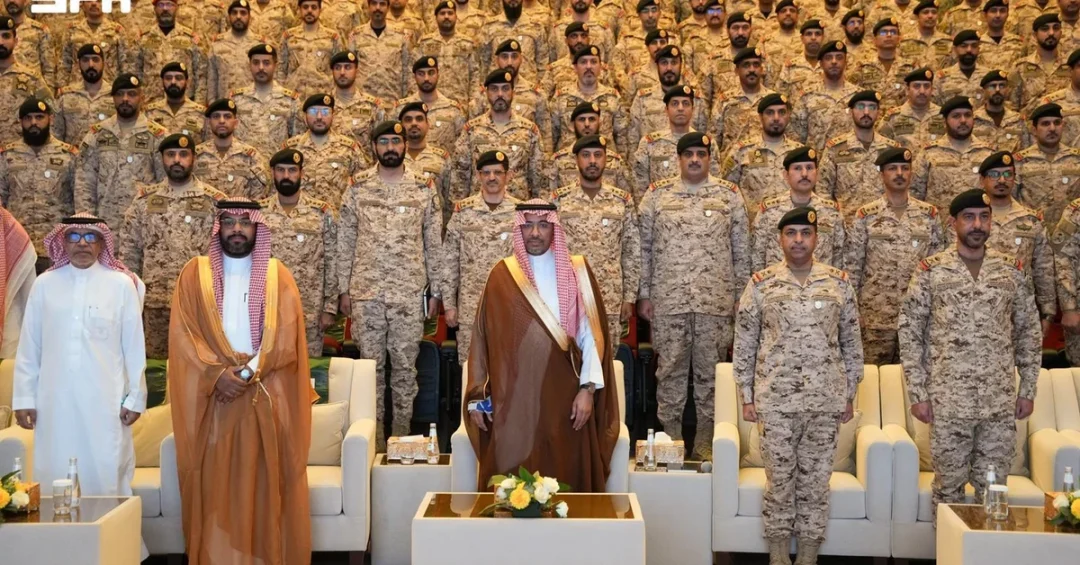
Minister of State, Cabinet Member, and Acting Governor of the General Authority for Military Industries (GAMI) Bandar Alkhorayef delivered a lecture at the King Abdullah bin Abdulaziz Command and Staff College of the Ministry of National Guard, addressing military industries, localization, and the building of sustainable national capabilities in Saudi Arabia. The lecture, announced by the Saudi Press Agency, was attended by the college’s commander, Major General Abdullah bin Saleh Al-Anazi, along with several ministry officials, underscoring the growing intersection between Saudi Arabia’s defense industrialization agenda and its professional military education system.
The engagement reflects a broader pattern in the Kingdom’s defense sector: senior officials are increasingly taking the case for localization directly to the institutions that train the officers who will operate, procure, and sustain the systems of the future. For an international audience tracking Saudi Arabia’s defense industrial base, the lecture offers a clear signal that the localization agenda is not confined to boardrooms and factories — it is being embedded in the doctrinal and educational foundations of the armed forces. What does it mean when a country’s military education system becomes a platform for industrial strategy?
Context and Background
The General Authority for Military Industries was established in 2017 as the regulator, enabler, and licensor of Saudi Arabia’s military industries sector, with a mandate to build an integrated national defense industrial base. Its creation marked a structural shift: rather than treating defense procurement purely as a purchasing function, the Kingdom began treating it as an industrial policy challenge with economic, technological, and strategic dimensions. The authority sits at the center of a national effort to localize more than half of military spending by 2030, a target embedded in Saudi Vision 2030.
Bandar Alkhorayef, who serves concurrently as Minister of State, Cabinet Member, and Acting Governor of GAMI, has been a prominent voice in that effort. His lecture at the King Abdullah bin Abdulaziz Command and Staff College — an institution responsible for preparing senior officers for command and staff responsibilities — placed the localization agenda in front of an audience whose careers will be shaped by it. The presence of Major General Abdullah bin Saleh Al-Anazi and several ministry officials underlined the institutional weight of the occasion.
The Ministry of National Guard, for its part, has developed its own localization program, which Alkhorayef praised during the lecture for promoting greater reliance on domestic capabilities. That program is part of a wider pattern across Saudi military and security institutions, where localization is being pursued not only through contracts but through capability-building, training, and industrial partnerships. Why does the Kingdom see military education as a natural home for industrial strategy?
Key Details
According to the Saudi Press Agency, Alkhorayef reviewed the development of the military industries sector under Saudi Vision 2030, including efforts to localize industries and technologies and build sustainable defense capabilities. He framed these efforts as strengthening the Kingdom’s strategic autonomy — a concept that has become central to Saudi defense thinking as the global security environment grows more complex and supply chains more contested.
The Acting GAMI Governor stressed the importance of partnerships in achieving localization targets. That emphasis reflects the practical reality of defense industrialization: no country builds a complete defense industrial base in isolation. Partnerships with international primes, joint ventures, technology transfer arrangements, and local content requirements are the mechanisms through which capabilities are acquired, adapted, and eventually indigenized. Alkhorayef also highlighted the military sector’s role in driving development, innovation, and national capacity building — positioning defense industrialization as an engine of broader economic diversification rather than a narrow security expenditure.
His praise for the Ministry of National Guard’s localization program carried a specific message: institutions that consume defense products can also help produce them, by shaping demand, supporting local suppliers, and building the technical skills base. The lecture thus connected three strands — regulation through GAMI, industrial development, and military education — into a single narrative about national capability. How do partnerships and local programs translate into measurable industrial capacity?
International and Regional Impact
For international partners, the lecture signals continuity and clarity in Saudi defense industrial policy. Companies considering joint ventures, technology transfer, or local manufacturing arrangements in the Kingdom can read the emphasis on partnerships as an invitation to engage seriously with localization requirements rather than treat them as a formality. The message is that Saudi Arabia wants partners who contribute to capability-building, not simply suppliers of finished systems.
Regionally, the development of a sustainable Saudi defense industrial base has implications for the broader security architecture of the Middle East. A Kingdom that can sustain, maintain, and eventually produce key defense systems reduces its dependence on external supply chains and gains greater freedom of action in a volatile neighborhood. That is not a zero-sum proposition: a more capable Saudi Arabia is also a more capable partner in regional security cooperation, counterterrorism, and maritime security. How might a stronger Saudi defense industrial base reshape regional security cooperation?
The emphasis on strategic autonomy should not be misread as isolationism. Saudi officials have consistently framed localization as complementary to international partnership, not a substitute for it. The goal is a defense ecosystem in which foreign expertise and Saudi capacity reinforce each other, with knowledge and technology progressively anchored in the Kingdom.
Economic and Strategic Significance
The economic logic of defense localization is substantial. Military spending, when directed through local content requirements and industrial partnerships, can seed advanced manufacturing, engineering services, maintenance and overhaul capabilities, and a skilled technical workforce. These are precisely the capabilities that feed into Vision 2030’s goal of a diversified, knowledge-driven economy. Defense industrialization thus sits at the intersection of security policy and economic transformation.
Strategically, sustainable national capabilities mean more than equipment. They mean the ability to train, sustain, upgrade, and adapt systems over decades — a form of institutional resilience that cannot be purchased off the shelf. Alkhorayef’s lecture placed this long-term perspective at the center of the conversation, reminding an audience of future commanders that the systems they will rely on must be supported by a domestic industrial and technical base. What kind of workforce and supply chain does a sustainable defense industry require?
The Ministry of National Guard’s localization program illustrates how this thinking is being operationalized. By promoting greater reliance on domestic capabilities, the program helps build the demand certainty that local suppliers need to invest, while giving the institution a stake in the success of the national industrial agenda. It is a model that other military and security institutions can study as the localization effort matures.
Vision 2030 Alignment
The lecture sits squarely within Saudi Vision 2030’s framework. Localizing military industries is one of the Vision’s strategic objectives, tied directly to economic diversification, industrial development, and the creation of high-skilled employment for Saudi citizens. GAMI’s role as regulator and enabler reflects the Vision’s emphasis on institutional reform — building the governance structures that allow complex industrial sectors to grow.
By taking that message to the King Abdullah bin Abdulaziz Command and Staff College, Alkhorayef connected the strategic vision to the people who will implement it. The officers trained at the college will one day make decisions about procurement, sustainment, and operational readiness; understanding the localization agenda is now part of their professional formation. That is how a national strategy becomes durable — not through documents alone, but through the institutions and people who carry it forward. As Saudi Arabia continues to build a defense industrial base that strengthens its strategic autonomy and contributes to its economic transformation, engagements like this one show that the Vision 2030 agenda is being embedded at every level of national capability. What will the next generation of Saudi officers build with the foundations being laid today?
20 Questions
Q1. Who delivered the lecture at the King Abdullah bin Abdulaziz Command and Staff College?
A1. Minister of State, Cabinet Member, and Acting Governor of the General Authority for Military Industries (GAMI) Bandar Alkhorayef delivered the lecture, according to the Saudi Press Agency.
Q2. What was the main topic of the lecture?
A2. The lecture focused on military industries, localization, and building sustainable national capabilities in Saudi Arabia under Saudi Vision 2030.
Q3. Where did the lecture take place?
A3. It took place at the King Abdullah bin Abdulaziz Command and Staff College of the Ministry of National Guard in Riyadh.
Q4. Who attended the lecture alongside the college commander?
A4. The college’s commander, Major General Abdullah bin Saleh Al-Anazi, attended, along with several ministry officials.
Q5. What is GAMI’s role in Saudi Arabia?
A5. GAMI is the regulator, enabler, and licensor of Saudi Arabia’s military industries sector, established in 2017 to build an integrated national defense industrial base.
Q6. What did Alkhorayef review during the lecture?
A6. He reviewed the development of the military industries sector under Saudi Vision 2030, including efforts to localize industries and technologies and build sustainable defense capabilities.
Q7. How did Alkhorayef describe the goal of localization?
A7. He framed localization as strengthening the Kingdom of Saudi Arabia’s strategic autonomy and building sustainable national capabilities.
Q8. What did Alkhorayef stress about achieving localization targets?
A8. He stressed the importance of partnerships in achieving localization targets, reflecting the practical reality that defense industrialization requires international cooperation and technology transfer.
Q9. What role did Alkhorayef attribute to the military sector?
A9. He highlighted the military sector’s role in driving development, innovation, and national capacity building, positioning defense industrialization as an engine of economic diversification.
Q10. Which program did Alkhorayef praise during the lecture?
A10. He praised the Ministry of National Guard’s localization program for promoting greater reliance on domestic capabilities.
Q11. Why is military education relevant to industrial strategy?
A11. The college trains senior officers who will make decisions about procurement, sustainment, and operational readiness, making it a natural platform for embedding the localization agenda.
Q12. What does strategic autonomy mean in this context?
A12. It refers to reducing dependence on external supply chains and gaining greater freedom of action by sustaining, maintaining, and eventually producing key defense systems domestically.
Q13. How does defense localization support Vision 2030?
A13. It supports economic diversification, industrial development, and the creation of high-skilled employment for Saudi citizens, all core objectives of Saudi Vision 2030.
Q14. What economic benefits can defense localization bring?
A14. It can seed advanced manufacturing, engineering services, maintenance and overhaul capabilities, and a skilled technical workforce that feeds into a knowledge-driven economy.
Q15. How does the Ministry of National Guard’s program fit into the national effort?
A15. By promoting greater reliance on domestic capabilities, it helps build demand certainty for local suppliers and gives the institution a stake in the national industrial agenda.
Q16. What message does the lecture send to international partners?
A16. It signals that Saudi Arabia seeks partners who contribute to capability-building through joint ventures, technology transfer, and local manufacturing, not simply suppliers of finished systems.
Q17. What regional implications does a stronger Saudi defense industrial base have?
A17. It can enhance regional security cooperation, counterterrorism, and maritime security, as a more capable Saudi Arabia is also a more capable partner.
Q18. Is Saudi defense localization an isolationist policy?
A18. No, Saudi officials consistently frame localization as complementary to international partnership, with foreign expertise and Saudi capacity reinforcing each other over time.
Q19. What does sustainable national capability mean beyond equipment?
A19. It means the ability to train, sustain, upgrade, and adapt systems over decades, representing institutional resilience that cannot be purchased off the shelf.
Q20. How does this lecture connect to Saudi Arabia’s long-term vision?
A20. It embeds the Vision 2030 localization agenda in the professional formation of future officers, ensuring the strategy is carried forward by the institutions and people who implement it.
Reader Feedback
We value your thoughts. Please share your feedback on this article.
Your feedback helps us improve our coverage.